

You can feel the pressure in almost every store right now: brands are still buying traffic, but the website experience often turns that spend into quiet loss. Ads are live. Product pages look “fine.” Sessions come in. But conversion rate stalls, refund rate creeps up, and customer acquisition cost feels heavier than it did a year ago.
That is why ecommerce trends 2026 should not be treated like another list of shiny ideas. The future of ecommerce is getting less forgiving. In 2026, the brands that win will connect product data, merchandising, checkout, fulfillment, returns, and measurement into one working system. The brands that do not will keep paying for traffic while friction quietly drains profit.
What is changing is not just one new channel. Online shopping trends 2026 are being shaped by several forces at once: AI-assisted discovery, social commerce with built-in checkout, retail media competition, value-seeking shoppers, margin pressure from returns, and tighter privacy expectations. If you run Shopify, WooCommerce, or a custom ecommerce stack, the opportunity is still very real—but only if you measure behavior clearly and fix the right friction first.
Key Takeaways for Ecommerce in 2026
- AI is moving from product discovery into shopping assistance, so your catalog quality now affects conversion.
- Social commerce is becoming a real sales channel, not just a top-of-funnel awareness play.
- Checkout, delivery clarity, and return policy design have direct impact on profit, not just user experience.
- Retail media keeps growing, but brands still need incrementality discipline and landing-page readiness.
- Privacy changes make first-party measurement more important and sloppy tracking more expensive.
- CRO in 2026 is less about random page tweaks and more about diagnosing behavior across the whole journey.
How These Ecommerce Trends Were Selected (2026-Ready Method)
I reviewed recent 2025–2026 industry coverage, prioritized primary research and reputable retail forecasts, and filtered out ideas that sound exciting but do not show up in real commerce metrics. The rule was simple: each trend needed to be already visible in the market, likely to influence revenue, conversion rate, average order value, margin, retention, or refunds in 2026, and useful enough that an ecommerce team could act on it this quarter.
That matters because the best e-commerce trends 2026 articles should not just predict where the market is heading. They should help retailers decide what to fix next. So this list is built around measurable business impact, not hype.
2026 Ecommerce Trends Snapshot
| Trend | Why It Matters | What To Fix First |
|---|---|---|
| AI Shopping Assistance | Better product data will influence discovery and purchase decisions | Titles, attributes, policies, comparison content |
| Profit-Driven Personalization | Relevance improves CR, AOV, and repeat purchase | PDP recommendations, cart add-ons, intent segments |
| Social Commerce | Content and checkout are moving closer together | Creator-ready offers, PDP alignment, return control |
| Retail Media Growth | Budgets shift toward closed-loop environments | Creative, measurement discipline, inventory sync |
| Checkout Simplification | Late-stage friction still kills paid traffic efficiency | Mobile flow, cost clarity, payment methods |
| Returns Management | Returns damage margin and inventory velocity | Exchange-first flows, PDP clarity, high-risk SKU review |
| Value-Led Buying | Shoppers want proof, clarity, and predictable cost | Trust stack, bundle logic, transparent pricing |
| Privacy And Fragile Measurement | Tracking gets harder as compliance pressure expands | Consent audit, first-party data, UTMs, blended attribution |
| Unified Commerce | Operations and customer experience are now tightly linked | Inventory accuracy, delivery promises, fulfillment alignment |
| Behavior-Led CRO | On-site diagnosis becomes the cheapest growth lever | Funnels, recordings, micro-friction analysis |
The 10 Ecommerce Trends for 2026
Ecommerce Trend 1: AI Shopping Assistance Moves From Novelty To Real Buying Behavior

What it is: AI is shifting from “help me research” to “help me choose” and, in some cases, “help me buy.” Shoppers are getting used to tools that compare products, summarize reviews, narrow options, and move them faster toward a cart.
Why it matters in 2026: This is one of the biggest ecommerce predictions because it changes what counts as a competitive advantage. Product data quality now affects discoverability and trust more directly. If your titles, attributes, compatibility info, shipping promises, and return rules are messy, AI-assisted shopping flows may push buyers toward a cleaner competitor.
Proof point: Global Payments explicitly calls out “AI is your shopping agent” and “agentic commerce” as a 2026 commerce shift (Press release, Dec 2025). EMARKETER’s 2026 commerce coverage also points to meaningful AI-driven ecommerce activity in the year ahead (Report page, Jan 2026).
What I’d Do This Week:
- Audit product titles and attributes for consistency across size, material, fit, compatibility, and bundle logic.
- Clean up shipping and returns messaging so it is unambiguous on product pages and in checkout.
- Improve on-site search with better synonyms, more usable filters, and stronger “no results” recovery.
- Create comparison pages, buying guides, and “best for” pages that help both people and AI-driven discovery.
Watch-Out: Do not confuse “AI chat on the site” with AI-ready commerce. If the catalog, policy language, and stock signals are unreliable, AI will only surface the weakness faster.
Ecommerce Trend 2: Personalization Gets Less Cute And More Profit-Driven
What it is: Personalization in 2026 is less about flashy widgets and more about practical relevance. Better product recommendations, smarter merchandising, useful bundles, and timely messaging reduce choice overload and help people move faster.
Why it matters in 2026: Rising acquisition costs mean many stores cannot grow efficiently through traffic alone. One of the clearest digital commerce trends right now is the move from vanity personalization to profit-focused personalization: better conversion rate, higher average order value, stronger repeat purchase, and improved customer lifetime value.
Proof point: Deloitte highlights AI-driven commerce, data-led insight, and value-oriented shoppers as core forces shaping retail in 2026 (Report, Jan 2026). NRF also points to AI, customer trust, and changing consumer expectations as major 2026 themes (Article, Jan 2026).
What I’d Do This Week:
- Personalize the next step, not the entire website: PDP recommendations, cart add-ons, and post-purchase offers.
- Segment traffic by intent: new vs returning, browsers vs direct-search shoppers, low-AOV vs high-AOV behavior.
- Run one clean test: personalized product-page modules vs control, measured by CR, AOV, and repeat purchase signal.
- Connect email and SMS flows to on-site behavior like browse abandonment, cart abandonment, and back-in-stock demand.
Watch-Out: Over-personalization can still feel invasive. If recommendations look random, too aggressive, or inconsistent across devices, shoppers lose trust instead of gaining confidence.
Ecommerce Trend 3: Social Commerce Stops Being Just Top Funnel
What it is: Discovery and purchase are getting compressed into one path. Creator content, live demos, short-form video, and native checkout flows now do much more than generate awareness. They increasingly generate direct sales.
Why it matters in 2026: This is one of the biggest online shopping trends 2026 because creative is becoming part of the conversion path itself. The content is no longer just the ad that gets the click. It is often the first product explanation, the first trust layer, and the first sales page.
Proof point: EMARKETER projects TikTok Shop’s US ecommerce sales at $23.41B in 2026 and describes social commerce as hitting a turning point as creators and built-in checkout push spending higher (Article, Jan 2026; Forecast, Jan 2026).
What I’d Do This Week:
- Choose 5 products that sell well through demonstration, transformation, or visible proof.
- Create creator-ready hooks, scripts, and offer angles that match the way real shoppers talk.
- Align product pages to social intent: shorter benefit copy, faster variant selection, stronger proof, clearer delivery messaging.
- Track new-to-file customer rate, refund rate, and support issues by social traffic source, not just ROAS.
Watch-Out: Social commerce can grow sales fast and still hurt margin if expectation-setting is weak. Oversold content usually comes back later as returns, chargebacks, and customer support pressure.
I keep seeing the same pattern: the brands that win social commerce in 2026 treat it like a product channel, not just an ad channel. They design the journey end to end—content, offer, checkout, and post-purchase support—because that is where ecommerce trends 2026 is actually moving.
Ecommerce Trend 4: Retail Media Networks Keep Pulling Budget From Everything Else

What it is: Retailers’ ad networks continue to grow because they sit closer to transaction data and often promise better measurement. That makes retail media hard to ignore for brands selling through marketplaces and large retail ecosystems.
Why it matters in 2026: Retail trends 2026 are increasingly shaped by closed-loop environments. For marketplace brands, retail media is becoming standard budget infrastructure. For DTC brands, it also changes how you compare channel efficiency, attribution logic, and incrementality.
Proof point: EMARKETER forecasts US retail media ad spending growing from $60.32B in 2025 to $71.09B in 2026 (Article, Jan 2026).
What I’d Do This Week:
- Separate defensive budget from growth budget so branded capture does not pretend to be net-new demand.
- Push for placement transparency, attribution-window clarity, and any available incrementality testing options.
- Build product-first creative specifically for retail media environments, not recycled Meta or Google assets.
- Sync promo timing and inventory status so paid traffic does not land on low-stock or out-of-stock products.
Watch-Out: Closed-loop reporting is useful, but it does not automatically mean the spend is incremental. Many brands still end up paying to re-win customers who were already on their way to buy.
Ecommerce Trend 5: Checkout Simplification Becomes A Competitive Weapon
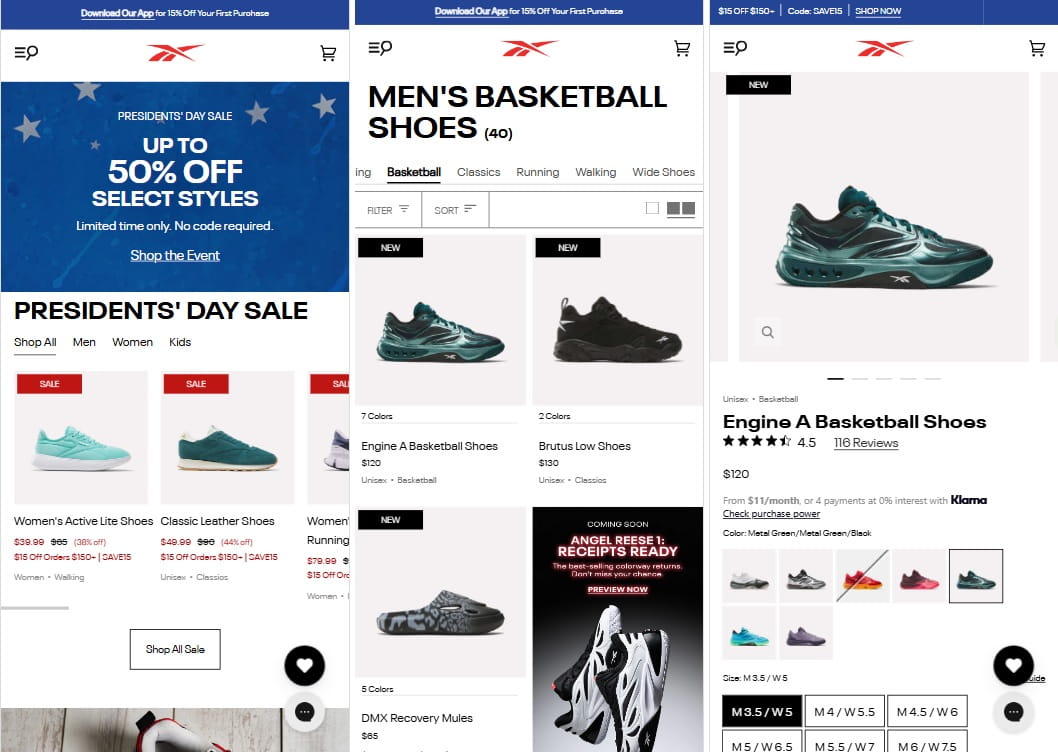
What it is: Fewer steps, fewer surprises, more payment flexibility, and earlier cost clarity—especially on mobile. In many stores, checkout is still the place where the marketing promise and the real buying experience finally collide.
Why it matters in 2026: The future of ecommerce will reward stores that make purchase feel easy and predictable. Paid traffic is expensive enough already. If checkout still asks for too much, hides costs too late, or makes mobile users work too hard, the economics get ugly fast.
Proof point: Baymard’s ongoing checkout usability research continues to show that cart abandonment remains extremely high, and checkout friction is still a major cause (Research page; Updated abandonment list).
What I’d Do This Week:
- Remove non-essential checkout fields and move optional questions after purchase.
- Show shipping, taxes, fees, and delivery timing earlier in the flow.
- Offer the payment methods your customers actually want to use, including wallets and BNPL where relevant.
- Run a mobile thumb audit: can someone finish checkout quickly with one hand and no precision clicking?
Watch-Out: Hiding key information might lift conversion temporarily, but it often creates a second problem later: more support tickets, refund requests, and negative reviews.
Ecommerce Trend 6: Returns Become A Managed System, Not A Necessary Evil
What it is: Returns management is becoming a strategic operating layer. That includes policy design, fraud control, exchange-first flows, restocking speed, and tighter feedback loops between return reasons and product-page quality.
Why it matters in 2026: Returns hit margin hard. They create reverse logistics cost, slow inventory flow, and often expose weak merchandising or unclear PDP content. One of the most practical ecommerce trends for 2026 is treating returns as a profit problem you can diagnose, not just a support process you absorb.
Proof point: EMARKETER expects online return volumes to rise to nearly $379B in 2026 (Article, Jan 2026).
What I’d Do This Week:
- Tag return reasons by SKU and connect them back to exact product-page problems like fit confusion, material ambiguity, or imagery mismatch.
- Test exchange-first experiences and store-credit incentives that protect contribution margin.
- Identify high-return products and strengthen size guides, product specs, FAQs, and photo realism.
- Compare return behavior by channel so you can spot where traffic quality and expectation setting diverge.
Watch-Out: Tightening your return policy too aggressively can reduce trust and hurt conversion. The smarter move is usually better expectation setting, stronger product detail, and better post-purchase flow design.
Ecommerce Trend 7: Value-Seeking Shoppers Stay In Control
What it is: Value is no longer just a discount. In 2026, value means clarity, proof, predictable cost, and confidence that the product is worth the price.
Why it matters in 2026: One of the clearest retail trends 2026 is that shoppers are still managing uncertainty. If your pricing logic is unclear, your product proof is weak, or your shipping and return terms feel vague, you will pay more to acquire customers and lose more of them before purchase.
Proof point: Deloitte highlights value-oriented consumers and smarter margin management as defining 2026 retail dynamics (Report, Jan 2026).
What I’d Do This Week:
- Make “why this costs what it costs” obvious through materials, durability, warranty, support, and shipping clarity.
- Test bundles that improve perceived value without wrecking margin.
- Show shipping thresholds, return terms, and delivery dates near the CTA instead of hiding them lower on the page.
- Strengthen the PDP trust stack with reviews, UGC, guarantees, specs, and visible proof.
Watch-Out: If your answer to value-seeking shoppers is endless discounting, you train customers to wait and you weaken your own economics.
Ecommerce Trend 8: Privacy Rules Expand, And Measurement Gets More Fragile
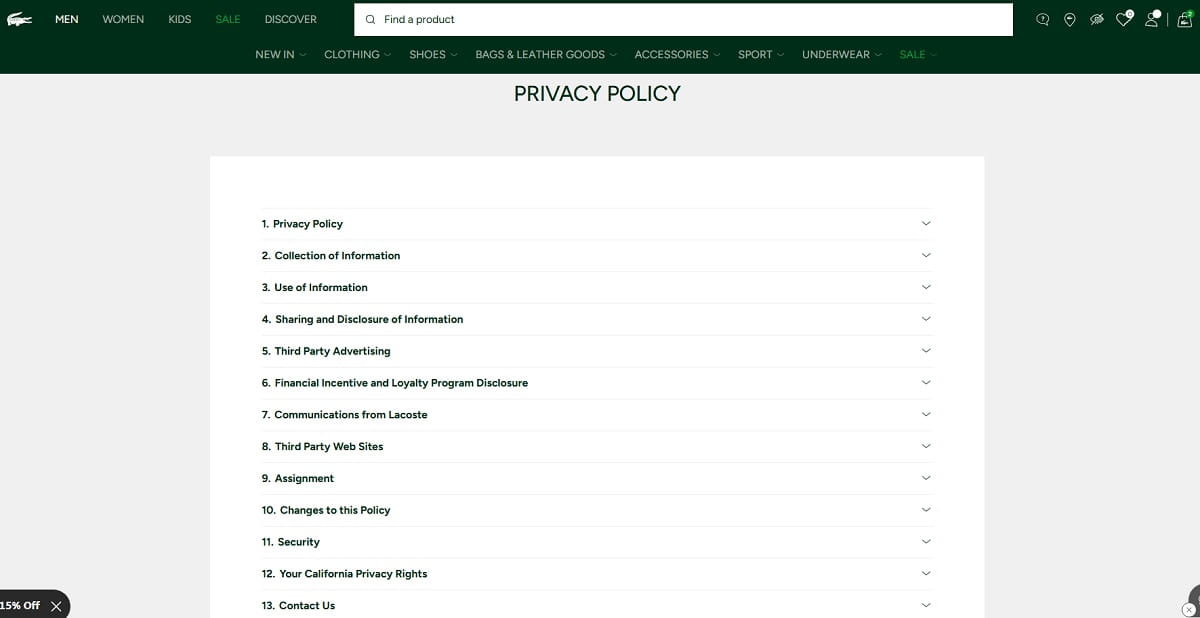
What it is: More privacy requirements, more opt-out mechanisms, and more pressure on data handling. At the same time, browser shifts and consent realities continue to make attribution less stable than many marketers want to admit.
Why it matters in 2026: This is one of the least glamorous but most important e-commerce trends 2026. Stores that depend on messy tracking and lazy tag governance will struggle to read performance clearly. Stores with stronger first-party data discipline will make better decisions faster.
Proof point: IAPP highlights new US state privacy requirements coming online in early 2026, including expanded delete and opt-out mechanisms (Article, Jan 2026). Reuters has also reported on Google’s evolving direction around third-party cookie changes and the wider debate around tracking policy shifts (News report, Apr 2025).
What I’d Do This Week:
- Audit your consent flow and make sure analytics and marketing tags behave correctly when users opt out.
- Strengthen first-party tracking with better event hygiene, cleaner UTMs, and server-side support where it makes sense.
- Shift attribution expectations toward blended measurement, including incrementality testing and platform reporting.
- Document which vendors receive which data and why.
Watch-Out: Delaying measurement cleanup is expensive. The longer it sits unresolved, the harder it becomes to compare channel quality, judge CAC, and trust year-over-year performance.
Ecommerce Trend 9: Unified Commerce And Fulfillment Reliability Separate Winners From Strugglers
What it is: Unified commerce means better alignment between inventory, orders, customer context, and fulfillment execution across channels. In plain language, it means the experience shoppers expect and the operations behind it are finally treated as one system.
Why it matters in 2026: Delivery expectations are not easing. If the site promises one thing and operations deliver another, the result is not just poor CX. It is lost margin, more customer support, more cancellations, and weaker retention.
Proof point: Deloitte points to resilient supply chains and operational adaptability as key 2026 dynamics, while NRF continues to spotlight supply chain and execution shifts across retail (Deloitte, Jan 2026; NRF, Jan 2026).
What I’d Do This Week:
- Fix stock accuracy issues that cause cancellations or late disappointment.
- Replace vague shipping language with real date expectations on PDP and in cart.
- Compare your promised fulfillment speed with actual operational performance and close the gap.
- Track cart exits that happen after shipping cost or delivery timing becomes visible.
Watch-Out: Speed without reliability is often worse than slower but accurate service. One broken delivery promise can undo a lot of expensive acquisition work.
Ecommerce Trend 10: CRO Shifts From Page Tweaks To Behavior Diagnosis
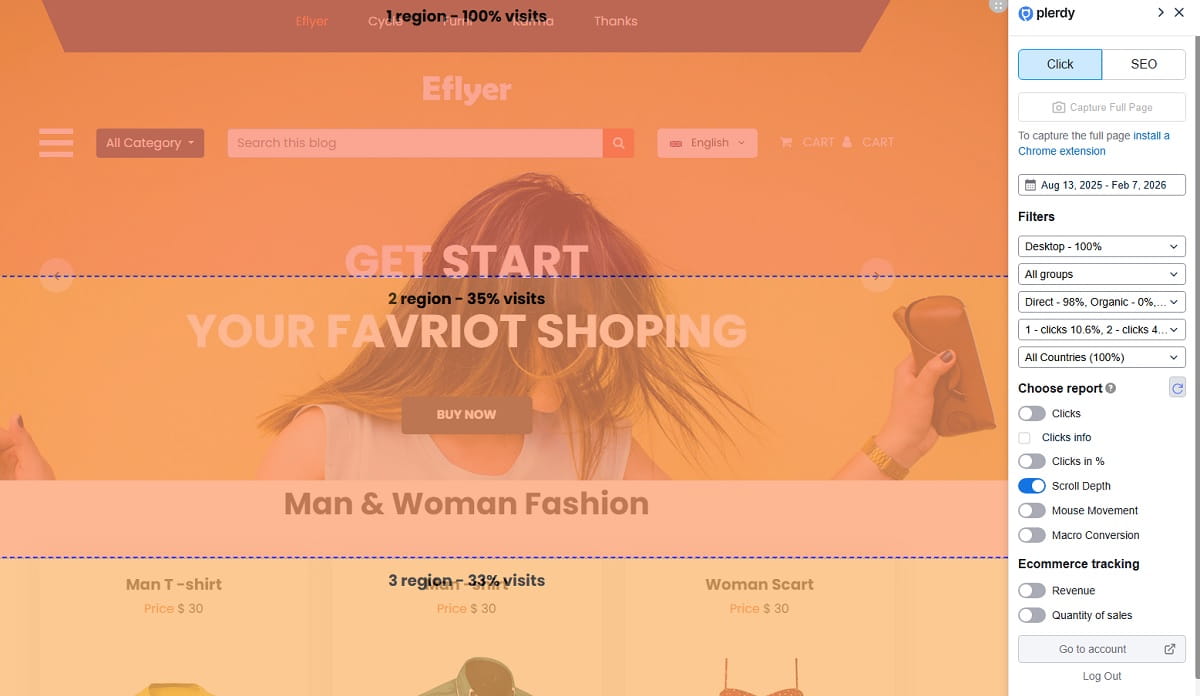
What it is: Conversion work is becoming more diagnostic. Instead of testing random ideas, strong teams are looking for evidence: where users hesitate, where they rage click, where they stop scrolling, where trust breaks, and where checkout momentum collapses.
Why it matters in 2026: This may be the most practical of all ecommerce trends for 2026. When every acquisition channel gets noisier and more expensive, the cheapest growth often comes from fixing the experience you already paid to send traffic to.
Proof point: Baymard’s research continues to show how persistent checkout issues contribute to abandonment, while broader 2026 retail coverage keeps reinforcing the value of data-led decision-making and AI-informed optimization (Baymard; Deloitte, Jan 2026).
What I’d Do This Week:
- Map the funnel by device from product view to add to cart to checkout start to purchase.
- Watch session recordings from paid traffic, social traffic, and returning customers to compare friction patterns.
- List three micro-frictions that are slowing momentum, such as slow product pages, confusing variant logic, or buried trust signals.
- Run one high-signal test based on evidence, not opinion: checkout simplification, shipping clarity, or PDP trust stack improvements.
Watch-Out: Testing random ideas wastes time. Diagnose first, then test the highest-impact blocker.
Which Ecommerce Trends Matter Most by Store Type?
For Shopify Stores
Shopify brands should focus first on product data quality, faster mobile checkout, social-commerce alignment, and return reduction. These are usually the fastest wins because the tooling is already available, but the execution often lags.
For WooCommerce Stores
WooCommerce teams usually need to pay extra attention to plugin sprawl, mobile performance, tracking hygiene, and checkout simplicity. The opportunity is still strong, but fragmentation can quietly damage both UX and measurement.
For Enterprise Or Custom Ecommerce Stacks
Custom-stack teams should treat unified commerce, inventory visibility, AI-ready catalog structure, and privacy-safe first-party measurement as strategic priorities. At this level, the biggest gains often come from system alignment, not isolated front-end edits.
Which Ecommerce Trends Should You Prioritize First?
If you are not sure where to begin, use this order:
- Fastest revenue impact: checkout simplification, product-page clarity, trust stack improvements.
- Fastest margin impact: returns management, inventory accuracy, delivery-promise alignment.
- Best for acquisition efficiency: social-commerce alignment, retail-media landing-page readiness, behavior-led CRO.
- Best for long-term resilience: first-party measurement, privacy compliance, AI-ready product data.
How Plerdy Helps You Act on These Trends
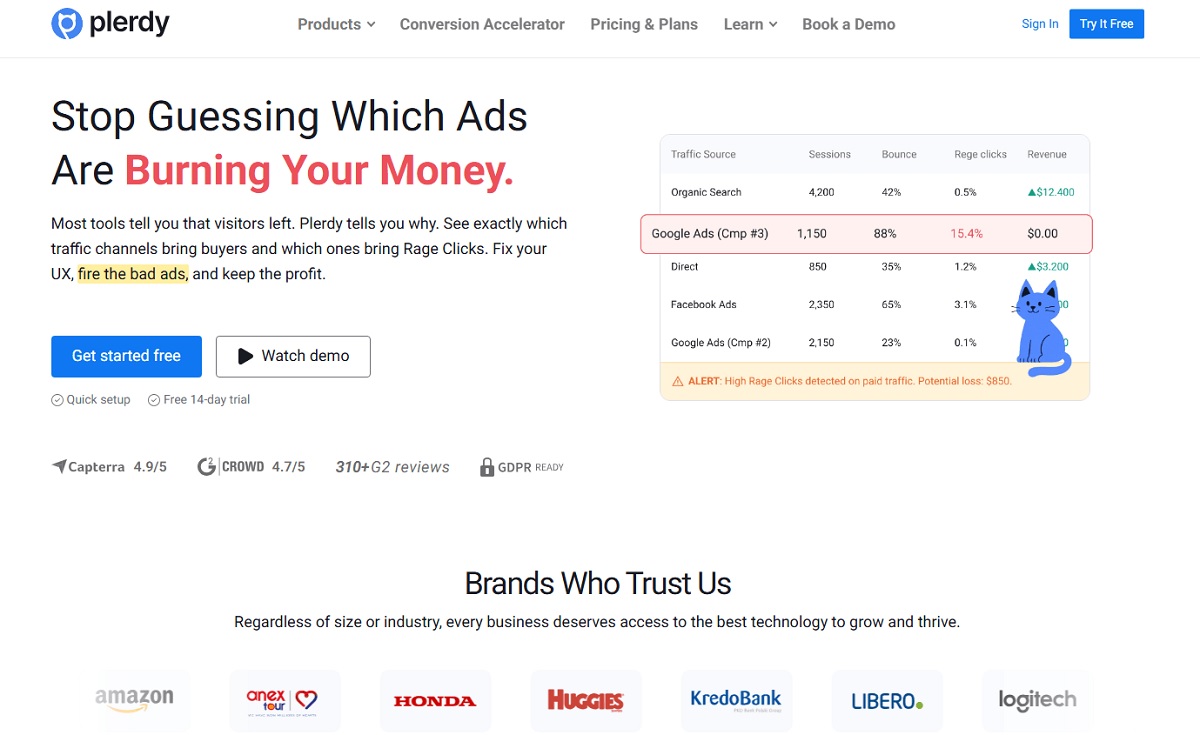
Most teams do not struggle to list trends. They struggle to connect those trends to what shoppers actually do on their site. That is where Plerdy becomes useful. Instead of treating 2026 ecommerce trends like abstract strategy, you can translate them into measurable behavior on real pages through heatmaps, scroll depth, session recordings, funnels, and friction diagnostics.
- AI Shopping Assistance: Measure how shoppers use comparison content, specs, and decision-support blocks on PDP. Use Plerdy Heatmaps to find weak decision support and missed clicks.
- Personalization: Identify hesitation in variant selection, sizing, and delivery messaging. Validate tests using Plerdy Funnels before scaling changes.
- Social Commerce: Review sessions from social traffic to catch expectation mismatch, bounce patterns, and frantic scrolling. Use Plerdy Session Recordings to see exactly where the story breaks.
- Retail Media: Track landing-page friction for high-intent traffic and identify why expensive sessions still fail to convert. Use Plerdy Lost Revenue Analysis to surface revenue leaks.
- Checkout Simplification: Use click maps and funnel drop-off to find dead clicks, field confusion, and mobile pain points. Start with checkout UX analysis.
- Returns Control: Compare behavior on high-return SKUs and improve product clarity, sizing, and trust signals before the refund happens.
- Value-Seeking Behavior: Measure whether users even reach shipping thresholds, warranty info, reviews, and pricing logic. If they do not, the value story is buried.
Quick 2026 Ecommerce Trends Checklist
- My product data is consistent across titles, attributes, compatibility, and bundles.
- My product pages clearly answer what the product is, why it is worth it, when it arrives, and how returns work.
- My checkout shows total cost early and works cleanly on mobile.
- My payment options reflect actual customer preference.
- I track funnel steps by device and by channel.
- I review session recordings weekly for major landing pages and top SKUs.
- I connect return reasons back to specific PDP problems.
- I test based on behavior evidence, not on opinions in Slack.
- I have audited consent and privacy controls.
- I have a first-party measurement plan that does not depend only on platform dashboards.
What Are The Most Important Ecommerce Trends for 2026?
The biggest ecommerce trends for 2026 are AI-assisted shopping, stronger social commerce, retail media growth, checkout simplification, tighter privacy expectations, smarter returns management, and behavior-led CRO. The most useful way to rank them is by business impact: conversion rate, average order value, refund rate, margin, and retention.
How Is AI Changing Ecommerce in 2026?
AI is changing ecommerce by improving product discovery, comparison, shopping assistance, merchandising decisions, and personalization. But the biggest operational shift is this: better product data and cleaner policy information now influence whether AI-driven shopping flows help your store or quietly route buyers elsewhere.
What Online Shopping Trends Should Smaller Brands Watch Closely in 2026?
Smaller brands should watch social commerce, mobile checkout expectations, returns pressure, first-party measurement, and value-focused buying behavior. These trends usually create faster wins than chasing every new channel, because they affect the store experience you already control.
Should Ecommerce Brands Focus More on Acquisition or Conversion in 2026?
Both still matter, but many ecommerce brands will get cheaper growth from fixing conversion friction first. If checkout, shipping clarity, product-page trust, or return expectation are weak, buying more traffic only scales the leak.
How Should Shopify Stores Prepare for Ecommerce Trends in 2026?
Shopify stores should start with stronger product data, simpler mobile checkout, better social-commerce alignment, clearer shipping and return messaging, and better behavior analysis. In practice, that usually means improving product pages and checkout before investing more into acquisition.
Conclusion
The ecommerce trends for 2026 reward the brands that connect strategy to behavior. Not the ones that publish a trend deck. Not the ones that bolt AI onto a messy storefront. The winners will be the teams that make discovery easier, checkout cleaner, returns smarter, value clearer, and measurement more trustworthy.
If you want a practical way to act on the future of ecommerce, start small but start where the money leaks. Pick two trends that hit your business hardest. Review what shoppers actually do on product pages, in cart, and in checkout. Then ship one fix this week. That is how ecommerce predictions turn into revenue instead of content.