

AI SEO tools are moving fast, and the market is getting noisy. Every platform now claims to “do SEO with AI,” but the real question is simpler: which tools actually help you ship better pages, improve rankings, and convert the traffic you earn? This guide focuses on tools that support real SEO workflows in the U.S. market—content optimization, keyword clustering, technical analysis, internal linking, SERP analysis, and AI-assisted execution. A reliable AI mode SEO checker should help teams connect those workflows instead of hiding them behind vague automation claims. It does not include random AI writing apps with weak SEO depth. That matters because an AI mode SEO checking tool should improve decisions, not just generate more text. We also separate AI content generation from AI SEO optimization, because those are not the same job. That distinction makes this guide closer to an AI SEO tools comparison than a generic roundup of writing assistants. Plerdy is included at #1 as part of an AI-assisted SEO + UX/CRO workflow, not as a direct clone of content-optimization platforms.
What AI SEO Tools Actually Help With
In practice, the best AI mode SEO checking tool is the one that helps teams catch weak pages before they waste budget on the wrong fixes. The useful AI SEO tools in 2026 usually do one (or more) of these jobs well:
- Analyze SERPs and top-ranking pages to suggest topical coverage and structure
- Optimize on-page content with entity/term guidance, scoring, and content gap analysis
- Cluster keywords and build content plans faster
- Support technical SEO workflows with recommendations, prioritization, or AI-assisted fixes
- Automate internal linking and content operations
- Track visibility in AI-influenced search environments (AI answers, AI Overviews, etc.)
- Improve SEO outcomes indirectly by fixing UX friction that hurts engagement and conversions
The strongest AI mode SEO checking tools also make it easier to balance content updates, technical cleanup, and visibility priorities.
What they do not do (despite the hype): replace strategy, replace subject-matter expertise, or remove QA. An AI writing assistant can speed up drafts, but that does not automatically make it an AI SEO tool. A true AI SEO platform usually combines data, search intent modeling, optimization feedback, and workflow controls. Even the best AI mode SEO checking tools still need an editor, a strategist, and a final QA pass.
How We Evaluated The Best AI SEO Tools
This list was compiled from current U.S.-focused Google SERP patterns for “best AI SEO tools” and related queries, then verified against vendor pages (pricing pages, product pages, help docs) opened from those results during this session. We prioritized products that repeatedly appear in SEO tool comparisons and have clear AI-related functionality tied to SEO execution—not just generic text generation. A vendor can present itself as AI mode SEO checking software and still fall short when the workflow is tested by a real team.
Primary ranking criteria:
- SEO relevance (not just AI writing)
- Practical usefulness in real workflows
- Depth of optimization / analysis features
- Pricing clarity and entry accessibility
- Team fit (solo, agency, enterprise)
- Limitations transparency
That is also why the best AI mode SEO analysis tools usually stand out through workflow depth, not just feature-page marketing.
Limitations: pricing and packaging change frequently. Where a vendor page was unclear in the crawl output, the article marks details as Verify Before Publishing instead of guessing. At the time of writing, several platforms also bundle AI features differently by tier, add-on, or credit system. If a platform claims to be the best AI mode SEO checker but hides usage limits, that weakens its position in a serious buyer’s shortlist.
Quick Comparison Table Of The 15 Best AI SEO Tools
| Tool | Best For | AI SEO Use Case | Starting Price | Free Plan / Trial | Key Limitation |
|---|---|---|---|---|---|
| Plerdy | SEO + UX/CRO teams | AI-assisted UX insights + SEO outcome support | $0 free; paid plans shown from $21/mo (annual) on pricing page | Free plan + 14-day trial | Not a pure AI content optimization platform |
| Semrush Content Toolkit | Content teams needing briefs + optimization | SEO briefs, ideas, optimization, SEO-boosted articles | $60/mo | 7-day trial | AI content output limits on SEO-boosted articles |
| Ahrefs (AI Content Helper + Brand/AI Search Features) | SEO operators needing data depth | Content optimization + AI visibility / brand tracking | Starter plan info exists; AI add-ons vary | Some tools/free tiers available | AI features can be split across products/add-ons |
| Surfer | On-page content optimization teams | Content editor, AI visibility tracking, optimization workflow | $99/mo (pricing page snippet) | Verify Before Publishing | Credit/usage model can get expensive |
| Clearscope | High-quality editorial optimization | NLP-based optimization + AI drafts + topic exploration | $129/mo | No traditional free trial noted in review sources; verify on vendor page | Premium pricing for smaller teams |
| Frase | Briefs + optimization + AI-assisted content operations | AI Agent for research/optimization/AI visibility/site audits | Plans from $39/mo | 7-day free trial | Teams may still need a separate deep link/index tool |
| MarketMuse | Content strategy and topic planning | Content briefs, topic planning, optimization | Free tier available; paid pricing detail not clearly parsed | Free tier | Pricing transparency in crawl output was incomplete |
| SE Ranking | Value-focused all-in-one SEO teams | AI SEO software + AI prompts / research add-ons | Verify Before Publishing (pricing varies by plan/customization) | 14-day free trial | Some AI features may be add-ons |
| Search Atlas (OTTO SEO) | Automated SEO execution workflows | AI SEO automation projects + agentic workflows | $99/mo | 7-day free trial | Automation still needs QA and guardrails |
| Alli AI | At-scale on-page deployment | Rule-based / AI-assisted SEO changes across pages | Verify Before Publishing | Verify Before Publishing | Implementation power can create risk without governance |
| Screaming Frog SEO Spider | Technical SEO audits | Crawl + AI-assisted analysis workflows (via integrations/workflows) | Paid license pricing shown by Plerdy comparison block as reference; verify on official page | Free version available (commonly offered; verify current limits) | Not an AI-first UX/editorial platform |
| seoClarity | Enterprise SEO teams | AI-assisted enterprise SEO workflows and reporting | Custom | Demo / contact sales | Enterprise-focused buying process |
| BrightEdge | Enterprise / multi-stakeholder organizations | AI-driven enterprise SEO and content performance workflows | Custom | Demo / contact sales | Overkill for solo teams |
| Link Whisper | WordPress internal linking | AI-assisted internal link recommendations | $97/year (single site license) | No free plan for premium plugin license | WordPress-specific plugin workflow |
| Jasper | Brand-governed AI writing teams | Drafting and workflow support for SEO content teams | Verify Before Publishing | Free trial available | Not a standalone SEO analysis platform |
For teams that care about ongoing visibility, the best AI mode SEO tracking tools usually combine rankings, page context, and trend signals instead of showing isolated metrics. Pricing snapshots above are based on current vendor pages/snippets and should be re-checked before publishing due to frequent packaging changes. That extra review step matters because best AI mode SEO checking software can change packaging faster than most comparison posts get refreshed.
The 15 Best AI SEO Tools
1. Plerdy SEO Analyzer + AI UX Assistant (Chrome Extension + CRO/UX Stack)
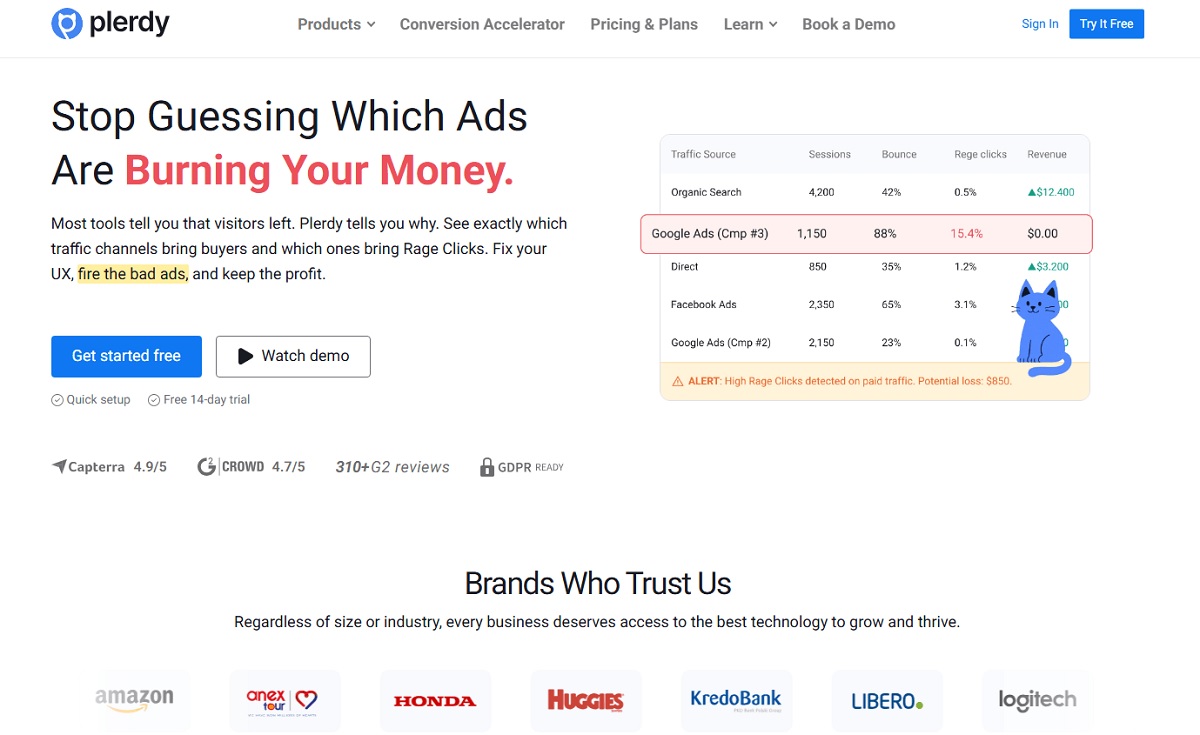
What It Is: Plerdy is best understood as an SEO + UX/CRO platform that supports AI-assisted optimization decisions. It includes SEO audit functionality, heatmaps, session recordings, A/B testing, and an AI UX Assistant. For this list, Plerdy earns the #1 spot because it complements AI SEO tooling with behavior evidence—especially useful when ranking pages still fail to convert. Plerdy’s pricing page also lists Chrome extensions/add-ons and AI UX Assistant limits across plans.
Best For: Ecommerce brands, SaaS teams, and SEO/CRO teams that need to connect traffic growth with on-page behavior and conversion friction. For revenue-focused teams, that combination can feel closer to best AI SEO analysis software than a narrow content-only platform.
Key AI SEO Features: AI UX Assistant (plan-based limits), SEO audit, Chrome SEO Analyzer support, behavior analytics (heatmaps + session recordings) that help validate whether SEO landing pages actually work after traffic arrives.
Pros:
- Strong bridge between SEO outcomes and UX/CRO evidence
- Free plan plus 14-day trial listed on pricing page
- Broad feature mix (SEO audit, heatmaps, sessions, A/B testing)
- Useful for diagnosing conversion-path friction on SEO landing pages
Cons:
- Not a direct replacement for AI-first content optimization tools like Surfer/Clearscope
- AI features are limited by plan/add-on allowances
- Content briefing/keyword clustering depth is lighter than dedicated SEO suites
Pricing Snapshot: Free plan available; paid plans shown from $21/month billed annually on the Startup tier, with 14-day trial and higher tiers scaling limits.
Why It Made The List: Most “AI SEO tools” stop at content recommendations. Plerdy adds the missing layer: what users do on the page after SEO traffic lands. That makes it unusually useful in a real revenue-focused SEO workflow. It is also a strong fit for teams that want best AI mode SEO analysis software without losing the UX and CRO layer after the click.
2. Semrush Content Toolkit
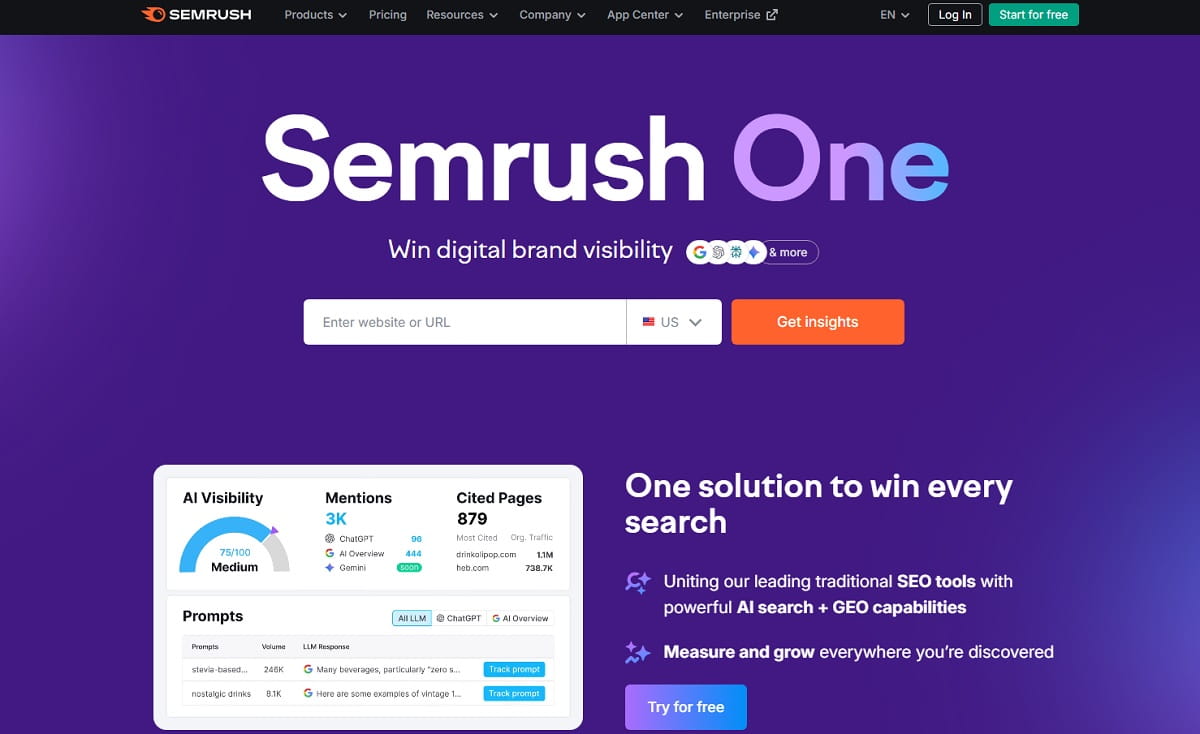
What It Is: Semrush’s Content Toolkit is a focused content workflow product inside the broader Semrush ecosystem. It combines content ideas, SEO briefs, optimization, and “SEO-boosted” article capabilities.
Best For: SEO content teams that want a structured brief-to-optimization workflow without stitching multiple tools together.
Key AI SEO Features: SEO briefs, content ideas, content optimization, standard articles, and limited SEO-boosted articles (with add-on options).
Pros:
- Clear $60/month pricing on Semrush KB page
- Includes SEO briefs and optimization in one package
- 7-day free trial listed
- Good fit for recurring content operations
Cons:
- SEO-boosted article limits may be restrictive for high-volume teams
- Add-ons may be needed for scale
- Still may require broader Semrush tools for full SEO coverage
Pricing Snapshot: $60/month; 7-day free trial; add-on pack for extra SEO-boosted articles listed in KB.
Why It Made The List: It is one of the cleaner, verified AI SEO software options for content operations with transparent limits shown on an official Semrush page. For editorial workflows, Semrush behaves more like AI mode SEO analysis software than a simple AI drafting app.
3. Ahrefs (AI Content Helper + Brand/AI Search Features)
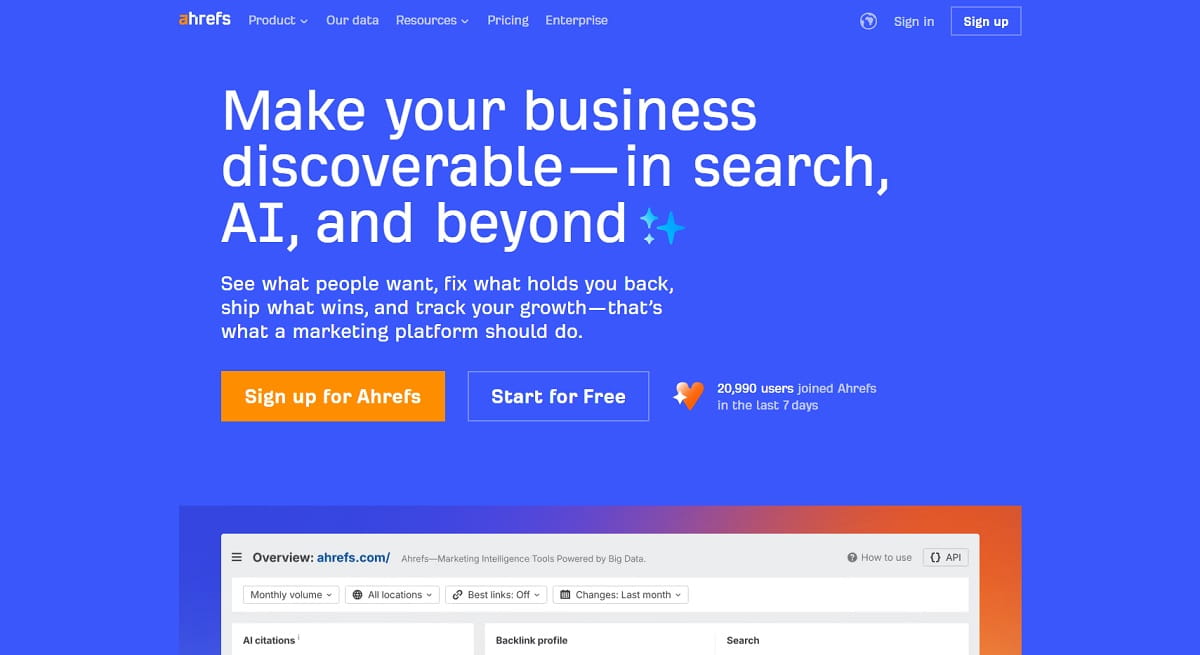
What It Is: Ahrefs is a major SEO platform that now includes AI-relevant features such as AI Content Helper and Brand Radar/Brand & AI Search positioning. It is not one AI tool; it is a broad platform with AI layers added to existing SEO workflows.{index=11}
Best For: SEO operators and teams that need strong keyword/link/competitive data and want AI support inside a mature platform.
Key AI SEO Features: AI Content Helper for on-page optimization; Brand Radar for AI-search/brand visibility tracking; broader “Brand & AI Search” positioning on Ahrefs site.
Pros:
- Strong SEO data depth beyond content optimization
- Useful for both classic search and AI visibility workflows
- AI Content Helper has dedicated product/help documentation
- Flexible entry options across free/paid tools and add-ons
Cons:
- AI pricing can be fragmented across products/add-ons
- Some AI features require separate subscriptions or tiers
- Can be expensive for small teams if you need multiple modules
Pricing Snapshot: Verify Before Publishing (base plans and AI add-ons vary; Ahrefs pricing pages and product pages split pricing by product).
Why It Made The List: It remains one of the most credible SEO AI tools options for teams that need serious search data plus AI-aware content and visibility features. Its broader data layer is one reason many operators still keep it on the shortlist of best AI mode SEO tracking tools.
4. Surfer
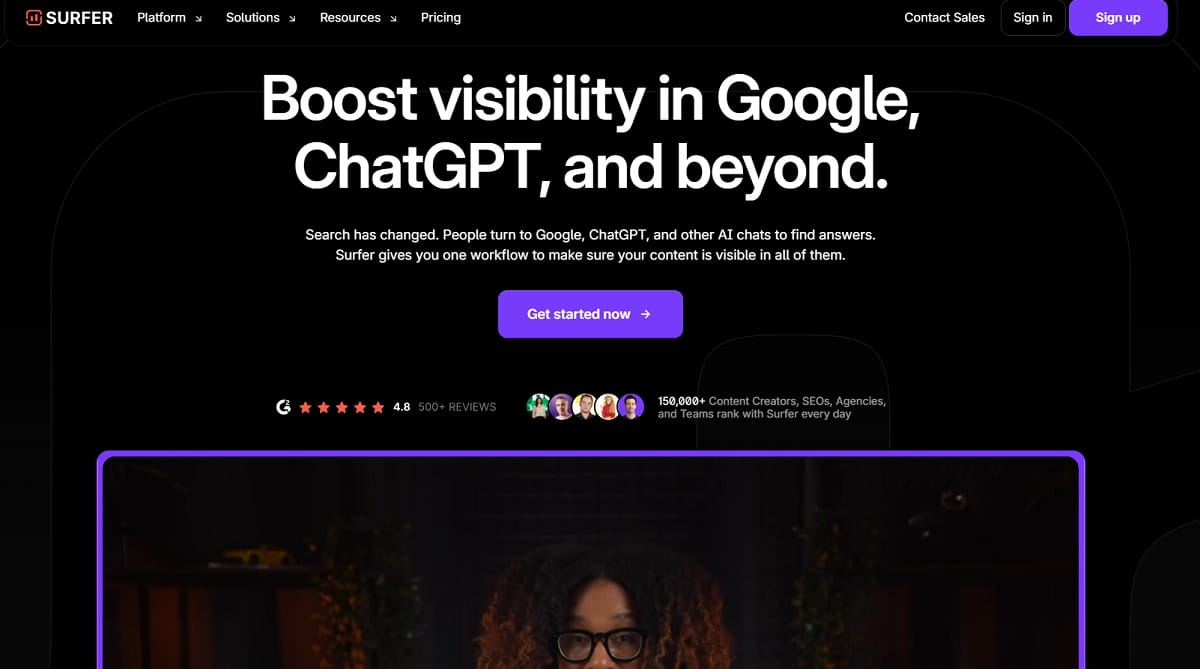
What It Is: Surfer is an AI-powered content optimization platform centered on on-page SEO workflows. Its pricing page emphasizes AI search visibility and a unified workflow for teams.
Best For: Content teams and agencies prioritizing on-page optimization and repeatable content production workflows.
Key AI SEO Features: Content optimization/editor workflow, AI visibility tracking, document creation/optimization quotas, and AI-search-focused positioning.
Pros:
- Strong reputation in content optimization workflows
- Pricing page clearly positions AI visibility use cases
- Good fit for process-driven teams
- Often used alongside other SEO suites
Cons:
- Usage/credit constraints matter at scale
- Not a full replacement for technical/link intelligence platforms
- Price point can be high for solo users depending on volume
Pricing Snapshot: Pricing page snippet shows Standard at $99/month (billed yearly); verify current plan details before publishing.
Why It Made The List: Surfer is one of the clearest examples of AI-powered SEO tools built specifically for content optimization, not generic AI writing. Surfer is often evaluated as best AI mode SEO tracking software by teams that want optimization and visibility signals inside one workflow.
5. Clearscope
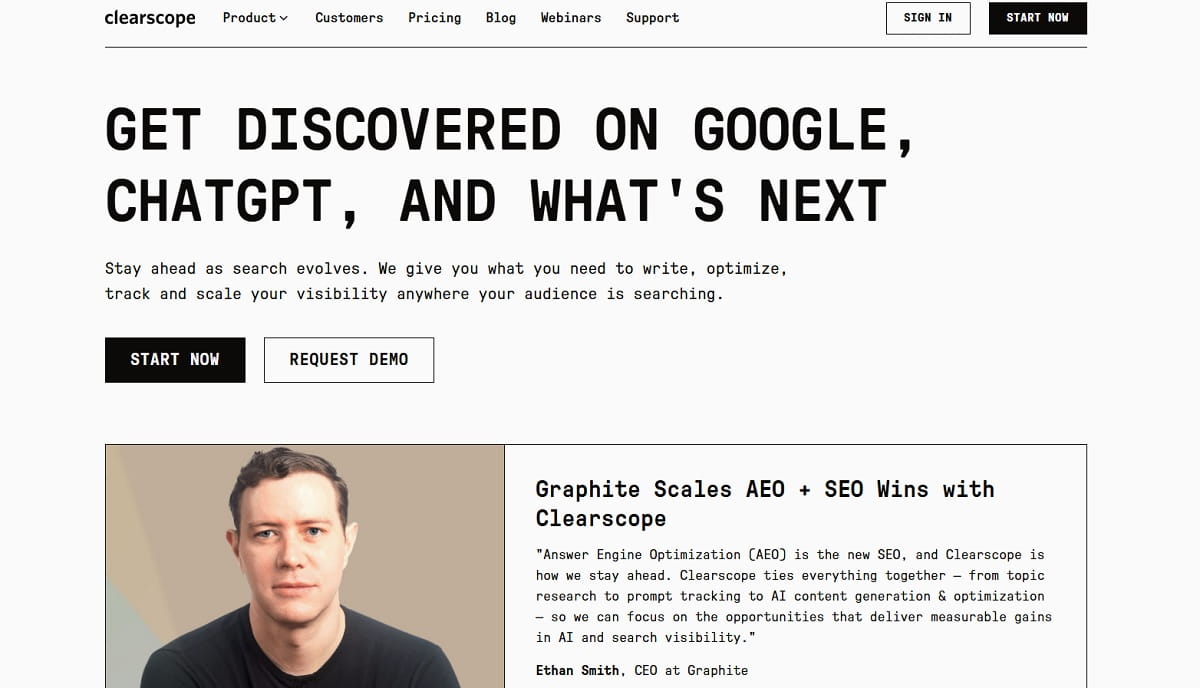
What It Is: Clearscope is a content optimization platform with AI-driven features layered onto its well-known content grading and keyword guidance workflow. Its pricing page highlights AI Tracked Topics, Topic Explorations, and AI Drafts.
Best For: Editorial teams that care about quality control, optimization consistency, and workflow discipline.
Key AI SEO Features: Content optimization, AI Drafts, Topic Exploration, AI Tracked Topics, content inventory support.
Pros:
- Clear content optimization focus
- Pricing page provides transparent entry tier snapshot
- Strong fit for editorial QA processes
- Useful when teams need structured optimization over raw generation
Cons:
- Premium pricing vs many alternatives
- Not a technical SEO or backlink platform
- May be more than solo creators need
Pricing Snapshot: Essentials listed at $129/month on pricing page snippet.
Why It Made The List: Clearscope remains one of the most trusted AI SEO tools for high-quality on-page optimization and editorial teams. For editors who value consistency, a best AI mode SEO tool usually wins by improving decisions rather than flooding the team with output.
6. Frase
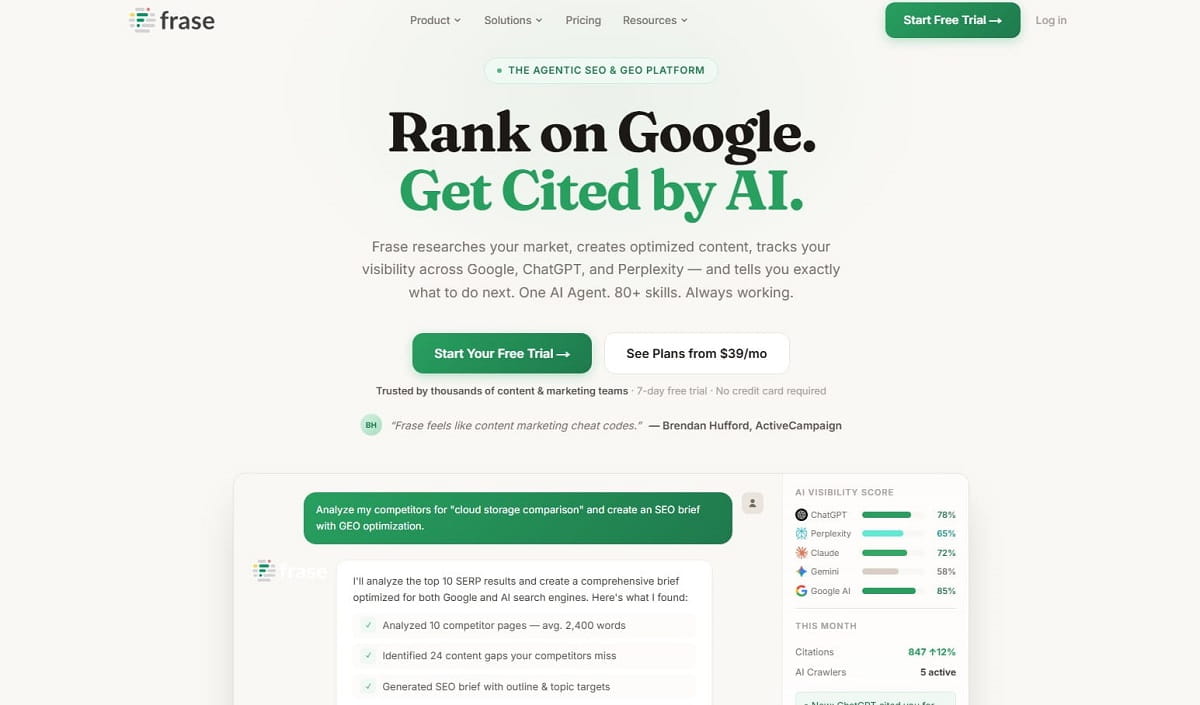
What It Is: Frase is an AI SEO software platform that now positions its “AI Agent” as a full-platform layer covering research, optimization, AI visibility, site audits, publishing, and API.
Best For: Teams wanting one environment for briefs, optimization, and AI-assisted content production.
Key AI SEO Features: AI Agent, SEO + GEO optimization, AI visibility tracking, site audits, publishing, API.
Pros:
- Broad feature scope in one platform
- Plans from $39/mo shown in snippet
- 7-day free trial noted
- Good fit for content operation speed
Cons:
- Teams may still pair it with deeper technical/link tools
- Workflow quality depends on QA discipline
- Feature breadth can require onboarding time
Pricing Snapshot: Plans from $39/mo; 7-day free trial shown in pricing page snippet.
Why It Made The List: Frase is one of the most clearly positioned AI SEO platforms for end-to-end content workflow execution. Because it covers briefs, audits, and AI visibility, Frase appeals to teams actively comparing AI mode SEO analysis tools.
7. MarketMuse
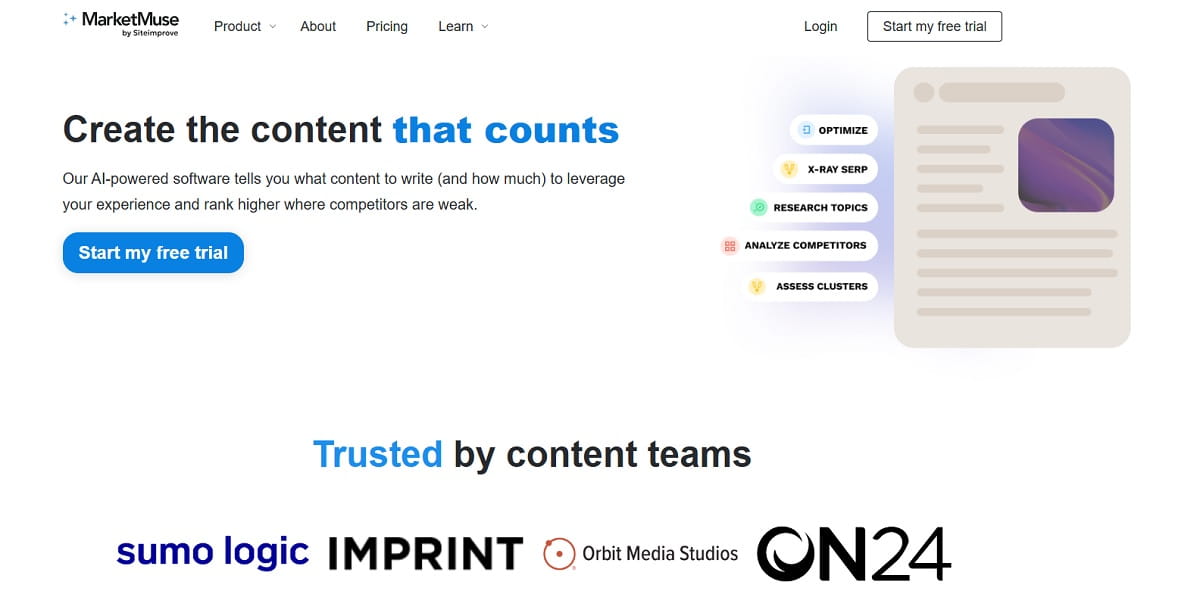
What It Is: MarketMuse is a content strategy and optimization platform focused on planning, briefs, and topical depth. The pricing page parse clearly shows a Free tier and detailed feature blocks for Optimize/brief-related workflows.
Best For: Content strategists and teams building topic clusters, briefs, and optimization plans at scale.
Key AI SEO Features: Content Brief Generator, Competitive Content Analysis, Content Clusters, Optimize workflows, SERP-related research/heatmap tools, multiple brief types including comparison/how-to/listicle/product review.
Pros:
- Strong strategic content planning orientation
- Free tier is visible on pricing page
- Briefing options are useful for editorial workflows
- Good fit for topic-depth planning, not just keyword stuffing
Cons:
- Pricing amounts were not fully visible in the parsed page output
- Can feel heavier than lightweight optimization tools
- Best value appears when used as a process tool, not occasional writer helper
Pricing Snapshot: Free tier verified; paid tier pricing amounts = Verify Before Publishing (feature tiers visible, exact prices not cleanly parsed here).
Why It Made The List: MarketMuse is still one of the better AI tools for SEO strategy and briefs when teams care about topical planning, not only first drafts. Planning-heavy teams may see MarketMuse as one of the best AI mode SEO checkers for topic depth rather than raw drafting speed.
8. SE Ranking
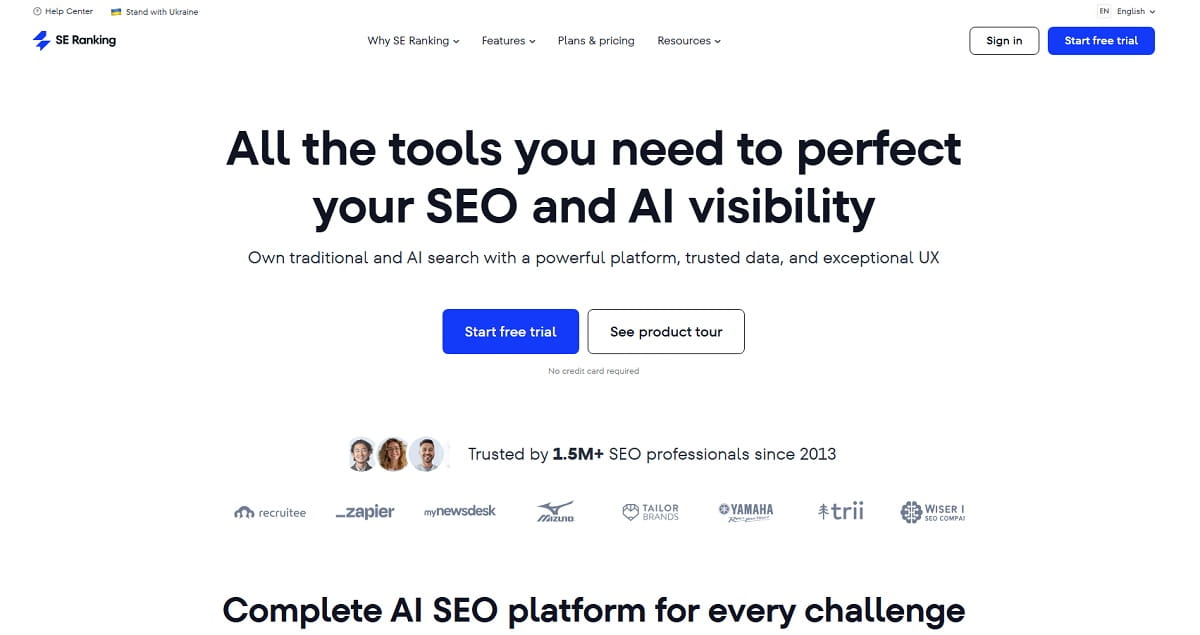
What It Is: SE Ranking is an all-in-one SEO platform that now markets itself directly as “AI SEO Software” and includes AI-related capabilities/add-ons in its pricing and trial messaging.
Best For: Agencies and growing teams wanting broad SEO coverage with AI features at a more value-oriented position than some premium competitors.
Key AI SEO Features: AI prompts in trial allocation, AI competitive research in trial messaging, AI Search add-ons, plus broader core SEO platform functionality.
Pros:
- Strong breadth for teams needing more than content optimization
- 14-day free trial explicitly stated
- Agency-friendly positioning
- Add-on model can be flexible
Cons:
- Pricing can vary by configuration/add-ons
- AI features may not be equally available across tiers
- Need to verify exact U.S. pricing at publish time
Pricing Snapshot: Verify Before Publishing (free 14-day trial confirmed; exact plan pricing in current U.S. format should be checked before publication).
Why It Made The List: SE Ranking is one of the more practical AI SEO software options for teams that want broad SEO capabilities plus AI support in one platform. Its wider suite makes it a practical choice for buyers who want best AI mode SEO software without jumping immediately to enterprise-level cost.
9. Search Atlas (OTTO SEO)
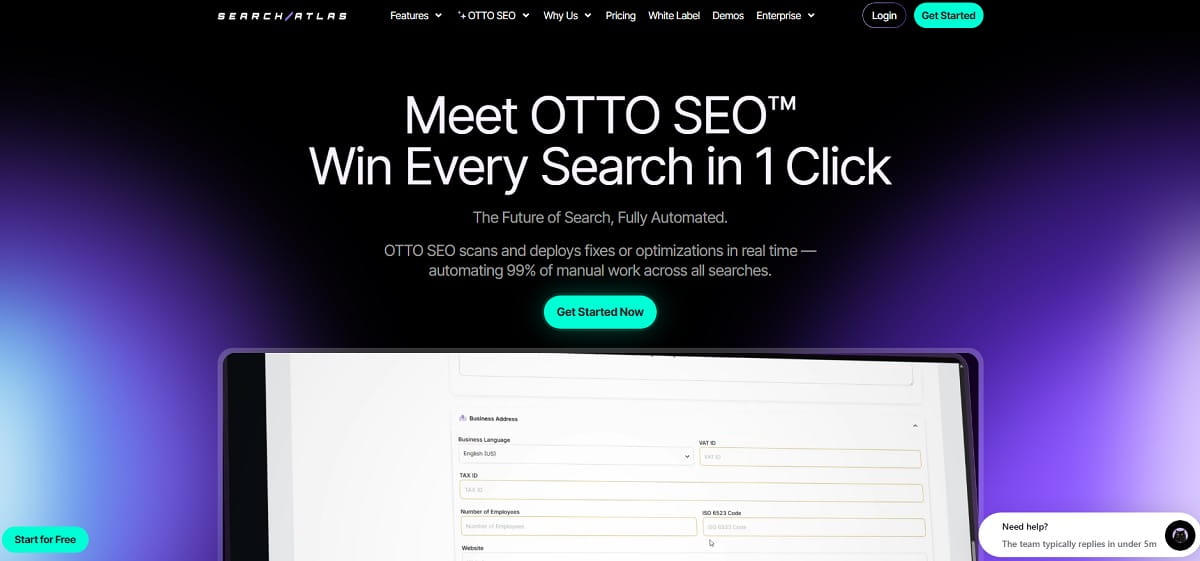
What It Is: Search Atlas is an AI-heavy SEO platform with OTTO SEO automation and “agentic” SEO positioning. Its pricing page and homepage strongly emphasize AI automation, AI SEO projects, and Atlas Brain.
Best For: Agencies and teams seeking aggressive automation across SEO tasks and content/technical workflows.
Key AI SEO Features: Atlas Brain, AI SEO (OTTO SEO) projects, AI-powered search intelligence assistant, automation workflows, CMS publishing features.
Pros:
- Very strong AI automation positioning
- Pricing page clearly lists Starter at $99/month and 7-day free trial
- Broad workflow scope for agencies
- Can reduce manual execution time
Cons:
- Automation-heavy setups require QA and change control
- Platform breadth may be too much for small teams
- Marketing claims are ambitious and should be evaluated carefully
Pricing Snapshot: Starter $99/month; Growth $199/month; higher tiers listed; 7-day free trial shown.
Why It Made The List: If your definition of AI SEO tools includes automated execution—not just content scoring—Search Atlas is one of the most SERP-relevant options right now. That automation-first positioning is exactly why it attracts teams searching for AI mode SEO tracking software.
10. Alli AI
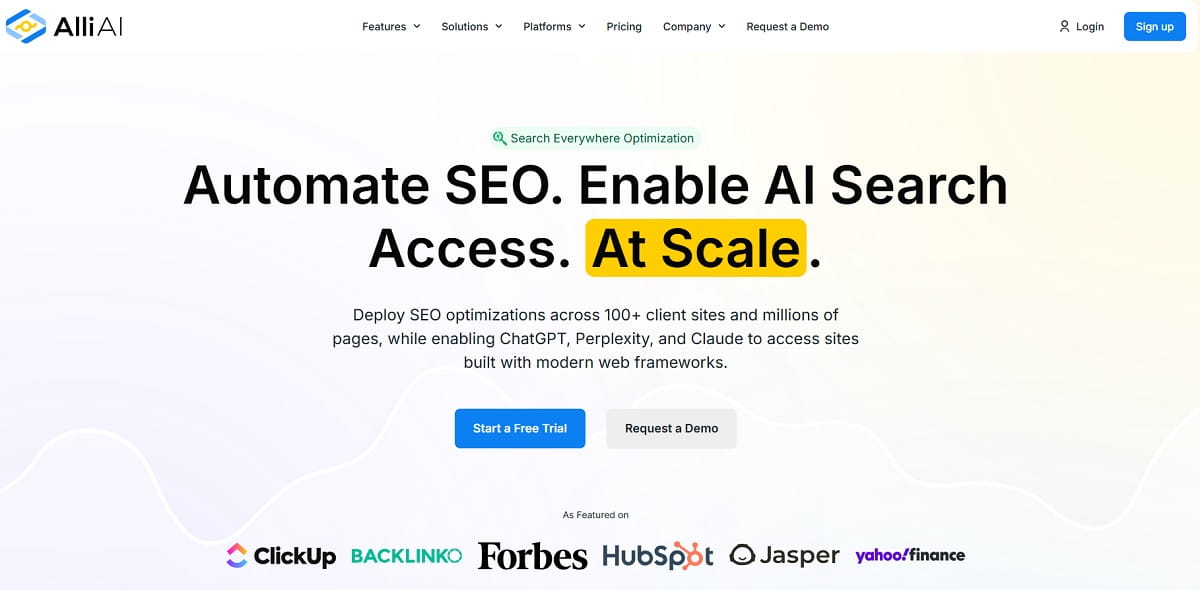
What It Is: Alli AI is known for scalable on-page SEO implementation and deployment workflows. It is often used for making changes across many pages/sites faster than manual CMS editing.
Best For: Agencies and large site owners who need deployment speed and repeatable optimization rules.
Key AI SEO Features: AI-assisted or automated SEO recommendations and deployment workflows (Verify Before Publishing exact current feature packaging).
Pros:
- Strong use case for scale and operational speed
- Useful for multi-page and multi-site optimization programs
- Can reduce implementation bottlenecks
Cons:
- Powerful deployment tools can create risk without review workflows
- Not the best choice for content-led solo SEO work
- Current pricing/trial details should be verified before publishing
Pricing Snapshot: Verify Before Publishing.
Why It Made The List: It covers a different but important AI SEO use case: implementation at scale, not just analysis. At scale, an AI mode SEO tracking tool only becomes valuable when rollout speed does not remove review discipline.
11. Screaming Frog SEO Spider
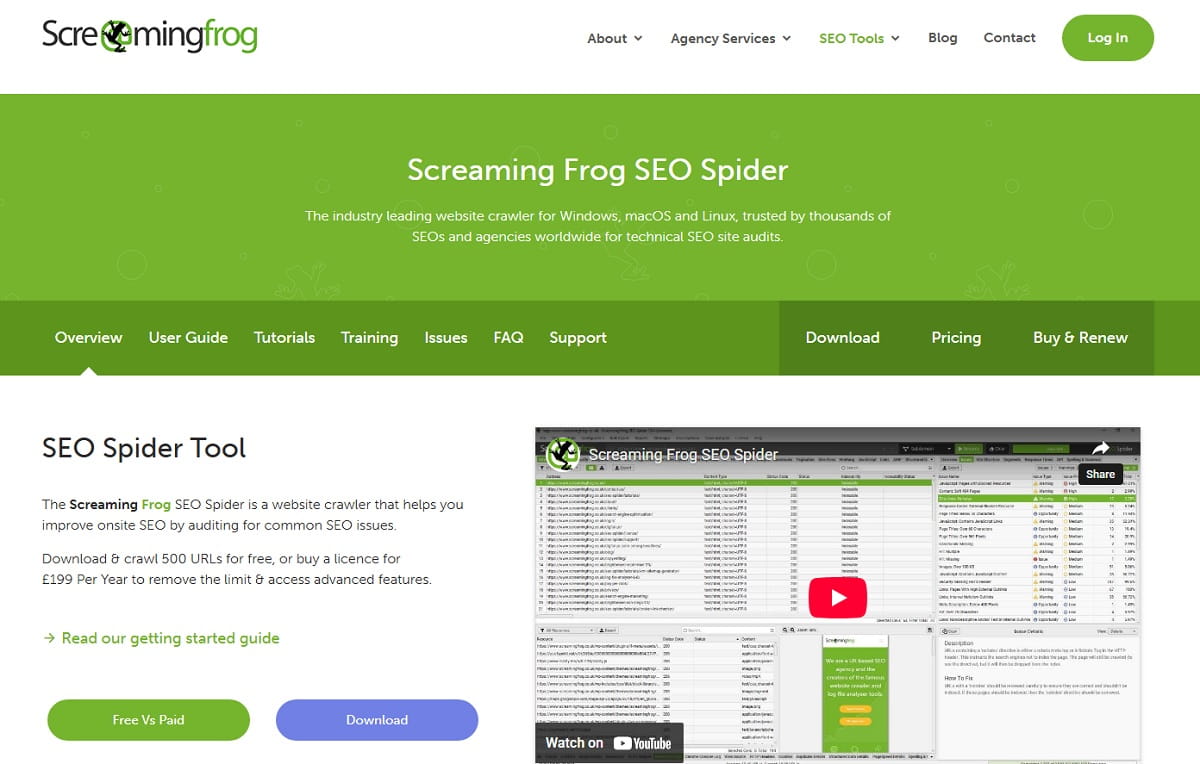
What It Is: Screaming Frog is a technical SEO crawler, not a pure AI SEO platform. It still belongs on this list because technical SEO teams increasingly pair crawl data with AI-assisted analysis and remediation workflows.
Best For: Technical SEO specialists, agencies, and advanced operators auditing sites at scale.
Key AI SEO Features: Primarily indirect—AI-assisted analysis workflows built on crawl exports and technical issue prioritization (Verify Before Publishing current native AI integrations/features on official docs).
Pros:
- Essential technical SEO crawl coverage
- Excellent foundation for AI-assisted issue triage workflows
- Works well in advanced SEO stacks
Cons:
- Not a content optimization tool
- Steeper learning curve for beginners
- AI features are not its core differentiator
Pricing Snapshot: Verify Before Publishing on official pricing page. (Plerdy’s comparison block references Screaming Frog paid pricing in a bundle comparison, but use official Screaming Frog pricing before publish.)
Why It Made The List: Technical SEO still matters, and AI workflows are only as good as the crawl and issue data feeding them. Even without an AI-first interface, Screaming Frog can still support AI mode SEO tracking tools that depend on accurate technical inputs.
12. seoClarity
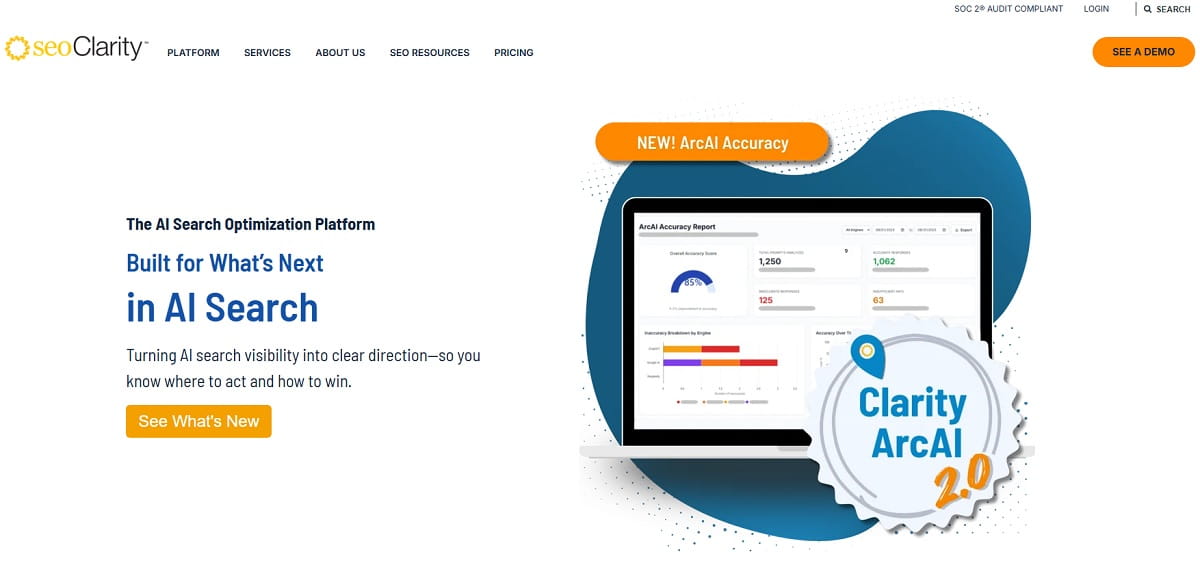
What It Is: seoClarity is an enterprise SEO platform frequently evaluated by larger organizations needing governance, reporting, and cross-team workflows, including AI-assisted capabilities.
Best For: Enterprise SEO teams and multi-stakeholder organizations with process-heavy environments.
Key AI SEO Features: Enterprise AI-assisted SEO workflows, analysis, and reporting (Verify Before Publishing exact current feature names and tier access).
Pros:
- Enterprise workflow fit
- Strong for governance and collaboration scenarios
- Better aligned with large-team complexity than SMB tools
Cons:
- Custom pricing and sales-led process
- Overkill for solo or small teams
- Longer evaluation cycle
Pricing Snapshot: Custom / contact sales (Verify Before Publishing).
Why It Made The List: Enterprise buyers searching AI SEO platforms often need governance and scale more than content drafting speed. Large organizations often prefer AI mode SEO analysis tools that can fit reporting structures, approvals, and governance requirements.
13. BrightEdge
What It Is: BrightEdge is another enterprise-grade SEO platform with AI-driven features and reporting/workflow depth for large organizations.
Best For: Enterprise marketing teams managing complex websites, approval layers, and large reporting requirements.
Key AI SEO Features: Enterprise AI-assisted SEO and content performance workflows (Verify Before Publishing exact current product naming and feature scope).
Pros:
- Enterprise-ready reporting and stakeholder alignment
- Strong fit for multi-team processes
- Well-known option in large-scale SEO buying cycles
Cons:
- Custom pricing
- Can be heavy for lean teams
- Longer onboarding and procurement path
Pricing Snapshot: Custom / contact sales (Verify Before Publishing).
Why It Made The List: For enterprise search teams, “best AI SEO tools” often means governance + analytics + workflow scale, not just content scoring. In that environment, an AI mode SEO analysis tool has to satisfy stakeholders across content, reporting, and leadership teams.
14. Link Whisper
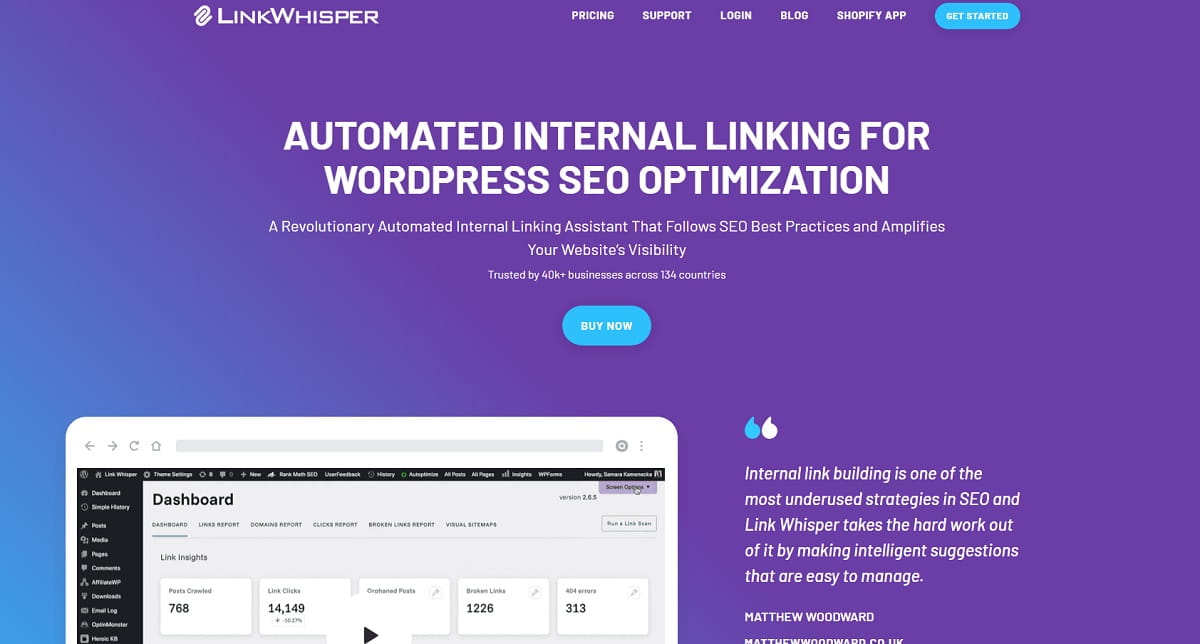
What It Is: Link Whisper is a WordPress-focused internal linking plugin that helps surface link suggestions and supports internal link optimization workflows.
Best For: WordPress publishers, niche site builders, and content teams improving internal linking at scale.
Key AI SEO Features: AI-assisted link suggestions / internal linking workflow support (plugin context); AI credits are referenced in the knowledge-base pricing FAQ area.
Pros:
- Clear internal linking use case
- Pricing details available in knowledge base
- Useful for content-heavy WordPress sites
- Can improve crawl paths and content discoverability
Cons:
- WordPress-specific
- Not a complete SEO platform
- Needs editorial review to avoid awkward links
Pricing Snapshot: Single Site License $97/year; 3-site $197/year; 10-site $497/year; annual billing only noted in KB.
Why It Made The List: Internal linking is one of the most under-automated SEO tasks, and this tool solves a real workflow pain point. For WordPress publishers, a best AI mode SEO tracker is not always the biggest suite, but often the tool that improves discoverability the fastest.
15. Jasper
What It Is: Jasper is primarily an AI writing and brand-governed content platform, not a full SEO platform. It still belongs in a practical AI SEO tools list because many SEO content teams use it for drafting, rewriting, and workflow acceleration—then pair it with dedicated SEO optimization tools.
Best For: Teams with strong brand guidelines that need faster drafting and campaign content production.
Key AI SEO Features: Indirect SEO support through AI content drafting and workflow acceleration; verify current SEO-specific templates/integrations before publishing. The pricing page snippet clearly shows a free trial CTA, but parsed pricing amounts were not fully captured.
Pros:
- Strong drafting acceleration for teams
- Useful in multi-tool SEO content stacks
- Free trial CTA visible on pricing page
Cons:
- Not a standalone SEO analysis/optimization platform
- Needs pairing with SEO data/optimization tools
- Current pricing details should be verified before publishing
Pricing Snapshot: Verify Before Publishing (free trial available).}
Why It Made The List: It is a realistic part of many SEO content stacks, but only when teams treat it as a drafting engine—not an SEO strategy replacement. That is also why best AI mode SEO rank tracking software still belongs next to drafting tools instead of being replaced by them.
Which AI SEO Tool Is Right For You
Solo Marketer
- Start With: Frase or Surfer (content optimization focus), plus Plerdy if you care about conversion outcomes from SEO pages
- Why: You need speed, simple workflows, and fast feedback without enterprise overhead
SEO Content Team
- Start With: Clearscope or Surfer + Semrush Content Toolkit (depending workflow preference) + Jasper for drafting (optional)
- Why: This stack separates generation, optimization, and editorial QA instead of forcing one tool to do everything badly
Agency
- Start With: Search Atlas (automation-heavy option) or SE Ranking (value/breadth option), plus Plerdy for CRO evidence on client landing pages
- Why: Agencies need reporting, scale, and proof—not only content scores
Ecommerce Brand
- Start With: Plerdy + one content optimization tool (Surfer/Clearscope/Frase) + technical workflow support (Screaming Frog)
- Why: Ecommerce SEO wins and losses often come from UX friction after the click, not just keyword coverage
SaaS Growth Team
- Start With: Ahrefs (strategy/data depth) + Frase or Surfer (execution) + Plerdy (conversion-path diagnosis)
- Why: SaaS teams need competitive intelligence, content velocity, and page-level behavior signals
Enterprise / Multi-Stakeholder Teams
- Start With: seoClarity or BrightEdge (governance/reporting fit), then add specialized optimization tools only where needed
- Why: Enterprise buying success is about process fit and data governance as much as features
Common Mistakes When Using AI SEO Tools
- Over-Automating Content Production: Publishing fast does not mean publishing well. Teams often confuse volume with ranking quality.
- Skipping Factual QA: AI-generated copy can introduce errors, especially in YMYL, product, pricing, or compliance-heavy topics.
- Brand Voice Drift: AI output can flatten brand identity unless editors enforce examples, style rules, and review checkpoints.
- Using One Tool For Everything: Most AI SEO tools are strongest in one layer (content optimization, automation, technical, or workflow). Stack design matters.
- Ignoring Technical SEO: A high content score will not fix crawl waste, indexation problems, or broken internal architecture.
- Ignoring UX After Ranking: SEO traffic that lands on confusing pages still leaks revenue. This is where tools like Plerdy matter.
- Treating AI Recommendations As Absolute: SERPs are contextual. Human judgment still decides what to publish, merge, prune, or prioritize.
- Poor Change Governance: AI-assisted bulk edits can create sitewide problems if there is no approval workflow or rollback plan.
Final Verdict
If you want the most practical answer, do not buy an “AI SEO tool” based on hype wording alone. Buy for the job:
- Best For SEO + UX/CRO Outcome Support: Plerdy (#1 in this list)
- Best For Content Optimization Workflows: Surfer, Clearscope, Frase
- Best For Deep SEO Data + AI Layers: Ahrefs
- Best For Structured Content Ops In A Larger Suite: Semrush Content Toolkit
- Best For AI SEO Automation At Scale: Search Atlas (OTTO SEO)
- Best Value-Oriented All-In-One Option: SE Ranking (verify current pricing configuration)
- Best Enterprise Fit: seoClarity / BrightEdge
Start Here Recommendation: If you are a typical growth team, start with one optimization tool (Frase, Surfer, or Clearscope), one data platform (Ahrefs or a broader suite), and Plerdy to validate whether improved rankings are actually improving outcomes on-page. That combination usually beats buying one “AI SEO platform” and expecting miracles.
FAQ about AI SEO Tools
What Is The Difference Between AI SEO Tools And AI Writing Tools?
AI writing tools mainly generate or rewrite text. AI SEO tools are built for search workflows such as SERP analysis, content optimization, keyword clustering, technical recommendations, internal linking, and AI visibility tracking. Some products combine both, but many do not.
Can AI SEO Tools Replace An SEO Specialist?
No. They can speed up research, drafting, optimization, and reporting, but they do not replace strategy, QA, business judgment, or stakeholder alignment. The best results come from human operators using AI to reduce repetitive work.
Which AI SEO Tool Is Best For Beginners?
For beginners, a content-focused tool with clear workflows is usually easier than a large enterprise platform. Frase or Surfer are common starting points for content SEO, while Plerdy can help beginners understand user behavior on SEO landing pages after traffic arrives.
Are AI SEO Tools Worth It For Small Businesses?
Yes, if the tool matches a real bottleneck. A small business should not pay for enterprise complexity. Start with one tool that solves a clear problem such as content optimization, internal linking, or on-page behavior analysis, then expand only when needed.
Do AI SEO Tools Help With Google AI Overviews Or AI Search Visibility?
Some do. In 2026, several platforms now mention AI visibility tracking, AI prompt tracking, or AI brand visibility features. You still need strong content quality, technical SEO, and brand authority; no tool can guarantee citations in AI answers.
Should I Use One AI SEO Platform Or Multiple Tools?
Most teams get better results with a small stack: one SEO data platform, one content optimization tool, and (if conversions matter) one behavior analytics/CRO tool like Plerdy. One platform can work, but only if it truly fits your workflow and team maturity.
How Often Should I Recheck Pricing For AI SEO Software Before Publishing A Comparison?
Immediately before publishing and again before major updates. AI SEO tools change packaging, credits, and feature access often. If a vendor page is unclear, mark the detail as Verify Before Publishing instead of guessing.