

Marketing attribution software connects campaigns and customer touchpoints with conversions, pipeline, and revenue. A useful platform helps answer which channels create demand, which interactions assist a sale, where acquisition costs are rising, and how confidently the next marketing dollar can be allocated. A weak setup simply distributes credit across incomplete data and makes the resulting dashboard look more certain than it is.
Plerdy adds a website-level perspective to attribution by connecting traffic sources, pages, products, and on-page interactions with completed ecommerce purchases. It does not replace an enterprise multi-touch attribution platform, a CRM, or an ad network. Instead, it helps conversion and ecommerce teams understand what happened between the campaign click and the sale—the part of the journey that channel reports often cannot explain.
Quick Answer: Plerdy is best for connecting website behavior with ecommerce revenue; Google Analytics 4 is the practical free starting point; HubSpot, Dreamdata, and HockeyStack fit B2B revenue attribution; Triple Whale and Northbeam serve data-intensive ecommerce brands; AppsFlyer specializes in mobile and cross-platform measurement; and Adobe Customer Journey Analytics is the strongest enterprise option when data spans many online and offline systems.
What Is Marketing Attribution Software?
Marketing attribution software collects touchpoint, identity, cost, conversion, and revenue data and then assigns conversion credit to the marketing interactions that preceded an outcome. Google defines attribution as assigning credit to ads, clicks, and other factors along a user’s path to a meaningful action in its GA4 attribution documentation.
The outcome can be an ecommerce purchase, qualified lead, opportunity, closed-won deal, subscription, app install, renewal, or another business event. The platform may track the journey itself, import it from connected systems, or combine both approaches. The best marketing attribution software also preserves campaign costs, revenue values, attribution windows, identity rules, refunds, and model definitions so teams can audit why a channel received credit. This makes customer journey attribution useful for decisions rather than merely decorative reporting.
Attribution, Tracking, Analytics, And Incrementality
These terms are related but not interchangeable:
- Conversion Tracking records that an outcome happened and passes the event, value, and identifiers to selected destinations.
- Marketing Analytics measures campaign and customer performance through metrics, segments, dashboards, and trends.
- Marketing Attribution applies rules or models to distribute credit among recorded touchpoints.
- Incrementality Testing estimates whether marketing caused additional conversions compared with what would have happened without the exposure.
- Marketing Mix Modeling uses aggregated historical data to estimate channel contribution, saturation, and budget scenarios.
Attribution explains how observed credit is allocated; it does not automatically prove causality. A paid social impression can receive attribution credit without proving that the purchase would not have happened otherwise. Mature measurement programs use attribution for journey-level optimization and validate major budget decisions with experiments, incrementality analysis, or marketing mix modeling.
Four Types Of Marketing Attribution Platforms
- Website And Ecommerce Attribution: Connects campaign traffic, products, pages, funnels, and purchases. Plerdy, Triple Whale, Northbeam, and Attribution serve different parts of the ecommerce attribution software market.
- B2B Revenue Attribution: Joins anonymous visits, contacts, accounts, campaigns, opportunities, and closed revenue. HubSpot, Ruler Analytics, Dreamdata, and HockeyStack fit here.
- Mobile And Cross-Platform Attribution: Measures installs, in-app events, deep links, web-to-app paths, connected TV, and advertising partners. AppsFlyer is designed for this environment.
- Enterprise Journey Analytics: Unifies behavioral, CRM, offline, content, and operational data with customizable governance. Adobe Customer Journey Analytics is the enterprise option in this comparison.
Google Analytics 4 sits between categories. It is a valuable cross-channel analytics baseline, but it is not a neutral replacement for every dedicated attribution platform. Its scope, identity, integrations, processing, and reporting logic must match the decision being made.
Best Marketing Attribution Software Compared
| Software | Best For | Primary Strength | Pricing Approach | Main Limitation |
|---|---|---|---|---|
| Plerdy | Ecommerce And CRO Teams | Website Behavior And Element-Level Revenue Influence | Free Trial And Paid Plans | Not a Full Cross-Channel MTA Or CRM |
| Google Analytics 4 | Organizations Needing a Free Baseline | Web And App Event Attribution | Free Standard Version; Enterprise Upgrade | Limited Neutrality And Offline Journey Depth |
| HubSpot | HubSpot-Centered B2B Teams | Contact, Deal, And Revenue Attribution | Subscription; Advanced Attribution In Higher Tiers | Best Value Requires Broad HubSpot Adoption |
| Ruler Analytics | Lead Generation And Offline Sales | Forms, Calls, CRM Revenue, And Closed-Loop Attribution | Subscription Or Quote Based | Requires Clean CRM Outcome Data |
| Triple Whale | Shopify And DTC Brands | Ecommerce Attribution And Profitability | Tiered Subscription | Less Suitable For Complex B2B Journeys |
| Northbeam | High-Spend Ecommerce Brands | MTA, MMM, And Incrementality | Custom Quote | May Exceed Smaller Teams’ Needs And Budgets |
| Dreamdata | B2B SaaS And Account-Based Marketing | Account-Level Journey And Revenue Attribution | Free Entry And Paid Plans | Not Designed Primarily For Transactional Ecommerce |
| Adobe Customer Journey Analytics | Large Enterprises | Governed Online And Offline Journey Analysis | Custom Enterprise Quote | High Implementation And Governance Requirements |
| AppsFlyer | Mobile-First And Cross-Platform Businesses | Mobile, Web, CTV, And App Attribution | Plan And Volume Based | Unnecessary For a Simple Website-Only Funnel |
| HockeyStack | Complex B2B Go-To-Market Teams | Buyer Journeys, Pipeline, And Revenue Intelligence | Custom Quote | Requires Cross-Team Data And Process Alignment |
| Attribution | Teams Needing Auditable Custom Models | User-Level Cost And Raw Attribution Data | Plan Or Quote Based | Greater Flexibility Adds Configuration Work |
| Windsor.ai | Data Teams Building Cross-Channel Reports | Marketing Data Integration And Attribution Feeds | Tiered Subscription | Often Requires a Separate BI And Data Workflow |
Pricing Note: Vendors frequently change packages, traffic limits, included connectors, attribution features, and onboarding fees. Treat the table as a buying orientation, not a quotation. Confirm current pricing and feature availability on each official website before making a purchase.
How We Evaluated Marketing Attribution Tools
We evaluated each tool against the measurement problem it is designed to solve rather than ranking platforms by dashboard count. The following criteria carry more practical value than an oversized feature list:
- Data Coverage: Supported ad networks, organic channels, CRM objects, ecommerce orders, subscriptions, calls, offline events, mobile apps, and warehouses.
- Identity And Journey Logic: Anonymous-to-known stitching, account matching, cross-session handling, cross-device options, and transparent identity rules.
- Revenue Accuracy: Transaction IDs, dynamic values, currency, refunds, recurring revenue, opportunity stages, closed revenue, and reconciliation options.
- Model Flexibility: First-touch, last-touch, linear, time-decay, position-based, custom, data-driven, view-through, and model-comparison capabilities.
- Auditability: Ability to trace a reported number to touchpoints, source records, costs, exclusions, windows, and model settings.
- Activation: Exporting audiences, qualified outcomes, revenue, or attribution signals back to ad platforms, CRM systems, and warehouses.
- Privacy And Governance: Consent support, permissions, retention controls, regional requirements, security, and avoidance of unnecessary personal data.
- Time To Value: Implementation effort, maintenance, documentation, analyst dependence, and usability for the intended team.
- Total Cost: Subscription, tracked contacts or sessions, seats, connectors, data storage, onboarding, implementation, and ongoing administration.
A high ranking does not imply that one attribution tracking software platform is universally superior. Marketing attribution tools should be judged against the journey they must measure: a Shopify brand, an enterprise B2B company, a mobile game, and a local service business produce different paths and need different evidence.
Best Marketing Attribution Software Reviews
1. Plerdy — Best For Website And Ecommerce Revenue Influence

Plerdy Ecommerce Analytics connects transactions with traffic sources, products, pages, navigation paths, and on-page interactions. It helps teams move beyond the channel label and investigate which product placement, CTA, filter, banner, content block, or funnel step influenced a purchase.
Best For: Ecommerce managers, CRO specialists, UX teams, and performance marketers who need to understand what visitors did after arriving from a campaign.
Why It Stands Out: Conventional attribution analytics can show that paid search or email received revenue credit. Plerdy adds behavioral evidence: which pages were profitable, which products should be promoted or paused, how page depth relates to purchases, and which website elements buyers interacted with before ordering. Heatmaps, session recordings, funnels, and event tracking can then help explain weak conversion paths.
Limitations: Plerdy is not a replacement for an enterprise cross-channel attribution engine, media mix model, CRM, mobile measurement partner, or financial source of truth. Use it alongside those systems when the decision concerns website UX and conversion performance.
2. Google Analytics 4 — Best Free Attribution Baseline

Google Analytics 4 analyzes web and app events, traffic sources, advertising activity, journeys, and key events. Event-scoped reports can use the selected reporting attribution model, while user- and session-scoped acquisition dimensions follow different rules. Google’s explanation of traffic-source dimension scopes is essential reading before comparing reports.
Best For: Organizations that need a broadly supported, low-cost starting point for website and app measurement.
Why It Stands Out: GA4 integrates closely with Google Ads, supports event-level analysis, offers attribution reports, and is familiar to agencies and internal teams. Google Ads currently supports last-click and data-driven models; Google notes that first-click, linear, time-decay, and position-based models are no longer supported there, as explained in its attribution model documentation.
Limitations: Different scopes and products can produce different answers. GA4 does not automatically connect every offline sale, CRM relationship, account buying group, profit adjustment, or non-Google impression. Modeled data may also be included where outcomes cannot be directly observed; Google describes the conditions in its modeled key event guidance.
3. HubSpot — Best For HubSpot-Centered Revenue Teams

HubSpot Advanced Marketing Reporting combines customer journey reporting with contact, deal, and revenue attribution inside its CRM-centered platform.
Best For: B2B companies already using HubSpot for marketing, contacts, deals, content, and sales operations.
Why It Stands Out: Attribution can use the same records that teams already manage. Reports can connect interactions with contact creation, deal creation, and won revenue. According to HubSpot’s current attribution report documentation, deal and revenue attribution availability depends on the subscription level.
Limitations: The strongest attribution functionality is tied to higher product tiers and disciplined HubSpot usage. External websites, offline activities, custom sales processes, missing associations, and poorly maintained deal values can weaken the result.
4. Ruler Analytics — Best For Leads, Calls, And Closed Revenue
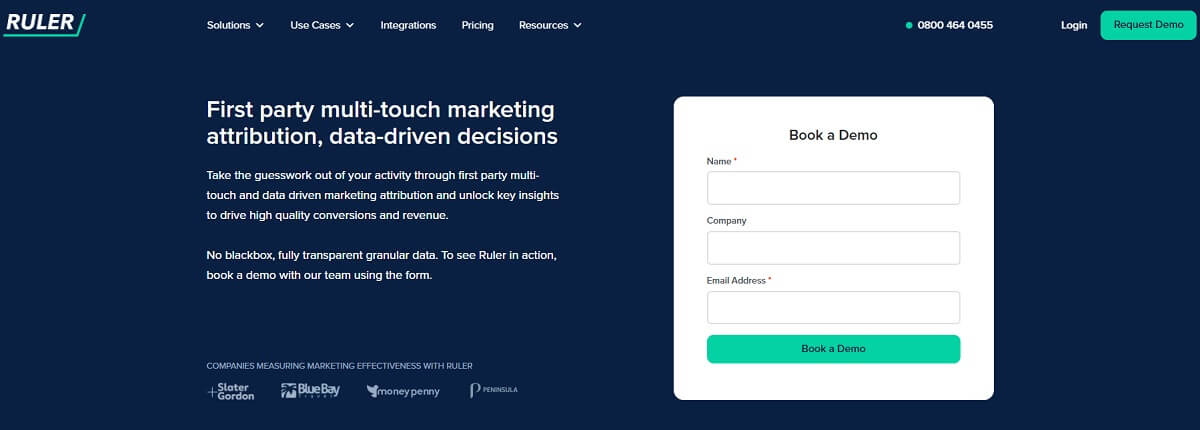
Ruler Analytics tracks visitor journeys, matches conversions from forms, calls, live chat, and ecommerce, and connects marketing information with CRM or order revenue.
Best For: Lead-generation companies, agencies, and service businesses where revenue is confirmed after a website lead or phone call.
Why It Stands Out: Ruler is designed to close the gap between the first anonymous marketing interaction and the later sales outcome. It can pass revenue and conversion information back to analytics, CRM, reporting, and advertising systems.
Limitations: Closed-loop attribution is only as reliable as campaign tagging, lead matching, call tracking, CRM stage discipline, and revenue records. Businesses should confirm geographic coverage, consent requirements, integration depth, and model availability for their stack.
5. Triple Whale — Best For Shopify And DTC Operations

Triple Whale is an ecommerce intelligence platform used to bring marketing, store, customer, creative, and profitability data into a performance-focused workspace.
Best For: Shopify and direct-to-consumer brands managing meaningful advertising spend across several acquisition channels.
Why It Stands Out: Triple Whale is built around ecommerce operators’ recurring questions: channel efficiency, customer acquisition cost, return on ad spend, creative performance, new customer revenue, and profitability. Its positioning and workflows are more commerce-specific than a general analytics platform.
Limitations: It is not the natural choice for long B2B sales cycles, account-based buying committees, phone-led businesses, or mobile-app-only acquisition. Feature and data coverage can vary by plan, store platform, and connected channels.
6. Northbeam — Best For High-Spend Ecommerce Measurement

Northbeam combines multi-touch attribution, media mix modeling, incrementality, and advertising activation for ecommerce growth teams.
Best For: Established ecommerce brands that spend enough across paid channels to justify a specialized marketing measurement platform.
Why It Stands Out: Northbeam addresses more than click allocation. Its product includes first-party measurement, attribution models, budget analysis, view-through measurement, and media mix modeling. Its documentation explains why independent reports differ from ad-platform totals: individual platforms can each claim credit for the same purchase, while a centralized model deduplicates the journey.
Limitations: The platform may be excessive for small stores with low conversion volume, limited ad spend, or no analyst ownership. A sophisticated model does not repair missing transaction values, inconsistent UTM parameters, or incorrect store data.
7. Dreamdata — Best For B2B SaaS Attribution
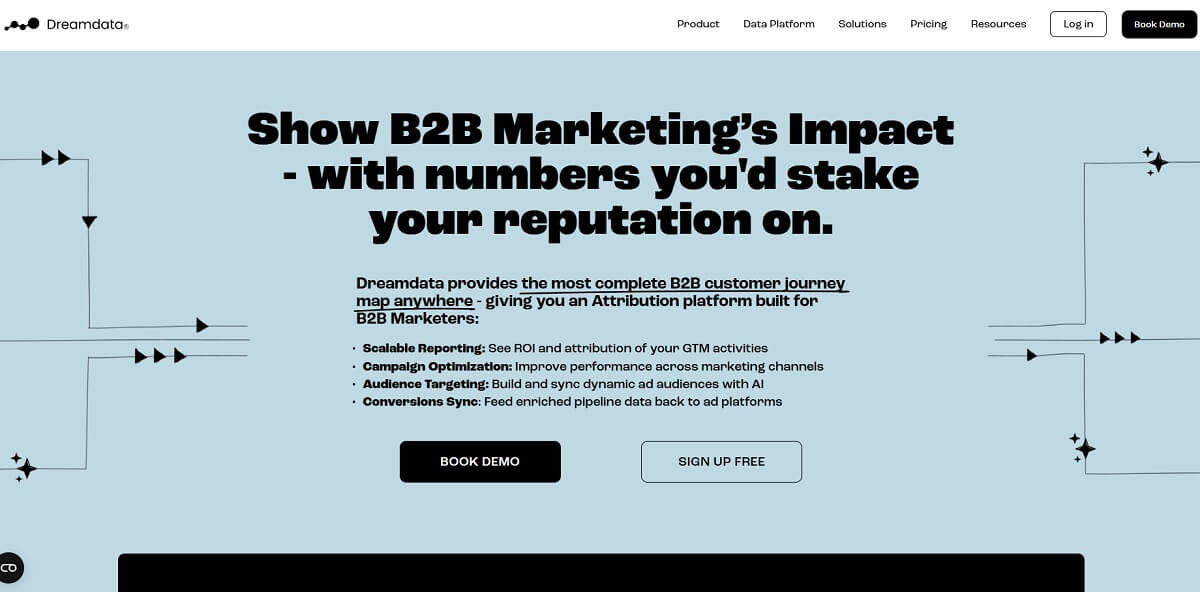
Dreamdata joins go-to-market data and maps marketing and sales interactions to accounts, pipeline, and revenue.
Best For: B2B SaaS, account-based marketing, product-led sales, and revenue teams with long, multi-person buying journeys.
Why It Stands Out: Dreamdata is designed around the account rather than only an individual browser or ecommerce order. It can combine advertising, website, CRM, sales, and product signals, clean campaign data, and apply standard or custom multi-touch models.
Limitations: Account attribution requires reliable company matching, CRM associations, opportunity data, and agreed lifecycle definitions. It is not primarily an ecommerce merchandising or mobile-install attribution tool.
8. Adobe Customer Journey Analytics — Best For Enterprise Journey Measurement

Adobe Customer Journey Analytics brings data from websites, apps, CRM systems, call centers, point-of-sale systems, and other sources into governed customer journey attribution and analysis.
Best For: Large organizations with multiple brands, channels, data sources, analyst teams, and governance requirements.
Why It Stands Out: Adobe allows teams to apply attribution beyond paid media and compare models across custom segments and journey events. Its official analytics attribution overview describes using content engagement, chatbot interactions, webinars, CRM, and offline data within a unified analytical framework.
Limitations: Enterprise flexibility brings implementation, modeling, governance, training, and maintenance costs. This is not a plug-and-play conversion attribution tool for a small marketing department.
9. AppsFlyer — Best For Mobile And Cross-Platform Attribution

AppsFlyer Measurement Suite covers mobile, web, connected TV, PC, console, and retail media measurement, with integrations and activation workflows for performance marketing.
Best For: Mobile apps, gaming, subscription apps, and businesses that need web-to-app or app-to-web measurement.
Why It Stands Out: AppsFlyer specializes in acquisition environments where installs, deep links, in-app events, privacy frameworks, fraud prevention, and advertising partner integrations matter. It also supports incrementality and cross-platform measurement.
Limitations: A website-only lead-generation business may not need a mobile measurement partner. Implementation quality depends on SDK events, deep-link configuration, consent, partner mappings, and consistent revenue events.
10. HockeyStack — Best For Complex B2B Buyer Journeys
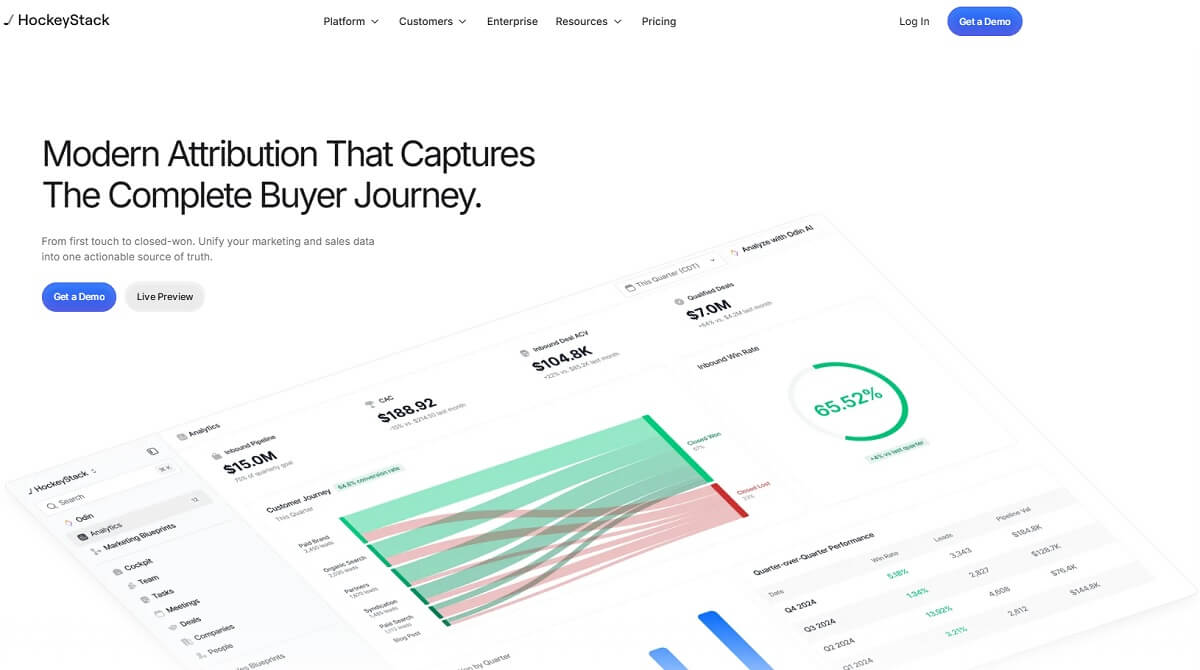
HockeyStack combines B2B marketing attribution, buyer journey analysis, pipeline reporting, account signals, custom dashboards, and go-to-market intelligence.
Best For: B2B marketing and revenue operations teams that need to connect campaigns, content, accounts, sales activity, and pipeline.
Why It Stands Out: Teams can compare attribution models, customize business logic, examine lift, sync data with source systems, and analyze complex pre-opportunity activity rather than stopping at lead generation.
Limitations: The value depends on reliable CRM processes and alignment among marketing, sales, finance, and operations. Smaller organizations may not have enough journey complexity or data ownership to justify the platform.
11. Attribution — Best For Auditable Custom Attribution
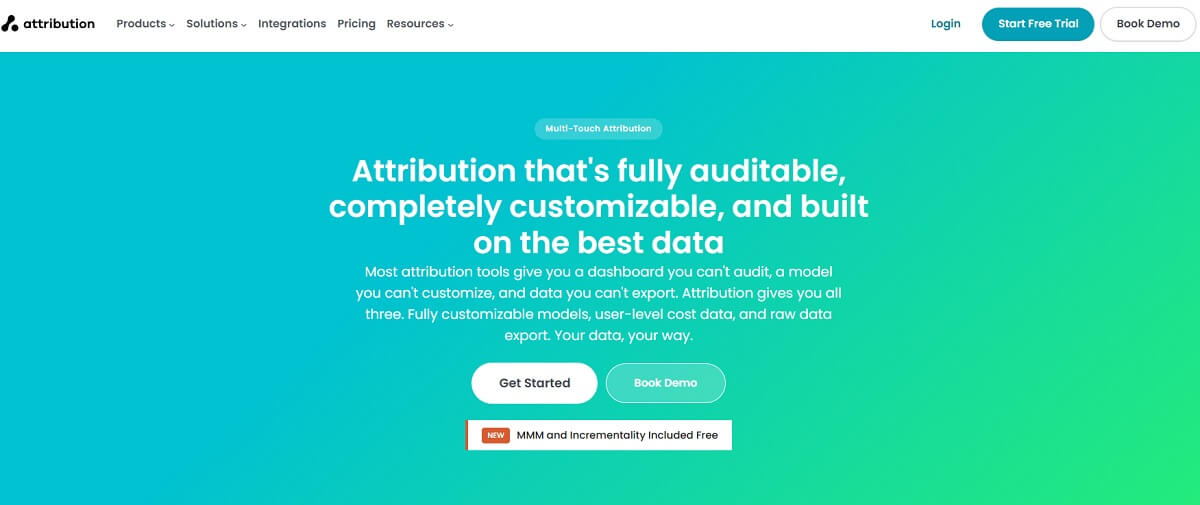
Attribution is a customizable multi-touch attribution platform supporting B2B pipeline and B2C purchase use cases.
Best For: Data-conscious teams that need raw exports, user-level cost data, configurable models, and the ability to audit reported credit.
Why It Stands Out: The platform emphasizes traceability. Teams can inspect visits, channels, cost, events, model settings, exclusions, and the revenue assigned to individual paths. It also supports integrations across ad platforms, CRM systems, ecommerce platforms, payments, CDPs, and warehouses.
Limitations: Flexible models require responsible configuration. Custom exclusions, cutoff events, identity choices, and lookback windows can create misleading results when governance is weak.
12. Windsor.ai — Best For Cross-Channel Data Pipelines
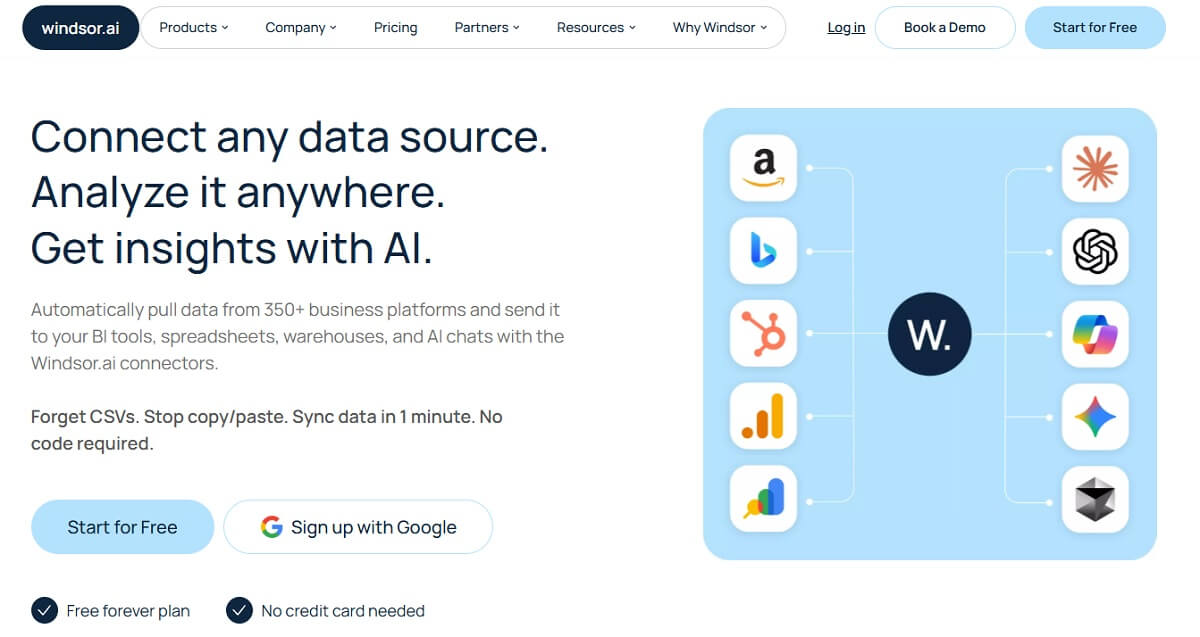
Windsor.ai connects marketing and revenue data from multiple platforms and makes it available for attribution analysis and reporting destinations.
Best For: Agencies, analysts, and marketing data teams that want to centralize sources and report through BI tools, spreadsheets, or warehouses.
Why It Stands Out: Windsor.ai is useful when the immediate problem is fragmented data collection. It can connect cost, campaign, conversion, and revenue data and feed reporting workflows without building every connector internally.
Limitations: A connector layer does not replace a measurement strategy. Teams may still need a BI platform, data model, naming standards, identity logic, dashboard ownership, and independent validation.
How To Choose Marketing Attribution Software
Start With the Business Model
The conversion object determines the required platform. An ecommerce order has a transaction ID, item data, value, currency, tax, discounts, and possible refunds. A B2B sale has contacts, an account, an opportunity, stages, several stakeholders, a close date, and recognized revenue. A mobile conversion may begin with an ad impression, continue through an app store, and finish with an in-app subscription.
- Choose Plerdy when the core question is how traffic, pages, products, and website elements influence ecommerce revenue.
- Choose HubSpot, Ruler Analytics, Dreamdata, or HockeyStack when the outcome is created and qualified inside a CRM.
- Choose Triple Whale or Northbeam for ecommerce media allocation and profitability analysis.
- Choose AppsFlyer when mobile apps, installs, deep links, and cross-platform journeys dominate.
- Choose Adobe when journey analysis requires many governed enterprise data sources.
- Begin with GA4 when the organization needs a practical web and app baseline before buying specialized software.
Define the Source Of Truth
An attribution platform should not invent the final outcome. Select the operational system that confirms each event:
- The ecommerce backend confirms orders, transaction values, refunds, and items.
- The CRM confirms qualified leads, opportunities, stages, and closed revenue.
- The subscription or billing system confirms trials, upgrades, recurring revenue, and churn.
- The mobile app backend confirms installs, purchases, and subscription status.
Analytics and advertising platforms should be reconciled against that source. Never assume that matching dashboard totals prove correct attribution; two systems can contain the same duplicated or misclassified events.
Map the Complete Data Path
Document how campaign metadata, identifiers, consent states, sessions, leads, accounts, orders, and revenue move through the stack. Include domain changes, payment providers, scheduling tools, phone calls, offline sales, CRM updates, returns, and subscription events.
The most expensive attribution failure often occurs before modeling: UTMs are overwritten, transaction IDs are missing, form records do not retain click identifiers, opportunities are disconnected from contacts, or revenue never returns from the CRM.
Require Model Transparency
Ask vendors to demonstrate one real conversion from raw touchpoints to the reported channel credit. The team should be able to identify:
- Which touchpoints were eligible and excluded.
- How direct traffic, branded search, organic visits, and repeat sessions were treated.
- Which attribution window and time zone were applied.
- How cross-device, anonymous, and account-level identities were joined.
- Whether impression, modeled, or observed data is included.
- How refunds, duplicate orders, and recurring revenue are handled.
If the answer is simply “AI calculated it,” the result is not sufficiently auditable for a major budget decision.
Compare Total Cost And Operational Effort
Include the subscription, tracked traffic or contacts, connectors, seats, implementation, warehouse, server-side tagging, consent tooling, onboarding, analyst time, dashboard maintenance, and data-quality monitoring. The cheapest software can become expensive when it needs constant manual repair. The most advanced platform can be wasteful when a company has only one major paid channel and a short buying cycle.
Run a Real Data Pilot
Use one complete conversion type and one representative reporting period. Compare the new tool with the backend, CRM, GA4, and ad platforms. Do not expect identical attribution totals; expect documented reasons for differences.
A successful pilot should answer a decision the team could not answer before, reveal the underlying path, survive reconciliation, and lead to an action such as changing spend, repairing tracking, improving a landing page, or importing higher-quality outcomes into an ad platform.
Marketing Attribution Models Compared
| Model | How Credit Is Assigned | Useful For | Main Risk |
|---|---|---|---|
| First-Touch | All Credit Goes To the First Eligible Interaction | Understanding Journey Initiation And Demand Capture | Ignores Nurturing And Closing Touchpoints |
| Last-Touch | All Credit Goes To the Final Eligible Interaction | Short Transactional Journeys And Conversion Capture | Overvalues Branded Search, Direct, And Retargeting |
| Linear | Credit Is Split Equally Across Eligible Touchpoints | Simple Multi-Touch Journey Visibility | Assumes Every Touchpoint Has Equal Influence |
| Time-Decay | More Credit Goes To Interactions Nearer the Conversion | Journeys Where Recent Nurturing Matters | Undervalues Early Demand Creation |
| Position-Based | More Credit Goes To the First And Last Interactions | Balancing Acquisition And Conversion | Weighting Is a Business Assumption |
| Custom Rules | Credit Follows Organization-Specific Weights And Exclusions | Known Sales Motions And Governance Requirements | Can Encode Internal Bias Into the Report |
| Data-Driven | Statistical Models Estimate Each Interaction’s Contribution | High-Volume Journeys With Consistent Signals | Weak Data And Opaque Logic Create False Confidence |
| Incrementality | Compares Outcomes With And Without Marketing Exposure | Testing Causal Lift And Budget Decisions | Requires Valid Experimental Design And Sufficient Scale |
| Marketing Mix Modeling | Estimates Channel Effects From Aggregated Historical Data | Budget Planning Across Online And Offline Channels | Less Granular And Sensitive To Model Assumptions |
There is no universally correct attribution model. Use first-touch and last-touch as diagnostic boundaries, compare multi-touch alternatives, and validate consequential recommendations with experiments where possible. Google says its data-driven attribution model compares converting and non-converting paths and performs better with more data; its current guidance recommends at least 200 conversions and 2,000 supported ad interactions within 30 days for stronger analysis, although the model can operate below that level. See Google’s data-driven attribution explanation for the current requirements and scope.
Implementation And Quality Assurance Plan
Week One: Define
- Select one macro outcome: purchase, qualified opportunity, closed revenue, or paid subscription.
- Document the source of truth, event owner, value, currency, deduplication identifier, and refund logic.
- Map the critical touchpoints and decide which channels, impressions, calls, offline events, and sales activities are eligible.
- Choose the initial attribution window and two models for comparison.
- Write the first business decision the report must support.
Week Two: Connect
- Standardize UTMs, campaign names, channel groupings, and click identifiers.
- Install or audit browser, server, SDK, CRM, ecommerce, and call-tracking integrations.
- Preserve anonymous-to-known identifiers only where appropriate and permitted.
- Connect real cost and revenue sources instead of hard-coded estimates.
- Configure consent before dependent measurement technologies execute.
Week Three: Validate
- Complete controlled test journeys for every critical device, browser, domain, payment method, form, and app route.
- Confirm that one real outcome creates one conversion with the correct ID, value, currency, and timestamp.
- Test refreshes, duplicate callbacks, payment failures, cancellations, refunds, CRM stage changes, and deleted records.
- Compare attributed conversions with backend or CRM outcomes by day and identifier.
- Inspect individual journeys to confirm that source, campaign, touchpoint order, and eligibility rules make sense.
Week Four: Operate
- Publish one decision-oriented dashboard with documented definitions.
- Assign owners for tracking, CRM quality, channel taxonomy, revenue reconciliation, and privacy.
- Record known differences between the attribution platform, GA4, ad platforms, and the source of truth.
- Create alerts for missing revenue, duplicate conversions, unknown channels, sudden direct-traffic growth, and connector failures.
- Schedule monthly model comparison and quarterly measurement reviews.
Attribution Quality Assurance Checklist
| Test | Expected Result | Why It Matters |
|---|---|---|
| Confirmed Outcome | One Unique Conversion With Correct Value And Currency | Prevents Inflated Revenue And ROAS |
| Failed Or Abandoned Outcome | No Macro Conversion Is Recorded | Prevents Clicks Or Form Starts From Becoming False Sales |
| Campaign Journey | Original And Subsequent Touchpoints Appear In Order | Protects First-Touch And Multi-Touch Logic |
| Cross-Domain Path | Approved Journey Context Survives Domain Changes | Prevents Payment And Booking Domains From Becoming Referrals |
| CRM Outcome | Qualified Stage And Revenue Return To the Correct Lead Or Account | Connects Marketing With Business Value |
| Refund Or Cancellation | Revenue Is Adjusted According To the Documented Rule | Prevents Gross Sales From Being Reported As Retained Revenue |
| Consent State | Collection Changes According To the Implemented Policy | Supports Privacy And Governance Requirements |
| Source Reconciliation | Differences Are Within a Known And Investigated Tolerance | Separates Modeling Differences From Tracking Failures |
Common Marketing Attribution Mistakes
- Treating Attribution As Causality: Assigned credit does not prove incremental impact.
- Trusting Platform Totals: Google, Meta, TikTok, email, and affiliate platforms can each claim the same conversion.
- Optimizing For Leads Instead Of Revenue: A channel with inexpensive leads can produce poor opportunities and no closed sales.
- Ignoring the Website Experience: Campaign reports cannot explain confusing copy, dead clicks, weak CTAs, or checkout friction. This is where Plerdy behavior data adds context.
- Using Inconsistent UTMs: Variations in case, spelling, naming, or overwritten parameters fragment one campaign into several rows.
- Counting a Click As a Sale: Button clicks, form starts, and checkout starts are diagnostic micro conversions, not confirmed outcomes.
- Missing Transaction IDs: Reloads and overlapping integrations can duplicate orders and attributed revenue.
- Choosing an Arbitrary Window: A seven-day window can erase important touches in a six-month B2B sales cycle.
- Ignoring Refunds And Recurring Revenue: Initial order value may not represent retained customer value or profit.
- Changing Models Without Documentation: Trend breaks can be mistaken for campaign changes.
- Buying Before Fixing Data: New marketing attribution analytics cannot repair broken CRM associations or missing conversion events automatically.
- Collecting Unnecessary Data: More personal data increases risk and governance work without necessarily improving decisions.
Final Recommendation
The best marketing attribution software depends on where the journey begins, where revenue is confirmed, and what decision the team needs to make. Choose Plerdy to connect ecommerce transactions with traffic, products, pages, and on-page behavior. Start with GA4 for a broadly supported web and app baseline. Use HubSpot, Ruler Analytics, Dreamdata, or HockeyStack for B2B revenue attribution. Consider Triple Whale or Northbeam for ecommerce media measurement, AppsFlyer for mobile and cross-platform acquisition, Attribution for auditable custom modeling, Windsor.ai for marketing data pipelines, and Adobe Customer Journey Analytics for governed enterprise journeys. These marketing attribution platforms are complements in some stacks, not interchangeable products.
Do not choose a platform because its demo produces the most confident number. Choose the one that can show where its data came from, how credit was assigned, what it cannot observe, and how the result changes a real budget or conversion decision. Accurate attribution begins with accurate outcomes, consistent identifiers, explicit model rules, and continuous reconciliation.
Final Recommendation
The best marketing attribution software depends on where the journey begins, where revenue is confirmed, and what decision the team needs to make. Choose Plerdy to connect ecommerce transactions with traffic, products, pages, and on-page behavior. Start with GA4 for a broadly supported web and app baseline. Use HubSpot, Ruler Analytics, Dreamdata, or HockeyStack for B2B revenue attribution. Consider Triple Whale or Northbeam for ecommerce media measurement, AppsFlyer for mobile and cross-platform acquisition, Attribution for auditable custom modeling, Windsor.ai for marketing data pipelines, and Adobe Customer Journey Analytics for governed enterprise journeys. These marketing attribution platforms are complements in some stacks, not interchangeable products.
Do not choose a platform because its demo produces the most confident number. Choose the one that can show where its data came from, how credit was assigned, what it cannot observe, and how the result changes a real budget or conversion decision. Accurate attribution begins with accurate outcomes, consistent identifiers, explicit model rules, and continuous reconciliation.
Frequently Asked Questions
What Is Marketing Attribution Software?
Marketing attribution software collects customer touchpoint, campaign, conversion, cost, and revenue data and assigns credit to the marketing interactions that preceded an outcome. Depending on the platform, it may support ecommerce purchases, leads, opportunities, subscriptions, app installs, offline sales, or account-level B2B journeys.
What Is the Best Marketing Attribution Software?
The best marketing attribution software depends on the use case. Plerdy is strong for website and ecommerce revenue influence, GA4 for a free baseline, HubSpot and Dreamdata for B2B, Triple Whale and Northbeam for ecommerce media measurement, AppsFlyer for mobile attribution, and Adobe Customer Journey Analytics for enterprise journey analysis.
How Does Marketing Attribution Software Work?
The software records or imports touchpoints, joins them to a person, account, device, order, or opportunity, confirms a conversion and its value, and applies an attribution model. The model may give credit to the first touch, last touch, several touches, or interactions selected by statistical analysis.
What Is Multi-Touch Attribution Software?
Multi-touch attribution software assigns portions of conversion or revenue credit to several eligible interactions in the customer journey. Common approaches include linear, time-decay, position-based, custom, and data-driven models. The result depends on the observed data, identity logic, attribution window, exclusions, and model assumptions.
Is Google Analytics 4 an Attribution Tool?
Yes. GA4 includes attribution settings and reports for web and app key events, but it is not a complete replacement for every dedicated attribution platform. B2B account journeys, CRM revenue, phone calls, mobile acquisition, profit adjustments, offline channels, and independent media measurement may require additional tools and integrations.
What Is the Difference Between Attribution And Incrementality?
Attribution distributes credit among observed touchpoints before a conversion. Incrementality estimates how many additional conversions occurred because of marketing compared with what would have happened without the exposure. Attribution is useful for journey analysis, while incrementality is stronger for testing causal lift.
Which Attribution Model Should I Use?
Use first-touch and last-touch as simple diagnostic boundaries, then compare a multi-touch or data-driven model when the journey contains several meaningful interactions. Select a window that reflects the real buying cycle, document exclusions, and validate important budget conclusions through experiments or incrementality analysis where possible.
How Do I Evaluate Attribution Tracking Software?
Evaluate source coverage, identity rules, conversion and revenue accuracy, model flexibility, auditability, privacy controls, activation options, implementation effort, integrations, and total cost. Run a pilot with real data and require the vendor to trace at least one reported conversion from source touchpoints to assigned credit.
Can Plerdy Replace a Marketing Attribution Platform?
Plerdy should not be positioned as a full replacement for an enterprise multi-touch attribution, CRM, mobile measurement, or media mix modeling platform. It complements those systems by showing how traffic sources, products, pages, navigation paths, and on-page interactions influence ecommerce purchases and website conversion behavior.