

Rank tracking software monitors where a website appears for selected keywords across search engines, locations, devices, and dates. The best tool does more than report that a keyword moved from position eight to position twelve. It helps an SEO team determine which page changed, what appeared in the search results, which competitor gained visibility, and what action to take next.
Plerdy adds a useful content-analysis layer to this workflow. Along with tracking positions and historical SERP changes, it compares the top-ranking pages by titles, descriptions, H1–H3 headings, content length, frequently used terms, lists, images, and page structure. This makes it especially practical when a team needs to turn a ranking change into a content brief instead of merely recording another data point.
Quick Answer: Plerdy is the best choice for combining rank tracking with competitor content analysis. Semrush and Ahrefs fit teams that want rank tracking inside a broad SEO platform. SE Ranking offers a strong balance for agencies and growing businesses. AccuRanker and Advanced Web Ranking provide deeper dedicated tracking for larger keyword portfolios. Nightwatch stands out for granular local monitoring, while Wincher and Mangools SERPWatcher keep the workflow accessible for smaller teams.
What Is Rank Tracking Software?
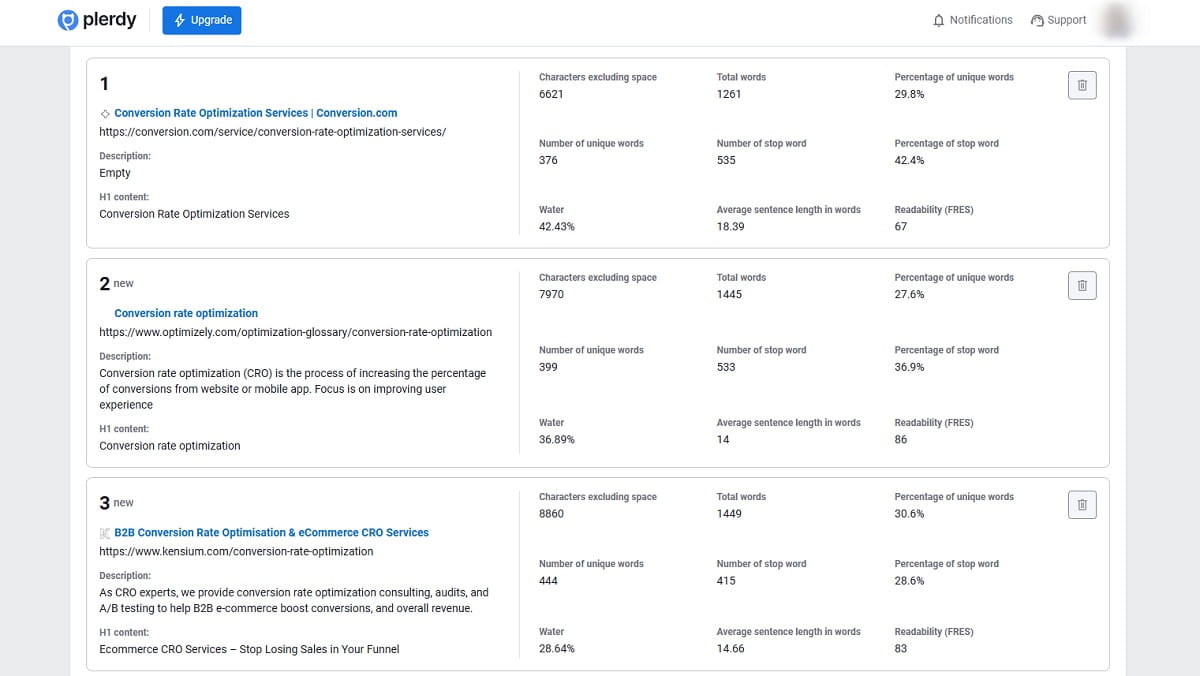
Rank tracking software is an SEO tool that checks the position of a domain or URL for a defined set of search queries and saves those results over time. A project normally specifies the keyword, search engine, country or city, language, and device. The platform then repeats the same neutralized check on a schedule so the team can compare like with like.
This controlled setup matters because a manual Google search is not a dependable benchmark. Search results can differ by location, device, language, time, search history, and SERP layout. A rank tracker cannot recreate every individual user’s results, but it can provide a consistent measurement for a stated market and configuration.
Rank Tracker Vs. SERP Checker Vs. Search Console
| Method | Primary Question | Strongest Use | Main Limitation |
|---|---|---|---|
| Rank Tracker | Where Do My Pages Rank For a Fixed Keyword Set? | Scheduled Position History, Segmentation, Alerts, And Competitor Comparison | Only Monitors the Keywords And Markets You Configure |
| SERP Checker | What Does the Search Results Page Look Like Now? | On-Demand SERP Analysis, Ranking URLs, Features, And Content Competition | May Not Provide Ongoing Portfolio Reporting |
| Google Search Console | Which Queries Produced Impressions And Clicks For My Property? | First-Party Performance Data, CTR, Impressions, Clicks, And Discovered Queries | No Neutral Competitor Tracking And Less Control Over a Fixed SERP Test |
These sources should complement one another. Google’s Search Console Performance report connects queries with impressions, clicks, click-through rate, and average position. A dedicated rank tracker creates a stable monitoring set and adds competitor context. A SERP checker explains the composition of the results page and can reveal why the meaning of “position three” changed after an AI Overview, local pack, or video carousel appeared.
Best Rank Tracking Software Compared
| Tool | Best For | Typical Update Model | Standout Capability | Main Limitation |
|---|---|---|---|---|
| Plerdy | Rank Tracking With Competitor Content Analysis | Scheduled Tracking And Historical SERP Data | Top-10 Metadata, Heading, Term, And Structure Comparison | Not a Full Backlink Or Enterprise SEO Suite |
| Semrush | All-In-One SEO And Competitive Research | Daily Tracking With Automated Reports | Traditional Search, SERP Features, Competitors, And AI Visibility | Broader Suite Can Be Costly For Tracking Alone |
| Ahrefs | Rank Tracking Alongside Keyword And Backlink Research | Weekly By Default; Daily With an Add-On | Share Of Voice, SERP History, Competitors, And Cannibalization Signals | Daily Tracking Is Not the Default |
| SE Ranking | Agencies And Growing Businesses | Scheduled Tracking Based On Plan And Setup | Balanced SEO Suite, Local Data, Competitors, And Reporting | Limits And Add-Ons Require Careful Plan Comparison |
| AccuRanker | Fast Dedicated Tracking For SEO Teams | Daily Plus On-Demand Refreshes | Pixel Position, CTR, Segmentation, And Share Of Voice | Focused Tracker Rather Than a Complete SEO Toolkit |
| Wincher | Simple Rank Monitoring For In-House Teams | Scheduled Position Monitoring | Accessible Dashboard, Page Tracking, And Competitor Comparison | Less Enterprise Depth Than Specialist Platforms |
| ProRankTracker | Agencies Needing Search And White-Label Reports | Daily Plus Plan-Dependent On-Demand Updates | Top-100 Organic, Maps, Video, AI, And Client Reporting | Interface Depth May Be Excessive For a Small Site |
| Advanced Web Ranking | Agencies And Large International Portfolios | Daily, Weekly, Biweekly, Monthly, Or On Demand | Search Engine Coverage, Pixel Visibility, And Flexible Reporting | More Configuration Than Lightweight Trackers |
| Nightwatch | Granular Local And Multi-Location Tracking | Daily Tracking | City And ZIP-Level Monitoring With SERP Archives | Local Depth May Be Unnecessary For National-Only Sites |
| Mangools SERPWatcher | Beginners, Freelancers, And Smaller Campaigns | Weekly On Most Plans; Daily On Agency | Clear Performance Index, Alerts, And Shareable Reports | Update Frequency Depends Heavily On the Plan |
| Serpstat | Teams Wanting Rank Tracking In a Broader SEO Platform | Flexible Scheduled Checks | Top-100 Results, Competitors, SERP Features, And AI Overviews | Broader Interface Takes Time To Learn |
| SEO PowerSuite Rank Tracker | Desktop Users And Highly Configurable Projects | User-Scheduled Desktop Checks | Flexible Search Engines, Local Settings, And Custom Reports | Desktop Workflow And Maintenance Differ From Cloud SaaS |
Important: Feature availability, update frequency, keyword allowances, and reporting options can change by plan. Confirm the current limits on each official product page before purchasing. A seven-day or fourteen-day test using your own keywords is more informative than a feature checklist alone.
How We Evaluated SEO Rank Tracking Tools
The tools were compared as working systems, not simply ranked by the length of their feature lists. A useful SEO rank tracking tool must collect sufficiently consistent data, preserve context, and help a team make a decision. We used the following criteria:
- Tracking Scope: Search engines, countries, cities, ZIP codes, languages, mobile and desktop devices, organic results, local packs, and relevant SERP features.
- Data Freshness: Daily, weekly, on-demand, and configurable checks, plus the cost of increasing the frequency.
- Historical Context: Position history, SERP snapshots, annotations, competitor movement, and the ability to retain useful data over time.
- Diagnostic Value: Landing-page changes, URL switching, cannibalization clues, SERP feature ownership, content gaps, and competitor analysis.
- Portfolio Management: Tags, keyword groups, folders, locations, devices, permissions, projects, and bulk editing.
- Reporting: Alerts, scheduled emails, exports, shareable dashboards, white-label options, Looker Studio support, and APIs.
- Usability: Setup speed, clarity of charts, filtering, and the effort required to move from a warning to an action.
- Value: The practical cost for the required number of keyword-location-device combinations, not only the advertised entry price.
We did not treat vendor claims of being “the most accurate” as independently proven. Rank tracking accuracy is configuration-dependent, and two reputable platforms can return different positions if they check at different times, from different locations, or count SERP elements differently. Consistency and auditability are often more useful than a promise of universal precision.
Best Rank Tracking Software Reviews
1. Plerdy — Best For Rank Tracking With Competitor Content Analysis
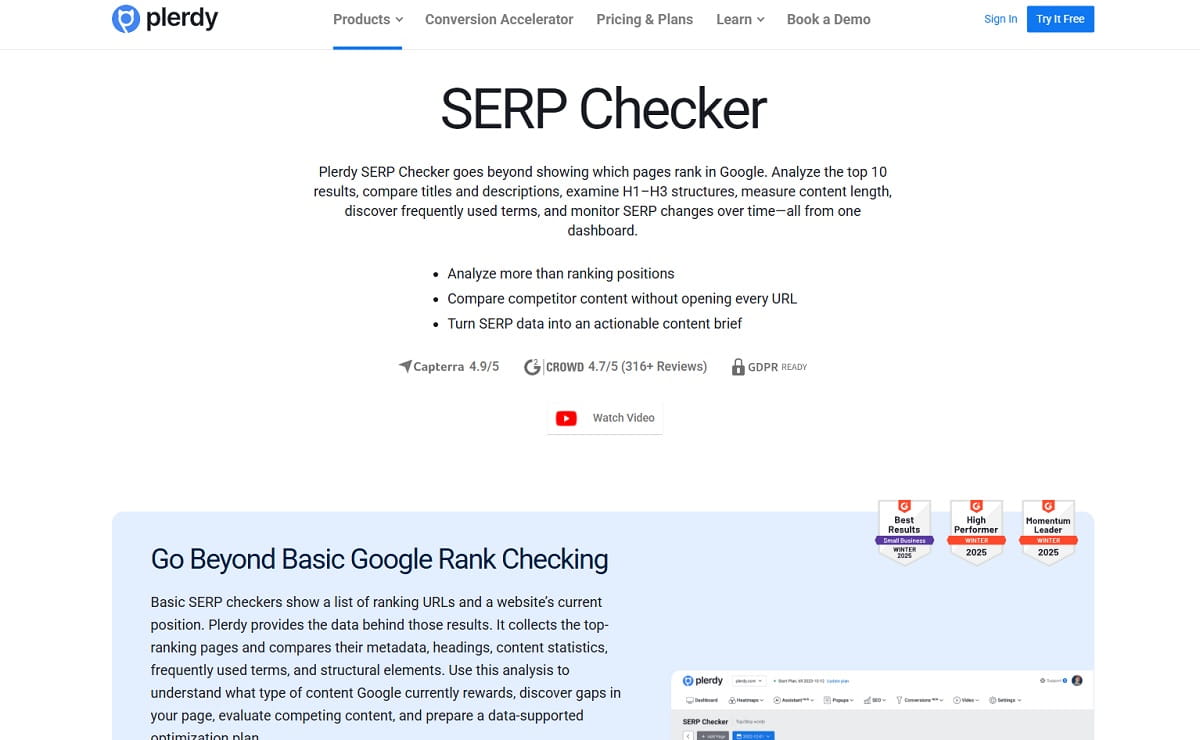
Plerdy SERP Checker is designed for the moment after an SEO specialist notices a position change and asks why it happened. It monitors rankings and changes inside Google’s results while analyzing the top 10 pages for the selected keyword. The comparison covers ranking URLs, titles, meta descriptions, H1–H3 headings, content length, frequently used terms, lists, images, and structural patterns.
That connection makes Plerdy valuable for content-led SEO. A team can compare SERP overlap before assigning two closely related keywords to separate pages, inspect the pages that displaced an article, and build an evidence-based update brief. Shareable analysis also helps an SEO specialist pass the same competitive context to a writer, editor, or client.
- Best For: SEO teams, content managers, and agencies that need ranking data to lead directly into page optimization.
- Key Strengths: Historical SERP monitoring, top-10 content comparison, intent validation, content-gap discovery, and shareable analysis.
- Consider Before Buying: Plerdy is not intended to replace a broad backlink database or an enterprise suite covering every SEO discipline.
2. Semrush — Best For an All-In-One SEO Workflow
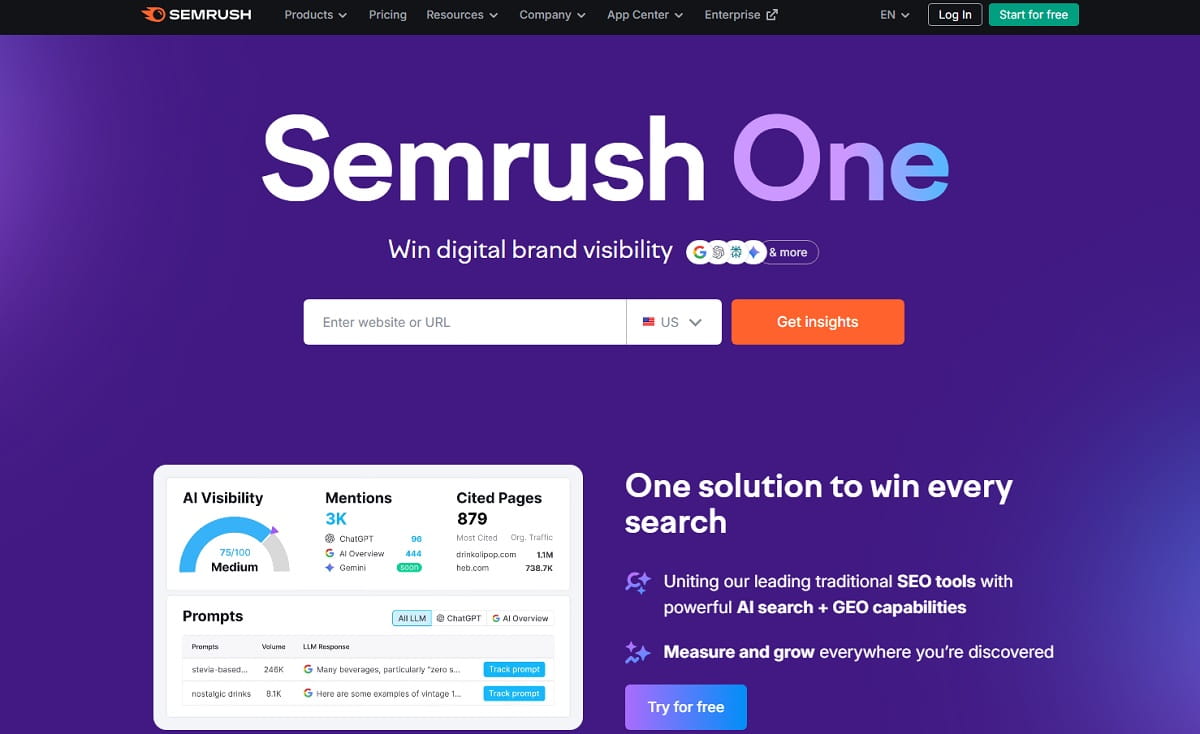
Semrush Position Tracking monitors visibility across locations, devices, traditional search platforms, and supported AI environments. Its official feature set includes daily ranking changes, competitor comparisons, SERP features, automated reports, alerts, and keyword-level segmentation. Teams can connect those insights with Semrush keyword research, site auditing, backlink, and content tools.
Semrush is strongest when rank tracking is one part of a larger SEO operation. Its breadth can reduce tool switching, but a business that only needs a lightweight Google rank tracker may pay for capabilities it rarely uses.
- Best For: Agencies and in-house teams managing research, technical SEO, content, competitors, and reporting in one platform.
- Key Strengths: Daily updates, local and device targeting, competitor discovery, SERP features, alerts, and a wide SEO toolkit.
- Consider Before Buying: Review project, keyword, location, and user limits instead of comparing only monthly plan prices.
3. Ahrefs — Best For Rank Tracking With SEO Research
Ahrefs Rank Tracker combines position history with Share of Voice, traffic-value visibility, position distribution, SERP feature monitoring, tags, target URLs, and competitor comparison. Ahrefs also highlights cases where multiple URLs from the same site appear for a keyword, which can help an analyst investigate cannibalization.
The platform is particularly attractive to teams already using Ahrefs for backlinks, keyword research, or competitor discovery. Its key tradeoff is refresh frequency: the official product page lists weekly updates as the default and daily tracking through Project Boost. Active campaigns that require daily movement should include that difference in the cost calculation.
- Best For: SEO teams that want rank reporting beside strong keyword, backlink, and competitor research.
- Key Strengths: Share of Voice, target URLs, position distribution, SERP history, and competitor benchmarking.
- Consider Before Buying: Confirm whether default weekly updates are sufficient for the campaign.
4. SE Ranking — Best For Agencies And Growing Businesses
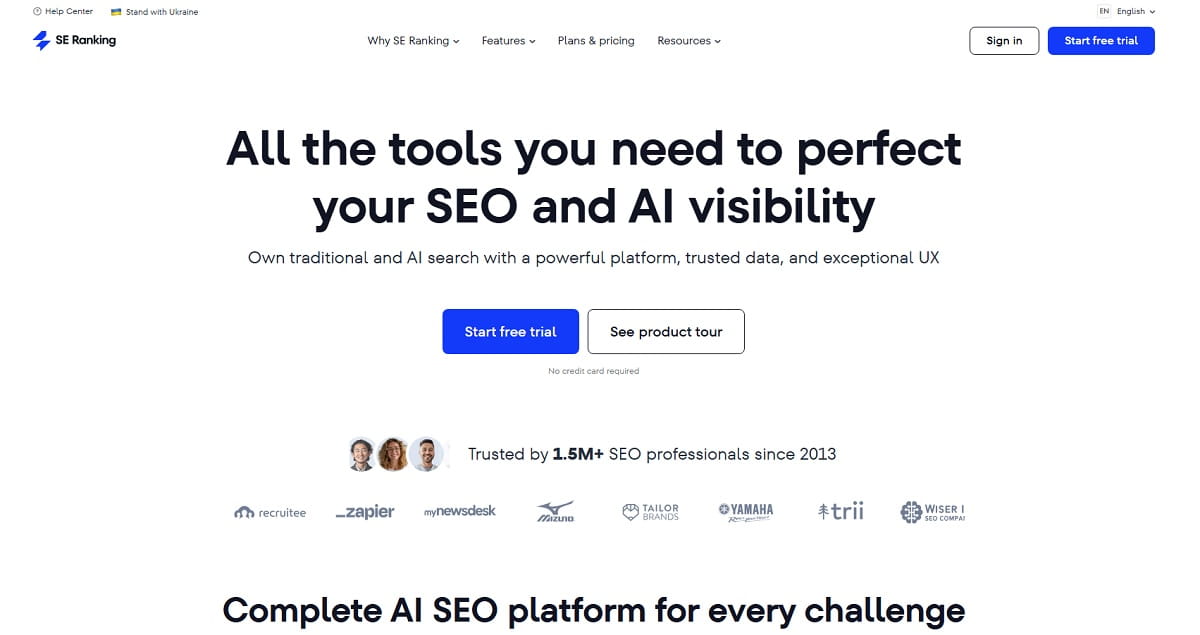
SE Ranking positions rank tracking within a practical suite for agencies, freelancers, and in-house marketers. It supports location and device monitoring, competitor comparisons, reports, and related tools for keyword research, website auditing, backlinks, and content work.
Its appeal is balance: it offers more surrounding SEO functionality than a dedicated tracker without necessarily forcing a small team into the heaviest enterprise workflow. However, agencies should model actual usage because checking the same keyword across multiple locations or devices can consume limits differently, and some advanced capabilities may be packaged separately.
- Best For: Agencies and SMB teams that want a broad SEO platform with rank tracking at its core.
- Key Strengths: Competitor monitoring, location support, reporting, site audit, and research tools.
- Consider Before Buying: Compare plans using the final number of keyword-location-device combinations.
5. AccuRanker — Best For Fast Dedicated Rank Tracking
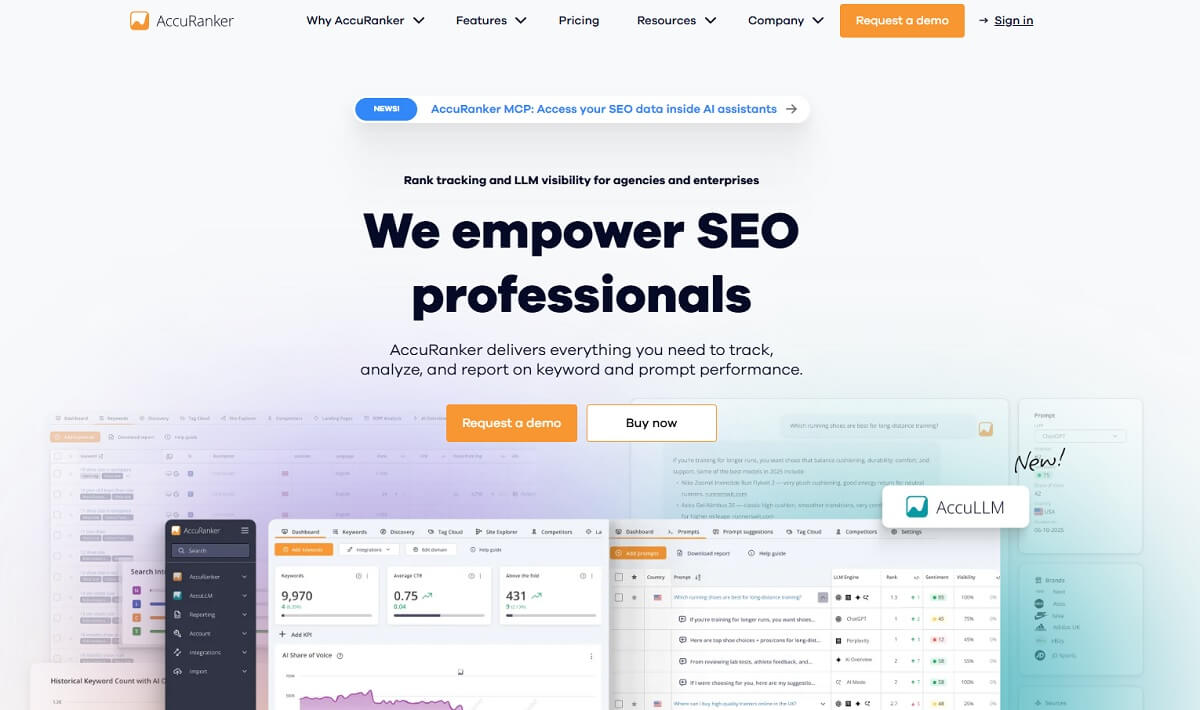
AccuRanker is a specialized rank tracker built around daily data and on-demand updates. Its feature set includes local and country-level monitoring, pixel position, CTR estimates, segmentation, competitor analysis, and Share of Voice. On-demand refreshes are useful after a release, migration, content update, or suspected algorithm shift.
Because AccuRanker concentrates on SERP analytics rather than offering every SEO function, it suits teams that already have separate research and audit tools. That focus can be an advantage for speed and reporting, but it also means the total stack may require additional subscriptions.
- Best For: Established SEO teams that prioritize fresh, segmented rank data.
- Key Strengths: Daily and on-demand refreshes, pixel position, Share of Voice, CTR metrics, and data segmentation.
- Consider Before Buying: Budget for complementary keyword, backlink, content, or audit tools if needed.
6. Wincher — Best For Straightforward In-House Tracking
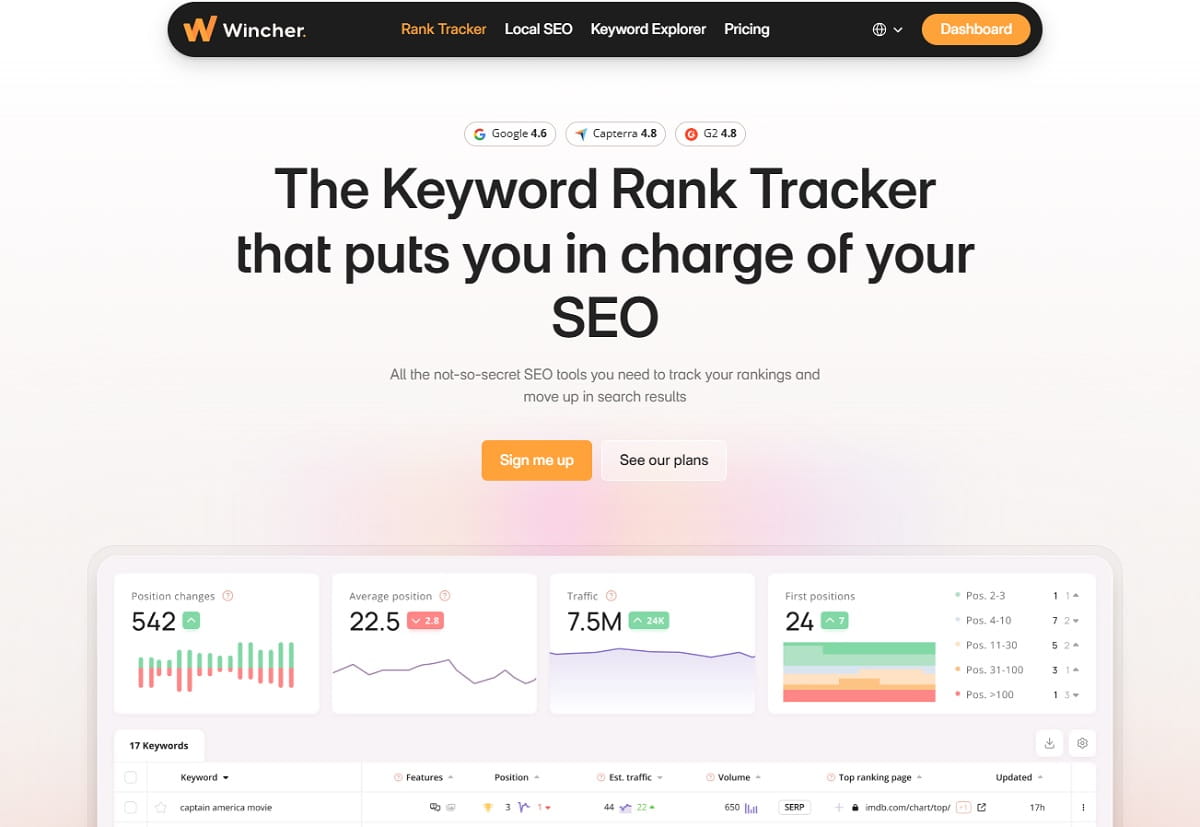
Wincher emphasizes an accessible workflow for monitoring pages, target keywords, and competitors. Its dashboard helps users identify strong and weak pages, compare position trends, and discover relevant queries without the complexity of a large enterprise platform.
Wincher is a sensible fit when marketers, founders, or content teams need to use the reports directly. Large agencies needing extensive cross-market data engineering, advanced APIs, or highly customized reporting should test those requirements carefully.
- Best For: Small and midsize in-house teams that value clarity and quick adoption.
- Key Strengths: Simple dashboards, competitor tracking, page monitoring, and keyword discovery.
- Consider Before Buying: Confirm enterprise reporting and integration needs during the trial.
7. ProRankTracker — Best For Search Coverage And Client Reports
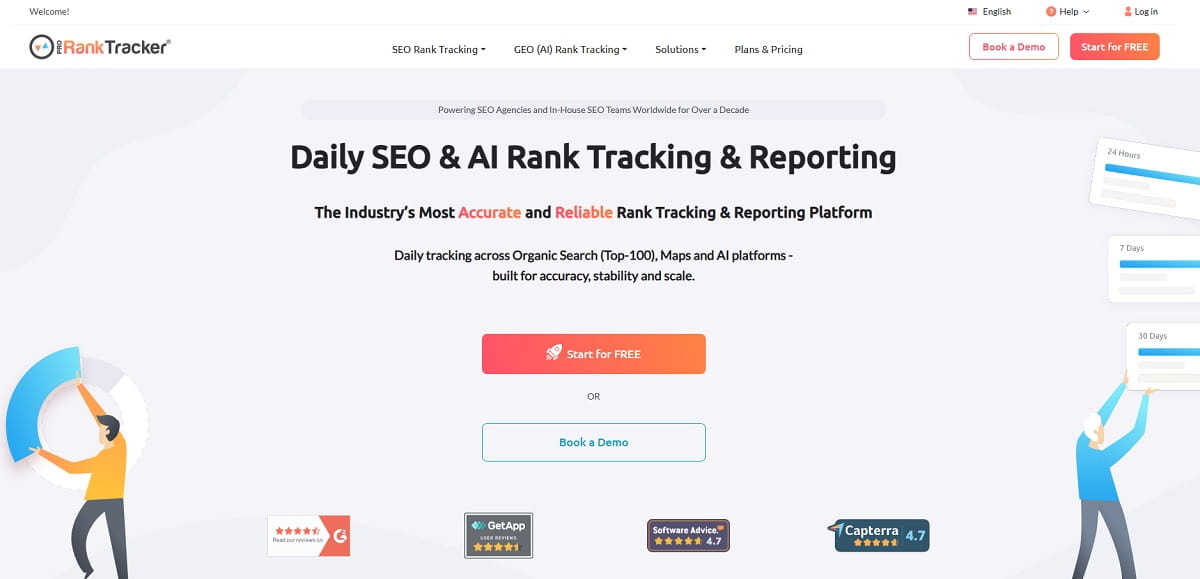
ProRankTracker focuses specifically on rank tracking and reporting. Its official product information describes daily top-100 Google monitoring for desktop and mobile, local pack and Maps tracking, YouTube and Google video results, and visibility across supported AI platforms. Reporting options include scheduled and shareable reports, white labeling, and several export formats.
This breadth is useful for agencies with clients across organic, local, and video search. A small content site may find a narrower interface easier, but teams that live in ranking reports can benefit from a specialist product.
- Best For: Agencies that need frequent checks, multiple result types, and branded client reporting.
- Key Strengths: Daily top-100 data, local and video tracking, on-demand updates, and white-label reports.
- Consider Before Buying: Define the result types that truly matter so the setup does not become unnecessarily complex.
8. Advanced Web Ranking — Best For Agencies And International Portfolios
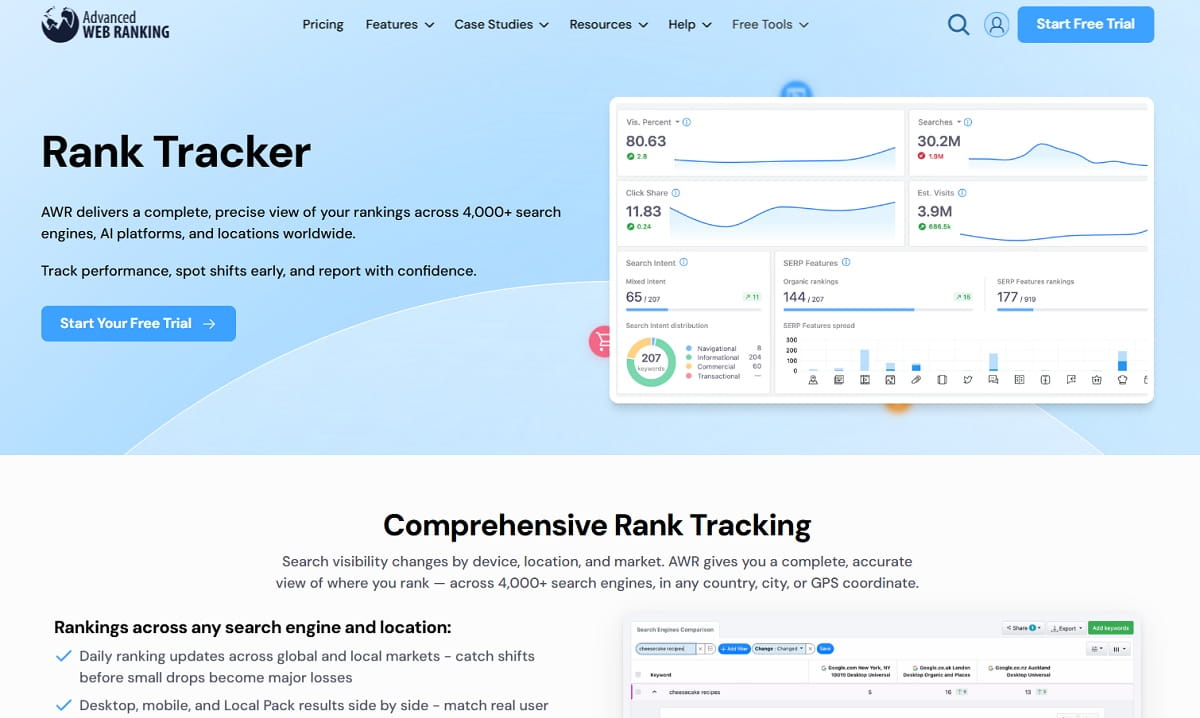
Advanced Web Ranking supports extensive search engine and location coverage, flexible daily through monthly schedules, on-demand checks, desktop and mobile results, local packs, SERP features, and competitor intelligence. Its pixel-position reporting reflects a modern reality: an organic listing can remain at the same numerical rank while being pushed much farther below the fold.
AWR also emphasizes reporting and market-level visibility, making it suitable for agencies and international brands. The tradeoff is setup depth; teams should create consistent project templates, tags, and naming rules before scaling to many clients.
- Best For: Agencies, enterprises, and international SEO programs with complex reporting needs.
- Key Strengths: Broad search engine coverage, flexible schedules, pixel visibility, market share, and client reporting.
- Consider Before Buying: Plan governance and project structure before importing a large keyword portfolio.
9. Nightwatch — Best For Local Rank Tracking
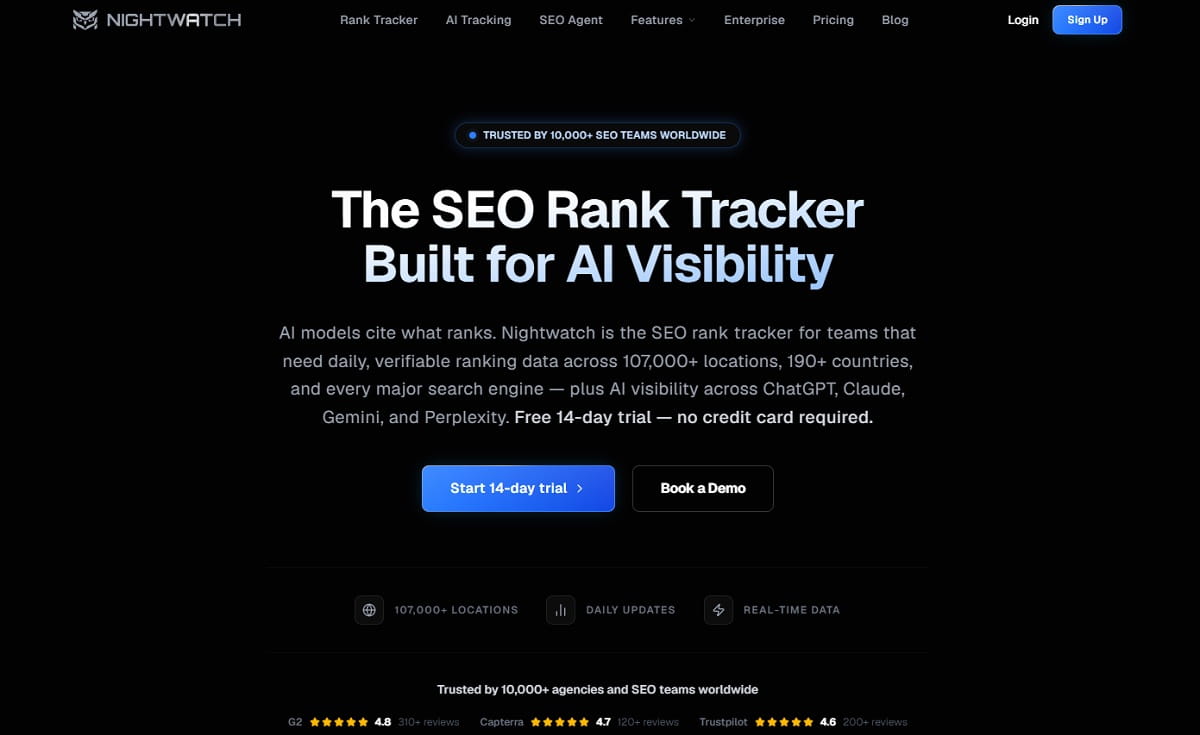
Nightwatch is well suited to businesses whose rankings change meaningfully from one city or ZIP code to another. It provides daily monitoring across devices and supported search engines, granular location targeting, historical SERP records, segmentation, Google Search Console and Analytics connections, reporting, and competitor analysis.
Location precision is valuable for franchises, service-area businesses, healthcare networks, and agencies managing local clients. A national SaaS business with one primary US market may not need that granularity and should avoid paying for complexity it will not use.
- Best For: Multi-location businesses, local SEO specialists, franchises, and agencies.
- Key Strengths: Daily updates, granular locations, SERP archives, local packs, segmentation, and reporting.
- Consider Before Buying: Use a local tracker only when location-level differences affect actual decisions.
10. Mangools SERPWatcher — Best For Beginners And Smaller Campaigns
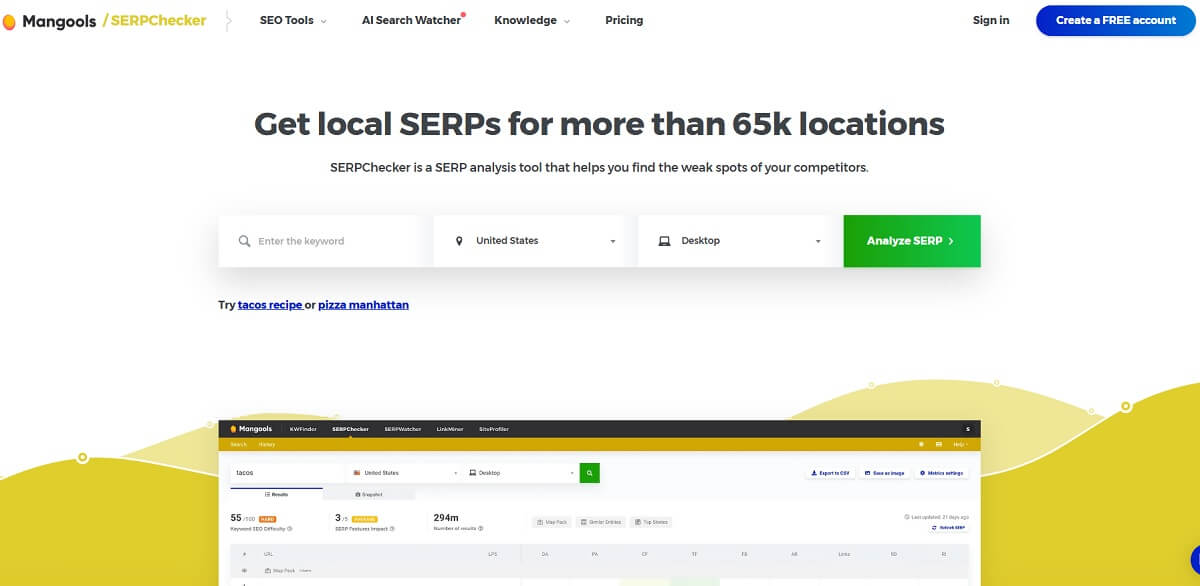
Mangools SERPWatcher presents rank data through a clean interface and a Performance Index based on positions and search volume. It includes desktop and mobile tracking, location support, keyword tags, alerts, scheduled reports, interactive sharing, and connections with the wider Mangools toolkit.
The central plan consideration is frequency. The official page states weekly rank updates on most plans and daily updates on the Agency plan. That can be perfectly adequate for evergreen content, but a team running active launches or time-sensitive SEO experiments may need daily data.
- Best For: Freelancers, bloggers, small businesses, and marketers new to keyword rank tracking software.
- Key Strengths: Easy setup, understandable reporting, location and device data, alerts, and a broader beginner-friendly SEO suite.
- Consider Before Buying: Match the plan’s update schedule to the pace of the SEO program.
11. Serpstat — Best For Integrated SEO Analysis
Serpstat Rank Tracker monitors top-100 positions across configured regions and supports mobile, desktop, competitor, SERP feature, and Google AI Overview analysis. It sits beside keyword research, competitor analysis, site auditing, and backlink tools in the larger Serpstat platform.
Serpstat works best when a team wants rank tracking connected to other SEO investigations. The number of tools and reports introduces a learning curve, so a trial should focus on the exact daily workflow rather than trying every available module.
- Best For: Marketing teams that want rank monitoring and broader SEO research in one account.
- Key Strengths: Top-100 reports, competitors, region targeting, SERP features, AI Overviews, and flexible reporting.
- Consider Before Buying: Confirm that the team can navigate and operationalize the broader platform.
12. SEO PowerSuite Rank Tracker — Best For Configurable Desktop Projects
SEO PowerSuite Rank Tracker takes a desktop-software approach. Users can configure search engines, locations, pages, schedules, competitors, and reports while storing projects locally or using supported cloud workflows. This model appeals to specialists who want granular control and do not mind maintaining a desktop application.
The product differs operationally from browser-based SaaS. The machine, application, scheduler, project files, and search-safety configuration become part of the workflow. Teams should test collaboration and reporting, not just tracking features, before choosing it for a multi-user agency.
- Best For: Consultants and technical SEO users who prefer desktop control and configurable projects.
- Key Strengths: Search engine flexibility, detailed targeting, scheduled checks, competitor research, and customizable reports.
- Consider Before Buying: Evaluate desktop maintenance, collaboration, and report publishing against cloud alternatives.
How To Choose Rank Tracking Software
Start With the Decision
Do not begin with the tool. Begin with the decisions the data must support. A content team may need to spot URL switching and compare competing page structures. A local agency may need ZIP-level Google Maps visibility. An enterprise may prioritize APIs, permissions, millions of checks, and consistent executive reporting. These are different purchasing problems.
Calculate Real Keyword Usage
A single phrase can consume several tracking units when monitored across the United States and three cities, on mobile and desktop, for Google and Bing. Build a small worksheet with keywords × locations × devices × search engines × update frequency. This reveals the real workload and makes plan comparisons much more accurate.
Choose a Useful Update Frequency
Daily tracking is helpful during migrations, launches, active experiments, seasonal campaigns, and volatile competitive periods. Weekly tracking is often enough for lower-priority evergreen content. More frequent data is not automatically better; it can amplify noise unless the team has rules for deciding when a movement requires investigation.
Test Location And Device Settings
Run the same group of real keywords through each shortlisted platform using identical settings. Compare not only the returned position, but also the ranking URL, detected SERP features, stored snapshot, timestamp, location definition, and device. If the tools disagree, determine whether they measured the same SERP before judging accuracy.
Evaluate Reporting By Audience
An SEO analyst needs filters and raw data. A content manager needs affected URLs and topics. A client needs a concise trend, business context, and next action. Test whether one dataset can serve all three audiences through scheduled reports, shareable dashboards, exports, or an API without hours of manual formatting.
Run a Real Pilot
Use a trial with at least one stable keyword group, one volatile group, one local or device-specific group when relevant, and several competitors. Annotate a known content change. The winner is the platform that helps the team explain and act on the change with the least friction—not the one with the longest homepage.
How To Build a Rank Tracking Workflow
- Map Keywords To Intended URLs: Assign each important query cluster to a preferred landing page before tracking begins.
- Separate Markets: Create distinct projects or segments for countries, cities, languages, and devices that represent materially different audiences.
- Tag By Business Context: Use categories such as brand, non-brand, product, comparison, problem, TOFU, MOFU, BOFU, page type, owner, and revenue priority.
- Record a Baseline: Save initial positions, ranking URLs, SERP features, traffic, conversions, and known competitors.
- Annotate Changes: Mark publication dates, content updates, migrations, redirects, template releases, internal-link changes, and major technical fixes.
- Configure Alerts: Prioritize URL replacement, loss from the top 3 or top 10, sudden multi-keyword drops, deindexing, and important SERP feature changes.
- Investigate the SERP: When movement occurs, inspect which URLs and result types appeared, not only the numerical position.
- Validate Business Impact: Compare rankings with Search Console clicks and impressions, analytics sessions, leads, transactions, and revenue.
- Assign an Action: Update content, consolidate overlapping URLs, improve internal links, fix indexing, strengthen intent alignment, or deliberately do nothing when the change is noise.
- Review the Keyword Set: Add newly discovered commercial queries and remove phrases that no longer affect a decision.
How To Investigate a Ranking Drop
First, confirm that the decline affects the same location, device, search engine, and ranking URL. Next, check whether the SERP layout changed or another page from your domain replaced the intended URL. Then compare Search Console impressions and clicks to see whether demand or CTR also changed. Finally, examine the winning pages and recent site changes before editing content.
Plerdy is particularly useful in the competitor-comparison step because the Plerdy SERP Checker guide shows how to inspect top-ranking metadata, headings, terms, and structural differences. This turns “we lost three positions” into a testable hypothesis such as missing comparison criteria, weaker intent alignment, an outdated section, or a competing internal URL.
Rank Tracking Metrics That Matter
| Metric | What It Shows | Best Use | Warning |
|---|---|---|---|
| Current Position | Rank For One Keyword In One Configuration | Detailed Diagnosis | Too Volatile To Use Alone |
| Ranking URL | Which Page Google Selected | Intent And Cannibalization Checks | A URL Change Is Not Always Harmful |
| Visibility Or Share Of Voice | Weighted Presence Across a Keyword Set | Portfolio And Competitor Trends | Formula Varies By Platform |
| Position Distribution | Keywords In the Top 3, 10, 20, Or 100 | Pipeline And Progress Reporting | Does Not Measure Conversion Value |
| SERP Feature Ownership | Presence In Snippets, Local Packs, Videos, And AI Overviews | Understanding Real Search Visibility | Feature Detection Differs By Tool |
| Pixel Position | How Far Down the Page a Result Appears | Evaluating Above-The-Fold Exposure | Not Available In Every Platform |
| Competitor Gap | Where Competitors Win Within the Tracked Set | Prioritizing Content And Landing Pages | Only As Good As the Selected Competitors |
| Clicks, CTR, And Conversions | Whether Visibility Produces Business Results | Budget And Optimization Decisions | Requires Search Console And Analytics Data |
Average position is useful as a directional measure, but it should not be presented as the final SEO outcome. A move from position five to three for a high-intent product query can be more valuable than hundreds of movements among informational terms. Connect rank tracking to qualified traffic, leads, trials, purchases, and revenue whenever possible.
Common Rank Tracking Mistakes
- Tracking Vanity Keywords: A high-volume phrase is not valuable when it does not match the offer or influence a business decision.
- Mixing Locations And Devices: Comparing US desktop data with city-level mobile results creates false trends.
- Watching Positions Without URLs: An apparently stable rank can hide one internal page replacing another.
- Ignoring SERP Features: The same organic position may receive less visibility when the page layout changes.
- Reporting Every Daily Movement: Normal volatility becomes noise and trains stakeholders to ignore alerts.
- Skipping Annotations: Without release and content-update dates, teams struggle to connect cause and effect.
- Treating Search Volume As Traffic: Volume is an estimate; actual clicks depend on rank, intent, brand, CTR, and SERP features.
- Replacing Search Console: A tracker is a controlled monitoring system, not a substitute for first-party impression and click data.
- Choosing By Entry Price: Location, device, frequency, users, and reporting can change the real monthly cost.
- Reacting Before Diagnosing: Editing a page immediately after a one-day drop can damage a page that was experiencing temporary volatility.
Final Recommendation
Choose Plerdy when the primary goal is to connect ranking and SERP changes with actionable competitor content analysis. Choose Semrush, Ahrefs, or SE Ranking when rank tracking must live inside a broader SEO suite. Consider AccuRanker or Advanced Web Ranking for deeper dedicated tracking, and Nightwatch when local granularity is decisive.
Do not purchase from the comparison table alone. Shortlist two or three tools, run the same real keyword set for at least one reporting cycle, and evaluate how quickly each platform helps the team move from a change to a defensible action. The best rank tracking software is the one your organization can configure consistently, trust appropriately, and connect to traffic and revenue.
Final Recommendation
Choose Plerdy when the primary goal is to connect ranking and SERP changes with actionable competitor content analysis. Choose Semrush, Ahrefs, or SE Ranking when rank tracking must live inside a broader SEO suite. Consider AccuRanker or Advanced Web Ranking for deeper dedicated tracking, and Nightwatch when local granularity is decisive.
Do not purchase from the comparison table alone. Shortlist two or three tools, run the same real keyword set for at least one reporting cycle, and evaluate how quickly each platform helps the team move from a change to a defensible action. The best rank tracking software is the one your organization can configure consistently, trust appropriately, and connect to traffic and revenue.
Frequently Asked Questions
What Is Rank Tracking Software?
Rank tracking software monitors where a domain or page appears for selected keywords across configured search engines, locations, devices, and dates. It stores historical positions and may also track ranking URLs, competitors, SERP features, visibility, and alerts.
What Is the Best Rank Tracking Software?
The best rank tracking software depends on the workflow. Plerdy is strong for combining rank changes with competitor content analysis; Semrush, Ahrefs, and SE Ranking suit broader SEO programs; AccuRanker and Advanced Web Ranking fit dedicated tracking; and Nightwatch is useful for granular local monitoring.
How Accurate Are Rank Trackers?
A reputable tracker can provide consistent results for a defined location, device, search engine, and time. Results may still differ from a manual search because of personalization, location, timing, language, data centers, and differences in how SERP features are counted.
How Often Should Keyword Rankings Be Updated?
Daily updates are useful for active campaigns, migrations, launches, and important commercial keywords. Weekly updates can be sufficient for stable evergreen pages and lower-priority terms. The right frequency is the fastest schedule the team can use without reacting to normal noise.
What Is the Difference Between a Rank Tracker And a SERP Checker?
A rank tracker repeatedly monitors a fixed keyword set and reports trends over time. A SERP checker examines the search results for a query, often on demand, and may reveal ranking pages, features, and competitive content. Some platforms, including Plerdy, combine elements of both.
Can Google Search Console Replace a Rank Tracker?
No. Search Console provides valuable first-party data for impressions, clicks, CTR, queries, pages, and average position, but a dedicated tracker offers controlled keyword sets, scheduled checks, neutral competitor comparisons, and precise market configurations. Use both together.
Can Rank Tracking Affect Google Rankings?
No. Monitoring a position does not improve or reduce the ranking. The value comes from using the data to diagnose search visibility, prioritize content and technical work, monitor competitors, and measure the effects of SEO changes.
How Many Keywords Should a Website Track?
Track enough keywords to represent every important product, service, location, funnel stage, and intended landing page. A focused small site may need dozens or hundreds, while a large ecommerce or international site may need thousands. Prioritize queries that can trigger a content, technical, or business decision.
How Does Plerdy Differ From a Basic Google Rank Tracker?
A basic Google rank tracker primarily reports positions and ranking URLs. Plerdy also compares the top-ranking pages by metadata, headings, content length, frequently used terms, lists, images, and page structure, helping teams turn SERP movement into a content optimization plan.