

Hotjar built its name on one simple idea: watch how people actually use a page, not just what they click on a dashboard. That idea is now bigger than the Hotjar brand itself — as of July 1, 2025, Hotjar merged into Contentsquare and stopped selling as a standalone product, which is exactly why so many teams are searching for a Hotjar alternative in 2026, whether they’re replacing lost functionality, avoiding an enterprise price jump, or just want a single behavior-analytics tool their whole team already trusts. Plerdy is one of the few options that covers the full job in one subscription — heatmaps, session replay, SEO auditing, and on-site pop-ups — without forcing a tier upgrade to unlock the basics competitors bundle for free.
This guide compares 15 verified Hotjar alternatives and competitors — checked against each vendor’s own current site and pricing page rather than older reviews, since this category changes fast — tells you exactly which one fits which use case (free, open-source, mobile apps, developers, product teams, enterprise), and explains the one thing most other roundups skip: what actually happened to Hotjar, and why it changes the calculus for anyone comparing tools in 2026.
What’s In This Guide
- Is Hotjar Shutting Down? The Contentsquare Merger Explained
- Why Are Teams Looking For Hotjar Alternatives In 2026
- Quick Answer: The Best Hotjar Alternative For Each Use Case
- Feature Comparison: Hotjar Alternatives At A Glance
- The 15 Best Hotjar Alternatives And Competitors
- Hotjar Alternatives Pricing Comparison
- Hotjar Vs Competitors: Which Tool Should You Choose
- How To Choose the Right Hotjar Alternative
- Bottom Line
- FAQ About Hotjar Alternatives
Is Hotjar Shutting Down? The Contentsquare Merger Explained
No — Hotjar isn’t shutting down, but it no longer exists as a product you can buy on its own. Contentsquare, which first acquired Hotjar back in 2021, completed a full legal and product merger on July 1, 2025. Contentsquare’s own help center confirms it directly: “As of 1 July 2025, Hotjar (Hotjar Ltd. Malta) merged into the Contentsquare Group.” Heatmaps, Recordings, and Surveys — the three tools that made Hotjar popular — are now folded into Contentsquare’s Experience Analytics, Voice of Customer, and Product Analytics product lines, and new sign-ups go through Contentsquare’s plan structure (Free, Growth, Pro, Enterprise) instead of Hotjar’s old pricing page.
For existing users this mostly changes vocabulary, not workflow — the tracking script and dashboards you’re used to are still there under a new name. For anyone comparing tools today, it changes two things. First, the free tier reportedly got more generous: independent analysis from Spike AI puts the new free plan at up to 200,000 sessions a month, well above Hotjar’s old 35-sessions-a-day cap. Second, moving past the free tier now means adopting Contentsquare’s enterprise sales motion, and the same analysis flags professional-services engagements that can add tens of thousands of dollars a year on top of the subscription. That trade-off — a better free plan, a steeper paid one — is the real reason “Hotjar alternatives” now includes people who liked Hotjar fine and are simply reacting to what it turned into.
Why Are Teams Looking For Hotjar Alternatives In 2026
- The Contentsquare merger. Covered above — some teams want to stay independent of Contentsquare’s enterprise pricing track entirely.
- Pricing at scale. Hotjar (now Contentsquare) charges by sessions or page views; traffic spikes can push a team into the next tier without warning.
- One tool, one job. Hotjar/Contentsquare is behavior analytics only — no SEO auditing, no on-site pop-ups, no A/B testing — so teams running lean stacks look for a platform that folds more of the CRO workflow into one login.
- Data residency and privacy. Contentsquare is a large, multi-brand analytics company; some EU teams specifically want a self-hosted or privacy-first option like Matomo instead.
- Mobile app coverage. Native iOS/Android heatmaps and session replay were never Hotjar’s strength — teams building mobile-first products look for purpose-built tools like UXCam.
- Developer workflow fit. Product and engineering teams often want session replay and heatmaps inside the same platform as feature flags and event analytics, which is PostHog’s core pitch.
- Vendor consolidation isn’t just Hotjar. Cisco has announced end-of-life for Smartlook — new accounts closed May 31, 2026, subscription renewals stop August 31, 2026, and servers shut down entirely in 2027 with no clean way to export historical session replays. It’s a reminder that this whole category is consolidating, not just around Hotjar — which is why every tool below was rechecked against its own current site rather than assumed still active.
Quick Answer: The Best Hotjar Alternative For Each Use Case
| Use Case | Best Pick | Why |
|---|---|---|
| Best overall / all-in-one CRO | Plerdy | Heatmaps, session replay, SEO tools, pop-ups, and funnels in one subscription |
| Best free alternative | Microsoft Clarity | Unlimited sessions, no paid tier at all |
| Best open-source / privacy-first | Matomo | Self-hosted, GDPR-friendly, full data ownership |
| Best for mobile apps | UXCam | Native iOS/Android session replay and heatmaps |
| Best for developers | PostHog | Session replay, heatmaps, feature flags, and product analytics in one SDK |
| Best for product teams | Pendo | Behavior data tied to in-app guidance and product analytics |
| Best for A/B testing and CRO teams | VWO | Heatmaps and recordings bundled with a full experimentation platform |
| Best for large enterprise | Contentsquare | Hotjar’s own successor, now with AI-assisted struggle analysis |
| Best budget pick | Lucky Orange | Full recording-plus-heatmap toolkit at a small-business price point |
Feature Comparison: Hotjar Alternatives At A Glance
A quick scan of what’s actually included before you read the full breakdown below. “Surveys” covers in-product feedback or NPS; “Free Plan” means a perpetual free tier exists, not just a trial.
| Tool | Heatmaps | Session Replay | Surveys | A/B Testing | Free Plan |
|---|---|---|---|---|---|
| Plerdy | Yes | Yes | Pop-ups | No | Yes |
| Microsoft Clarity | Yes | Yes | No | No | Yes (only tier) |
| Lucky Orange | Yes | Yes | Yes | No | No (trial only) |
| Crazy Egg | Yes | Limited | No | Yes | Yes (limited) |
| Mouseflow | Yes | Yes | No | No | Yes |
| FullStory | Yes | Yes | No | No | Yes |
| PostHog | Yes | Yes | No | Yes | Yes |
| Contentsquare | Yes | Yes | Yes | No | Yes |
| Mixpanel | Yes | Yes | No | No | Yes |
| Inspectlet | Yes | Yes | Yes | Yes | Yes |
| Zoho PageSense | Yes | Yes | No | Yes | Yes |
| Matomo | Yes | Yes | No | No | Yes (self-hosted) |
| UXCam | Yes (mobile) | Yes (mobile) | No | No | No (trial only) |
| Pendo | Limited | Yes | Yes | No | Yes |
| VWO | Yes | Yes | No | Yes | Yes (explore tier) |
The 15 Best Hotjar Alternatives And Competitors
Every tool below does the core job Hotjar did — heatmaps and/or session replay of real visitor behavior — checked against each vendor’s current site and pricing page rather than older reviews, since features and pricing in this category change often (see the Smartlook note above for why that check matters). Pricing changes frequently, so treat every number below as a starting point checked in August 2026, and confirm the current rate on the vendor’s own pricing page before you buy.
1. Plerdy
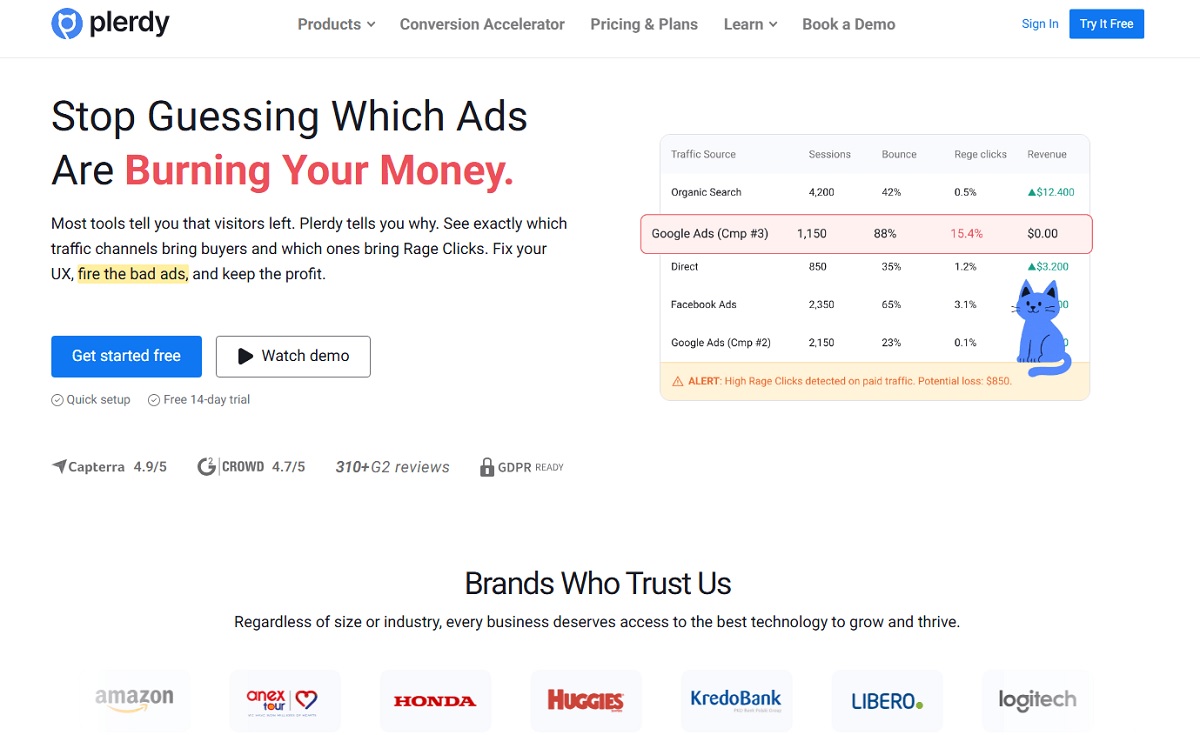
Best for: teams that want heatmaps, session replay, and SEO/CRO tools under one login instead of stitching together three subscriptions.
Plerdy combines heatmaps, session replay, conversion funnels, on-site pop-ups, and an SEO-auditing module in a single platform. The pitch is consolidation: instead of paying for a behavior-analytics tool and a separate SEO tool and a separate pop-up builder, Plerdy folds all three into one dashboard and one price. The trade-off is depth — a pure-play tool like FullStory or Contentsquare will out-feature Plerdy on enterprise session-replay search and AI struggle detection specifically, so the fit is strongest for small-to-mid teams that want breadth over specialization.
Key features: heatmaps (click, move, scroll), session replay, conversion funnels, on-site pop-ups and forms, SEO audit and monitoring tools, all under one account.
Vs Hotjar: replaces Hotjar’s heatmaps and replay, then adds SEO and pop-up tools Hotjar/Contentsquare never offered at all.
Pros: one login for heatmaps, replay, SEO, and pop-ups. Cons: less specialized session-search tooling than pure-play enterprise platforms.
Pricing: free tier available; paid plans start at $32/month (Startup) — see Plerdy’s current pricing.
2. Microsoft Clarity
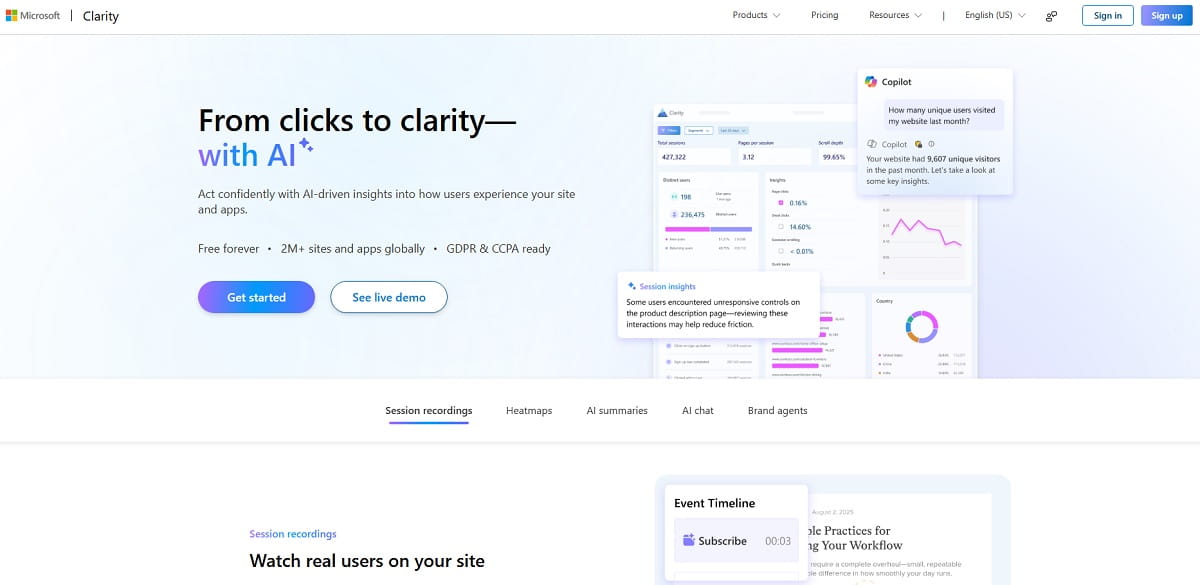
Best for: anyone who wants unlimited heatmaps and session recordings without a credit card, ever.
Clarity remains completely free with no session cap and no paid tier, funded by Microsoft as a data-and-goodwill play tied to Bing and Microsoft Advertising. It covers heatmaps, session recordings, and AI-generated recording summaries. The trade-off: no built-in surveys, no A/B testing, no pop-up builder — it’s a focused recording-and-heatmap tool, not a CRO suite.
Key features: unlimited heatmaps, unlimited session recordings, AI-generated recording summaries, native Google Analytics 4 integration.
Vs Hotjar: the same core recording/heatmap job old Hotjar did, minus surveys and A/B testing, at zero cost instead of a subscription.
Pros: completely free, no session limits. Cons: no surveys, A/B testing, or pop-ups built in.
Pricing: 100% free, no paid tier, no session limit — confirmed directly on Microsoft Clarity’s site: “Free forever.”
3. Lucky Orange

Best for: small e-commerce and marketing teams that want recordings, heatmaps, and live chat in one lightweight tool.
Lucky Orange bundles session recordings, dynamic heatmaps, conversion funnels, form analytics, and a built-in live-chat widget at a price point aimed squarely at small businesses rather than enterprise buyers. It’s consistently one of the most-recommended low-cost Hotjar swaps in community forums like Shopify’s own community boards, usually cited alongside Microsoft Clarity for teams that “can’t afford a $5–6k Hotjar/Contentsquare subscription.”
Key features: session recordings, dynamic heatmaps, conversion funnels, form analytics, built-in live chat.
Vs Hotjar: a comparable feature set to Hotjar plus live chat, at small-business pricing well below Contentsquare’s enterprise track.
Pros: live chat bundled in, small-business pricing. Cons: no perpetual free plan — only a 7-day free trial.
Pricing: 7-day free trial with full feature access; paid plans start at $32/month for up to 3,500 sessions (Build) — see Lucky Orange’s current pricing.
4. Crazy Egg
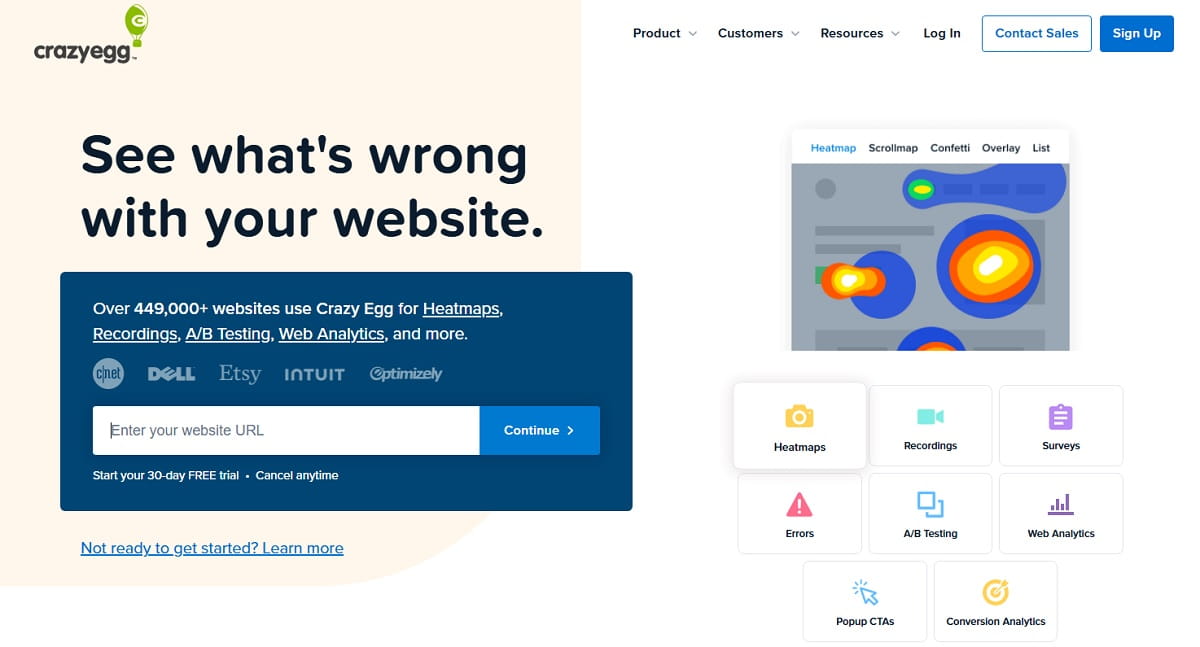
Best for: marketers who want visual, no-code heatmap and A/B-testing reports without engineering involvement.
Crazy Egg’s heatmaps, scroll maps, and click reports are built for fast visual reads rather than deep technical analysis, and its A/B testing tool runs on the same script. It’s one of the longest-running players in this category, which shows in how polished the reporting UI is — but session replay search and filtering are noticeably lighter than FullStory or Contentsquare.
Key features: heatmaps, scroll maps, click reports, A/B testing on the same script, snapshot-style visual reporting.
Vs Hotjar: lighter on session replay depth than Hotjar, but its visual heatmap reporting is faster to read for non-technical marketers.
Pros: fast, visual, no-code heatmap reports. Cons: session replay search is lighter than enterprise tools.
Pricing: free plan available with no credit card required, plus a 30-day free trial on paid plans; paid plans start at $29/month for 5,000 pageviews (Analytics) — see Crazy Egg’s current pricing.
5. Mouseflow
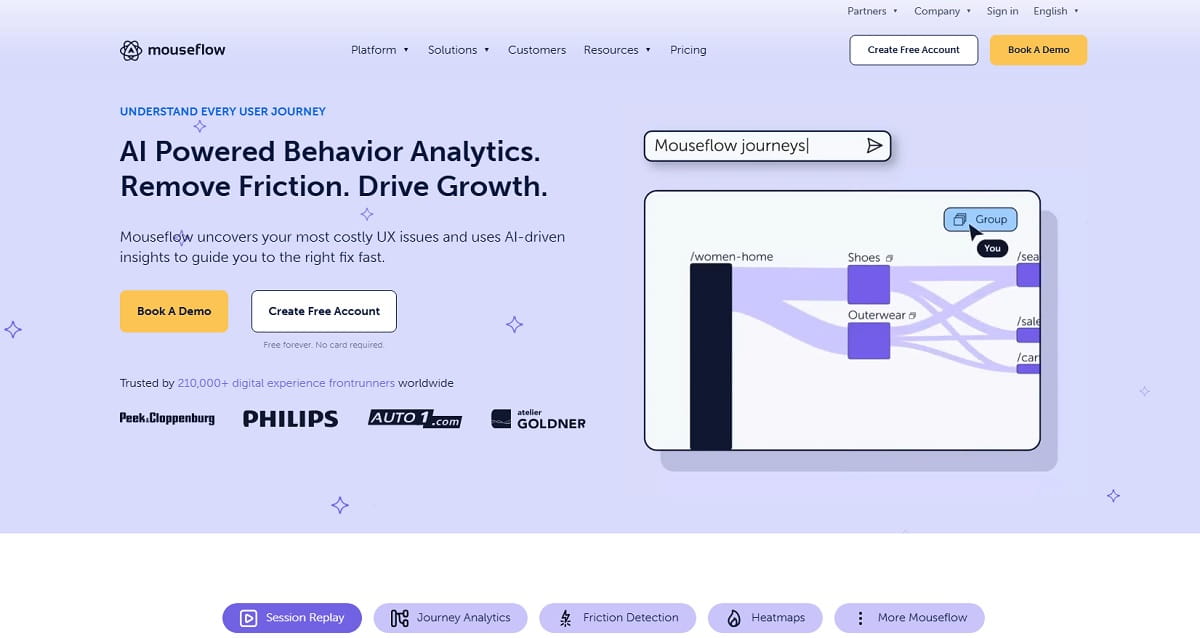
Best for: teams that want session replay tightly paired with form analytics and funnel drop-off tracking.
Mouseflow’s session replays, six heatmap types, and form analytics are built around finding exactly where and why visitors abandon a flow, with a “friction score” that flags problem sessions automatically. It’s the single most-mentioned Hotjar alternative across every competing roundup we checked — a strong signal that it consistently earns its spot rather than padding a list.
Key features: session replay, six heatmap types, automatic friction/rage-click scoring, form analytics, funnel drop-off tracking.
Vs Hotjar: matches Hotjar’s core heatmap/replay job and adds automatic friction scoring Hotjar never had.
Pros: automatic friction scoring flags problem sessions for you. Cons: advanced funnel features sit behind higher tiers.
Pricing: free plan for low traffic; paid plans start at $25/month (Essential) — see Mouseflow’s current pricing.
6. FullStory
Best for: teams that need enterprise-grade session search plus error tracking, not just heatmaps.
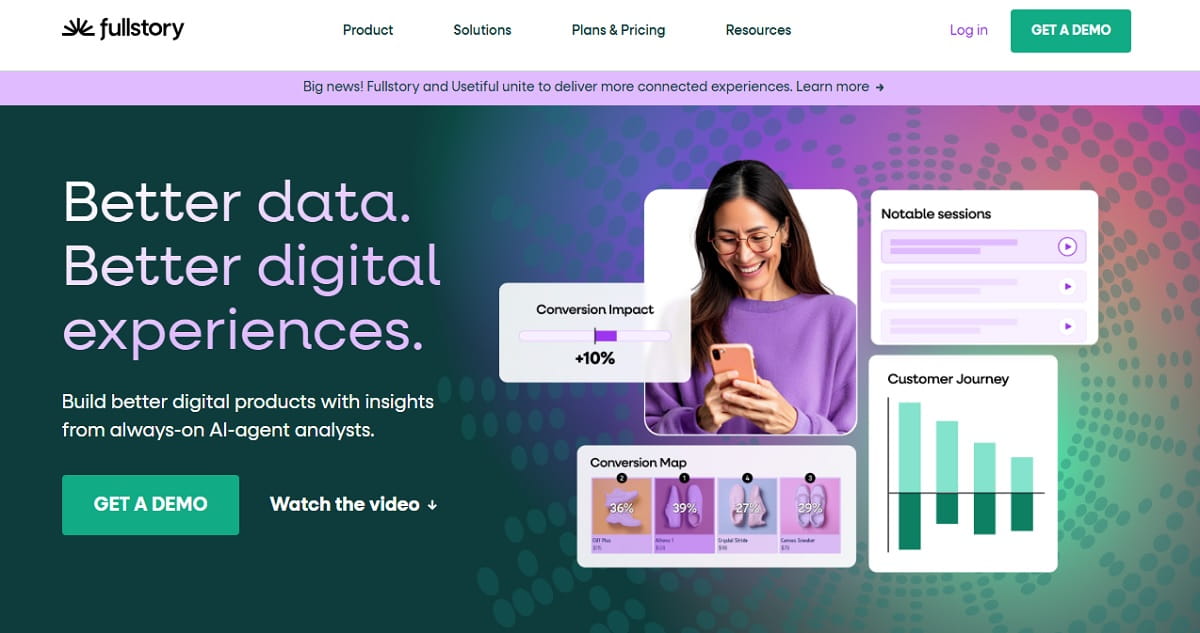
FullStory’s standout feature is its search: instead of scrubbing through recordings one by one, you can query sessions by behavior, error, or custom event across your whole dataset. Built-in error and rage-click tracking makes it a strong pick specifically for e-commerce teams that want behavior analytics and front-end error monitoring in the same tool rather than bolting on a separate error tracker. The trade-off is price — FullStory is priced and positioned for mid-market and enterprise, not solo sites.
Key features: searchable session replay, heatmaps, error and rage-click tracking, journey and funnel analysis.
Vs Hotjar: goes deeper than Hotjar ever did on session search and error tracking, at enterprise pricing to match.
Pros: best-in-class session search and error tracking. Cons: no published pricing — everything past the free tier requires a sales call.
Pricing: free forever plan (FullStory Free) with 30,000 sessions/month and 12 months of retention; paid Business/Advanced/Enterprise tiers are custom quote-only — see FullStory’s pricing page.
7. PostHog
Best for: developers and product teams who want session replay and heatmaps living next to feature flags and product analytics in one SDK.
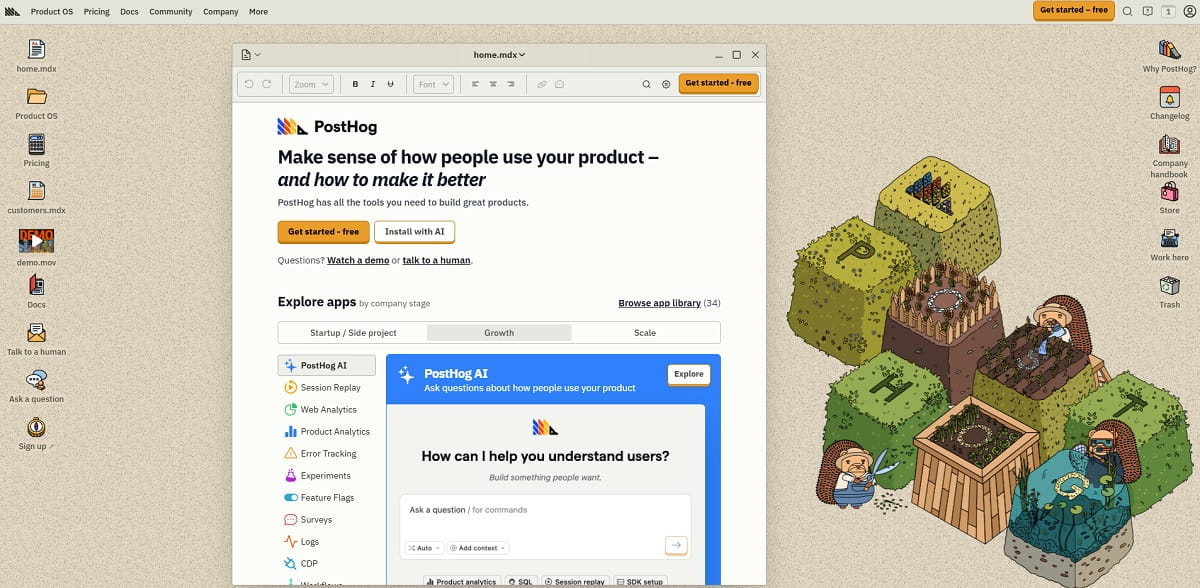
PostHog ships session replay, heatmaps, funnels, feature flags, A/B testing, and error tracking from a single open-source-friendly SDK, with a generous free tier before usage-based pricing kicks in. It’s popular with engineering-led teams specifically because it avoids adding a second script and a second vendor relationship just for behavior data — a developer, not a marketer, is usually the one who installs it.
Key features: session replay, heatmaps, funnels, feature flags, A/B testing, error tracking, open-source self-hosting option.
Vs Hotjar: covers the same behavior data plus feature flags and product analytics Hotjar/Contentsquare doesn’t touch.
Pros: one SDK for replay, flags, and analytics, with an open-source option. Cons: usage-based pricing can be harder to forecast at scale.
Pricing: free tier covering the first 5,000 web (2,500 mobile) recordings/month, then usage-based from $0.0050 per recording, tapering down with volume — see PostHog’s pricing page.
8. Contentsquare

Best for: large enterprises that were already evaluating Hotjar’s higher tiers and want AI-assisted struggle detection at scale.
Contentsquare is, technically, Hotjar’s own successor rather than a separate competitor — it acquired Hotjar in 2021 and completed a full merger on July 1, 2025. For teams that liked Hotjar and don’t mind an enterprise sales process, staying inside the Contentsquare ecosystem is the path of least resistance; the free tier is reportedly more generous than old Hotjar, but paid tiers move into enterprise-level contracts and, per third-party analysis, professional-services costs on top of the subscription. It belongs on this list as the “upgrade path,” not a clean alternative.
Key features: AI-assisted struggle and journey analysis, heatmaps, session replay, Voice of Customer surveys, enterprise-grade reporting.
Vs Hotjar: this is Hotjar’s actual successor, not a competitor — same underlying data, wrapped in Contentsquare’s broader (and pricier) platform.
Pros: AI-assisted struggle analysis at enterprise scale. Cons: enterprise sales process and, per third-party analysis, added professional-services costs.
Pricing: a free plan exists (“Start for free”); paid tiers are custom quote-only — see Contentsquare’s pricing page.
9. Mixpanel
Best for: product teams already using Mixpanel for event analytics who want heatmaps and replay without adding a second vendor.
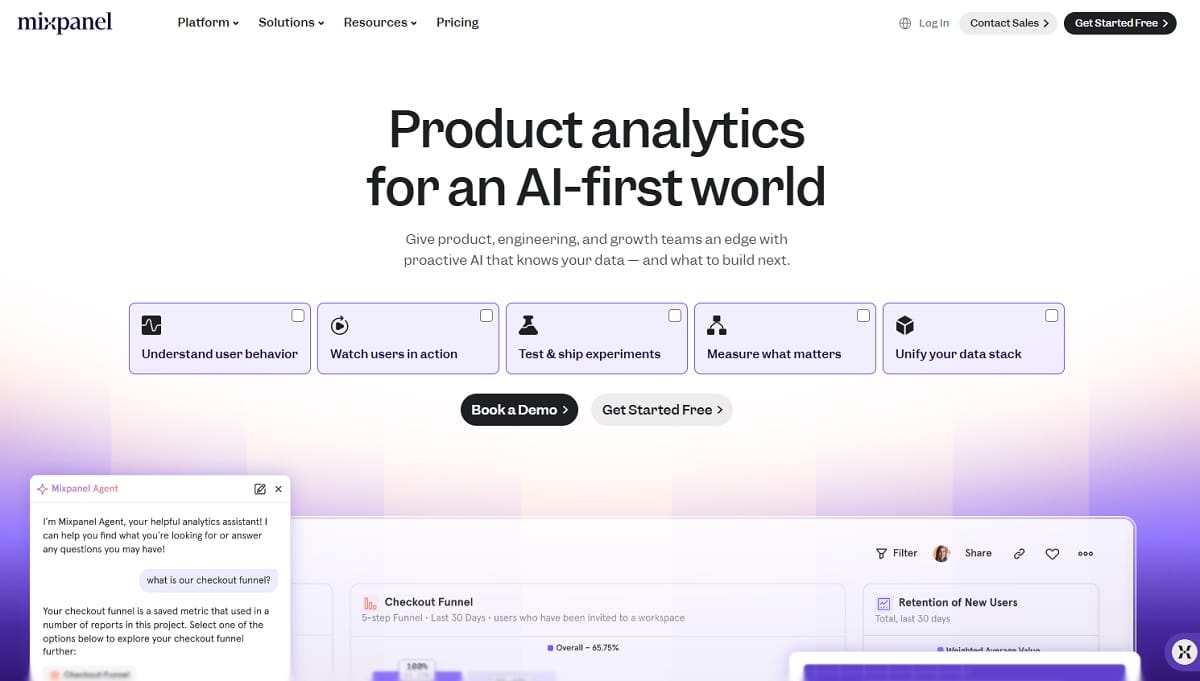
Mixpanel added native session replay and heatmaps directly to its platform, layering behavior visualization on top of the event-based analytics and cohort tools it’s known for. It’s a newer addition to Mixpanel’s feature set rather than a mature, dedicated heatmap product, so teams that need heatmaps as their primary use case may still prefer a purpose-built tool — but for teams standardized on Mixpanel already, it closes a real gap.
Key features: event-based product analytics, cohort analysis, native session replay and heatmaps, funnel and flow reporting.
Vs Hotjar: event analytics first, heatmaps/replay second — the opposite priority order from Hotjar.
Pros: no new vendor needed if you already run Mixpanel for analytics. Cons: heatmaps/replay are a newer, less mature part of the product.
Pricing: free forever plan with up to 1M events and 10,000 session replays/month; Growth tier is usage-based, Enterprise is custom — see Mixpanel’s pricing page.
10. Inspectlet
Best for: budget-conscious teams that want session replay, heatmaps, form analytics, and error logging from one long-running provider.
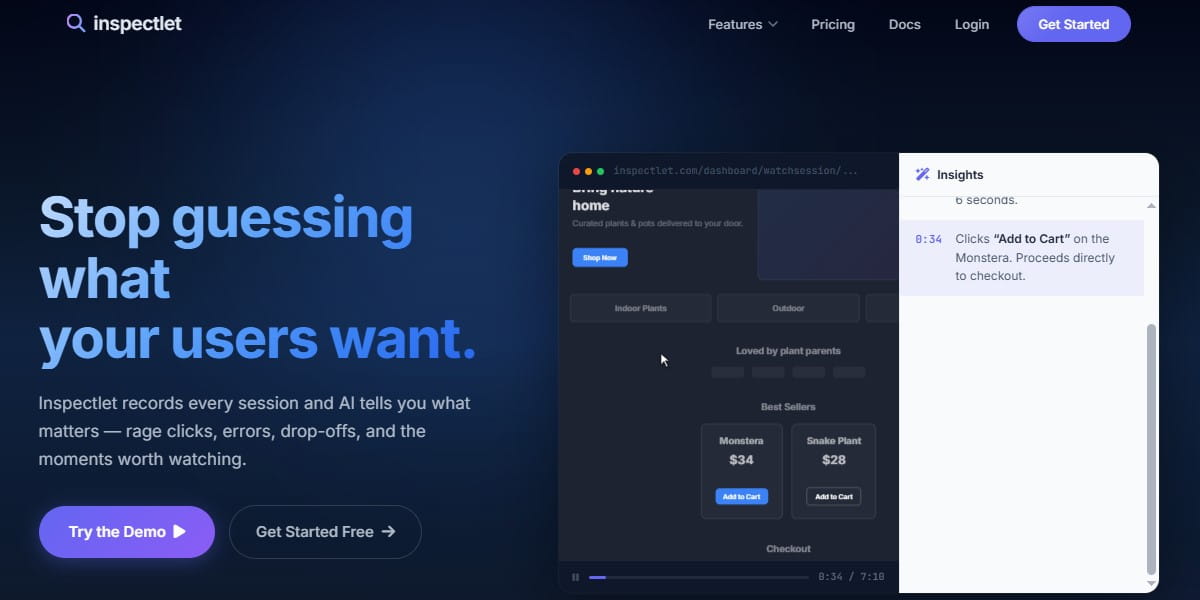
Inspectlet remains an active, independently sold product covering session replay, heatmaps, JavaScript A/B testing, feedback surveys, form analytics, and front-end error logging. It’s a smaller name than FullStory or Mouseflow, which typically means lower pricing and a smaller feature-release cadence.
Key features: session replay, dynamic heatmaps, JavaScript A/B testing, feedback surveys, form analytics, error logging.
Vs Hotjar: near feature-for-feature parity with Hotjar’s core toolset, from a smaller, lower-profile vendor.
Pros: near full feature parity with Hotjar at a smaller-vendor price point. Cons: paid tier pricing isn’t published — you’ll need to contact sales for tier details.
Pricing: free plan with 2,500 recorded sessions/month across up to 3 websites; paid tiers are billed monthly or annually (15% off annual) but not published — see Inspectlet’s plans page.
11. Zoho PageSense
Best for: teams already inside the Zoho ecosystem (CRM, Desk, Forms) that want heatmaps and A/B testing without adding a new vendor.
PageSense covers heatmaps, funnel analysis, session recording, and A/B testing, and its main advantage is native integration with the rest of Zoho’s suite rather than any single standout feature. It’s a practical, low-friction pick specifically for teams that already run their business on Zoho.
Key features: heatmaps, funnel analysis, session recording, A/B testing, native integration across the Zoho suite.
Vs Hotjar: matches Hotjar’s core features, with the native Zoho ecosystem integration Hotjar never had.
Pros: native fit if you already run Zoho CRM, Desk, or Forms. Cons: pricing above the free tier isn’t published by tracked-user volume.
Pricing: Forever Free plan for up to 5,000 monthly tracked users; Professional and Enterprise tiers start at 10,000 tracked users, priced on request — see Zoho PageSense’s pricing page.
12. Matomo
Best for: teams that need GDPR-grade privacy, self-hosting, or a genuinely free open-source option.
Matomo is a full web-analytics platform first, with heatmaps, session recordings, and event tracking layered on as features rather than the core product. It’s the clearest answer to two specific searches: “open-source Hotjar alternative” and “Hotjar alternative that protects your data” — you can self-host it and keep 100% of the data on your own infrastructure, which none of the SaaS-only tools on this list can offer.
Key features: full web analytics, heatmaps, session recordings, event tracking, 100% data ownership, GDPR/CCPA/HIPAA-friendly setup.
Vs Hotjar: the one thing here Hotjar/Contentsquare structurally can’t match — full self-hosted data ownership.
Pros: full data ownership via self-hosting. Cons: self-hosting means you own the maintenance too, unless you pay for Matomo Cloud.
Pricing: free forever, self-hosted Community edition with unlimited users and traffic; Matomo Cloud starts at €29/month for 50,000 hits — see Matomo’s pricing page.
13. UXCam
Best for: mobile-first products that need native iOS and Android session replay, not a web tool retrofitted for apps.
UXCam is built specifically for mobile: native SDKs for iOS and Android capture session replay, heatmaps, and crash context inside the app itself, rather than trying to adapt a browser-based script. For teams whose primary product is a mobile app rather than a website, it’s a more direct fit than any web-first tool on this list, Hotjar/Contentsquare included.
Key features: native iOS/Android session replay, mobile heatmaps, crash and issue context, in-app funnel analysis.
Vs Hotjar: covers where Hotjar was always weak — native mobile apps — at the cost of web coverage.
Pros: purpose-built native mobile SDKs, not a retrofit. Cons: no public pricing — every quote is custom by session volume.
Pricing: free trial with full feature access; paid plans are custom-quoted by monthly session volume — see UXCam’s pricing page.
14. Pendo
Best for: product management teams that want behavior data feeding directly into in-app guides, NPS surveys, and product analytics.
Pendo’s core job is product experience management — onboarding flows, in-app guides, and feature adoption tracking — with heatmaps and session data as supporting evidence for product decisions rather than the main event. It fits teams whose primary question is “which features are people actually using,” not “where do people click on this landing page.”
Key features: in-app guides and onboarding flows, feature-adoption tracking, NPS and in-app surveys, heatmaps and session data as supporting context.
Vs Hotjar: treats behavior data as one input into product decisions, not the main product, unlike Hotjar.
Pros: ties behavior data directly to product-adoption decisions. Cons: behavior data is secondary — not the tool’s main strength.
Pricing: free plan for up to 500 monthly active users; Base, Core, and Ultimate paid tiers are custom-quoted by MAU — see Pendo’s pricing page.
15. VWO
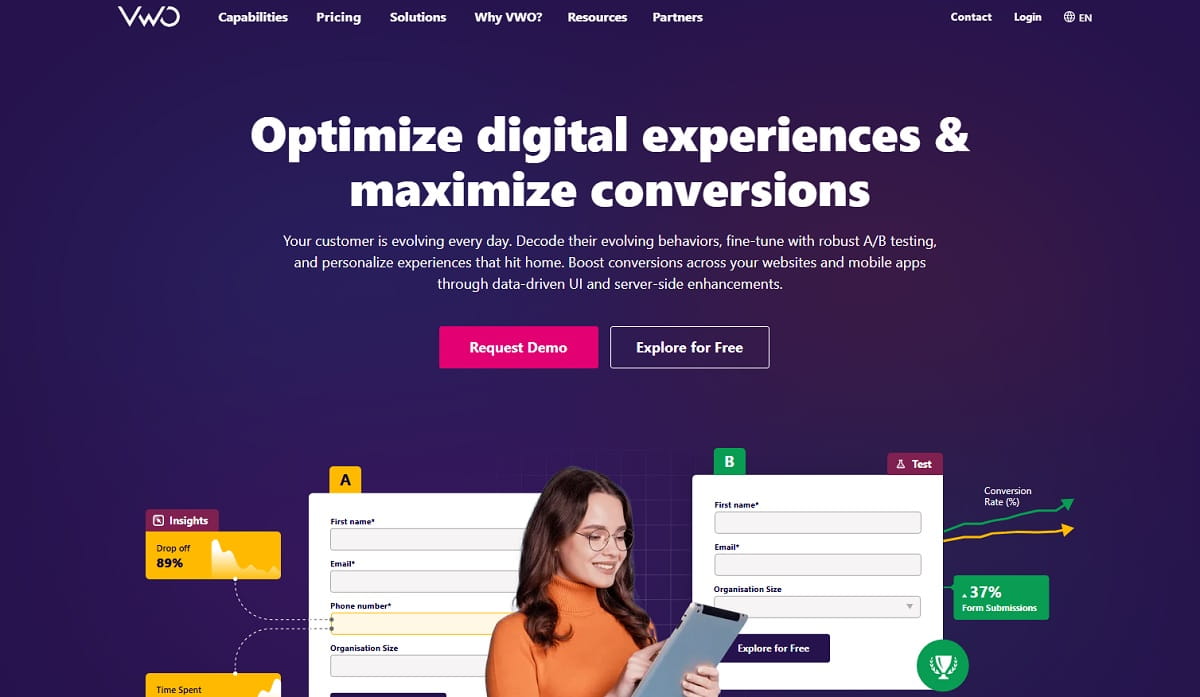
Best for: conversion-optimization teams that want heatmaps and recordings bundled inside a full A/B and multivariate testing platform.
VWO’s heatmaps and session recordings ship as part of a broader experimentation suite that includes A/B testing, multivariate testing, and personalization. It’s a strong pick if you’re buying a testing platform first and want behavior data included, rather than buying a behavior-analytics tool and hoping it also does testing well.
Key features: A/B and multivariate testing, heatmaps, session recordings, visitor segmentation, personalization.
Vs Hotjar: behavior data is the add-on here; the core product is a testing platform Hotjar never had.
Pros: heatmaps and testing in one experimentation platform. Cons: no public pricing above the free explore tier.
Pricing: a free “Explore” tier is available; Growth, Pro, and Enterprise tiers are custom-quoted — see VWO’s pricing page.
Hotjar Alternatives Pricing Comparison
Checked directly on each vendor’s pricing page in August 2026. “Custom” means no public number is listed and you’ll need to request a quote.
| Tool | Free Plan | Paid Plans Start At | Pricing Model |
|---|---|---|---|
| Plerdy | Yes, limited | $32/mo | Tiered by usage |
| Microsoft Clarity | Yes, unlimited | No paid tier | Free only |
| Lucky Orange | No (7-day trial) | $32/mo | Tiered by sessions |
| Crazy Egg | Yes, limited | $29/mo | Tiered by pageviews |
| Mouseflow | Yes, limited | $25/mo | Tiered by traffic |
| FullStory | Yes (30k sessions/mo) | Custom | Quote-based |
| PostHog | Yes (5k recordings/mo) | From $0.005/recording | Usage-based |
| Contentsquare | Yes, limits unpublished | Custom | Quote-based |
| Mixpanel | Yes (1M events/mo) | Usage-based | Usage-based + custom Enterprise |
| Inspectlet | Yes (2,500 sessions/mo) | Not published | Tiered, contact for pricing |
| Zoho PageSense | Yes (5,000 users/mo) | Not published | Tiered by tracked users |
| Matomo | Yes, self-hosted, unlimited | €29/mo (Cloud) | Free self-hosted or paid cloud |
| UXCam | No (trial only) | Custom | Quote-based by session volume |
| Pendo | Yes (500 MAU) | Custom | Quote-based by MAU |
| VWO | Yes (Explore tier) | Custom | Quote-based |
Hotjar Vs Competitors: Which Tool Should You Choose
If you want the shortest possible version of this guide: pick based on what you’re optimizing for, not brand familiarity. Choose Plerdy if you want heatmaps, replay, and SEO/CRO tools in one subscription. Choose Microsoft Clarity if budget is the only constraint. Choose Matomo if data ownership or GDPR compliance is non-negotiable. Choose UXCam if your product is mobile-first. Choose PostHog if engineering owns the tool. Choose Contentsquare only if you were already heading toward an enterprise contract — it’s Hotjar’s direct successor, not a true alternative.
How To Choose the Right Hotjar Alternative
Start from the job, not the feature list. If the real question is “what’s broken on this specific page,” you want strong heatmaps and filterable session replay — Mouseflow, FullStory, and Lucky Orange lead there. If the question is “should we build this feature at all,” you want a tool tied to product analytics — PostHog, Mixpanel, or Pendo fit better. If budget or data ownership is the deciding factor, Microsoft Clarity and Matomo cover the two ends of that spectrum for free and self-hosted respectively. And if you’re tired of running four separate CRO tools, Plerdy is built specifically to replace that stack rather than add to it.
Bottom Line
Hotjar’s move into Contentsquare didn’t remove behavior analytics as a category — if anything, it pushed more teams to re-evaluate what they actually need instead of defaulting to whatever tool they installed first. For most small-to-mid teams that want heatmaps, session replay, and CRO tools without three separate logins, Plerdy is the strongest first tool to test. Teams with a narrower, specific need — mobile-only, developer-first, fully free, or fully self-hosted — are better served by the specialist on this list built for that exact job.
FAQ About Hotjar Alternatives
What Are the Best Hotjar Alternatives?
The strongest all-round picks are Plerdy for an all-in-one CRO platform, Microsoft Clarity for a fully free option, Mouseflow for session replay paired with form analytics, and Matomo for a self-hosted, privacy-first setup. The right one depends on whether you need one tool that also handles SEO and pop-ups (Plerdy) or a focused heatmap-and-replay tool (Clarity, Mouseflow).
What Are the Best Hotjar Competitors?
Direct competitors that do the same core job — heatmaps and session replay of real visitor behavior — include Plerdy, Mouseflow, FullStory, Crazy Egg, Lucky Orange, and Microsoft Clarity. Contentsquare technically isn’t a competitor anymore; it’s the company Hotjar merged into on July 1, 2025.
Is Hotjar Shutting Down?
No. Hotjar merged into Contentsquare on July 1, 2025, and its tools now run under Contentsquare’s Experience Analytics, Voice of Customer, and Product Analytics product lines instead of being sold as a standalone product. Existing tracking and dashboards continue to work; new customers sign up through Contentsquare’s plans instead of Hotjar’s old pricing page.
What Is the Best Free Hotjar Alternative?
Microsoft Clarity is the most complete free option — unlimited sessions, no paid tier, heatmaps and recordings included. Matomo also offers a free, self-hosted open-source edition if you’re willing to manage the hosting yourself.
Is There an Open-Source Hotjar Alternative?
Yes — Matomo is the clearest open-source option, with a self-hosted community edition you fully control. PostHog also offers an open-source, self-hostable version alongside its cloud product.
What Are the Best Hotjar Alternatives For Mobile Apps?
UXCam is built specifically for native iOS and Android session replay and heatmaps. If you need one account covering both web and mobile, be careful betting on a single cross-platform vendor right now — Cisco is winding down Smartlook, a tool that used to fill that role, through 2026 and 2027 — so pairing UXCam for mobile with a separate web-first tool is currently the safer approach.
What Is the Best Hotjar Alternative For Developers?
PostHog is the strongest fit for engineering-led teams — it ships session replay, heatmaps, feature flags, product analytics, and error tracking from a single open-source-friendly SDK, so developers aren’t installing a separate marketing tool just for behavior data.
What Are the Best Hotjar Alternatives For Product Teams?
Pendo is the clearest product-team pick, since it ties heatmaps and session data directly into in-app guidance, onboarding flows, and feature-adoption analytics rather than treating behavior data as a standalone report. PostHog is a strong second choice for teams that also want experimentation and feature flags in the same platform.
What Are the Best Hotjar Alternatives For Ecommerce With Error Monitoring?
FullStory pairs session replay and heatmaps with built-in error and rage-click tracking, which makes it the strongest single pick when you need behavior analytics and front-end error monitoring in one tool rather than two. Lucky Orange is a lighter-weight option if error monitoring is a nice-to-have rather than a requirement.
How Does Matomo Compare To Hotjar?
Matomo is a full web-analytics platform with heatmaps and session recording added as features, while Hotjar (now part of Contentsquare) is a behavior-analytics tool first. The practical difference is control: Matomo can be self-hosted so you own 100% of the data, which matters for teams with strict GDPR or data-residency requirements that a SaaS-only tool can’t satisfy.
How Does Lucky Orange Compare To Hotjar?
Lucky Orange covers the same core ground — recordings, heatmaps, and funnels — plus a built-in live-chat widget, at pricing aimed at small businesses rather than enterprise buyers. It’s one of the most frequently recommended low-cost swaps in community discussions from teams specifically looking to cut behavior-analytics costs.
Is There a Microsoft Hotjar Alternative?
Yes — Microsoft Clarity, which is free, unlimited, and built by Microsoft. It’s the most commonly recommended free swap in community forums, precisely because there’s no session cap and no credit card required.
What Are the Best Hotjar Alternatives For Heatmaps Specifically?
Crazy Egg and Mouseflow are the strongest picks if heatmaps are the primary need rather than session replay — both built their product around visual click, scroll, and move data first. Microsoft Clarity is the best free option for heatmaps alone.