

A free SERP checker shows which pages rank for a keyword without relying on your personalized Google results. We tested 10 tools using the same keywords, US location, and desktop settings to compare result accuracy, free limits, location support, SERP features, and ease of use.
Our quick verdict: Ahrefs is the best free SERP checker for analyzing competing pages, while SERP Robot is better for quick position checks. Plerdy is the best option when you need to combine rank monitoring with on-page SEO analysis.
The table below shows which tools are genuinely free, which require registration, and where their limitations begin.
Best Free SERP Checkers at a Glance
| Tool | Best for | Free access | Location selection | Mobile results | Main limitation |
|---|---|---|---|---|---|
| Plerdy | SEO monitoring and page optimization | Free account with limited usage | Yes | Depends on project settings | Designed for ongoing projects rather than anonymous checks |
| Semrush | Complete SERP overview | Free checker, no sign-up required | Yes | Available in the wider Semrush toolkit | Advanced reports require an account or paid plan |
| Ahrefs | Backlink and traffic metrics | Top 10 results; sample SEO data | Yes | Limited in the free checker | Complete metrics require paid tools |
| SE Ranking | Daily Google rank checks | 5 free checks per day | Yes | Yes | Full history and tracking require the platform |
| SERPROBOT | Checking a domain for multiple keywords | Up to 10 keywords per manual check | Yes | Yes | Manual checks can take several minutes |
| AccuRanker | Live SERP previews | 5 searches per day | Yes | Yes | Only a small number of daily searches |
| Small SEO Tools | Bulk keyword position checks | Up to 10 keywords in the current interface | Google regions/TLDs | Yes | Fewer competitor metrics than specialist platforms |
| Mangools SERPChecker | Beginner-friendly SERP analysis | Limited free plan | Yes | Yes | Daily lookups are limited |
| Backlinko | Evaluating ranking difficulty | Free SERP lookup powered by Semrush | Yes | Yes | Deeper analysis sends users to Semrush |
| WhatsMySERP | Simple browser-based rank checking | Limited free checks | Yes | Limited | Less detailed competitor data |
Free allowances and product limits can change. The information above was reviewed in July 2026; check each provider’s current terms before choosing a tool for a recurring workflow.
What Is a SERP Checker?
A SERP checker is a tool that retrieves the search engine results page for a specific keyword and location. Unlike a normal Google search, it reduces the influence of your search history, account, and physical location. This makes it easier to see which pages actually compete for a keyword in the market you want to target.
Some tools show only the ranking URLs. More advanced SERP checkers add authority scores, backlinks, estimated traffic, ranking keywords, search features, and historical position changes. A good tool should also let you choose a country and, when local SEO matters, a state, city, or ZIP code.
How We Compared the Tools
We reviewed each tool using the criteria that matter during real SEO research:
- whether the tool returns current Google results;
- whether users can select the United States or another target location;
- whether desktop and mobile results are available;
- how many checks are available without payment;
- whether registration or a credit card is required;
- whether the report includes backlinks, authority, traffic, or keyword data;
- whether the tool identifies SERP features such as AI Overviews, featured snippets, People Also Ask, local packs, videos, or ads;
- whether results can be saved, exported, or tracked over time.
We treated a permanently limited plan as “free,” but identified a temporary trial separately. This distinction matters: a tool that works for 14 days is not a long-term free rank tracker.
10 Best Free SERP Checkers
Tracking the search engine position of your website can feel like a wild goose hunt in the always changing field of SEO, where Google’s algorithm changes more often than a chameleon in a disco. Not to worry, though—digital marketers and search engine optimists! Here to help you out of the maze of SEO tools is “10 Best Free SERP Checkers”. We have carefully selected the best SERP checkers from among those that won’t cost a thing in this post. Whether your business is small, you are a freelancing SEO specialist, or you simply want to know where your blog ranks in the Google search results, our carefully selected list guarantees the most accurate, quick SERP checkers. Prepare to improve your SEO without going broke!
1. Plerdy — Best for Combining SERP and On-Page SEO Work
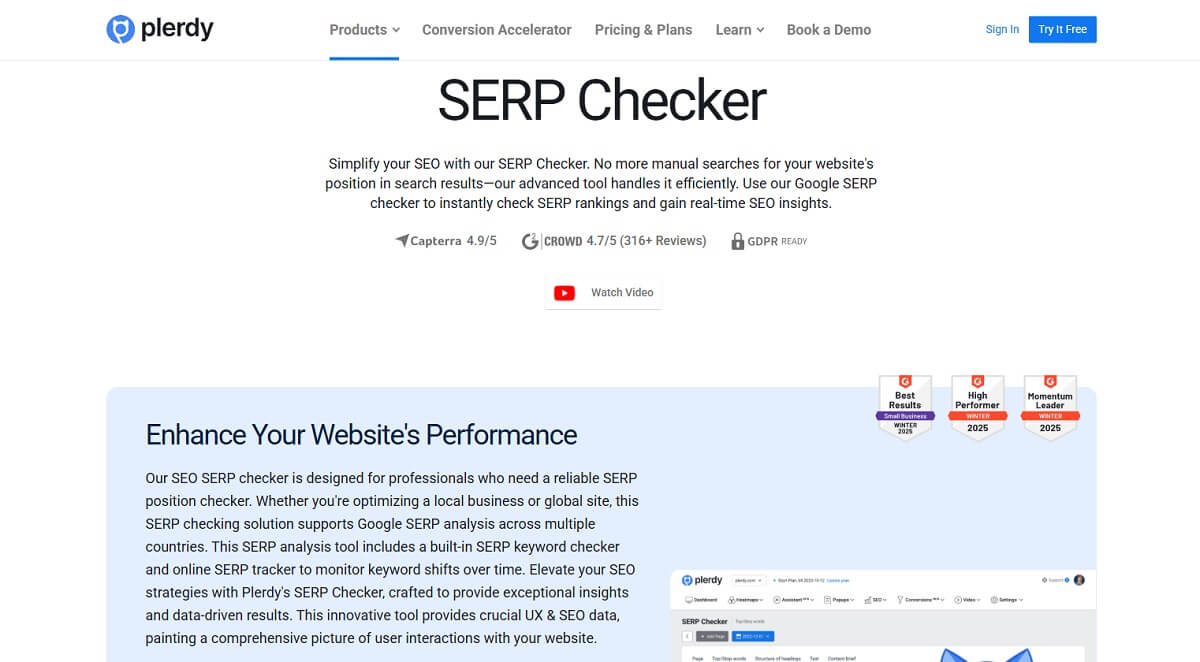
Plerdy approaches ranking analysis as part of a broader optimization workflow. Instead of stopping at a one-time SERP snapshot, it helps teams connect keyword positions with competitor pages and on-page SEO issues that may affect performance.
This approach is useful after the initial SERP check. Once you know which pages outrank yours, Plerdy’s SEO tools can help examine titles, descriptions, headings, content relevance, and technical page elements. The platform is therefore better suited to an ongoing website project than to a completely anonymous one-off search.
What you get with free access:
- a limited free account;
- keyword and SERP monitoring capabilities;
- competitor visibility data;
- integration with on-page SEO analysis;
- one workspace for SEO and user-behavior tools.
Limitation: Usage depends on the selected plan and project limits. It requires account and project setup, unlike anonymous public checkers.
Verdict: Plerdy is the better fit when you need to move from “Where do we rank?” to “What should we change on the page?”
2. Semrush — Best Overall Free SERP Checker
Semrush offers one of the most complete free SERP snapshots. Enter a keyword, select a location, and the tool returns the top 10 Google results without requiring an account. The report combines the ranking pages with Semrush metrics, helping you evaluate not only who ranks but also why those pages may be difficult to outrank.
The checker can display Authority Score, backlinks, estimated traffic, and the number of keywords associated with ranking pages. It also identifies important SERP features, including AI Overviews, featured snippets, and People Also Ask boxes.
What you get for free:
- the top 10 Google results;
- country or location selection;
- authority and backlink context;
- traffic and ranking-keyword estimates;
- SERP feature detection;
- no sign-up for the basic checker.
Limitation: Historical data, continuous rank tracking, larger exports, and complete competitor research require access to the wider Semrush platform.
Verdict: Choose Semrush when you want a fast, detailed overview of a keyword before deciding whether to create or update a page.
3. Ahrefs — Best for Backlink and Traffic Metrics
Ahrefs SERP Checker analyzes the top 10 pages for a keyword across hundreds of locations. It is especially useful when you want to estimate ranking difficulty through link data. The report includes Ahrefs metrics such as Domain Rating, URL Rating, backlinks, referring domains, organic traffic, and ranking keywords.
The free report provides the complete list of top-ranking pages, while some detailed metrics are shown as sample data. You can still use it to distinguish between a SERP dominated by powerful domains and one containing weaker pages that may be easier to compete with.
What you get for free:
- top 10 ranking pages;
- support for hundreds of locations;
- sample backlink and traffic metrics;
- no VPN or manual location switching;
- no registration for the basic check.
Limitation: Complete metrics, SERP history, and deeper URL analysis require an Ahrefs subscription.
Verdict: Ahrefs is the strongest option in this list for quickly comparing the backlink strength of pages already ranking in the top 10.
4. SE Ranking — Best for Free Daily Checks
SE Ranking’s Google Rank Checker combines a live SERP view with useful competitive metrics. The free interface currently provides five attempts per day and lets users select a country and device. You can enter a domain to find its position or leave the domain field empty to examine the ranking pages.
The results may include total traffic, the number of ranking keywords, Domain Trust, and referring domains. SE Ranking also distinguishes between standard Google results and AI Overview data, making it useful for monitoring how modern search layouts affect visibility.
What you get for free:
- five checks per day;
- desktop and mobile results;
- country selection;
- organic result and AI Overview tabs;
- basic authority and traffic metrics.
Limitation: Full top-100 data, automated updates, long-term history, and advanced AI visibility reports require an account or subscription.
Verdict: Use SE Ranking when a few detailed daily checks are more valuable than a large number of basic lookups.
5. SERPROBOT — Best for Checking Several Keywords
SERPROBOT is built for a straightforward task: finding where a domain ranks for specific keywords. Select a Google region and device, enter your domain, and add up to 10 keywords to the free manual checker. You can also include competitor domains when you want to compare positions.
The tool is simpler than Semrush or Ahrefs because it focuses on position rather than authority and backlink analysis. That simplicity is useful when you already know your target keywords and only need to check whether rankings have moved.
What you get for free:
- up to 10 keywords per manual check;
- region selection;
- desktop and mobile results;
- competitor domain checks;
- no paid account for manual searches.
Limitation: Free checks are manual and can take longer during busy periods. Automatic reports, alerts, and historical charts belong to the registered service.
Verdict: SERPROBOT is a practical choice for freelancers and small site owners who want to check several target keywords in one session.
6. AccuRanker — Best for Live SERP Previews
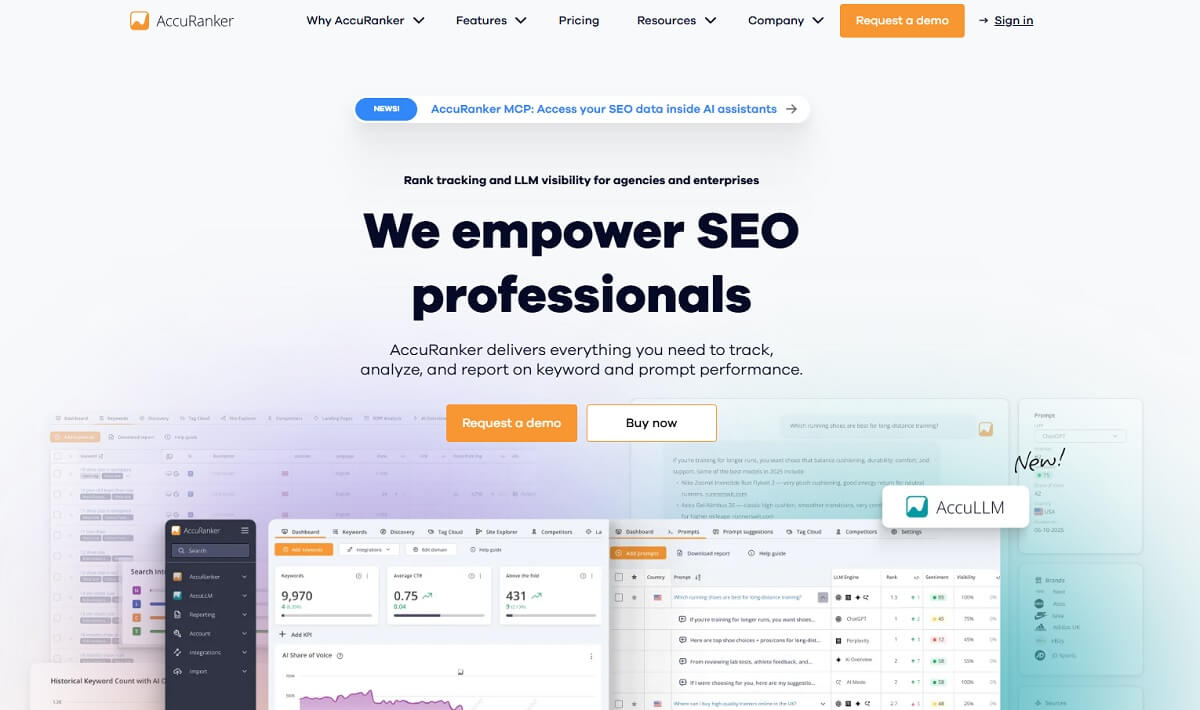
AccuRanker’s Live SERP Checker reproduces location-based search results and can show organic listings, ads, and local results. It supports both desktop and mobile searches, which is helpful because the same keyword can produce different rankings and SERP features on different devices.
The interface is quick: enter a keyword, choose a country, select a device, and run the search. The free allowance is intentionally small, but it is sufficient for validating a few high-priority queries.
What you get for free:
- five searches per day;
- country-specific results;
- desktop and mobile SERPs;
- ads, local results, and organic listings;
- no complex project setup.
Limitation: Five searches will not cover a large keyword list, and ongoing tracking requires the paid AccuRanker platform.
Verdict: AccuRanker works best when you need to inspect the actual composition of a small number of SERPs.
7. Small SEO Tools — Best for Basic Bulk Position Checks
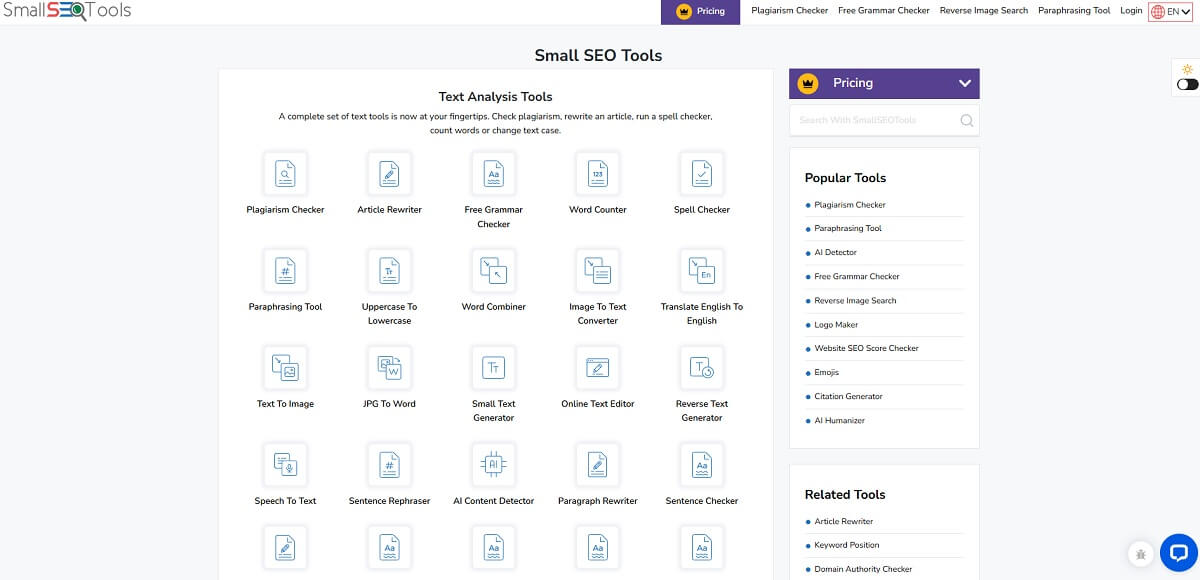
Small SEO Tools Keyword Rank Checker lets you enter a domain, select a search engine and device, and check several keywords in one request. The current interface accepts up to 10 keywords and also provides a field for a competitor URL.
This is primarily a keyword position checker, not a full competitor-analysis platform. It will not replace the link and traffic metrics offered by Ahrefs or Semrush, but it can answer the basic question: “Where does this domain rank for these keywords?”
What you get for free:
- multiple keywords in one check;
- domain and competitor URL fields;
- search engine and device selection;
- Google region or domain options;
- no paid subscription for basic use.
Limitation: Reports contain fewer SEO and competitor metrics, and the advertising-heavy interface may feel slower than dedicated platforms.
Verdict: Use Small SEO Tools for occasional bulk position checks when you do not need advanced analysis.
8. Mangools SERPChecker — Best for Beginners
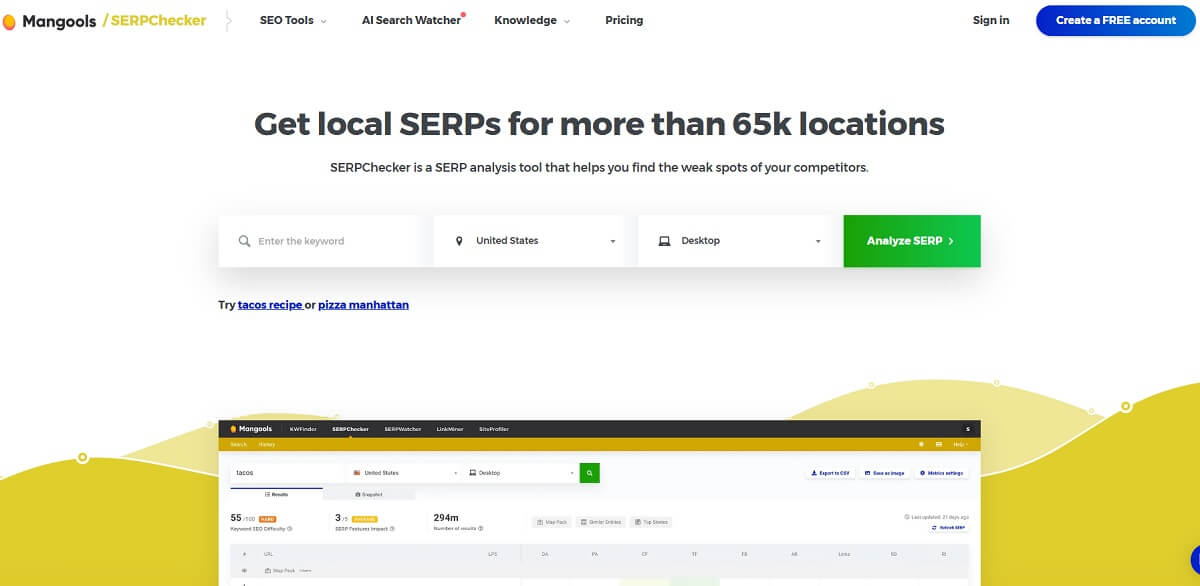
Mangools SERPChecker presents ranking data in a clear interface that is easier to understand than many enterprise SEO platforms. It combines the ranking pages with authority, link, and SERP-feature data, while allowing users to choose a location and device.
Mangools now offers a limited free plan without requiring a credit card. SERP lookups count against the daily allowance, so it is better for selective research than for checking hundreds of keywords.
What you get for free:
- a permanently limited free plan;
- location-based SERP analysis;
- desktop and mobile views;
- authority and link metrics;
- a clean, beginner-friendly report.
Limitation: Free SERP lookups are limited and reset according to the account’s daily usage period.
Verdict: Mangools is a good starting point for marketers who want useful SEO metrics without an overwhelming dashboard.
9. Backlinko SERP Checker — Best for Understanding Ranking Difficulty
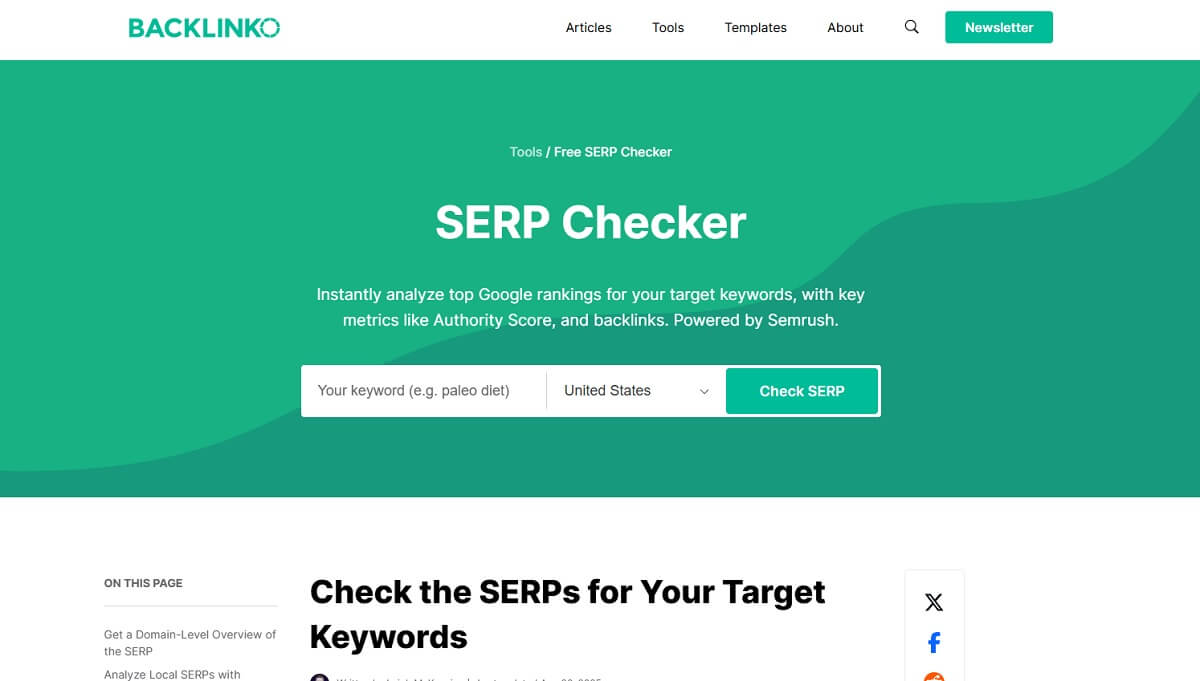
Backlinko’s free SERP Checker is powered by Semrush and combines a keyword search with educational explanations. Its URL-level report can include Authority Score, referring domains, backlinks, estimated search traffic, and the total number of keywords for which each URL ranks.
The page also explains how to interpret domain-level metrics, local SERPs, historical data, and search features. This makes it particularly useful for beginners who want to understand what the numbers mean instead of receiving another unexplained table.
What you get for free:
- top-ranking URLs for a keyword;
- Semrush authority and link data;
- location filtering;
- guidance on evaluating competitors;
- SERP feature information.
Limitation: It uses Semrush data, and deeper reports or historical analysis lead into the Semrush ecosystem.
Verdict: Choose Backlinko if you want a free checker plus a practical explanation of how to turn SERP data into an SEO decision.
10. WhatsMySERP — Best for Simple Browser-Based Checks
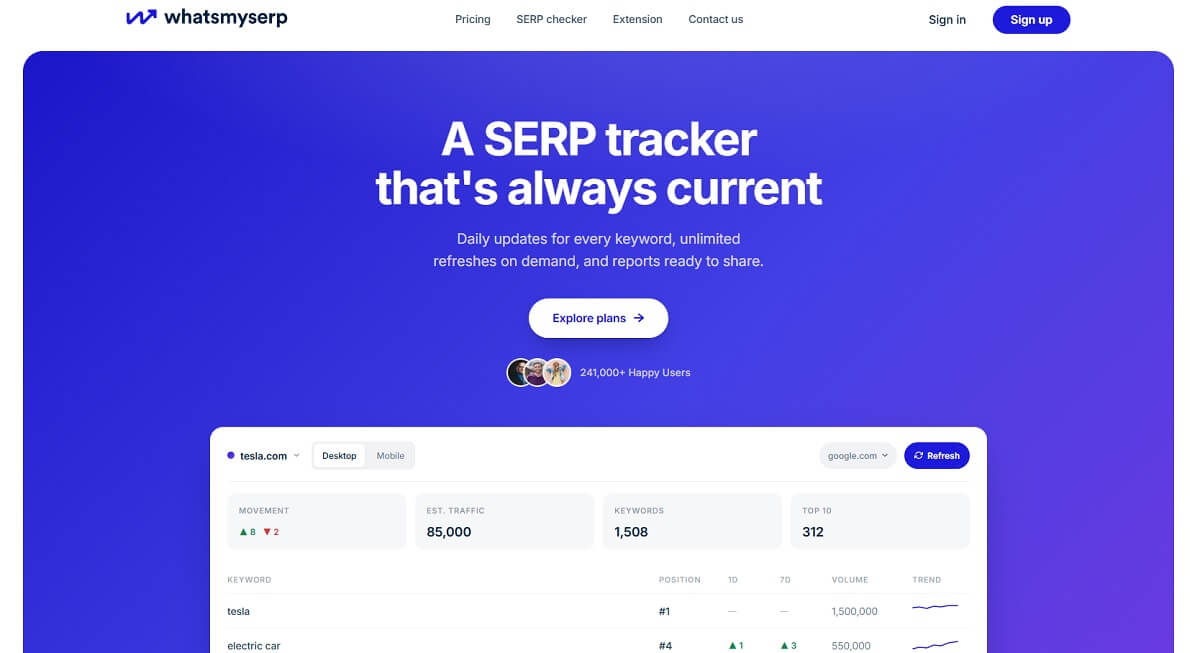
WhatsMySERP provides a lightweight way to check Google positions without navigating a large enterprise SEO suite. It is aimed at users who want to enter a domain and keyword, choose a target region, and get a straightforward ranking result.
Its simplicity is the main advantage. It can be useful for validating a few positions or checking whether a ranking change is visible outside your personalized Google results.
What you get for free:
- limited manual rank checks;
- keyword and domain comparison;
- location-based results;
- a simple interface;
- basic browser-based access.
Limitation: It provides less competitor, backlink, traffic, and SERP-feature data than the leading platforms.
Verdict: WhatsMySERP is suitable for quick checks, but use Semrush, Ahrefs, or SE Ranking when you need to understand why a competitor ranks.
SERP Checker vs. Rank Tracker: What Is the Difference?
A SERP checker retrieves the search results for one keyword at a particular moment. It is best for competitor research, search-intent analysis, and checking which SERP features appear.
A keyword rank checker searches those results for a particular domain. It answers a narrower question: “What position does my website hold for this keyword?”
A rank tracker saves keywords and checks them automatically over time. It adds position history, alerts, visibility charts, competitor comparisons, and scheduled reports. Most free tools offer manual SERP checks, while reliable long-term tracking is usually a paid feature because every automated update consumes data.
A SERP simulator is different from all three. It only previews how a title, URL, and meta description may appear in Google. It does not retrieve live rankings.
How to Choose the Best Free SERP Checker
Check the Location Settings
Google results can differ by country, state, city, language, and device. If your audience is in the United States, a generic global result is not enough. Choose a tool that lets you select the US market and, for local SEO, a specific city or ZIP code.
Look Beyond the Position Number
A position alone does not explain whether you can outrank a page. Authority, backlinks, estimated traffic, content type, and SERP features provide the context needed to evaluate ranking difficulty.
Distinguish Free Plans from Free Trials
A permanently limited plan can support a recurring workflow. A 7- or 14-day trial is useful for a one-time audit but should not be described as a free long-term solution.
Compare Desktop and Mobile Results
Mobile SERPs may contain different rankings, local results, images, videos, and other search features. Check both devices when mobile traffic represents a significant share of your audience.
Check SERP Features
Traditional organic position is only part of current search visibility. AI Overviews, featured snippets, local packs, People Also Ask, videos, shopping results, and ads can reduce clicks even when your page ranks in the top 10.
Decide Whether You Need Exports or History
Manual checks are enough for occasional research. Agencies and in-house SEO teams usually need CSV exports, scheduled reports, alerts, and historical position data. Those features are more likely to require a paid plan.
Which Free SERP Checker Should You Use?
- Choose Semrush for the most balanced free combination of ranking pages, authority data, backlinks, traffic estimates, and SERP features.
- Choose Ahrefs when backlink strength and organic traffic estimates are the main parts of your competitor analysis.
- Choose SE Ranking when five detailed daily checks are enough and you want desktop, mobile, and AI Overview data.
- Choose SERPROBOT when you need to find one domain’s position for several keywords at once.
- Choose AccuRanker when you want a clean live preview that includes organic, local, and paid results.
- Choose Mangools when you are new to SEO and prefer a simpler interface.
- Choose Plerdy when the next step is to analyze and improve the page rather than only record its position.
Frequently Asked Questions
What is the best free SERP checker?
Semrush is the best overall free SERP checker for most users because it combines the top 10 results with authority, backlink, traffic, keyword, and SERP-feature data. Ahrefs is a strong alternative when backlink metrics are the priority, while SERPROBOT is better for checking one domain across several keywords.
Is there a completely free SERP checker?
Yes. Semrush and Ahrefs provide free browser-based SERP checks, and SERPROBOT allows manual checks for up to 10 keywords. Free tools usually limit the number of searches, displayed metrics, exports, or historical data. Automated daily rank tracking is rarely unlimited because every update has a data cost.
How accurate are free SERP checkers?
A reputable free SERP checker is accurate enough for keyword research and routine position checks when the correct country, language, and device are selected. Small differences can still occur because Google results change continuously and may vary by city, search history, device, data center, and the moment the check is made.
Can I check Google rankings without personalization?
Yes. A SERP checker retrieves results for the selected market without relying on your personal Google account or normal search history. Incognito mode can reduce personalization, but it does not fully control your physical location, device, language, or Google data center, so a location-aware SERP checker is more consistent.
What is the difference between a SERP checker and a rank tracker?
A SERP checker displays the search results for a keyword at a specific moment. A rank tracker saves keywords and checks them automatically on a schedule, creating history, visibility charts, alerts, and competitor reports. Use a SERP checker for research and a rank tracker for ongoing monitoring.
Can a SERP checker show local and mobile rankings?
Yes, but the available location depth depends on the tool. Many checkers support country and device selection, while advanced platforms can target a state, city, or ZIP code. Always select mobile results separately when local or mobile traffic is important because rankings and SERP features may differ from desktop.
How often should I check keyword rankings?
Weekly checks are sufficient for most stable informational keywords. Daily tracking is more useful for competitive commercial queries, active campaigns, major content updates, and periods of high SERP volatility. Avoid reacting to one isolated movement; evaluate the trend across several checks.
Does Google Search Console replace a SERP checker?
No. Google Search Console shows the queries, impressions, clicks, and average positions of your own verified website. It does not provide a neutral live SERP or detailed data about every competing page. Use Search Console to measure your performance and a SERP checker to analyze the current competitive landscape.
Final Verdict: The Best Free SERP Checker for 2026
Semrush is the best overall choice when you need a free snapshot of the top 10 results plus enough authority, backlink, traffic, and SERP-feature data to make a content decision. Ahrefs is the better alternative for link-focused competitor research, while SE Ranking provides a useful balance of daily checks, device selection, and modern AI-search data.
For a quick check of one domain across several keywords, SERPROBOT is simpler and faster to understand. AccuRanker is useful when you want to inspect ads, local listings, and organic results together. Plerdy becomes the stronger option after the position check, when you need to connect ranking data with competitor analysis and concrete on-page improvements.
Do not choose a tool based only on the word “free.” Select the checker that supports your target location, device, required metrics, and checking frequency. For important keywords, verify the result with a second tool before making a major SEO decision.