

Choosing between Qualtrics and SurveyMonkey looks easy at first. Both tools create surveys. Both collect responses. Both help teams understand customers, employees, products, and markets. But the real difference appears when you compare pricing, analytics, research depth, and team needs.
This Qualtrics vs SurveyMonkey comparison is built for people who need a practical answer, not a perfect vendor brochure. If you are a small business, SurveyMonkey may feel faster and cheaper to start. If you are an enterprise team, research department, university, or HR team with complex logic and reporting needs, Qualtrics can make more sense. It depends on the job. A bit boring, yes, but that is usually how software choices work.
Qualtrics Vs SurveyMonkey: Fast Answer
Choose Qualtrics if you need enterprise-level research, advanced survey logic, employee engagement studies, customer experience programs, concept testing, crosstabs, statistical analysis, dashboards, and more control over complex data.
Choose SurveyMonkey if you need a simpler survey tool for SMB teams, quick forms, customer feedback, polls, basic market research, team collaboration, exports, and a faster learning curve.
The short answer: Qualtrics is better for deep research and enterprise workflows. SurveyMonkey is better for speed, usability, and everyday survey projects. So, when people search for SurveyMonkey vs Qualtrics, the answer is not “one tool wins.” The better tool is the one that fits your survey use case, budget, and reporting needs.
Qualtrics Vs SurveyMonkey Comparison Table
| Comparison Point | Qualtrics | SurveyMonkey | Better Fit |
|---|---|---|---|
| Best For | Enterprise research, customer experience, employee experience, product studies, academic research, complex survey logic. | SMB surveys, quick customer feedback, team surveys, simple market research, forms, polls, and everyday business questions. | Qualtrics for enterprise. SurveyMonkey for SMB and fast survey work. |
| Free Plan | Free account available with limits: single user, 3 active surveys, 30 questions per survey, 500 total responses, and 8 question types. | Basic free plan available, but with limited creation and analysis features. Free users can create simple surveys, but limits apply. | Both have free options, but neither free plan is ideal for serious research. |
| Starting Paid Price | Strategic Research online pricing is $420/month, billed annually at $5,040, for 1,000 responses shared across all users. | Individual Advantage Annual is $39/month, billed annually. Standard Monthly is $99/month. Premier Annual is $139/month, billed annually. | SurveyMonkey is cheaper for individual and small-team use. |
| Team Pricing | Usually quote-based for larger teams and enterprise programs. | Team Advantage is $30/user/month, starting at 3 users, billed annually. Team Premier is $92/user/month, starting at 3 users, billed annually. | SurveyMonkey is clearer for standard team pricing. |
| Enterprise Pricing | Custom pricing based on interactions, response volume, video feedback, security needs, and product suite. | Enterprise pricing is custom and depends on organization needs, integrations, admin controls, and support. | Both need sales contact, but Qualtrics is usually more enterprise-focused. |
| Survey Logic | Strong advanced logic, branching, screening, quotas, research workflows, and complex study setup. | Good logic and customization for common business surveys, with more advanced options on paid plans. | Qualtrics for complex research logic. |
| Analytics | Advanced analysis, crosstabs, statistical tools, dashboards, research reporting, and AI-supported research workflows. | Good charts, filters, exports, and practical survey reporting, but less deep for complex enterprise analytics. | Qualtrics for analytics depth. SurveyMonkey for simple reporting. |
| Export Options | Supports research data exports and reporting workflows depending on the plan and product setup. | Exports include formats like PDF, PPT, XLS, CSV, and SPSS, depending on plan and export type. | SurveyMonkey is strong for simple exports. Qualtrics is stronger for research workflows. |
| Survey Templates | Strong templates for research, customer experience, product, brand, employee, and academic use cases. | Large template library for surveys, forms, customer feedback, events, HR, education, and marketing. | SurveyMonkey is easier for quick templates. Qualtrics is deeper for research templates. |
| Employee Engagement Surveys | Very strong for employee experience, engagement tracking, lifecycle feedback, and enterprise HR programs. | Useful for HR surveys, team feedback, engagement checks, and simple employee polls. | Qualtrics for serious employee experience programs. |
| Market Research | Strong for concept testing, MaxDiff, conjoint, video feedback, product innovation, and advanced research design. | Good for general market research, feedback forms, customer surveys, and simple concept checks. | Qualtrics for advanced market research. SurveyMonkey for faster research surveys. |
| Ease Of Use | Powerful, but can feel complex for beginners or small teams. | Simple, friendly, and easier to launch without training. | SurveyMonkey. |
| Enterprise Vs SMB | Better for enterprise, universities, research teams, HR teams, and customer experience programs. | Better for SMB teams, marketers, founders, agencies, and teams that need surveys without a heavy setup. | Qualtrics for enterprise. SurveyMonkey for SMB. |
What Is Qualtrics?
Qualtrics is an experience management and research platform. It is not only a basic survey builder. It helps teams collect feedback, run detailed research, analyze responses, create dashboards, and connect survey data with customer or employee experience programs.
For companies that need something more serious than a simple questionnaire, Qualtrics can be the better option. It supports advanced research logic, screening, survey automation, reporting, and complex analysis. This is why many enterprise teams use Qualtrics for customer satisfaction, employee engagement, product research, brand research, and market research.
The downside is also clear. Qualtrics can feel heavy if you only need a quick customer poll or a simple form. The setup can take more time, and the pricing is not as friendly for small teams. Still, for enterprise research, it is one of the big survey companies people compare first.
What Is SurveyMonkey?
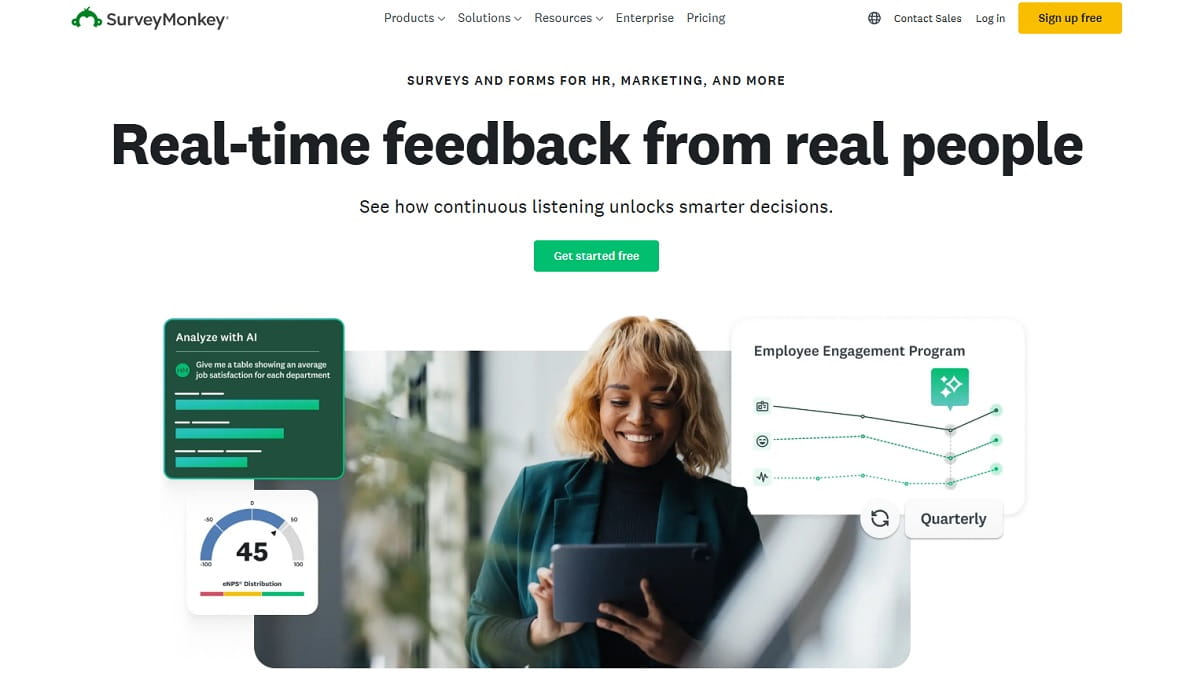
SurveyMonkey is an online survey and form tool built for fast survey creation. It helps teams create surveys, send them by email or link, collect responses, export results, and review charts without needing a research department.
SurveyMonkey is often easier for marketers, HR teams, small businesses, agencies, and product teams that need quick feedback. It is also useful when you need a customer survey, event feedback form, website poll, NPS question, or simple employee survey.
The main limitation is depth. SurveyMonkey can do a lot, but it is not always the best choice for highly complex research, enterprise analytics, or advanced experience management programs. In a Qualtrics vs SurveyMonkey analytics comparison 2025, Qualtrics is usually stronger for deep analysis, while SurveyMonkey is usually better for simple reporting and speed.
Qualtrics Vs SurveyMonkey Features And Pricing Comparison 2025
SurveyMonkey Pricing
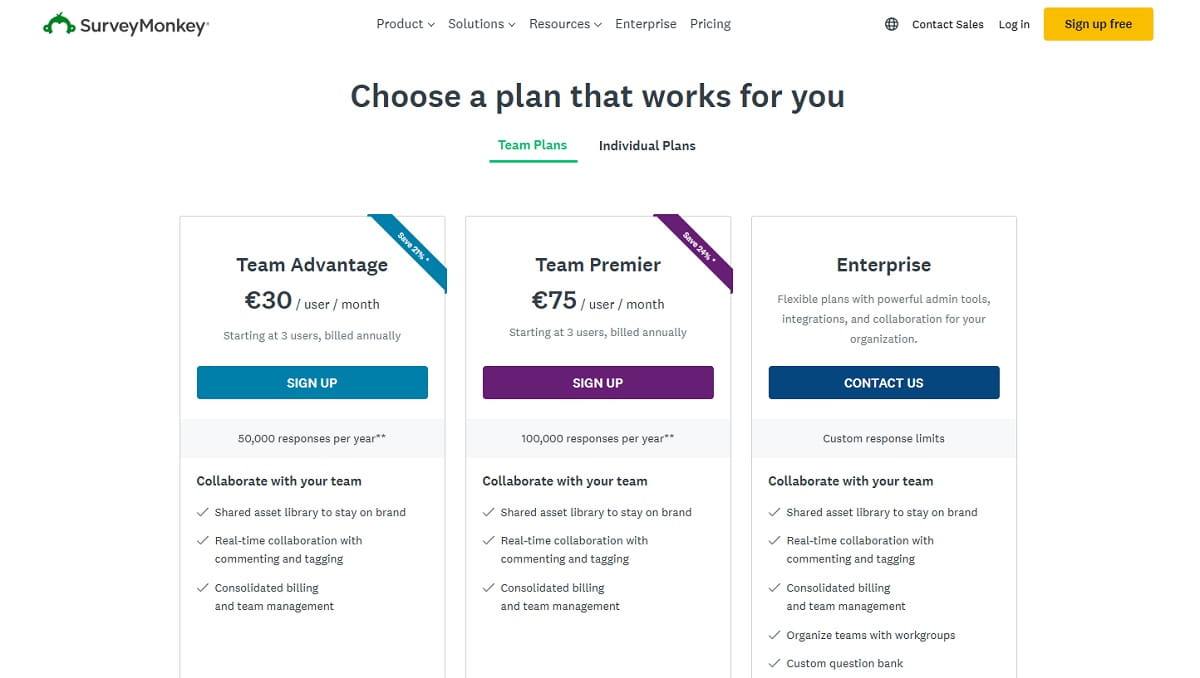
SurveyMonkey pricing is clearer for individual users and standard teams. Team Advantage is listed at $30 per user per month, starting at 3 users, billed annually. Team Premier is listed at $92 per user per month, also starting at 3 users and billed annually.
For individual paid plans, SurveyMonkey lists Advantage Annual at $39 per month, billed annually. Premier Annual is listed at $139 per month, billed annually. Standard Monthly is listed at $99 per month. Enterprise pricing is custom.
This means SurveyMonkey is often easier to estimate before talking to sales. For SMB teams comparing Qualtrics vs SurveyMonkey comparison features pricing enterprise vs SMB, SurveyMonkey usually feels more predictable at the start.
Qualtrics Pricing
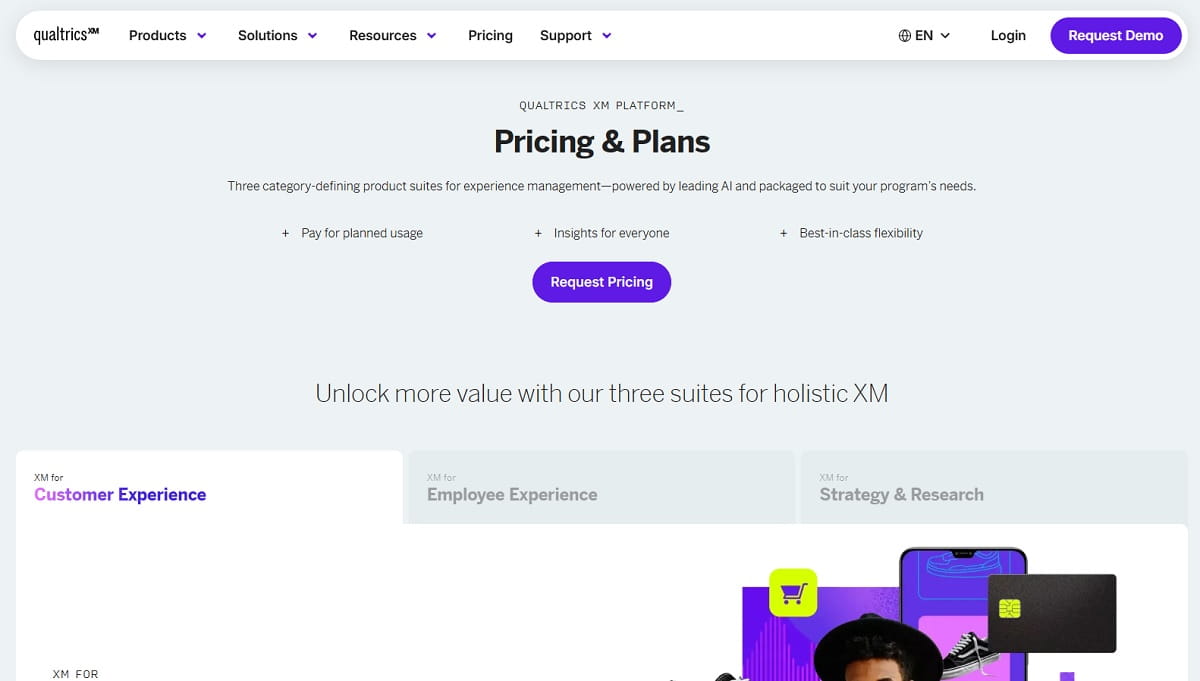
Qualtrics pricing is more enterprise-style. The free Qualtrics Surveys account is useful for testing the platform, but it has limits: one user, 3 active surveys, 30 questions per survey, 500 total responses, 50+ templates, 8 question types, and limited styling options.
Qualtrics Strategic Research has online pricing at $420 per month, billed annually at $5,040, for 1,000 responses shared across all users. Enterprise Strategic Research is quote-based and depends on response volume, research needs, interactions, video feedback, security requirements, and product setup.
So, Qualtrics is not the cheapest option. But it is not trying to be only a cheap survey form tool. It is built for deeper research, more serious reporting, and larger feedback programs.
Qualtrics Vs SurveyMonkey: Main Feature Differences
Survey Creation
SurveyMonkey wins on speed. You can build a simple survey quickly, use templates, add questions, send the survey, and review responses without much training. That is the real reason many SMB teams like it.
Qualtrics is also user-friendly in many areas, but it has more layers. That is good when the project is serious. It is less good when your team only needs a quick answer from 50 customers.
Research Logic
Qualtrics is stronger for advanced logic, screeners, quotas, complex flows, product research, academic studies, and enterprise research programs. If your survey needs to act like a real research instrument, not just a form, Qualtrics usually has the advantage.
SurveyMonkey still offers logic and customization, especially on paid plans. But for very detailed research design, Qualtrics is the safer choice.
Analytics And Reporting
Qualtrics is better for advanced analytics, dashboards, crosstabs, statistical analysis, and serious reporting. This matters for enterprise teams that need to defend decisions with clean data.
SurveyMonkey is better when you need readable charts, exports, and practical results without building a complex reporting system. It is more “open the report and move on,” which is sometimes exactly what a team needs.
Integrations And Workflow
SurveyMonkey offers many native integrations and is easier to connect for everyday marketing, sales, and team workflows. Qualtrics is more flexible for large organizations that need deeper data connections, governance, and experience management processes.
Why Is Qualtrics Better Than SurveyMonkey?
Qualtrics is better than SurveyMonkey when the survey is part of a bigger research or experience program. It is stronger for enterprise customer experience, employee engagement, product research, concept testing, brand research, and complex market research.
It also gives teams more control over research structure. You can build more advanced survey flows, use deeper analytics, and create reports that are better suited for leadership, HR, product, or research teams. This is the part where Qualtrics feels expensive, but also more serious.
Choose Qualtrics when:
- You need advanced survey logic and research workflows.
- You collect large volumes of feedback across teams or departments.
- You need employee engagement or customer experience programs.
- You need dashboards, crosstabs, and statistical analysis.
- You need more control over research quality and reporting.
When Is SurveyMonkey Better Than Qualtrics?
SurveyMonkey is better than Qualtrics when the team needs speed, simplicity, and clear pricing. Not every survey needs enterprise research software. Sometimes you just need to ask customers why they did not buy, ask employees about a process, or collect event feedback before everyone forgets the event existed.
Choose SurveyMonkey when:
- You need a quick survey or form.
- You do not have a research team.
- You want easier pricing for individual or team plans.
- You need simple reports and exports.
- You are an SMB, agency, marketer, or founder doing practical feedback work.
For many teams, SurveyMonkey vs Qualtrics is really a question of depth versus speed. SurveyMonkey is not as deep, but it is often easier to use.
Qualtrics Vs SurveyMonkey Pros And Cons
Qualtrics Pros
- Strong enterprise research features.
- Advanced survey logic and workflows.
- Good for customer experience and employee experience programs.
- Supports deeper analytics, dashboards, and statistical analysis.
- Better fit for large teams, universities, and research departments.
Qualtrics Cons
- Pricing is harder to estimate for enterprise plans.
- Can feel too complex for simple surveys.
- Setup may take more time.
- Small teams may pay for more power than they actually use.
SurveyMonkey Pros
- Fast and easy survey creation.
- Clearer public pricing for individual and team plans.
- Good templates for common survey needs.
- Useful exports and simple reporting.
- Better fit for SMBs and everyday feedback work.
SurveyMonkey Cons
- Less powerful for complex enterprise research.
- Advanced features depend on paid plans.
- Free plan is limited.
- Reporting may not be enough for teams that need deep analysis.
SurveyMonkey Vs Qualtrics Vs Google Forms
Some users also compare SurveyMonkey vs Qualtrics vs Google Forms. This is fair, but these tools are not built for the same job.
Google Forms is fine for very simple free forms, internal checks, small polls, and basic data collection. It is not a serious research platform.
SurveyMonkey is better when you need a more polished survey builder, templates, exports, team features, and practical reporting.
Qualtrics is better when surveys become serious research, customer experience, employee experience, or product strategy work.
Free Alternatives To Qualtrics And SurveyMonkey
If you only need a simple form, both Qualtrics and SurveyMonkey may be more than you need. Free alternatives to Qualtrics and SurveyMonkey can include Google Forms, Microsoft Forms, Typeform free options, Jotform free options, or other lightweight survey tools.
But there is a trade-off. Free tools are usually fine for small surveys, not for advanced research. They may lack complex logic, serious analytics, panel options, response management, or enterprise controls. If your survey result will guide a real business decision, free may become expensive in a quiet way. Bad data does that.
Teams comparing Sogolytics vs SurveyMonkey vs Qualtrics, Pollfish vs SurveyMonkey vs Qualtrics, or other survey platforms should first decide what they need: survey creation, audience panel, research analytics, employee experience, or customer feedback. These are not always the same thing.
Need Website Behavior Data, Not Just Survey Answers?
Qualtrics and SurveyMonkey help you ask people questions. That is useful. But surveys do not always show what users actually do on a website. People can say one thing and click another. It happens all the time.
This is where Plerdy can support the research process. Plerdy is not a SurveyMonkey or Qualtrics replacement. It is a behavior analytics and CRO tool that helps you analyze clicks, scroll depth, session recordings, conversion funnels, popups, and SEO issues. So, if a survey says “the checkout is confusing,” Plerdy can help you see where users actually stop, miss buttons, or abandon the funnel.
A good workflow can be simple: use SurveyMonkey or Qualtrics to ask users why something is happening, then use Plerdy to check what is happening on the website. The combination is stronger than guessing.
Final Verdict: Qualtrics Or SurveyMonkey?
Choose Qualtrics if you need advanced research, enterprise feedback programs, employee experience surveys, complex analytics, and more control over survey logic. It is the stronger tool for big research work.
Choose SurveyMonkey if you need quick surveys, simpler pricing, easier setup, team collaboration, exports, and practical survey reporting. It is the better fit for many SMB teams and marketers.
So, in this Qualtrics vs SurveyMonkey comparison features pricing 2025 review, the winner depends on the work. Qualtrics is stronger. SurveyMonkey is easier. And sometimes easier wins because the survey actually gets launched.
FAQ About Qualtrics Vs SurveyMonkey
Is Qualtrics Better Than SurveyMonkey?
Qualtrics is better than SurveyMonkey for advanced research, enterprise feedback, customer experience, employee experience, and complex analytics. SurveyMonkey is better for quick surveys, SMB teams, simple reports, and easier setup.
Is SurveyMonkey Cheaper Than Qualtrics?
Yes, SurveyMonkey is usually cheaper for individual users and standard teams. Qualtrics has a free account, but its Strategic Research paid option starts much higher and enterprise plans are usually quote-based.
What Is The Main Difference Between Qualtrics And SurveyMonkey?
The main difference is depth. Qualtrics is built for advanced research and experience management. SurveyMonkey is built for easier survey creation, common feedback projects, team surveys, and faster reporting.
Which Tool Is Better For SMB Teams?
SurveyMonkey is usually better for SMB teams because it is easier to start, has clearer public pricing, and works well for quick customer feedback, HR surveys, event feedback, and basic market research.
Which Tool Is Better For Enterprise Research?
Qualtrics is better for enterprise research because it supports advanced survey logic, deeper analytics, dashboards, employee experience programs, customer experience programs, and more complex research workflows.
Can Plerdy Replace Qualtrics Or SurveyMonkey?
No, Plerdy does not replace Qualtrics or SurveyMonkey as a survey builder. Plerdy helps with website behavior analytics, heatmaps, session recordings, funnels, popups, and SEO checks. It works well together with survey tools when you need both user opinions and real website behavior data.