

SurveyMonkey is still one of the most recognized tools for online surveys, customer feedback, market research, event feedback, and employee surveys. But many teams still search for surveymonkey alternatives because they need lower pricing, easier setup, website feedback, stronger form options, or more flexible reporting.
Some users compare survey monkey alternatives because they do not need a heavy research platform. A small ecommerce store may only need pop-up surveys, NPS, CSAT, CES, and quick feedback from real website visitors. A SaaS team may want product feedback, onboarding questions, or customer satisfaction surveys. Others simply need free alternatives to survey monkey for a small project, school survey, event form, or basic customer research.
This guide compares the best surveymonkey competitors for 2026. Plerdy is added as the first option because it works especially well for website feedback, conversion research, UX problems, and visitor surveys shown at the exact moment when users interact with your site.
What Is SurveyMonkey?
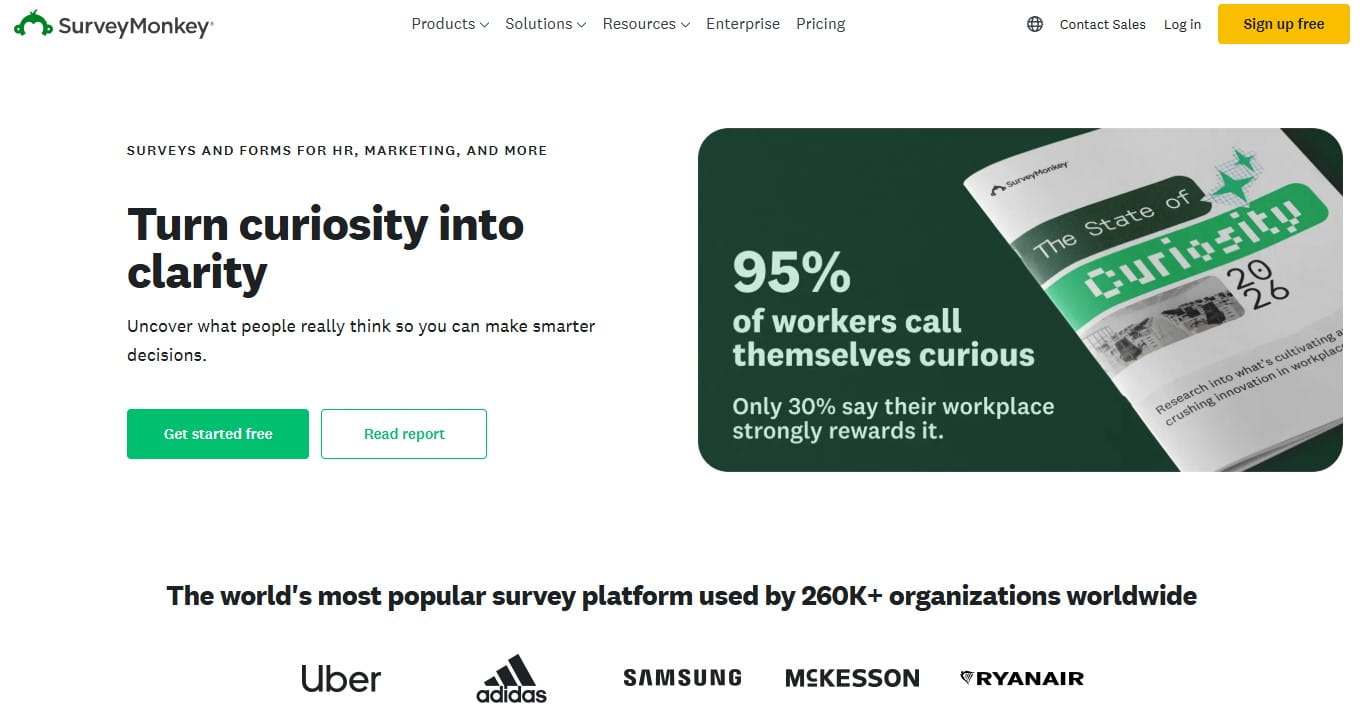
SurveyMonkey is an online survey and form platform used to create surveys, collect responses, analyze feedback, and make business decisions based on data. Companies use it for customer feedback, employee surveys, market research, event feedback, registration forms, product research, and other survey projects.
The platform is popular because it offers ready-made survey templates, AI-assisted survey creation, audience targeting, reporting, and integrations with other business tools. For many teams, SurveyMonkey is a safe and familiar choice when they need to launch a survey quickly and collect structured answers.
Still, it is not always the best fit. Some users need cheaper tools, simpler forms, website feedback, pop-up surveys, NPS, CSAT, CES, or better control over how questions appear on a website. That is why many businesses compare SurveyMonkey alternatives, survey monkey alternatives, and SurveyMonkey competitors before choosing a survey tool.
If you only need a classic survey link, SurveyMonkey can work well. But if you need feedback inside the website journey, form-based lead collection, free survey limits, or tools connected with UX and conversion optimization, then sites like SurveyMonkey may be a better match.
SurveyMonkey Alternatives Comparison Table
| Tool | Best For | Free Plan Or Starting Point | Main Reason To Choose It |
|---|---|---|---|
| Plerdy | Website feedback, NPS, CSAT, CES, pop-up surveys, CRO | Free plan available | Best when you need feedback from real website visitors and want to connect survey answers with UX and conversion issues. |
| Qualaroo | Targeted on-site surveys | Starter/pricing options available | Good for asking specific users contextual questions based on behavior, page, visit history, or exit intent. |
| Zoho Survey | Business surveys and Zoho ecosystem users | Free plan available | Strong choice for teams already using Zoho CRM, Zoho Analytics, or other Zoho products. |
| Jotform | Forms, surveys, payments, registrations | Free plan: 5 forms and 100 monthly submissions | Better than SurveyMonkey if you need flexible forms, payments, signatures, and many integrations. |
| QuestionPro | Market research and customer experience surveys | Free survey platform available | Useful for teams that need many question types, templates, research workflows, and CX surveys. |
| Alchemer | Advanced surveys and enterprise feedback | Paid plans from $55/user/month | Best for teams that need deeper logic, reporting, scripting, and enterprise-grade survey workflows. |
| Survio | Simple surveys and basic research | Free plan: 100 responses/month | Good free SurveyMonkey alternative for simple surveys, QR codes, reports, and small feedback projects. |
| Survicate | Customer feedback across many channels | Free signup; paid plans available | Strong for SaaS and product teams that need website, email, mobile, and in-product surveys. |
| Odoo Survey | Odoo users and internal business surveys | Part of the Odoo ecosystem | Best if your company already uses Odoo and wants surveys connected with business workflows. |
| SurveyLegend | Visual surveys, forms, polls | Free Starter; Pro from $15/mo annually | Useful for visually attractive surveys and smaller teams that need a simple interface. |
| BlockSurvey | Privacy-first surveys and AI survey creation | Standard from $49 monthly or $39/mo yearly | Good for privacy-sensitive surveys, branded forms, and AI-assisted survey creation. |
| forms.app | Forms, surveys, quizzes, lead capture | Free plan: 5 forms and 100 responses/month | Good SurveyMonkey competitor for quick forms, quizzes, reports, payments, and simple surveys. |
Best 12 SurveyMonkey Alternatives and Competitors
There is no single surveymonkey alternative that fits every business. Some tools are better for classic surveys. Some are better for forms. Some are better for website feedback and conversion optimization. Below, you will find sites like survey monkey for different use cases: website surveys, free survey tools, customer experience, product feedback, research, forms, quizzes, and enterprise survey workflows.
#1. Plerdy Alternative to SurveyMonkey
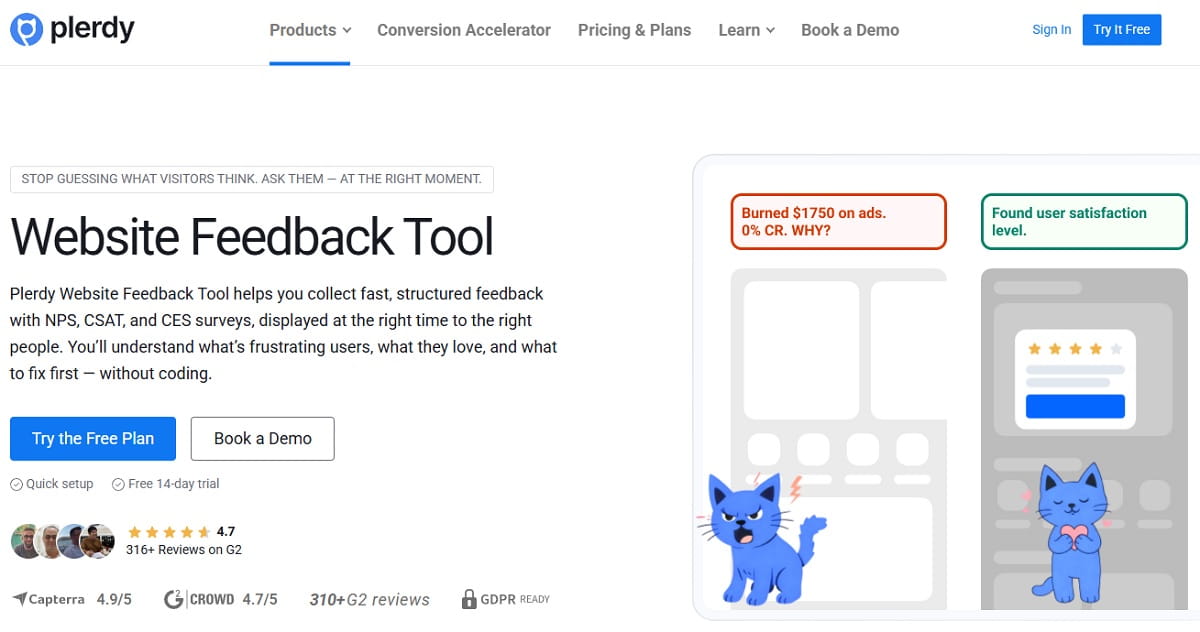
Plerdy is the best alternative to survey monkey for businesses that want to collect feedback directly from website visitors and use it to improve conversions. It is not a full replacement for large external research panels, but it is much stronger when your main goal is website feedback, NPS surveys, CSAT surveys, CES surveys, pop-up surveys, and CRO analysis.
Best for: ecommerce stores, SaaS websites, service pages, landing pages, lead generation websites, and teams that want to understand why users do not buy, submit a form, or move through the funnel.
Why it is a strong alternative: SurveyMonkey is useful for structured surveys, but Plerdy is often better than surveymonkey when feedback must appear inside the real website journey. For example, you can ask why users leave checkout, what is unclear on a pricing page, or what stopped visitors from completing a form.
Key features:
- NPS, CSAT, and CES surveys.
- Website feedback forms.
- Pop-up surveys and targeted messages.
- Behavior-based display rules, including scroll, click, and exit intent.
- Segmentation for different visitor groups.
- Heatmaps, session recordings, funnel analysis, and CRO tools in the same Plerdy ecosystem.
Watch before choosing: choose Plerdy when your main goal is website feedback and conversion improvement. If you need a large external survey audience panel, academic sampling, or very deep research logic, SurveyMonkey or research-focused competitors of surveymonkey may still fit better.
#2. Qualaroo Alternative to SurveyMonkey
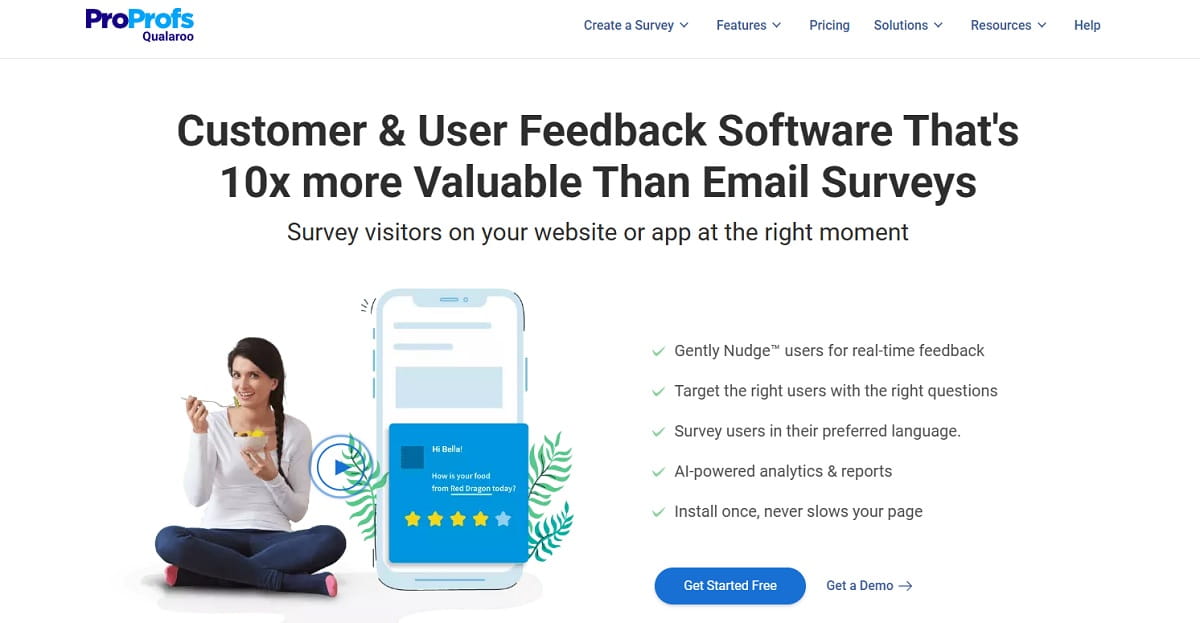
Qualaroo is a SurveyMonkey alternative built around targeted user feedback. It is useful when you want to survey people while they are using your website, product, or service, not days later through a generic email survey.
Best for: product teams, marketers, SaaS companies, UX researchers, and websites that need contextual questions.
Why it is a strong alternative: Qualaroo lets you target surveys by page, behavior, user type, visit history, and exit intent. That makes the feedback more specific than a broad survey link sent to everyone.
Key features:
- On-site survey Nudges.
- 20+ question types.
- Branching and skip logic.
- Exit intent surveys.
- Multi-language surveys.
- Scored surveys for qualification and segmentation.
Watch before choosing: Qualaroo is better for website and product feedback than for cheap, large-volume survey research.
#3. Zoho Survey Alternative to SurveyMonkey
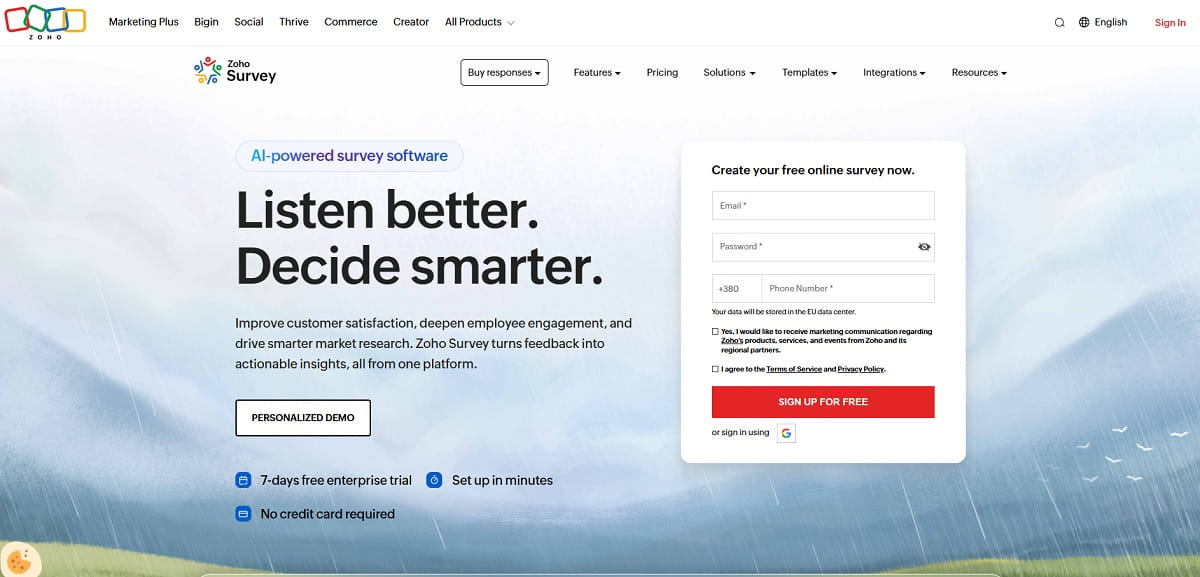
Zoho Survey is a practical SurveyMonkey competitor for teams that already use Zoho products. It helps create surveys, share them, collect responses, and analyze results inside a business-friendly ecosystem.
Best for: small businesses, research teams, educators, nonprofits, and companies already using Zoho CRM or Zoho Analytics.
Why it is a strong alternative: Zoho Survey is useful when survey data should connect with other business tools. It also offers templates, reporting, collaboration, and security features that are important for teams.
Key features:
- 250+ templates across different categories.
- Survey sharing and report sharing.
- Real-time reports and graphs.
- Collaboration features.
- Zoho ecosystem integrations.
- HIPAA and GDPR-focused security positioning.
Watch before choosing: Zoho Survey is strongest if your company already works inside the Zoho ecosystem. If not, compare the interface and reporting flow before switching from SurveyMonkey.
#4. Jotform Alternative to SurveyMonkey
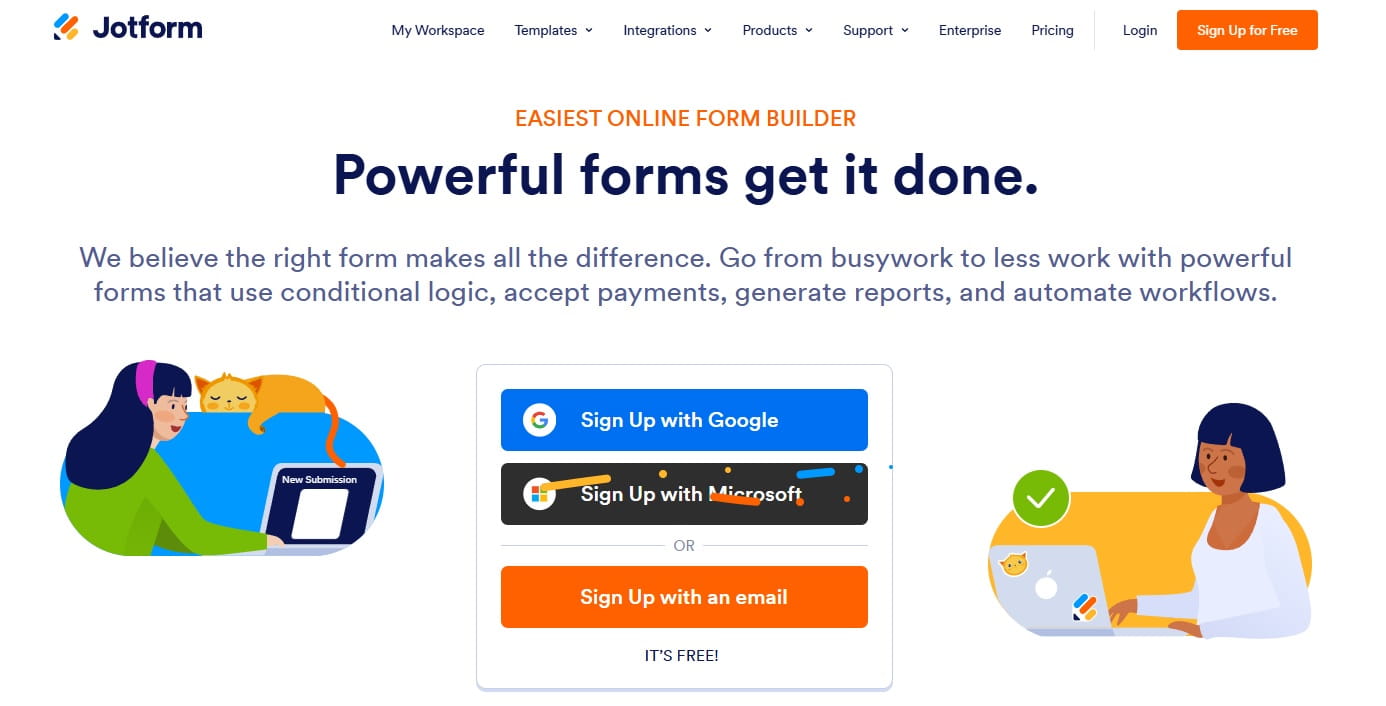
Jotform is one of the best SurveyMonkey alternatives if your survey needs are mixed with forms, payments, registrations, file uploads, signatures, or lead capture. It is more than a survey tool, and that is exactly why many small businesses choose it.
Best for: small businesses, event teams, service companies, schools, nonprofits, and teams that need both forms and surveys.
Why it is a strong alternative: SurveyMonkey is survey-first. Jotform is form-first, but it can handle surveys, quizzes, applications, orders, and payment collection. That makes it more flexible for many business workflows.
Key features:
- Drag-and-drop form builder.
- Survey and quiz creation.
- 150+ integrations.
- Payment collection.
- Custom branding and design controls.
- Free plan with usage limits.
Watch before choosing: Jotform is excellent for operational forms. For advanced research analysis, compare it carefully with more research-focused SurveyMonkey competitors.
#5. QuestionPro Alternative to SurveyMonkey
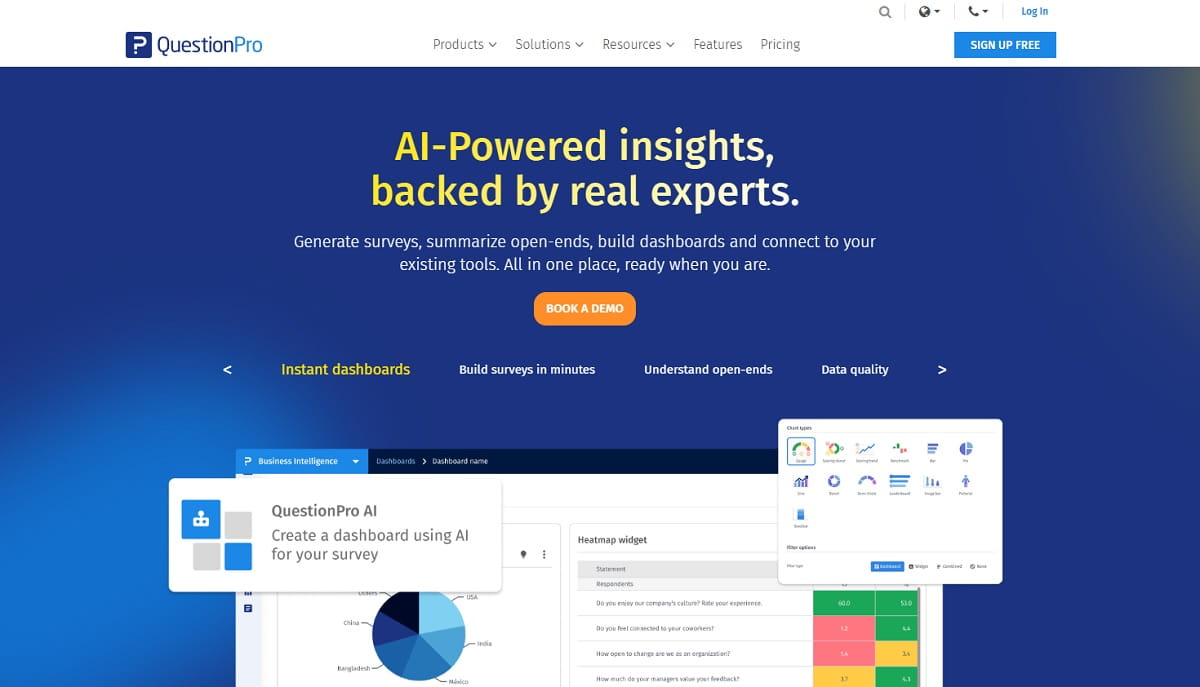
QuestionPro is a serious SurveyMonkey competitor for research, customer experience, employee experience, and market research surveys. It is a better fit for teams that need more structure than a simple form builder.
Best for: market researchers, CX teams, HR teams, universities, and companies running regular research projects.
Why it is a strong alternative: QuestionPro offers survey software, research suite tools, customer experience tools, and employee experience tools. This makes it broader than many basic free survey tools.
Key features:
- Survey creation and analysis.
- Market research survey tools.
- Employee survey tools.
- Customer experience surveys.
- GDPR and EU compliance positioning.
- Templates and advanced survey options.
Watch before choosing: QuestionPro may be more than a small team needs. It fits best when surveys are part of a serious research or feedback program.
#6. Alchemer Alternative to SurveyMonkey
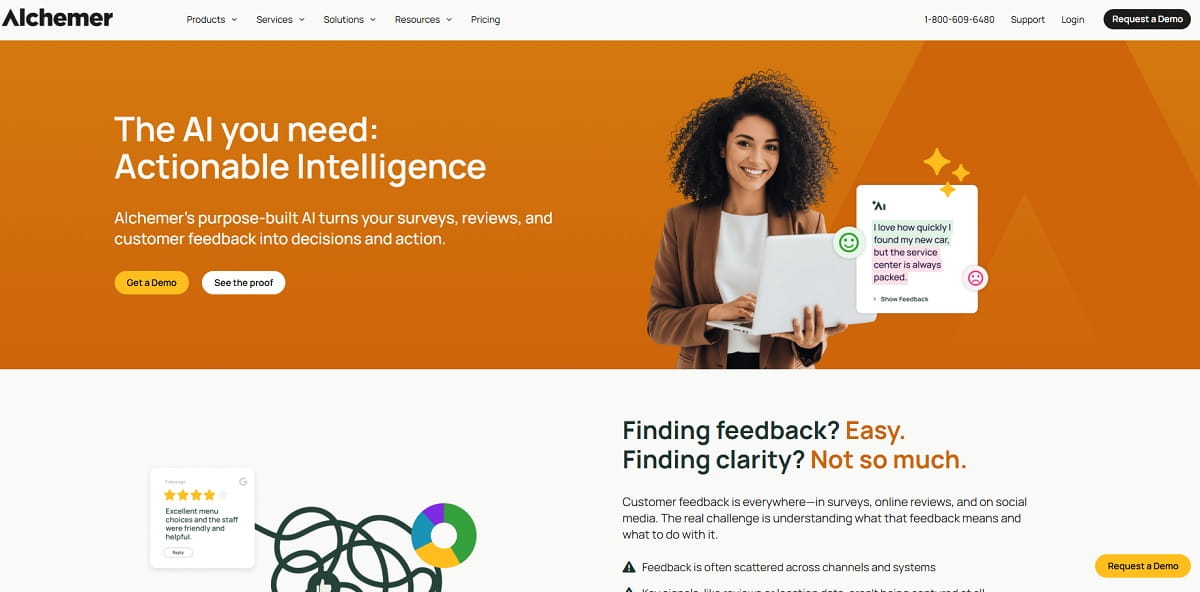
Alchemer, formerly SurveyGizmo, is a powerful SurveyMonkey alternative for teams that need advanced survey logic, reporting, feedback collection, and enterprise workflows.
Best for: research teams, enterprise feedback programs, customer experience teams, and organizations that need deeper survey controls.
Why it is a strong alternative: Alchemer gives teams more room for advanced survey design, logic, scripting, analytics, integrations, and enterprise security. It is not the cheapest option, but it is built for more complex work.
Key features:
- Unlimited surveys on paid plans.
- Large annual response limits.
- Custom templates and branding.
- Advanced logic and scripting.
- Advanced reporting and analysis.
- Enterprise-grade security options.
Watch before choosing: Alchemer is better for mature teams. If you only need a simple free SurveyMonkey alternative, it may feel too heavy.
#7. Survio Alternative to SurveyMonkey
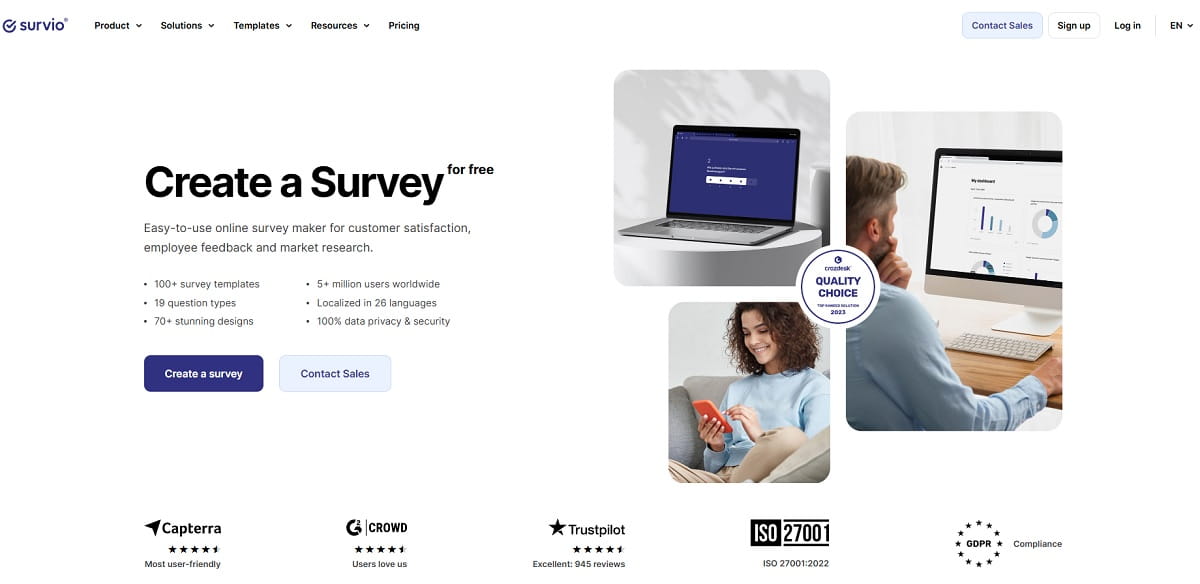
Survio is a simple SurveyMonkey alternative for users who want to create surveys quickly without a complex setup. It works well for small projects, basic research, customer satisfaction, student feedback, and event surveys.
Best for: small businesses, students, teachers, researchers, and teams that need quick surveys with a free starting point.
Why it is a strong alternative: Survio offers a free plan with unlimited surveys, unlimited questions, 19 question types, QR codes, online reports, and 100 responses per month. That makes it a useful free alternative to SurveyMonkey for low-volume surveys.
Key features:
- Unlimited surveys on the free plan.
- Unlimited questions on the free plan.
- 100 responses per month on the free plan.
- 19 question types.
- QR codes and website embedding.
- Online reports and individual responses.
Watch before choosing: Survio is good for simple projects, but larger teams may need paid plans for more responses, branding, team features, and advanced analytics.
#8. Survicate Alternative to SurveyMonkey
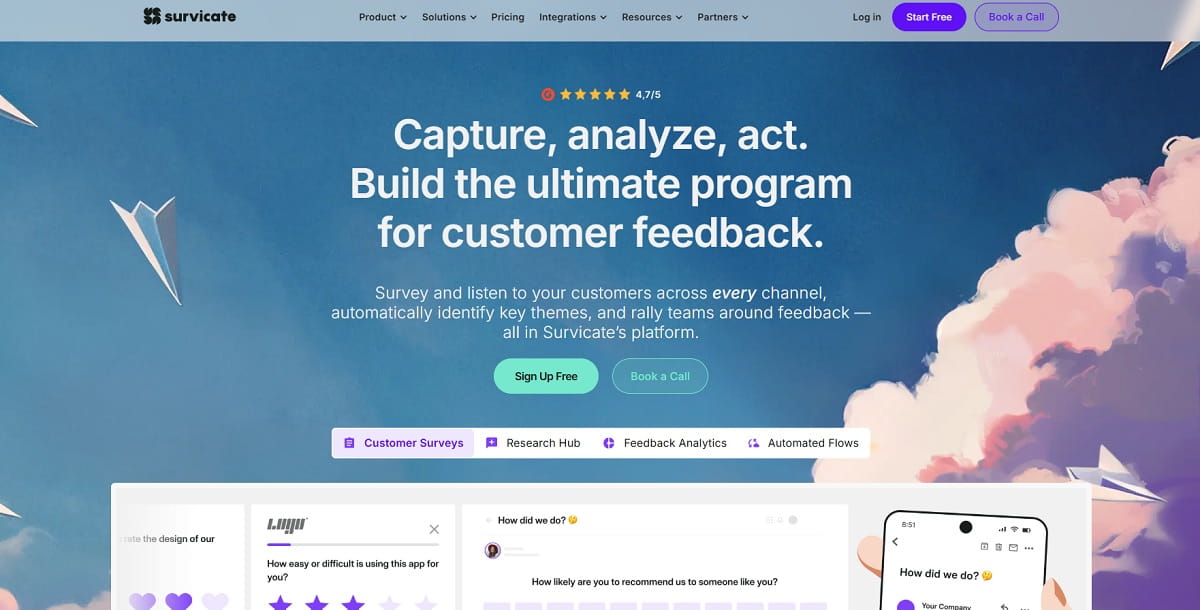
Survicate is a customer feedback platform for teams that want to survey users across several channels. It is especially useful for SaaS, product, and customer success teams.
Best for: SaaS companies, product teams, customer success teams, and businesses that need website, email, mobile, and in-product surveys.
Why it is a strong alternative: Survicate is focused on customer feedback programs, not just one-off surveys. It can collect feedback across website widgets, email campaigns, mobile apps, and in-product moments.
Key features:
- Website surveys.
- Email surveys.
- Mobile app surveys.
- In-product surveys.
- NPS, CSAT, CES, and product feedback templates.
- Integrations with tools like HubSpot, Salesforce, Slack, Intercom, and Google Sheets.
Watch before choosing: Survicate is best when feedback is part of a continuous customer experience workflow. For a few basic forms, simpler tools may be enough.
#9. Odoo Survey Alternative to SurveyMonkey
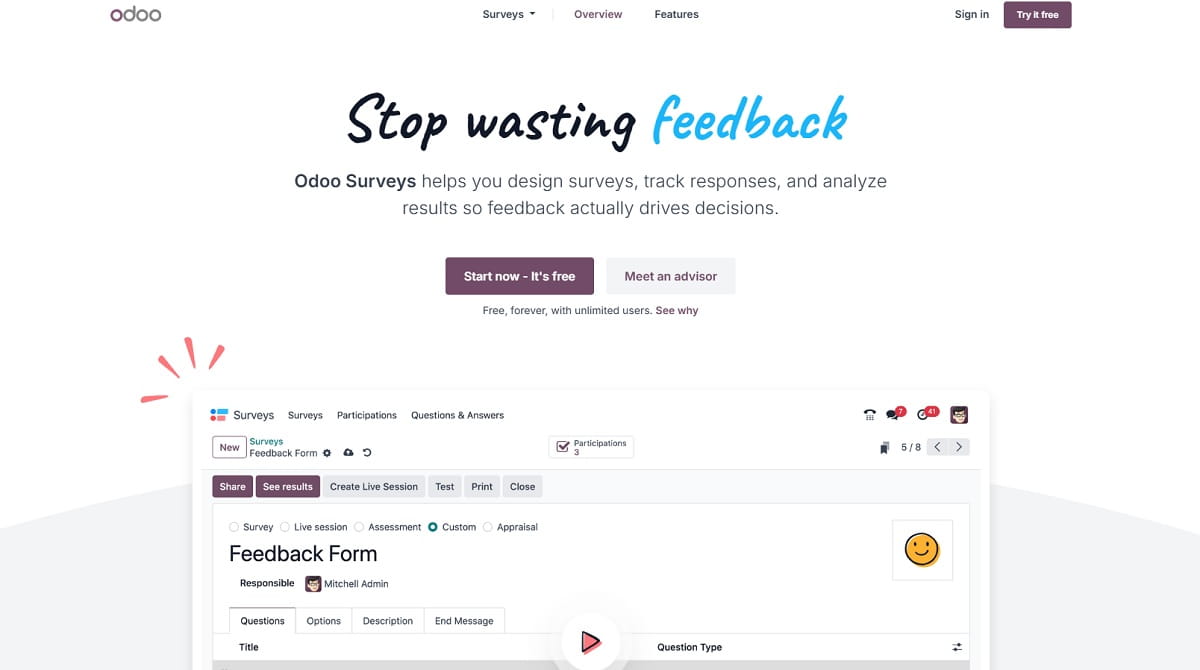
Odoo Survey is a good SurveyMonkey alternative for companies already using Odoo. It helps create surveys, questionnaires, assessments, certifications, and feedback forms inside the Odoo business ecosystem.
Best for: companies using Odoo CRM, HR, marketing, sales, or other Odoo apps.
Why it is a strong alternative: Odoo Survey makes sense when survey results should connect with business operations. For example, a company can use it for customer feedback, employee feedback, event evaluation, training assessments, or internal questionnaires.
Key features:
- Surveys and questionnaires.
- Assessments and certifications.
- Customer and employee feedback.
- Event feedback.
- Survey analysis inside Odoo workflows.
Watch before choosing: Odoo Survey is not the best standalone choice if you do not use Odoo. It is strongest when surveys are part of a wider Odoo setup.
#10. SurveyLegend Alternative to SurveyMonkey
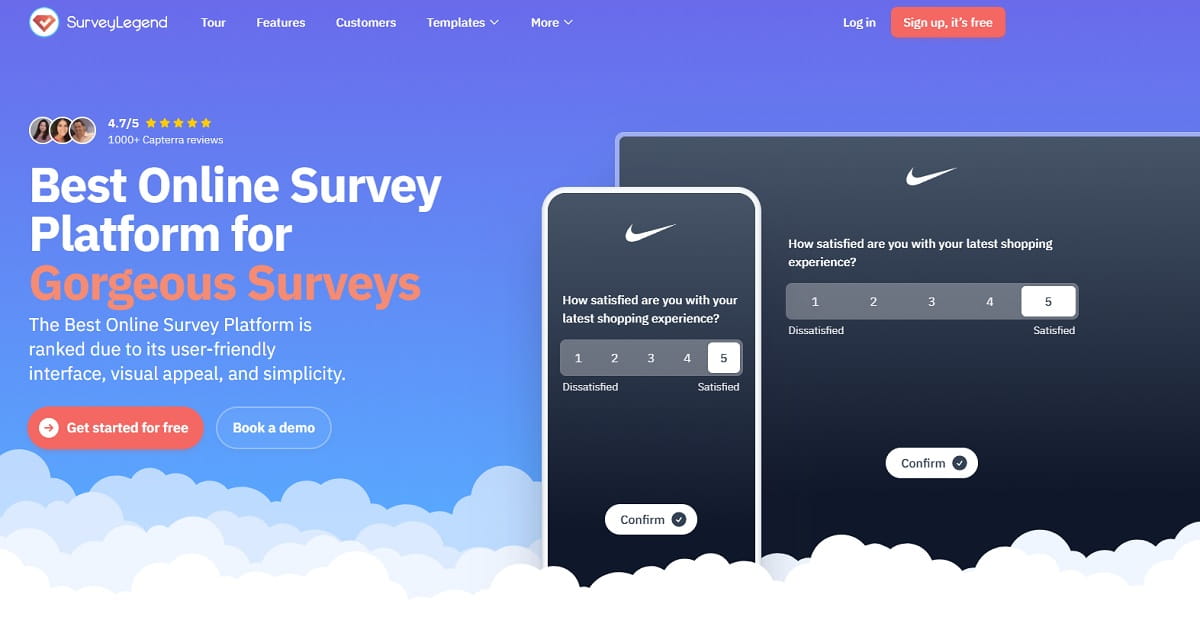
SurveyLegend is a visual SurveyMonkey alternative for creating surveys, forms, and polls. It is useful when design and respondent experience matter, but the project does not require a heavy enterprise research suite.
Best for: small businesses, educators, creators, nonprofits, and teams that need attractive online surveys.
Why it is a strong alternative: SurveyLegend offers a simple interface, visual survey design, forms, polls, and a free starter option. Paid plans add more surveys, exports, and business features.
Key features:
- Surveys, forms, and polls.
- Visual survey design.
- Free Starter option.
- Pro plan for more surveys and exports.
- Business plan with unlimited surveys.
Watch before choosing: SurveyLegend is good for visual surveys, but advanced research teams should compare reporting, logic, and export limits before switching.
#11. BlockSurvey Alternative to SurveyMonkey
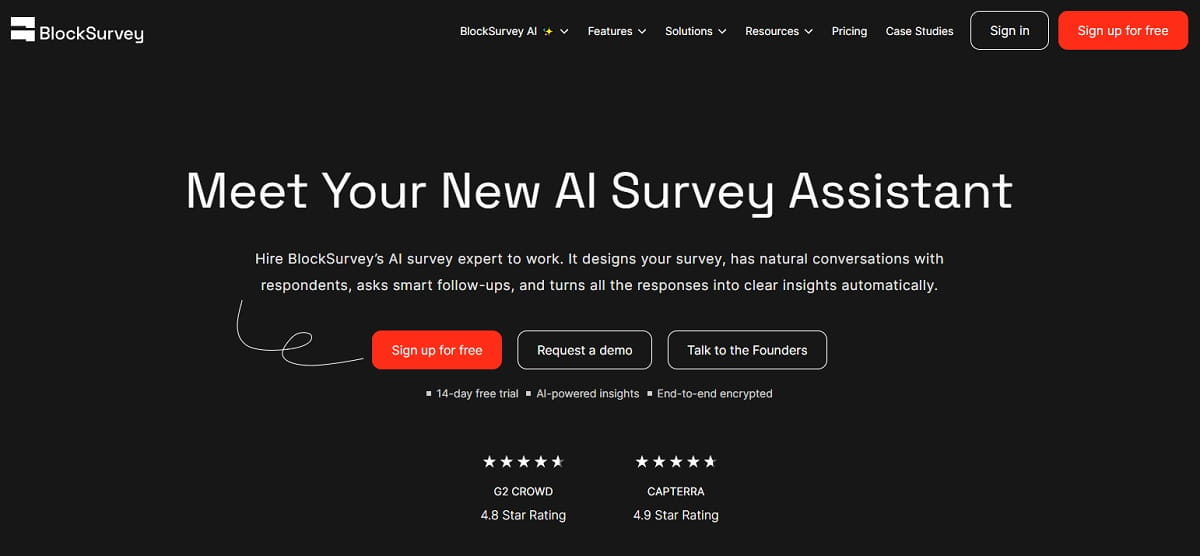
BlockSurvey is a privacy-first SurveyMonkey alternative with AI-powered survey creation. It is useful for teams that care about respondent privacy, branding, and secure feedback collection.
Best for: privacy-sensitive research, branded surveys, Web3 communities, startups, and teams that want AI-assisted survey creation.
Why it is a strong alternative: BlockSurvey focuses on privacy, AI survey creation, partial responses, spam prevention, duplicate response prevention, multilingual surveys, and branded survey experiences.
Key features:
- AI-powered survey creation.
- Unlimited surveys on paid plans.
- Skip and display logic.
- Partial response collection.
- Spam and duplicate response prevention.
- Multi-language surveys.
Watch before choosing: BlockSurvey is a strong fit when privacy is central. For classic business survey workflows, compare integrations and reporting depth before replacing SurveyMonkey.
#12. forms.app Alternative to SurveyMonkey
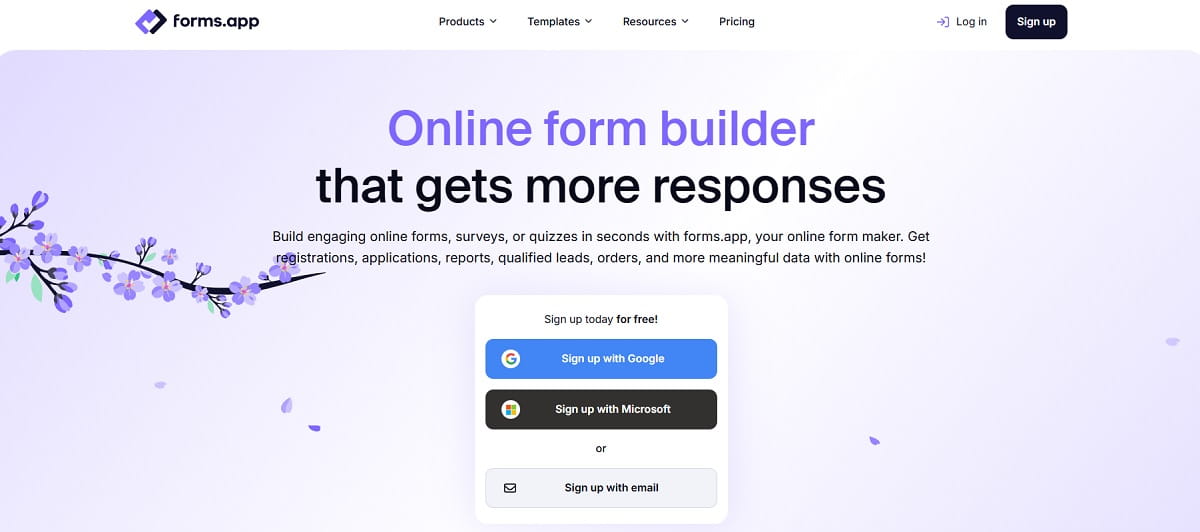
forms.app is a flexible SurveyMonkey alternative for forms, surveys, quizzes, registrations, lead capture, and simple reports. It is especially useful for small teams that want to create forms quickly and start collecting responses without a long setup.
Best for: startups, small businesses, marketers, educators, event teams, and teams that need forms plus surveys.
Why it is a strong alternative: forms.app is not only for surveys. It can handle quizzes, reports, qualified leads, registrations, applications, and orders. The free plan gives users 5 forms, unlimited views, and 100 responses per month.
Key features:
- Forms, surveys, and quizzes.
- Free plan with 5 forms and 100 responses per month.
- Reports and lead collection.
- Payment and order-related use cases.
- Custom business plans for high response volumes.
Watch before choosing: forms.app is great for quick forms and lightweight surveys. For complex research, compare it with tools like QuestionPro, Alchemer, or SurveyMonkey before moving everything.
Best Free SurveyMonkey Alternatives
Many users search for surveymonkey alternatives free because they do not want to pay for a full survey platform before testing the idea. This makes sense for small campaigns, student surveys, early customer research, event feedback, and basic lead forms.
The best surveymonkey free alternatives depend on what you need. Plerdy is better for website feedback and CRO surveys. Jotform and forms.app are useful when you need forms, quizzes, payments, or registrations. Survio and SurveyLegend can work for simple online surveys with a free starting point.
If you need free survey tools like surveymonkey, check the limits carefully. Free plans often limit responses, forms, exports, branding, storage, or team access. So the “free” option may be enough for a quick survey, but not always for serious customer research.
When Should You Choose a SurveyMonkey Alternative?
SurveyMonkey is still a strong survey platform, especially if you need templates, broad survey distribution, research workflows, and a mature survey ecosystem. But many users compare SurveyMonkey with other tools because they need something cheaper, simpler, more visual, or more connected to website behavior.
Choose Plerdy If You Need Website Feedback And CRO
Plerdy is the better choice when your survey question is connected to website behavior. For example, “Why did this visitor leave checkout?”, “Was the pricing page clear?”, “What stopped this user from submitting the form?”, or “How easy was this task?” In these cases, Plerdy can be more useful than a classic survey link because the feedback appears at the right moment.
Choose Jotform Or forms.app If You Need Forms And Surveys
If your work includes applications, registrations, payments, signatures, orders, or lead forms, form-first tools may be better than SurveyMonkey. Jotform and forms.app are good options when surveys are only one part of a wider data collection process.
Choose QuestionPro Or Alchemer If You Need Research Depth
If your team needs advanced survey logic, research workflows, employee experience surveys, customer experience programs, or deeper analysis, QuestionPro and Alchemer are stronger SurveyMonkey competitors than simple free form builders.
Choose Survio Or SurveyLegend If You Need A Simple Free Survey Tool
For smaller projects, free SurveyMonkey alternatives like Survio or SurveyLegend may be enough. They are useful for simple feedback, student research, customer satisfaction checks, event surveys, and quick questionnaires.
Conclusion
The best SurveyMonkey alternative depends on what kind of feedback you need. If you want classic online surveys, tools like Zoho Survey, QuestionPro, Alchemer, Survio, or SurveyLegend can work well. If you need forms, payments, quizzes, or registrations, Jotform and forms.app may be better.
If your main goal is to understand website visitors and improve conversions, Plerdy is the strongest option on this list. It helps collect NPS, CSAT, CES, and on-site feedback at the moment when users interact with your pages. That makes it useful not only for surveys, but also for UX, CRO, and real business decisions.
FAQ About SurveyMonkey Alternatives
What is the best SurveyMonkey alternative?
The best SurveyMonkey alternative depends on your goal. Plerdy is best for website feedback, NPS, CSAT, CES, pop-up surveys, and CRO. Jotform and forms.app are better for forms and payments. QuestionPro and Alchemer are stronger for advanced research and customer experience programs.
What are the best free alternatives to SurveyMonkey?
The best free alternatives to SurveyMonkey include Plerdy, Zoho Survey, Jotform, Survio, SurveyLegend, and forms.app. Each tool has different free limits, so users should compare response limits, form limits, exports, branding, and reporting before choosing.
Is Plerdy better than SurveyMonkey?
Plerdy can be better than SurveyMonkey when the goal is website feedback, conversion research, NPS, CSAT, CES, and pop-up surveys shown to real website visitors. SurveyMonkey may still be better for large research panels, broad survey distribution, and more traditional survey projects.
What are the best sites like SurveyMonkey?
The best sites like SurveyMonkey include Plerdy, Qualaroo, Zoho Survey, Jotform, QuestionPro, Alchemer, Survio, Survicate, Odoo Survey, SurveyLegend, BlockSurvey, and forms.app. The right choice depends on whether you need website feedback, forms, free surveys, or advanced research features.
Which SurveyMonkey competitors are best for advanced research?
QuestionPro and Alchemer are strong SurveyMonkey competitors for advanced research, customer experience surveys, employee surveys, survey logic, reporting, and larger feedback programs. They are better choices when simple forms or basic free survey tools are not enough.