

A unique selling proposition (USP) is the one specific, provable reason a customer should buy from you instead of a competitor. It is not a slogan, not a discount, and not “high quality at a fair price.” It is a promise your competitors either cannot make or have not made, stated so clearly that a buyer can repeat it after one look at your homepage.
This guide covers where the USP idea comes from, how it differs from a value proposition, the criteria a strong USP has to pass, a 7-step method with templates, and more than 15 real unique selling proposition examples, including several famous ones that no longer work and the reasons why. Because a USP is only a hypothesis until real visitors react to it, we also show how to test it on your own site with Plerdy: heatmaps show whether people even see your key message, session recordings show what they do next, and A/B tests show which version actually converts.
Contents
- What Is a Unique Selling Proposition?
- USP vs. Value Proposition vs. Slogan
- Why a USP Matters More Now
- What Makes a Strong USP: 6 Criteria
- Types Of Unique Selling Propositions
- How To Write a Unique Selling Proposition In 7 Steps
- Famous Unique Selling Proposition Examples
- USP Examples By Industry: Restaurants, Food, Ecommerce, SaaS
- USP Examples That Stopped Working
- Common USP Mistakes
- How To Measure Whether Your USP Works
- FAQ
- Conclusion
What Is a Unique Selling Proposition?
A unique selling proposition is a short statement of the specific benefit that sets your product or service apart from the competition and gives your target customer a reason to choose you. A good USP answers the buyer’s first question, “Why you and not them?”, in one sentence, and it is backed by something real: a feature, a process, a guarantee, a price structure, or a way of serving customers that others do not match.
You will also see the term “unique selling point.” In everyday marketing the two are used interchangeably. “Proposition” is the original wording and stresses that the USP is an offer to the customer (“buy this and you get this”), not just a feature you are proud of.
Where the USP Concept Comes From
The term was popularized by advertising executive Rosser Reeves of the Ted Bates agency. In his 1961 book Reality in Advertising, Reeves defined a USP by three rules that still hold up:
- A proposition. Every ad must say to the reader: buy this product and you will get this specific benefit.
- Uniqueness. The competition either cannot or does not offer that proposition.
- Pulling power. The proposition must be strong enough to move large numbers of new customers to your product.
Reeves’s agency is also linked to one of the best-known USP lines ever written, M&M’s “melts in your mouth, not in your hand.” More on that in the examples section.
USP vs. Value Proposition vs. Slogan
These terms overlap, so teams often mix them up. The practical difference is scope: a value proposition describes all the value a customer gets, a USP isolates the part that only you deliver, and a slogan is simply a memorable way to say it.
| Term | What It Answers | Can Competitors Share It? | Where It Lives |
|---|---|---|---|
| Unique selling proposition | Why choose us over the alternatives? | No, by definition | Strategy, hero section, sales pitch, ads |
| Value proposition | What overall value and outcomes does the customer get? | Partly, several brands can promise similar value | Homepage, product pages, sales decks |
| Slogan or tagline | How do we say it memorably? | No, but it can be empty of substance | Logo lockups, ads, packaging |
| Positioning statement | For whom, in which category, and against what? | No, it is internal | Internal brand and marketing docs |
A quick test: if a competitor could paste your statement onto their website without lying, it is a value proposition or a claim, not a USP. For a deeper look at the broader concept, see our value proposition examples.
Why a USP Matters More Now
Buyers compare options in seconds: a search, a few open tabs, maybe an AI-generated summary of the category. In that setting, generic claims blend together. A clear USP does four jobs at once:
- It wins the first few seconds. Visitors decide quickly whether a page is relevant. A specific promise in the hero section gives them a reason to keep reading.
- It reduces price pressure. When the only visible difference between offers is price, buyers pick the cheapest. A real differentiator gives them something else to weigh.
- It aligns the team. Sales, marketing, product, and support can repeat the same promise, so the customer hears one story instead of five.
- It makes the brand easy to describe. Customers, reviewers, and AI answer engines summarize brands in a sentence. If you do not supply that sentence, they will write a vaguer one for you.
What Makes a Strong USP: 6 Criteria
Run every draft through these checks. If it fails one, rewrite it before you put it on a landing page.
| Criterion | Test Question | Weak | Stronger |
|---|---|---|---|
| Specific | Can a customer picture exactly what they get? | “Fast delivery” | “Delivered overnight, guaranteed” |
| Distinctive | Could a competitor say the same thing truthfully? | “Premium quality” | “A carry-on sized to fit under the seat on major airlines” |
| Customer-focused | Is it about their problem, not your pride? | “Award-winning engineering” | “Chocolate that doesn’t make a mess in your hand” |
| Provable | What evidence backs it up? | “Best service in town” | “Find a lower price and we’ll match it” |
| Defensible | How hard is it for rivals to copy? | “Free shipping” | “A supply chain with no freezers at any location” |
| Short | Can it be said in one breath? | A 40-word paragraph | One sentence, ideally under 15 words |
Types Of Unique Selling Propositions
Most USPs are built on one of a handful of foundations. Knowing the type helps you see which angles are still open in your market.
| USP Type | What It Promises | Example | Main Risk |
|---|---|---|---|
| Product feature | A physical or functional difference | M&M’s candy shell | Rivals copy the feature |
| Speed | Faster outcome than alternatives | FedEx overnight delivery | Speed becomes the category standard |
| Guarantee | Removal of buyer risk | Best Buy Price Match Guarantee | Cost of honoring it at scale |
| Price model | A new way to pay, or not pay | Robinhood commission-free trades | Easy to copy for larger players |
| Process or ingredients | How the product is made | Chipotle’s “real ingredients” promise | A single quality failure damages trust |
| Audience or niche | Built for one specific group | Canva’s design for non-designers | Niche may be too small |
| Challenger position | Turning a weakness into a reason to buy | Avis “We try harder” | Works only if the team lives up to it |
| Mission or values | Buying supports a cause | TOMS giving model | Model may prove unsustainable |
| Personality | An attitude no one else in the category has | Liquid Death canned water | Novelty wears off |
How To Write a Unique Selling Proposition In 7 Steps
You do not invent a USP in a brainstorm. You find it where three things overlap: what your best customers care about most, what you genuinely do better, and what competitors are not claiming.
1. Define the Customer You Want More Of
A USP that tries to appeal to everyone appeals to no one. Look at your most profitable, most loyal customers rather than your average one. Write down their role or situation, the job they hire your product for, and what they used before you. Interviews with 8–10 recent buyers usually reveal more than any internal workshop: ask why they chose you, what nearly stopped them, and what they would miss most if you disappeared.
2. List the Problems You Solve And the Outcomes You Deliver
Make two columns: customer problems and your outcomes. Phrase both in the customer’s words, not in product language. “Our dashboard has 40 widgets” is a feature; “you see where visitors drop off without asking a developer” is an outcome. Collect exact phrases from reviews, support tickets, sales calls, and exit surveys.
3. Map What Competitors Already Claim
Open the homepages of your top 5–7 competitors and record their main promise. Uniqueness is relative, so you cannot judge it without this map. A simple grid is enough:
| Competitor | Main Hero Claim | Proof They Show | What They Don’t Claim |
|---|---|---|---|
| Competitor A | “All-in-one platform” | Customer logos | Speed of setup |
| Competitor B | “Lowest price” | Pricing table | Support quality |
| Your brand | Draft USP | Evidence you can show | Open space you can own |
Our guide to competitor analysis covers this research in more depth.
4. Find the Overlap Only You Can Own
Cross out every outcome that competitors already claim credibly. From what remains, pick the one that matters most to the customer from step 1 and that you can prove today. If nothing remains, that is useful information too: your USP may need to come from a new guarantee, a narrower audience, or a change in how you deliver the product.
5. Write the Statement Using a Template
Templates are scaffolding. Use one to get a clear draft, then cut it down to plain language.
| Template | Best For | Example Draft |
|---|---|---|
| We help [audience] [achieve outcome] by [unique method]. | Services, B2B, SaaS | We help small ecommerce teams find checkout friction by combining heatmaps and session replay in one tool. |
| Unlike [alternative], we [key differentiator]. | Crowded categories | Unlike chain bakeries, we bake every loaf the morning you buy it. |
| [Outcome] in [time or condition], or [guarantee]. | Delivery, food, local services | Your car serviced in 60 minutes while you wait, or the next service is free. |
| The only [category] that [unique fact]. | Products with a real first or only | The only running shoe sized in half widths. |
Then compress. Read the draft aloud, remove every adjective that is not evidence, and check it against the six criteria above.
6. Attach Proof To the Promise
Unproven claims read as puffery, and in regulated categories they can get you in trouble (see the Colgate case below). For each USP, decide which evidence sits right next to it: a guarantee, a number from your own data, a short case study, a certification, a comparison table, a demo, or a review snippet. If you cannot find any proof, the USP is not ready.
7. Test the USP On Real Visitors
Your team’s favorite version is not always the one customers respond to. Treat the USP as a hypothesis and test it where buying decisions happen, usually the homepage hero and key landing pages:
- Check attention first. Plerdy heatmaps show scroll depth and clicks, so you can confirm visitors actually see the USP before judging its wording.
- Watch real reactions. Session recordings reveal whether people move toward the call to action after reading the promise or start hunting for pricing, reviews, and proof.
- Compare versions. Run two or three USP headlines against each other with the Plerdy A/B testing tool and measure a real conversion goal, not just clicks. Start with a clear A/B testing hypothesis.
- Ask directly. A one-question on-site survey such as “What almost stopped you from signing up today?” shows which objections your USP still leaves open.
Famous Unique Selling Proposition Examples
The examples below are well-known because each one tied a short promise to something the company could actually deliver. Where a USP has changed or been retired, we say so, because what happened afterward is often the most useful lesson.
M&M’s
USP: “Melts in your mouth, not in your hand.”
This is the textbook Rosser Reeves USP. It names one concrete benefit, no melted chocolate on your fingers, and ties it directly to a product feature, the hard candy shell. It does not claim M&M’s taste better, which would be subjective and impossible to prove. Brand details are on the M&M’s official site.
Lesson: tie the promise to a physical or verifiable feature, and the claim explains itself.
FedEx
USP: “When it absolutely, positively has to be there overnight.”
Created by the agency Ally & Gargano and used from the late 1970s into the early 1980s, according to the Smithsonian’s Federal Express Advertising History Collection. It spoke to a very specific anxious buyer, someone for whom late delivery was not an option, and promised the one thing that buyer cared about.
Lesson: a USP built around the moment of highest customer anxiety is easy to remember and easy to act on.
Avis
USP: “We’re number two. We try harder.”
In 1962 DDB copywriter Paula Green turned Avis’s second place behind Hertz into its selling point. As Slate reports, Avis went from losing $3.2 million to earning $1.2 million within a year, and the market share gap with Hertz narrowed from 61–29 in 1963 to 49–36 by 1966. Avis dropped the tagline in 2012 after roughly 50 years.
Lesson: an honest weakness, reframed as a customer benefit, can be more persuasive than a claim to be the best.
Domino’s Pizza
USP: “Fresh, hot pizza delivered in 30 minutes or less, or it’s free.”
It was a near-perfect USP: specific, measurable, and backed by a guarantee. It also created pressure on drivers. Domino’s dropped the 30-minute guarantee in December 1993, days after a St. Louis jury awarded a woman injured by a Domino’s driver nearly $79 million, as The Washington Post reported.
Lesson: check what your USP forces employees to do. A promise that can only be kept by cutting corners is a liability.
Colgate
What is the USP of Colgate? For its flagship Colgate Total line, the USP is long-lasting, whole-mouth antibacterial protection. Colgate describes Total as fighting germs for 12 hours on teeth, tongue, cheeks, and gums, rather than cleaning only the teeth (Colgate Total product page). Around that core, the brand reinforces its position with dentist endorsement and a very broad product range, from whitening to sensitivity.
Colgate is also a cautionary tale. In 2007 the UK Advertising Standards Authority ruled that its “More than 80% of dentists recommend Colgate” claim was misleading. The underlying survey let dentists name several brands, so the figure did not mean dentists preferred Colgate over competitors (Osborne Clarke’s summary of the ruling). Colgate had to drop the claim.
Lesson: the more your USP relies on numbers, the more carefully the proof behind those numbers has to match the wording.
Best Buy
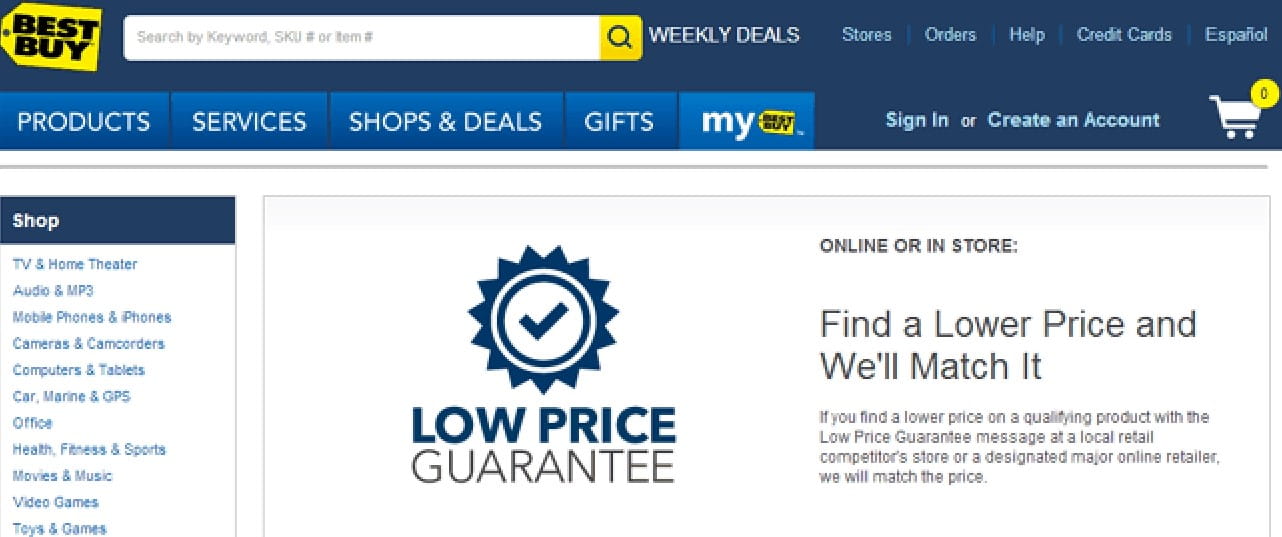
USP: Price Match Guarantee.
Best Buy removes the main reason shoppers leave a store to buy online: fear of overpaying. Under its Price Match Guarantee, it matches the current price of an identical, available product from qualified competitors, with exclusions such as marketplace, open-box, and some holiday-period offers.
Lesson: a guarantee can neutralize a competitor’s advantage (lower online prices) while keeping yours (instant pickup and in-store help).
Canva
USP: Professional-looking design for people who are not designers.
Canva’s stated mission is to empower everyone in the world to design anything and publish anywhere (About Canva). The USP is not “design software,” a crowded category, but design without the learning curve of professional tools, delivered through templates and drag-and-drop editing.
Lesson: redefining who the product is for can create a new category where you have no direct rival.
WooCommerce
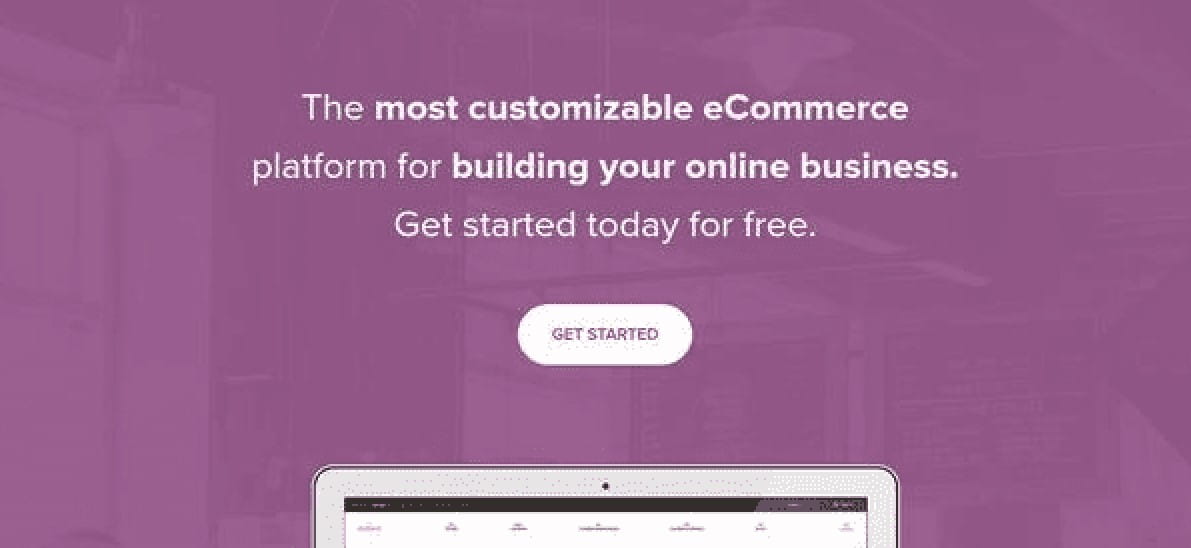
USP: Open-source flexibility and ownership.
WooCommerce’s homepage calls it “the most flexible ecommerce platform” and positions it as the open-source commerce platform for WordPress that gives merchants control over their checkout, data, and costs (WooCommerce). Against hosted platforms, the differentiator is control, not ease.
Lesson: you do not need to win on every dimension. Pick the trade-off your ideal customer values most and own it.
Death Wish Coffee
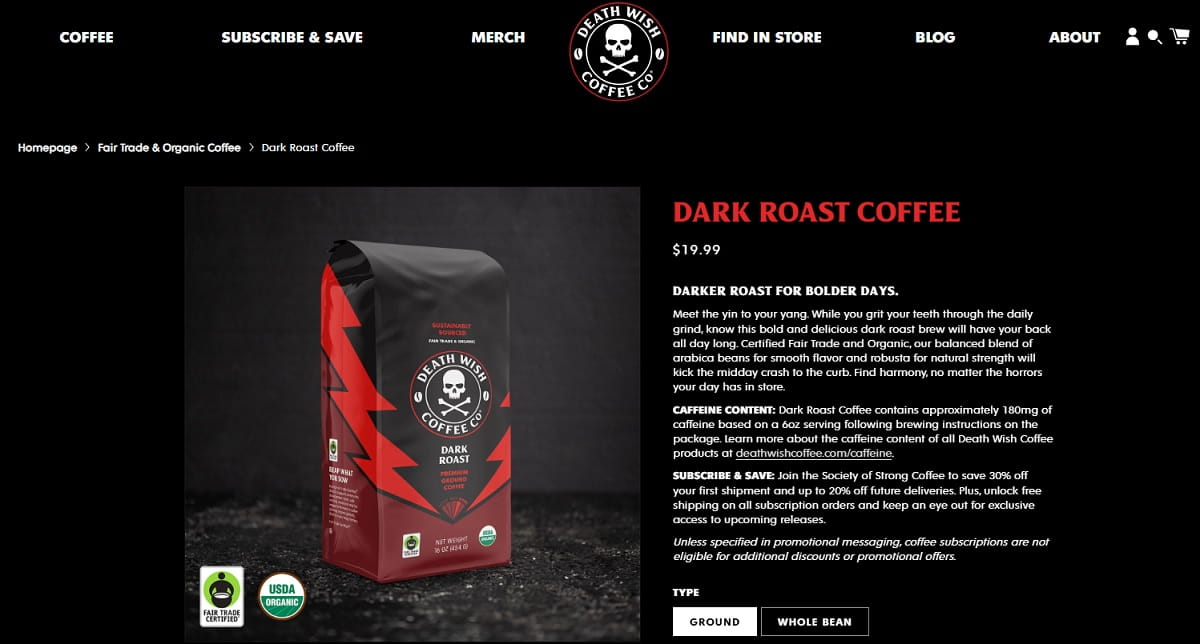
USP: Extremely strong coffee.
Death Wish Coffee markets itself around being a very high-caffeine coffee, and every part of the brand, the name, the skull logo, the tone, reinforces that single idea. The claim polarizes on purpose: it repels casual coffee drinkers and attracts the exact buyer it wants.
Lesson: a USP that deliberately excludes people can make the brand far more attractive to the people it keeps.
Liquid Death
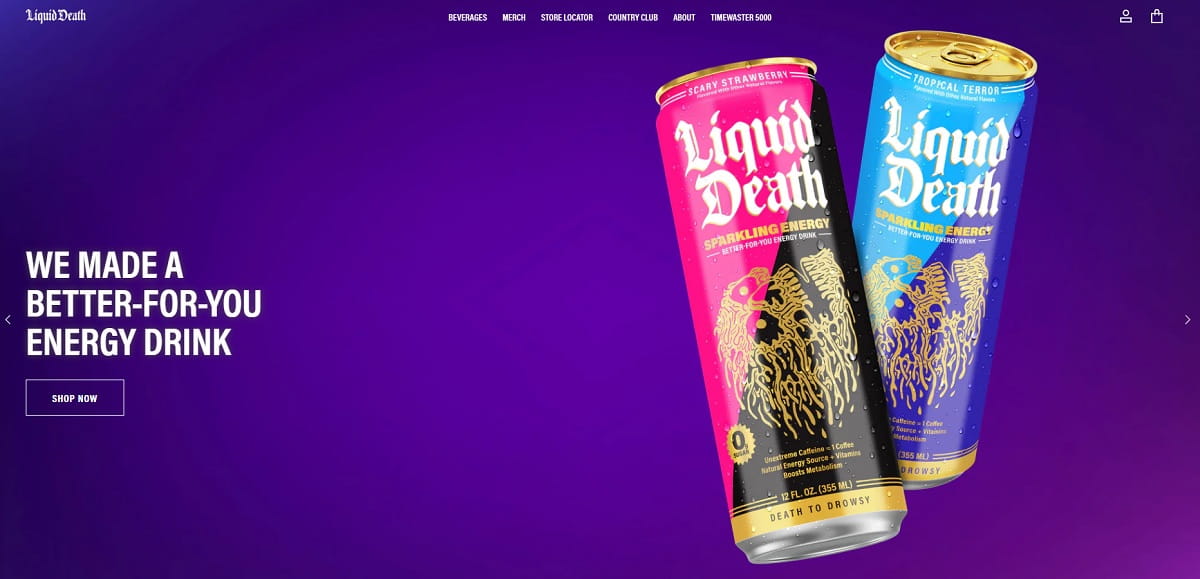
USP: Water with the attitude of a heavy metal band.
Liquid Death sells a commodity, water, in tall aluminum cans with the line “Murder your thirst.” The product difference is small. The USP is the personality and the packaging, which let people drink water in settings where they would otherwise hold a beer or energy drink.
Lesson: in commodity categories, brand experience can become the differentiator, but only if you commit to it everywhere.
USP Examples By Industry: Restaurants, Food, Ecommerce, SaaS
A USP looks different depending on what the buyer is risking. Here is how the same principles translate across common business types.
| Industry | Brand or Example | USP | Why It Works |
|---|---|---|---|
| Restaurant (fast food) | In-N-Out Burger | Fresh, never-frozen food, with no freezers or microwaves in its restaurants | A process promise that competitors built on frozen supply chains cannot match quickly |
| Restaurant (fast casual) | Chipotle | Every item made from 53 real ingredients | A countable, checkable claim instead of a vague “fresh food” |
| Local restaurant | Neighborhood pizzeria (template) | “Dough made daily from flour milled in our region” | Local origin is hard for national chains to copy |
| Food and beverage | M&M’s | Chocolate that does not melt in your hand | Feature and benefit in one sentence |
| Ecommerce (retail) | Best Buy | Price match on identical items from qualified competitors | Removes the fear of overpaying |
| Ecommerce (DTC) | Online store (template) | “Try it for 60 days. If it doesn’t fit your routine, return it free” | Risk reversal for products people cannot touch before buying |
| Ecommerce platform | WooCommerce | Open-source control over checkout, data, and costs | Owns the trade-off its buyers care about |
| SaaS | Canva | Design for non-designers | Reframes the audience, not the feature list |
| Fintech | Robinhood | Investing made accessible, originally through commission-free trades | Removed the most visible cost barrier |
| B2B services | Agency (template) | “Launch-ready landing page in 10 business days, or you don’t pay” | Speed plus a guarantee answers the buyer’s biggest risk |
The template rows are illustrations for your own drafting, not real companies. Use them as starting points and replace every number with one you can actually guarantee.
USP Examples That Stopped Working And Why
Most USP articles present examples as if they were permanent. They are not. Competitors copy, costs change, and promises create side effects. These cases show why a USP needs regular review.
| Brand | Original USP | What Changed | Lesson |
|---|---|---|---|
| Domino’s | 30 minutes or it’s free | Dropped in 1993 after a nearly $79 million jury award tied to a delivery crash | Check the behavior your promise creates |
| Robinhood | Commission-free stock trades | In October 2019, major brokers including Charles Schwab cut online commissions to zero | A price-based USP lasts only until a larger rival matches it |
| TOMS | One for One: buy a pair, give a pair | TOMS moved away from One for One in 2019 and now commits a third of profits to grassroots giving (Forbes) | A mission USP must stay effective, not just marketable |
| Warby Parker | Home Try-On: five frames mailed to you free | The mailed program ended in 2025 as the company shifted to 300+ stores and virtual try-on (Retail Dive) | A USP built for one channel may not survive a change in channel strategy |
| Zappos | Famously long return window | Zappos’s current policy requires returns within 60 days, with free returns in the US | Generous policies are expensive to keep at scale |
| Avis | We try harder | Retired in 2012 after about 50 years | Even great USPs eventually need a new expression |
Common USP Mistakes
- Confusing an offer with a USP. Discounts, free shipping, and 24/7 support help conversion, but competitors can switch them on tomorrow.
- Using claims anyone can make. “High quality,” “customer-first,” and “innovative” say nothing. If a competitor could use the sentence, it is not unique.
- Leading with features. Customers buy outcomes. Translate “AI-powered analytics” into what the buyer gets.
- Making promises the team cannot keep. Sales and support must be able to defend the USP in every conversation.
- Hiding the USP. If the USP sits below the fold or only in the “About” page, many visitors will never see it. Check scroll depth before rewriting copy.
- Stating it only in the headline. The promise has to show up in product pages, onboarding, packaging, and support, or it reads as a slogan.
- Never revisiting it. Review the USP whenever a competitor copies it, your pricing changes, or you enter a new market.
How To Measure Whether Your USP Works
There is no reliable public benchmark for how much a new USP should lift conversions, because the result depends on your traffic, offer, and starting point. Measure against your own baseline instead: record the numbers below for 2–4 weeks before the change, then compare after it.
| Signal | What It Tells You | How To Measure |
|---|---|---|
| Hero visibility | Whether visitors see the USP at all | Scroll and click heatmaps on the homepage and landing pages |
| Conversion rate on key pages | Whether the promise moves people to act | A/B test of USP headline variants against one conversion goal |
| Funnel drop-off | Where the promise stops being convincing | Conversion funnel analysis from landing page to purchase or sign-up |
| Customer language | Whether buyers repeat your USP in their own words | Post-purchase and on-site surveys, sales call notes, reviews |
| Price sensitivity | Whether the USP reduces discount pressure | Discount rate, win rate, and average order value over time |
| Branded search | Whether the USP makes the brand memorable | Branded query impressions in Google Search Console |
Change one element at a time. If you rewrite the headline, the hero image, and the call to action together, you will not know which change made the difference. For headline experiments specifically, see our guide to headline testing.
FAQ
What Is a Unique Selling Proposition In Simple Terms?
It is the one specific, provable reason a customer should buy from you instead of a competitor. A good USP fits in one sentence and describes a benefit competitors do not offer or do not claim.
What Is an Example Of a Unique Selling Proposition?
A classic example is M&M’s “Melts in your mouth, not in your hand.” It names one concrete benefit and ties it to a real product feature, the candy shell. Other well-known examples include FedEx’s overnight delivery promise and Best Buy’s Price Match Guarantee.
What Is the Difference Between a USP And a Value Proposition?
A value proposition describes all the value a customer gets from your product, and several brands can offer similar value. A USP isolates the single benefit that only you deliver, the part competitors cannot truthfully claim.
Is a Unique Selling Point the Same As a Unique Selling Proposition?
In practice, yes. Both terms mean what makes your offer different and better for a specific customer. “Proposition” is the original term from Rosser Reeves and emphasizes that it is a promise made to the buyer.
What Is the USP Of Colgate?
For Colgate Total, the USP is whole-mouth antibacterial protection: Colgate says it fights germs for 12 hours on teeth, tongue, cheeks, and gums. The brand supports this with dentist endorsement and a wide product range.
How Long Should a USP Be?
One sentence, ideally short enough to say in one breath. The internal version can be longer and more detailed, but the customer-facing statement should be clear at a glance in a hero section or ad.
Can a Small Business Have a USP?
Yes, and small businesses often have an advantage: they can serve a narrow niche, offer local sourcing, give personal service, or make guarantees that large companies find too expensive to offer at scale.
How Do You Test a Unique Selling Proposition?
First confirm visitors see it using scroll and click heatmaps, then run an A/B test of two or three USP headlines against one conversion goal, and add a short on-site survey to learn which objections remain. Tools such as Plerdy combine heatmaps, session recordings, A/B testing, and surveys in one place.
How Often Should You Update Your USP?
Review it at least once a year and whenever something important changes: a competitor copies your promise, your pricing or delivery model changes, or you move into a new market or audience.
Conclusion
A unique selling proposition is not a clever line. It is a specific promise, grounded in something you really do better, aimed at a customer who cares about exactly that. The strongest examples, from M&M’s to FedEx to Avis, all pass the same tests: they are specific, provable, and hard to copy. The retired ones show that no USP is permanent.
Write your USP from customer research and a competitor map, attach proof to it, and then let real visitor behavior decide which version stays. Plerdy gives you the heatmaps, session recordings, A/B tests, and on-site surveys to do that on your own pages. The free plan is enough to test your first USP headline.