

Keyword clustering helps you turn a messy keyword export into clear SEO pages, content briefs, and internal links. The practical win is simple: one strong page can rank for many related queries, while different intents get separate pages instead of fighting each other.
What is Keyword Clustering?
Keyword clustering is the SEO process of grouping search queries that can be targeted by the same page because they share search intent, semantic meaning, or similar Google results. Instead of creating thin pages for “keyword clustering,” “SEO keyword clustering,” and “keyword grouping,” you build one complete page if the SERP proves users want the same answer. If the intent changes, you split the cluster into separate URLs.
Why Keyword Clustering Matters for SEO
Modern SEO is not a one-keyword-one-page game. Google can rank one useful page for hundreds or thousands of related phrases when the page satisfies the underlying intent. Semrush describes keyword clustering as grouping search terms with the same intent so they can be targeted together on one page; SE Ranking explains that SERP similarity is also used to distribute keywords across website pages. The real advantage appears when you connect the cluster to a publishing decision: create, update, merge, split, or internally link.
Better Coverage
A cluster gives writers primary and secondary phrases, related questions, and subtopics before writing starts.
Less Cannibalization
Each cluster gets one owner URL, so two pages do not compete for the same intent.
Smarter Internal Links
Clusters reveal pillar pages, supporting articles, and descriptive anchors that help users and crawlers.
Google’s guidance on helpful content says readers should leave feeling they have learned enough to achieve their goal, and that SEO should support people-first content. Keyword clustering is strongest when it does exactly that: it turns research into a page that answers a complete task, not a page that repeats similar keywords.
SERP-Based vs Semantic Keyword Clustering
There are two common ways to group keywords: by word meaning and by search results overlap. Semantic clustering is fast because it groups similar language. SERP-based clustering is safer because it checks what Google actually ranks for each query in the target country. For a US article, use US Google data; a UK, Canada, or global SERP can merge or split intents differently.
| Method | How it works | Best for | Main risk |
|---|---|---|---|
| Semantic clustering | Groups phrases by word similarity, entities, embeddings, stems, and modifiers. | Early cleanup, huge keyword lists, AI-assisted labeling. | It may merge similar words with different intent. |
| SERP-based clustering | Compares top-ranking URLs for each keyword and groups queries with enough shared results. | Final page mapping, cannibalization prevention, localization. | It takes longer and depends on fresh SERP data. |
| Hybrid clustering | Uses semantic grouping first, then validates important groups with SERP overlap. | Most SEO teams, especially content teams with limited time. | Needs manual QA for high-value clusters. |
A practical rule: use semantic clustering to move quickly, but never publish or consolidate important URLs without a SERP check. SEO Utils explains SERP clustering by grouping keywords when several top results overlap; SE Ranking also describes SERP similarity as a grouping signal. The exact threshold can vary, but the principle is stable: similar ranking pages usually mean similar intent.
How to Cluster Keywords Step by Step
1. Build a Raw Keyword List
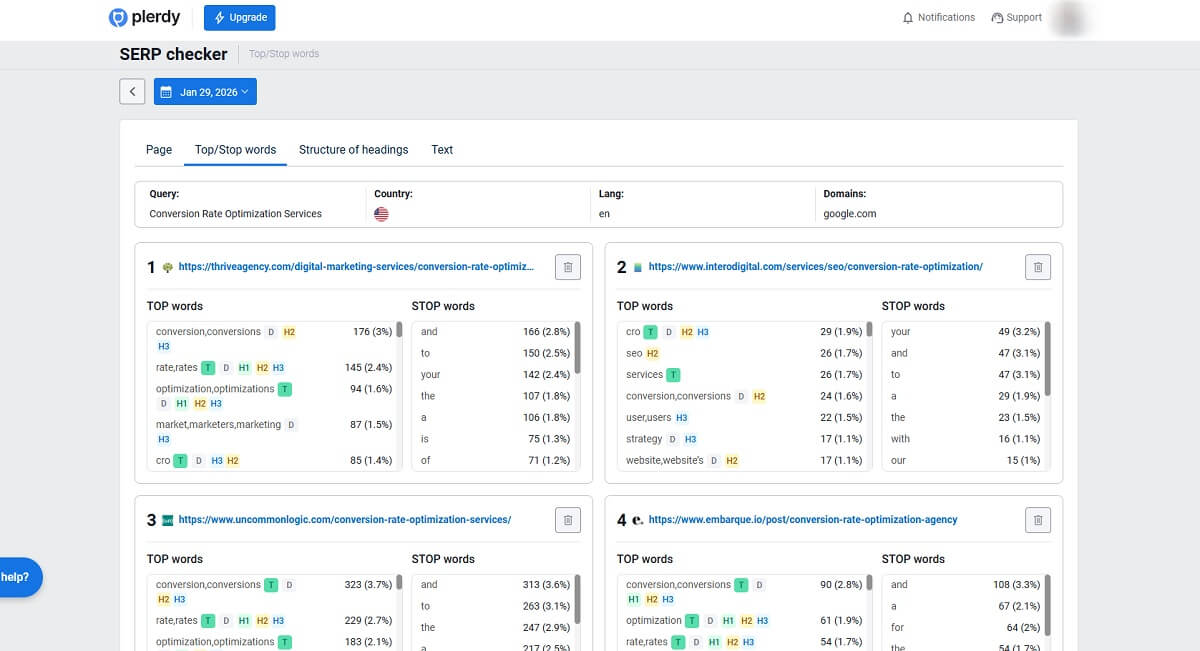
Start from Google Search Console, Keyword Planner, Plerdy SERP Checker, competitor pages, site search logs, paid search terms, and customer questions. Keep columns for keyword, country, language, volume, current ranking URL, clicks, impressions, SERP features, CPC, and business priority. If you do not have GSC data yet, mark that clearly instead of guessing.
2. Clean and Normalize the Export
Remove duplicates, brand-only terms that do not fit the project, misspellings you will not target, irrelevant locations, and phrases with impossible intent. Normalize singular/plural variants only after checking whether they actually share the same SERP.
3. Assign a First-pass Intent
Use four simple labels: informational, commercial, transactional, and navigational. Add a second label for page type: blog guide, glossary, tool page, product page, comparison page, category page, template, or checklist.
4. Compare SERP Overlap for Priority Keywords
For each high-value keyword, compare the top 10 URLs in the US SERP. If two queries share four or more organic results, they are often safe to test as one cluster. If they share one or two, separate them or keep them in a parent-child topic relationship. If the SERP mixes articles, tools, videos, and product pages, inspect the dominant pattern manually.
5. Choose the Primary Keyword
The primary keyword should represent the core intent, not just the highest volume phrase. For this page, “keyword clustering” is better than “keyword grouping” because it is the standard SEO term and matches the tool-aware informational intent.
6. Map One Cluster to One URL
Every cluster needs an owner URL. Sometimes that is a new page. Often it is an existing page that should be refreshed. If you skip this step, the blog slowly grows a jungle: leafy, ambitious, and occasionally trying to strangle itself.
| Finding | Best action | Reason |
|---|---|---|
| No existing page covers the intent | Create a new URL | You have a real content gap. |
| Existing page ranks for the cluster but is thin | Update the existing page | Preserve current signals and improve relevance. |
| Two pages rank for the same query set | Merge, redirect, or differentiate | Reduce cannibalization and clarify ownership. |
| One cluster contains mixed intents | Split into separate pages | A single page cannot satisfy all user jobs well. |
| Cluster is relevant but low priority | Add as subsection or FAQ | A small intent may not deserve a separate article. |
Keyword Clustering Example: From Export to Content Map
Imagine a SaaS team exports keywords around SEO content planning. The raw list includes “keyword clustering,” “keyword grouping,” “topic clusters,” “content hub,” “keyword cannibalization,” “SEO content brief,” and “SERP analysis.” They look related, but they should not all become one article.
| Cluster | Primary keyword | Secondary keywords | Intent | Recommended URL | Page type |
|---|---|---|---|---|---|
| Keyword clustering guide | keyword clustering | SEO keyword clustering, keyword grouping, SERP clustering, semantic keyword clustering | Learn and implement clustering | /blog/keyword-clustering/ | Practical guide |
| Topic cluster strategy | topic clusters | content clusters, pillar pages, SEO topic cluster strategy | Plan site architecture | /blog/topic-clusters/ | Strategy guide |
| Content hub | content hub | content hub examples, SEO content hub, hub and spoke content | Build a hub structure | /blog/content-hub/ | Examples guide |
| Cannibalization diagnosis | keyword cannibalization | SEO cannibalization, fix keyword cannibalization, duplicate ranking pages | Find and fix competing pages | /blog/keyword-cannibalization/ | Diagnostic guide |
| SEO content briefs | SEO content brief | content brief template, SEO brief example, content outline for SEO | Create writer instructions | /blog/seo-content-brief/ | Template article |
The key is not the number of keywords. The key is the user job. Someone searching “keyword clustering” wants to group queries. Someone searching “keyword cannibalization” wants to diagnose competing URLs. One article can mention cannibalization, but it should not try to own the whole cannibalization intent.
Turn a Keyword Cluster Into a Content Brief
A keyword cluster becomes useful only when it changes how the page is written. A strong brief should include the target country, primary keyword, secondary keywords, search intent, competitor patterns, unique angle, H1, H2s, FAQ, internal links, external sources, schema, and success metrics.
| Brief field | What to include | Example for this article |
|---|---|---|
| Primary keyword | Main phrase for title, H1, intro, and slug. | keyword clustering |
| Search intent | The decision the searcher wants to make. | Learn how to group keywords and map them to SEO pages. |
| Secondary phrases | Natural variants and subtopics. | keyword grouping, SERP clustering, semantic keyword clustering, keyword cannibalization. |
| Unique angle | What makes the article better than the SERP. | Hybrid workflow, worked output table, and cannibalization QA. |
| Internal links | Relevant Plerdy pages with descriptive anchors. | Keyword research, competitor keyword analysis, SEO Checker, SERP Checker. |
| Schema | Structured data that matches visible content. | BlogPosting and FAQPage. |
Suggested Outline for a Cluster-Driven Page
- Answer the primary query in the first 100 words.
- Define the concept without fluff.
- Compare methods and when each fails.
- Show a repeatable workflow.
- Include one complete example from input to decision.
- Add tables for thresholds, page mapping, and QA.
- Link internally to the next logical tasks.
- Finish with a checklist or implementation sequence.
Keyword Clustering Tools and Manual Methods
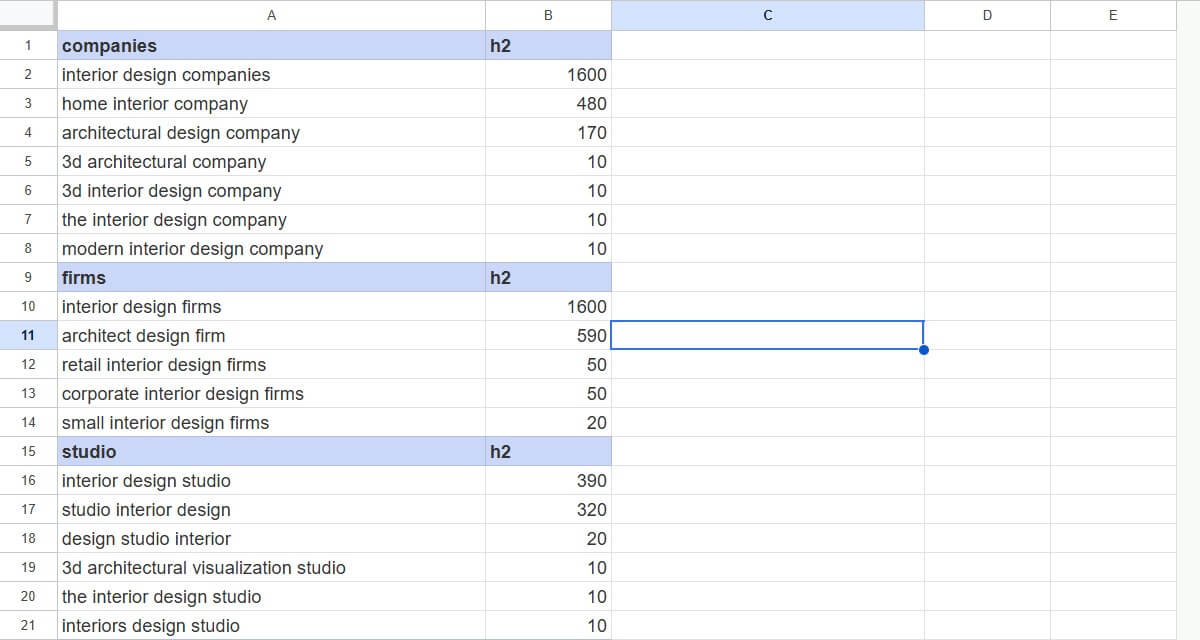
Tools save time, but they do not remove editorial judgment. Use automation for scale and human review for decisions that affect URLs, redirects, canonical tags, or content ownership. For duplicate or very similar pages, Google lists redirects, rel=”canonical” annotations, and sitemap inclusion as canonicalization signals, so URL decisions should never be left to a clustering export alone.
| Approach | Use when | Pros | Cons |
|---|---|---|---|
| Spreadsheet manual clustering | You have fewer than 200 keywords or a high-value niche topic. | Transparent, cheap, excellent for learning intent. | Slow and inconsistent across large lists. |
| AI semantic clustering | You need quick labels and draft groups. | Fast, good for naming clusters and spotting patterns. | Needs live SERP validation. |
| SERP-based clustering tool | You need page mapping for hundreds or thousands of keywords. | Better intent validation and localization. | Costs more and may over-split volatile SERPs. |
| Hybrid workflow | You want speed and quality control. | Best balance for most teams. | Requires a clear QA checklist. |
For Plerdy workflows, connect keyword research with Plerdy SERP Checker, SEO Checker Chrome Extension, and the competitor keyword analysis process. After publishing, use Google Search Console data and Plerdy behavior insights to see whether organic visitors actually engage with the page.
How Keyword Clustering Prevents Cannibalization
Keyword cannibalization happens when multiple pages target the same intent and Google has to choose between them. Clustering reduces the risk because every intent gets an assigned URL before content is written.
Same Page or Separate Page?
Use one page when queries share intent, SERP type, and reader task. Use separate pages when the SERP shows different content formats, different funnel stages, different audience needs, or different product expectations.
| Check | How to do it | Pass condition |
|---|---|---|
| Site search | Search Google for site:plerdy.com/blog “keyword clustering” and related phrases. | No exact page already owns the keyword. |
| Current rankings | Check GSC query/page pairs for the cluster. | One intended URL gets most impressions after publication. |
| Internal links | Review anchors from related SEO articles. | Anchors point to the correct owner URL. |
| Content overlap | Compare H1, H2s, intro, FAQ, and target terms. | Each page has a distinct job. |
| Canonical | Confirm the new URL self-canonicalizes unless it is intentionally consolidated. | Canonical points to /blog/keyword-clustering/. |
Google recommends crawlable links and descriptive anchor text. That matters here: do not link with vague anchors like “read more.” Use anchors such as “keyword clustering workflow,” “competitor keyword analysis,” or “SEO content optimization tools” when they honestly describe the target page.
Common Keyword Clustering Mistakes
Clustering by Words Only
“Content hub” and “content cluster” sound close, but the user may expect different examples and templates. Similar words are a clue, not a verdict.
Ignoring Geography
Search results differ by country. If the target market is the United States, use US keyword volume, US SERPs, and US competitor pages.
Creating one Giant Guide for Everything
A 9,000-word monster can still miss intent. Cluster-driven SEO is not about making pages huge; it is about making each URL complete for one job.
Publishing Without an Owner URL Map
Before writing, document which page owns which cluster. This avoids future fights between articles, product pages, and tool pages.
A Practical Plerdy Workflow for Keyword Clusters
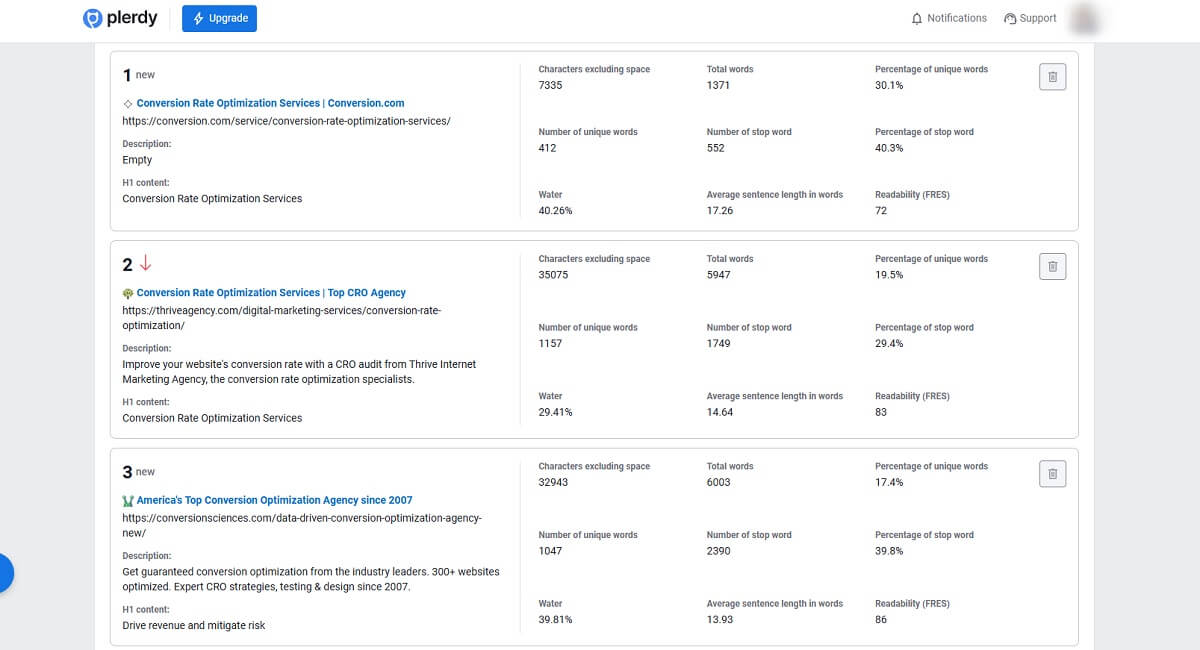
- Export keywords from GSC, SEO tools, competitor URLs, and Plerdy SERP checks.
- Group the list by semantic similarity to create a rough map.
- Validate priority clusters with US SERP overlap.
- Assign one owner URL to each cluster: create, update, merge, or split.
- Write the content brief with H1, H2s, FAQ, internal links, and sources.
- After publication, monitor GSC query spread and Plerdy engagement signals.
- Refresh the article when new queries appear or when SERP intent changes.
This is where SEO and UX meet. A page can rank for a cluster and still fail if users bounce, rage-click, abandon forms, or ignore the CTA. Pair keyword data with behavioral evidence before deciding that a ranking problem is only a content problem.
FAQ about keyword clustering
What is keyword clustering?
Keyword clustering is the process of grouping queries that share the same search intent, SERP results, or semantic meaning. The result is a keyword cluster that can usually be targeted by one strong page.
How do you cluster keywords for SEO?
Collect keywords, clean the list, label intent, compare SERP overlap, choose a primary keyword, map the cluster to one URL, and create a content brief. Validate important decisions manually before publishing.
What is SERP-based keyword clustering?
SERP-based clustering compares the top-ranking URLs for different queries. If the same pages rank for both searches, the queries probably share intent and can often live in the same cluster.
How many keywords should be in one cluster?
There is no ideal number. The cluster can include five keywords or fifty if they share one user job. Split the cluster when searchers need a different page type or a different answer.
Can ChatGPT cluster keywords?
Yes, AI can suggest groups, labels, and briefs quickly. But for SEO publishing decisions, check the live SERP because Google may treat similar-sounding keywords differently.
How does keyword clustering prevent cannibalization?
It assigns one owner URL to each intent. That makes it easier to decide whether to create a new article, update an existing one, merge two pages, or use internal links to clarify the relationship.
What is the difference between keyword clusters and topic clusters?
A keyword cluster is a group of related queries for one page. A topic cluster is a group of pages connected around a broad subject, usually with a pillar page and supporting articles.
Should keywords with different intent be grouped?
No. If one keyword requires a guide and another requires a product page, comparison, or template, separate them. Clustering should follow intent, not just shared words.
Conclusion: cluster keywords before you write
Keyword clustering is one of the cleanest ways to turn SEO research into a focused content plan. Start with the SERP, choose one owner URL per intent, write around the complete user job, and monitor the cluster after publication. If the page begins ranking for unexpected queries, expand it. If two Plerdy URLs compete, split or consolidate before the conflict becomes expensive.
Next step: create the cluster map first, then write the article. That order saves editorial time and gives Google a clearer page to rank.