

Digital marketing for contractors is the system that turns local demand into qualified calls, estimate requests, and booked jobs. The essential channels are a conversion-ready website, Google Business Profile, local SEO, Google Search or Local Services Ads, reviews, project proof, retargeting, and fast lead follow-up. The right mix depends on the trade, service area, average job value, capacity, and urgency of the customer’s problem.
A roofing company should not copy the marketing plan of a kitchen remodeler. Emergency plumbing relies on immediate search demand and phone calls. Remodeling requires visual proof, financing information, and a longer follow-up cycle. This guide shows how general contractors, roofers, HVAC companies, plumbers, electricians, masonry contractors, and remodelers can choose channels, allocate a budget, and measure results all the way to revenue.
Start here: If your website already receives traffic, do not automatically buy more clicks. First confirm that visitors can understand the service area, verify trust, call on mobile, and complete the estimate form. A leaking landing page makes every acquisition channel more expensive.
What Does Digital Marketing for Contractors Include?
Contractor digital marketing combines channels that create demand, capture existing demand, establish trust, convert prospects, and support follow-up. It is not simply posting project photos or “doing SEO.” A complete system answers five questions:
- Can the right homeowner or property manager find you?
- Can they immediately confirm that you perform the needed service in their location?
- Can they verify your license, insurance, experience, reviews, and work?
- Can they request an estimate or call without friction?
- Can your team respond, qualify, schedule, quote, and attribute the resulting job?
| Channel | Primary job | Best contractor use | Main KPI |
|---|---|---|---|
| Google Business Profile | Local discovery and trust | Every eligible local contractor | Qualified calls and website actions |
| Local SEO | Capture unpaid local demand | Repeatable services and service areas | Qualified organic leads |
| Search ads | Capture high-intent searches now | Urgent or high-value services | Cost per qualified lead |
| Local Services Ads | Generate calls and messages | Eligible home-service categories and markets | Cost per booked estimate |
| Reviews and referrals | Reduce perceived risk | All trades | Review velocity and referral jobs |
| Social media | Show proof and stay remembered | Visual and considered projects | Assisted leads and remarketing audience |
| Email and SMS | Nurture and reactivate | Long sales cycles and repeat services | Appointments and reactivated customers |
| Website analytics | Find and fix lost demand | Every channel sending site traffic | Visitor-to-qualified-lead rate |
1. Build the Measurement Foundation Before Buying Traffic
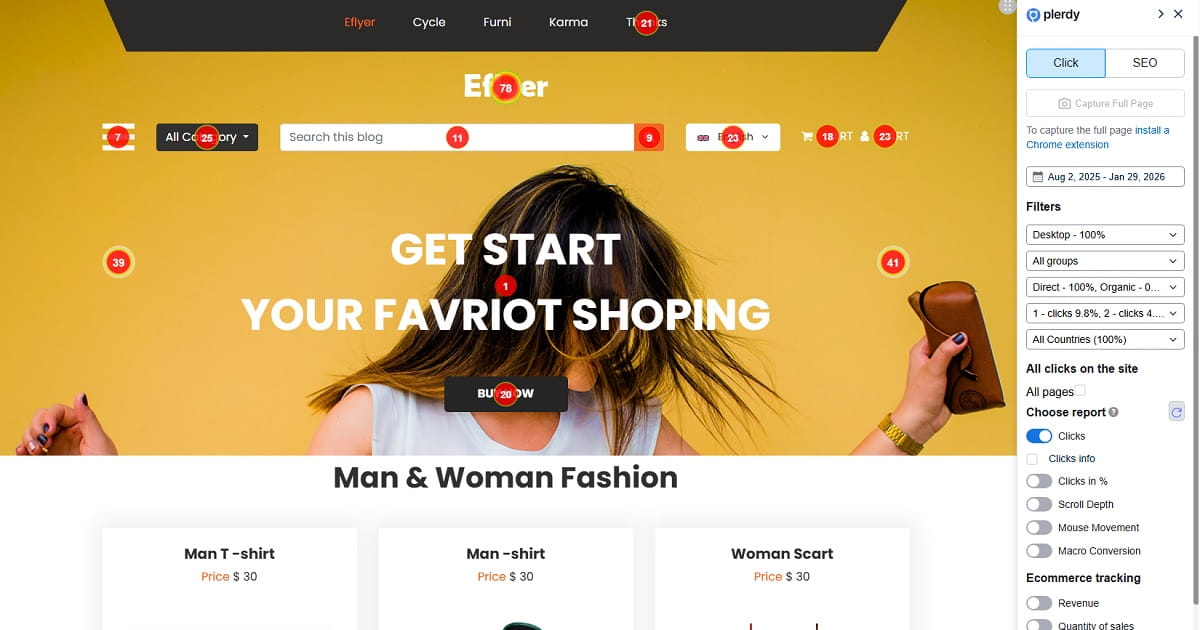
Marketing reports often celebrate impressions and form submissions while the contractor cares about profitable jobs. Define the full funnel before increasing spend:
Impression → click → engaged visit → lead → qualified lead → booked estimate → quote → won job → collected revenue
Track phone calls, estimate forms, scheduling actions, email clicks, chat conversations, and direction requests. Preserve source and landing-page information in the CRM. For calls, distinguish new prospects from existing customers, vendors, spam, and job applicants. A cheap lead is expensive when it never matches the service, location, timeline, or minimum job value.
Define a Qualified Contractor Lead
Create one written definition used by marketing and dispatch. A qualified lead typically:
- needs a service the company performs;
- is located inside the active service area;
- meets the minimum project size or job type;
- has an acceptable timeline;
- has decision-making authority or a clear role;
- provides valid contact information.
Audit Existing Traffic for Conversion Leaks
Use funnel data to locate the page or step that loses prospects. Then use heatmaps to see whether visitors notice and click the primary action, and session recordings to identify dead clicks, mobile obstacles, confusing forms, and repeated attempts. Segment behavior by channel, device, landing page, and service. Paid traffic and organic traffic can fail for different reasons on the same page.
2. Create a Contractor Website That Converts Local Demand
A contractor website must establish relevance and trust before asking for a commitment. Every important landing page should quickly communicate:
- the specific service offered;
- the geographic area served;
- who the service is for;
- the contractor’s license, insurance, warranty, and relevant credentials;
- proof from completed local projects and customers;
- the next step and expected response time.
Recommended Contractor Website Architecture
/
├── /services/
│   ├── /roof-repair/
│   ├── /roof-replacement/
│   └── /commercial-roofing/
├── /service-areas/
│   ├── /austin-tx/
│   └── /round-rock-tx/
├── /projects/
│   └── /standing-seam-roof-west-austin/
├── /reviews/
├── /about/
├── /financing/
├── /warranties/
└── /request-estimate/
Do not generate hundreds of near-identical city pages. Each location page should demonstrate genuine local relevance through completed work, service constraints, neighborhoods, permits or climate considerations, testimonials, photos, and clear availability. Google’s spam policies identify substantially similar pages created to funnel users toward the same destination as doorway abuse.
Contractor Landing Page Template
- Hero: service, location, primary benefit, and one clear CTA.
- Trust strip: license, insurance, years in business, rating, financing, or emergency availability—only when accurate.
- Problem and solution: recognizable symptoms and the service process.
- Project proof: original photos with location and scope context.
- Options: materials, systems, repair versus replacement, or project tiers.
- Process: what happens after the call or estimate request.
- Reviews: relevant reviews from similar work.
- Objection handling: timing, disruption, warranty, payment, permits, cleanup, and financing.
- Final CTA: phone and short estimate form with response expectations.
Reduce Form and Mobile Friction
Collect only what dispatch needs for the first response: name, contact method, service, ZIP code, and a short description. Make photo upload optional unless it is essential. Use a visible local phone number with click-to-call, avoid overlapping chat widgets, preserve entered data after validation errors, and test the entire flow on real phones.
3. Win Local SEO and Google Maps Visibility
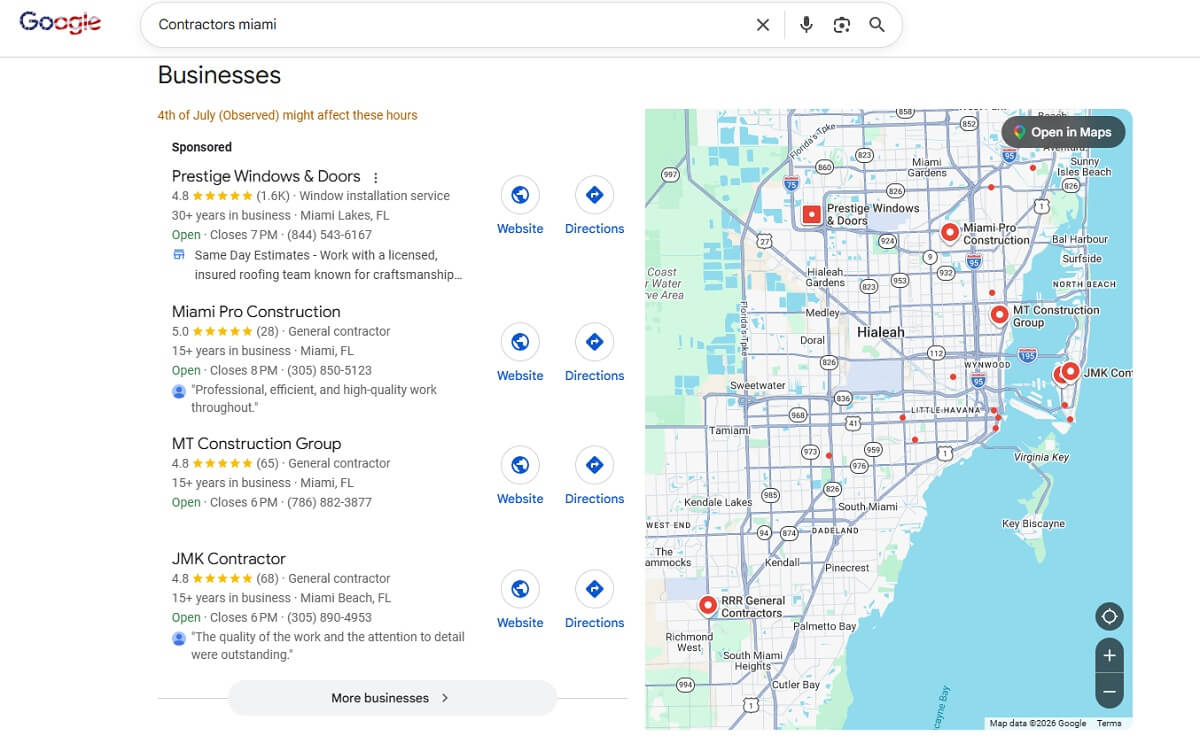
Local SEO connects a contractor with people searching for a service in a specific area. Google states that local results are mainly based on relevance, distance, and prominence. You cannot control the searcher’s location, but you can improve service relevance, profile completeness, website signals, reviews, and local authority.
Optimize Google Business Profile
- Use the real business name; do not add promotional keywords.
- Select the most accurate primary category and only relevant secondary categories.
- Complete services, hours, phone, website, appointment URL, and service areas.
- Upload original project, team, truck, equipment, and before-and-after photos.
- Answer questions accurately and keep holiday or emergency hours current.
- Link to the most relevant local landing page when appropriate.
- Track calls, messages, website visits, and booked work—not only profile views.
Map Search Intent to Dedicated Pages
| Search pattern | Recommended page | Example |
|---|---|---|
| Service + city | Substantial service-area page | roof repair in Austin |
| Specific service | Dedicated service page | commercial flat roof repair |
| Problem or symptom | Diagnostic guide linked to service | water stain after heavy rain |
| Cost | Transparent cost guide | electrical panel replacement cost |
| Comparison | Decision-support article | heat pump vs gas furnace |
| Near me | GBP plus locally relevant site signals | licensed plumber near me |
For the deeper keyword, page, citation, link, and technical workflow, use the dedicated SEO for contractors guide. Keep that page focused on organic visibility while this article owns the complete contractor marketing plan.
4. Use Google Search Ads and Local Services Ads Carefully
Paid search can produce demand quickly, but it also exposes weak targeting and weak landing pages quickly. Separate campaigns by service, urgency, geography, and economics. A $250 repair and a $25,000 replacement should not share the same bidding logic, form, or acceptable acquisition cost.
Build Search Campaigns Around Job Economics
- Create tightly related ad groups for one service intent.
- Send each ad to a page that matches the service and location.
- Use negative keywords for jobs, training, DIY, wholesale, definitions, and unsupported services.
- Restrict location targeting to areas the company will genuinely serve.
- Schedule ads around call-handling capacity when immediate response matters.
- Import qualified leads and won jobs rather than optimizing only for raw form submissions.
- Review search terms and call quality every week.
Consider Local Services Ads Where Eligible
Google’s Local Services Ads can generate phone and message leads for supported categories and locations. Eligibility, onboarding, licensing or registration requirements, and badge status vary. Verify the exact trade and market rather than assuming every contractor qualifies.
For LSAs, track lead validity, answer rate, booking rate, estimate show rate, close rate, and revenue. Keep services, coverage, business hours, job types, and lead feedback accurate. A campaign with a low reported cost per lead can still lose money if the calls are outside the service area or the office misses them.
Use Paid Social Primarily for Visual Proof and Follow-Up
Meta and other social ads can support high-consideration projects, seasonal offers, geographic awareness, and retargeting. They usually capture less immediate intent than search. Use real projects, crews, customer stories, and process videos—not generic stock photos. Retarget visitors who viewed an important service page but did not request an estimate, while respecting consent and platform policies.
5. Build a Review and Project-Proof Engine
Contractor marketing must reduce risk. Prospects worry about unfinished work, hidden costs, property damage, scheduling, permits, cleanup, and whether the company will still answer after payment. Reviews and detailed project evidence address those concerns better than unsupported claims.
Create a Compliant Review Workflow
- Choose real customer moments: completed inspection, successful repair, project handoff, or resolved service issue.
- Send a direct review link through the customer’s preferred channel.
- Ask for an honest review without suggesting a required rating.
- Do not buy, fabricate, or condition incentives on positive sentiment. The FTC’s Consumer Reviews and Testimonials Rule guidance explains prohibited review practices.
- Respond professionally and avoid exposing private project details.
- Route operational complaints to the responsible person and close the loop.
Turn Completed Jobs Into Searchable Proof
Create case-study pages that state the project type, general location, problem, constraints, chosen solution, timeline, materials, outcome, and lessons. Include original images with permission. A useful project page is not a gallery of ten unexplained photos; it helps a future customer recognize a comparable situation.
6. Create Contractor Content That Supports a Hiring Decision
The best contractor content reduces uncertainty before the first call. Build it from sales questions, call recordings, estimate objections, seasonal problems, inspection findings, and the reasons customers delay decisions.
| Content type | Example | Business purpose |
|---|---|---|
| Cost guide | How much does a 200-amp panel upgrade cost? | Set expectations and qualify demand |
| Repair-or-replace guide | Repair or replace a 15-year-old furnace? | Support a high-value decision |
| Problem guide | Why does the breaker trip when the AC starts? | Capture symptom searches |
| Material comparison | Architectural shingles vs metal roofing | Clarify tradeoffs and project fit |
| Project case study | Drainage repair for a sloped Austin yard | Demonstrate local experience |
| Process guide | What happens during a kitchen remodel estimate? | Reduce anxiety and no-shows |
| Maintenance checklist | Spring HVAC maintenance checklist | Generate seasonal and repeat demand |
Use a qualified subject-matter reviewer. Show the date, author, reviewer, relevant credentials, and material assumptions. Avoid universal price claims when labor, permits, materials, access, condition, and market can change the estimate. Link each article to the next useful step without turning every paragraph into a sales pitch.
7. Use Social Media, Email, SMS, and Retargeting as Support Channels
Social Media for Contractors
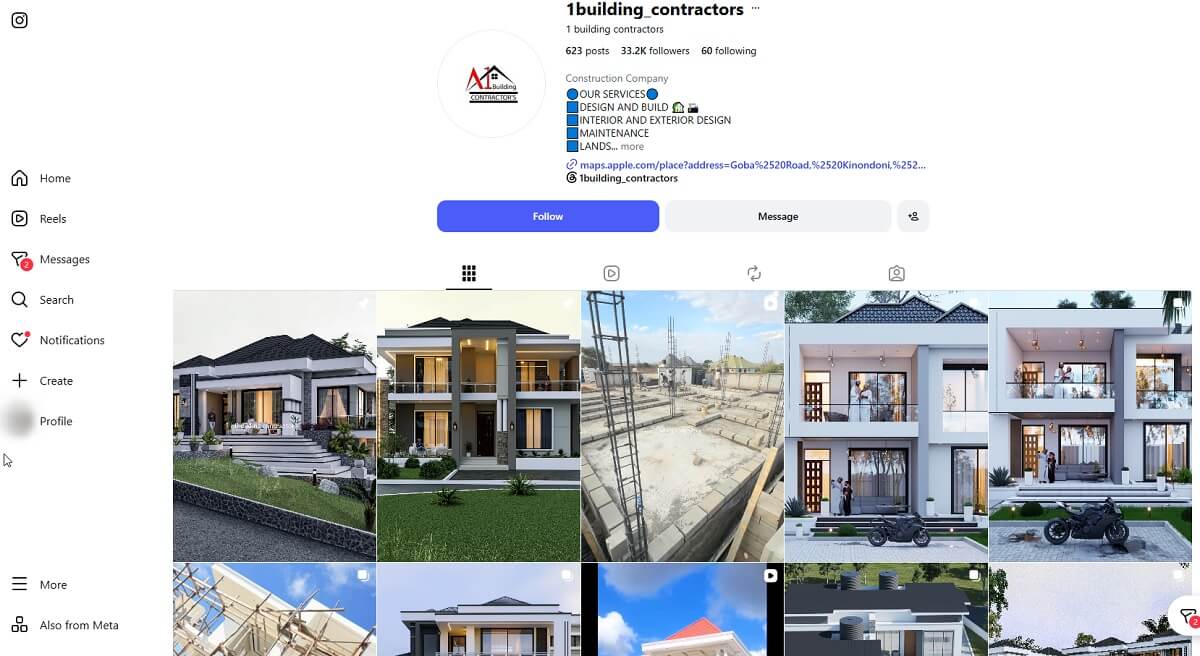
Social media works best as a proof library and familiarity channel. Publish before-and-after transformations, progress explanations, team introductions, material comparisons, jobsite safety, maintenance tips, and customer stories. Never share an address, face, vehicle plate, document, or property detail without appropriate permission.
One completed project can produce a short video, photo carousel, project page, FAQ, email feature, sales follow-up asset, and GBP photo update. Repurpose the evidence, not empty captions.
Email and SMS Follow-Up
Use email for estimate reminders, financing or warranty information, longer project education, seasonal maintenance, and customer reactivation. SMS is effective for time-sensitive scheduling and short follow-up when the customer has provided appropriate consent. Review the FCC’s calling and texting rules and obtain legal guidance for your specific campaigns rather than treating a form submission as unlimited permission.
Lead-Response Workflow
- Send immediate confirmation with realistic response timing.
- Notify the assigned person with source, service, ZIP code, and message.
- Attempt contact using the permitted channel.
- Qualify service, location, scope, urgency, ownership, and availability.
- Schedule the next action and send reminders.
- Record outcome codes: invalid, unqualified, booked, quoted, lost, won.
- Feed outcomes back to campaign and landing-page decisions.
8. Adjust the Marketing Plan by Contractor Type
| Contractor type | Highest-value intent | Priority channels | Critical landing-page proof |
|---|---|---|---|
| Roofing | Leak, storm damage, replacement | Local SEO, search/LSA, reviews, project proof | License, inspection process, materials, warranty, local projects |
| HVAC | Emergency repair, replacement, maintenance | Search/LSA, GBP, SEO, reactivation | Availability, brands serviced, financing, maintenance plans |
| Plumbing | Urgent repair and high-value installation | Search/LSA, GBP, call optimization | Service radius, response expectations, scope, pricing approach |
| Electrical | Safety issue, panel, EV charger, rewiring | Local SEO, search, educational content | Licensing, permits, safety process, relevant project examples |
| Remodeling | Kitchen, bathroom, addition, whole home | SEO, visual social, referral, email nurture | Portfolio, design process, budget ranges, timeline, testimonials |
| Masonry | Repair, restoration, patio, retaining wall | Local SEO, visual proof, search, referrals | Materials, structural limits, before-and-after work, drainage context |
| General contractor | Qualified project by type and value | SEO, referral, portfolio, selective paid search | Project fit, licenses, subcontractor process, schedule, case studies |
For emergency trades, prioritize phone visibility, staffing, location accuracy, and rapid qualification. For considered projects, prioritize portfolio depth, decision-support content, financing, follow-up, and consultation conversion. Do not optimize both models around the same form and response expectation.
9. Set a Contractor Digital Marketing Budget
There is no universal percentage that fits every contractor. Build the budget from capacity and unit economics:
Maximum acquisition cost per job = gross profit per job × acceptable marketing share of gross profit
Maximum cost per qualified lead = maximum acquisition cost per job × qualified-lead-to-job close rate
Example: if a job produces $4,000 in gross profit, the business is willing to invest 20% of that gross profit to acquire it, and 25% of qualified leads become jobs, the planning ceiling is:
$4,000 × 20% × 25% = $200 maximum cost per qualified lead
This is a planning example, not a benchmark. Replace every value with actual collected revenue, direct job costs, lead quality, estimate show rate, close rate, refunds, callbacks, and capacity.
Illustrative Monthly Budget Allocation
| Budget level | Suggested emphasis | Avoid |
|---|---|---|
| Under $2,500 | Tracking, GBP, reviews, core pages, conversion fixes, one testable paid channel | Spreading spend across every platform |
| $2,500–$7,500 | Core foundation plus search/LSA, local content, project proof, call tracking | Scaling before qualified-lead reporting works |
| $7,500–$20,000 | Multiple services/markets, systematic content, retargeting, CRO, CRM follow-up | Using one blended cost-per-lead target |
| Over $20,000 | Market-level allocation, creative testing, offline attribution, advanced CRO | Optimizing to platform-reported leads alone |
10. Measure Marketing From Impression to Booked Job
Separate channel delivery metrics from business outcomes. The following scorecard prevents a contractor from scaling campaigns that generate activity but not revenue.
| Funnel stage | Metric | Why it matters |
|---|---|---|
| Visibility | Qualified impressions, local visibility, impression share | Shows whether the business appears for relevant demand |
| Traffic | Clicks, sessions, landing-page engagement | Measures acquisition and message match |
| Lead | Calls, forms, chats, cost per lead | Measures initial response—but not quality |
| Qualification | Qualified-lead rate and cost per qualified lead | Filters unsupported services, locations, spam, and poor-fit projects |
| Scheduling | Booked-estimate rate and show rate | Reveals response and scheduling performance |
| Sales | Quote rate, close rate, quoted value | Connects marketing with sales execution |
| Revenue | Won jobs, collected revenue, gross profit | Shows economic contribution |
| Efficiency | Acquisition cost, gross-profit return, payback | Supports budget decisions |
Diagnose the Funnel Instead of Blaming the Channel
- Impressions but few clicks: improve relevance, position, offer, reviews, and title/ad message.
- Clicks but few leads: inspect landing-page match, mobile UX, trust, CTA visibility, and form reliability.
- Leads but few qualified leads: tighten keywords, geography, service description, exclusions, and minimum-project messaging.
- Qualified leads but few bookings: improve response speed, call handling, scheduling, and follow-up.
- Estimates but few jobs: review qualification, estimator performance, pricing communication, proof, financing, and follow-up.
- Jobs but weak profit: revise service mix, acquisition ceiling, job costing, and market allocation.
A 90-Day Digital Marketing Plan for Contractors

Days 1–30: Fix Measurement and Conversion
- Define qualified lead, booked estimate, won job, and channel ownership.
- Audit call, form, CRM, and revenue attribution.
- Review service and service-area profitability.
- Test every important form and phone action on mobile.
- Use funnels, heatmaps, and recordings to identify the largest website leak.
- Correct Google Business Profile information and primary categories.
- Improve the homepage and top two service landing pages.
- Implement a compliant post-project review request.
Days 31–60: Capture Existing Demand
- Create or rebuild high-value service pages.
- Publish one substantial priority service-area page.
- Launch or restructure one measurable search/LSA program.
- Add negative keywords and location exclusions.
- Publish two detailed project case studies.
- Create one cost, comparison, or repair-versus-replace guide.
- Connect lead outcomes back to source and landing page.
Days 61–90: Scale Evidence, Not Assumptions
- Compare channels by cost per qualified lead and booked estimate.
- Review call recordings or dispositions for recurring poor-fit demand.
- Run one controlled landing-page experiment on a high-traffic service.
- Repurpose project proof into social, email, GBP, and sales assets.
- Build follow-up for unbooked qualified leads and unsold estimates.
- Shift budget toward profitable services and markets with available capacity.
- Create the next 90-day roadmap from observed bottlenecks.
Contractor Digital Marketing Checklist
- One written qualified-lead definition
- Call, form, booking, quote, job, and revenue attribution
- Accurate Google Business Profile
- Dedicated pages for profitable services
- Substantial pages for genuinely served priority markets
- Visible mobile phone and short estimate form
- License, insurance, warranty, and financing claims verified
- Original project photos and detailed case studies
- Compliant review-request process
- Paid campaigns segmented by economics and location
- Negative keyword and search-term review
- Lead response owner and outcome codes
- Monthly report through booked jobs and gross profit
- Quarterly landing-page and tracking QA
Digital Marketing for Contractors FAQ
What is digital marketing for contractors?
Digital marketing for contractors uses websites, local SEO, Google Business Profile, paid search, Local Services Ads, reviews, content, social media, email, SMS, and analytics to generate and convert qualified local demand.
What is the best digital marketing channel for contractors?
The best channel depends on the trade and customer intent. Google Business Profile, local SEO, search ads, and Local Services Ads are usually important for immediate local demand. Referrals, reviews, visual content, email, and retargeting matter more for considered projects and long sales cycles.
How much should a contractor spend on digital marketing?
Build the budget from capacity, job gross profit, close rate, and an acceptable acquisition cost. Do not copy a universal revenue percentage without considering the trade, market, service mix, seasonality, backlog, and growth target.
Does digital marketing work for small contractors?
Yes, but a small contractor should concentrate resources. Start with accurate tracking, Google Business Profile, reviews, high-value service pages, mobile conversion, and one acquisition channel that the team can answer and measure consistently.
Should contractors invest in SEO or Google Ads first?
Ads can test and capture demand quickly, while SEO compounds over time. A new contractor may use focused paid search while building local organic assets. An established company with strong demand but weak website conversion should fix tracking and landing pages before scaling either channel.
Are Local Services Ads available to every contractor?
No. Availability depends on the service category and location, and onboarding requirements may include business registration, licensing, screening, reviews, and billing setup. Check Google’s current eligibility process for the exact trade and market.
How can contractors get more Google reviews?
Ask real customers for honest feedback at a natural completion point, provide a direct link, make the request easy, and respond professionally. Do not purchase reviews, create fake reviews, or offer rewards that require positive sentiment.
What should a contractor website include?
It should include specific service and service-area pages, verified licensing and insurance details, reviews, original project evidence, process and warranty information, a visible phone number, a short estimate form, and clear response expectations.
How do you measure contractor marketing ROI?
Connect campaign and landing-page data to qualified leads, booked estimates, quotes, won jobs, collected revenue, and gross profit. Platform-reported leads alone cannot show return because they may include spam, poor-fit services, and locations outside the service area.
How long does contractor digital marketing take to work?
Tracking and conversion fixes can improve performance immediately. Paid campaigns can generate demand after launch but need qualification data for optimization. Local SEO, content, reviews, and authority generally require sustained work over months.
Build a System That Produces Booked, Profitable Work
Effective online marketing for contractors does not end with traffic or leads. It connects the right local demand to clear services, credible proof, a friction-free response path, disciplined follow-up, and accurate job economics.
Start by fixing measurement and the pages already receiving attention. Then invest in Google Business Profile, local SEO, paid search, reviews, and content according to the trade and available capacity. Measure qualified leads, booked estimates, won jobs, and gross profit. When every channel feeds that same operating system, contractor marketing becomes easier to diagnose and safer to scale.