

Someone on the marketing team spots an obvious problem on a landing page. The form is too far down, the CTA gets lost after the first section, or customer proof would probably work better before the feature list. High bounce rates and a declining landing page conversion rate clearly signal that visitors drop off before discovering the core value proposition. Enough traffic exists to test the idea, and analytics are already in place.
Then comes the familiar part: a development ticket. The experiment sits behind bug fixes, product work, integration requests, and everything else developers quite reasonably consider more urgent. Two weeks later, the campaign has moved on, and nobody has tested anything. In fast-moving campaigns, this lag is fatal. Instead of acting on real-time user behavior—like low scroll depth or cold click zones on key CTA buttons discovered via heatmaps—the team’s optimization momentum completely stalls.
At that point, the bottleneck isn’t conversion strategy. It’s the website.
Small Experiments Shouldn’t Require Small Development Projects

Practical conversion rate optimization (CRO) often involves small iterations that aren’t technically complicated. Marketing might want to move a testimonial higher on the page, switch the order of two sections, try a shorter hero, add a second CTA, or replace a long form with a simpler one.
None of this sounds like serious development work. On a rigid website, though, every variation can require someone to edit a template or touch code.
The cost isn’t only developer hours. Waiting changes how marketing teams behave. When every experiment takes a week to launch, people naturally become more selective about what they test. Smaller ideas are dropped because they don’t seem worth the coordination.
Eventually, testing becomes something the team talks about more often than it actually does.
Look at the Tickets You Keep Creating
A useful way to find the problem is to review several months of website requests.
Separate genuine development from recurring page changes.
- Engineering tasks: Custom API/CRM integrations, server-side logic, custom checkout flows, and net-new dynamic components.
- Marketing tasks: Reordering page blocks, swapping testimonial cards, testing alternative CTA copy, and deploying headline variations.
If routine experiments constantly require engineering tickets, it’s time to rethink your CMS architecture. Partnering with a specialized WordPress development agency such as IT Monks to implement modular, Gutenberg-based blocks or reusable components allows marketing teams to deploy changes independently. This setup keeps developers focused on high-impact technical initiatives while marketers iterate quickly. Each variation still needs a clear hypothesis and measurement plan.
That last point is important. Removing development from routine experiments shouldn’t turn a website into a place where anyone changes anything whenever a metric dips.
The goal is faster testing, not random testing.
Build the Page Around Things Marketing Actually Tests
Reusable components work best when they reflect real marketing behavior. When running A/B or split testing variations, marketing teams shouldn’t need custom code just to test visual hierarchy or content alignment.
Suppose a team frequently experiments with social proof. Instead of hard-coding testimonials into one template, build a testimonial section that can appear in several approved positions. Give editors control over the quote, customer, image, and perhaps the number of testimonials displayed.
The same idea works for hero sections, forms, feature comparisons, statistics, FAQs, pricing blocks, and CTAs.
You don’t need to make every visual property editable. Marketing probably doesn’t need twelve padding controls or the ability to choose arbitrary font sizes. That kind of freedom often creates cleanup work later.
Give people control over the variables they genuinely test and keep the design rules inside the component.
A/B Testing Isn’t the Same as Editing

Making a page editable solves one problem, but it doesn’t automatically create a testing process.
If a marketer changes a headline on Monday and conversions rise on Tuesday, that isn’t necessarily evidence that the headline caused the improvement. Traffic sources may have changed. A campaign could have started. The audience mix may be different.
Useful experiments begin with a specific question.
A robust Conversion rate optimization (CRO) hypothesis follows a structured framework:
- Observation: Quantitative data (analytics drop-off) or qualitative user insights (heatmaps showing cold click zones on forms).
- Proposed Change: Moving verified customer proof directly beneath the hero section.
- Expected Impact: Reassuring visitors before the feature breakdown will increase demo-form starts by 15%.
Now there is something specific to test and an isolated metric to watch.
The website should make it easy to create the variation. The analytics setup should tell the team what happened afterward. Neither replaces the thinking behind the experiment.
Speed Matters More Than It Looks
A slow testing workflow compounds. A successful website experimentation program relies heavily on cadence and iterative learnings rather than one-off redesigns. Imagine one team can launch a meaningful experiment every two weeks while another can comfortably launch two in the same period. Not every test will produce a winner, of course. Some will be inconclusive, and some ideas will make the page worse.
But after six months, the second team has learned from far more real visitor behavior.
That’s the practical advantage of removing unnecessary handoffs. It isn’t about changing buttons faster for its own sake. It’s about shortening the distance between an observation and evidence.
Keep Developers in the Work That Needs Them
Giving marketing more control doesn’t mean removing developers from website optimization. Quite the opposite. It keeps their time available for changes where engineering matters.
A new calculator, personalized content system, checkout flow, API integration, or sophisticated experiment may require development from the beginning. Performance issues introduced by a third-party tool also need technical investigation.
Developers should also own the component system itself. Treating these reusable blocks as a functional marketing design system prevents code debt and keeps branding consistent across every iteration. If marketers repeatedly request a page pattern that doesn’t exist, that is useful feedback. Build it properly once rather than creating a workaround on five separate landing pages.
The division of responsibility becomes much clearer: marketing works within established components, while development expands and maintains the system.
Don’t Let Flexibility Turn Into Page Builder Sprawl
There is an easy overcorrection here.
Teams get tired of waiting for development and decide that marketing should be able to change absolutely everything. A highly flexible page builder gets installed, and suddenly each landing page has its own spacing, typography choices, scripts, and slightly different mobile behavior.
The development bottleneck disappears, but a maintenance problem takes its place.
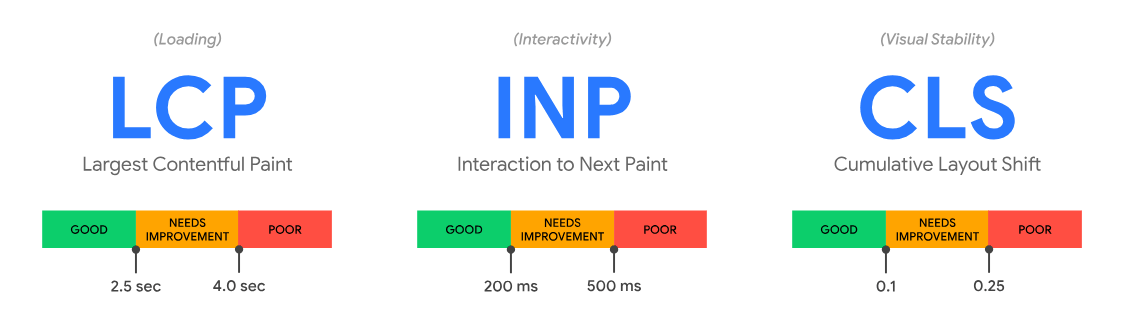
Beyond maintenance headaches, bloated visual builders inject excessive DOM depth, unused JavaScript, and layout shifts (CLS), directly damaging Largest Contentful Paint (LCP) and Core Web Vitals—which suppresses search rankings and degrades conversion rates before the test even finishes.
Good flexibility has boundaries. Reordering approved sections is useful. Rebuilding the site’s grid for one experiment probably isn’t.
Those boundaries also make tests cleaner because fewer unrelated variables change at once.
Measure the Queue as Well as the Conversion Rate
Marketing teams already watch conversion rates, but the speed of the experimentation process deserves attention too.
How long does it take to move from an approved hypothesis to a live test? How many experiments are waiting on development? Which requests appear repeatedly? Track your Testing Velocity (number of tests launched per month) and Lead Time to Test (days elapsed from hypothesis approval to test deployment). If your lead time exceeds 10–14 days for basic layout variations, your CMS architecture—not your CRO(Conversion rate optimization) team—is the bottleneck.
Those numbers reveal whether the website supports optimization or quietly slows it down.
A site built for experimentation won’t remove every technical dependency, and it shouldn’t. It can remove unnecessary dependencies created when routine layout and content changes require code.
When marketing can launch sensible variations inside a controlled component system, developers get fewer trivial tickets and conversion work gets more chances to produce actual evidence. That’s a much healthier queue for everyone.