

Adobe Target still does what it was built to do: enterprise-grade A/B testing, multivariate testing, and AI-driven personalization wired into Adobe Experience Cloud. What changed is everything around it. Two of the biggest names on every “Adobe Target alternatives” list merged in January 2026, another was sold twice in nine months, and a third now lives inside an observability platform. A shortlist written in 2024 is not just stale — parts of it point at products that no longer exist.
This guide rebuilds that shortlist from scratch. Every platform below was checked against its own site or official documentation in August 2026, not against older listicles. We start with Plerdy, because the most common reason an Adobe Target replacement disappoints is not the testing engine — it is that the team never had the behavioral evidence to know what was worth testing. Plerdy covers that gap with heatmaps, session replay, funnels, and unlimited A/B testing on a free forever plan, then we move through the enterprise and developer-first platforms that replace Adobe Target’s core job outright.
Adobe Target Alternatives At a Glance
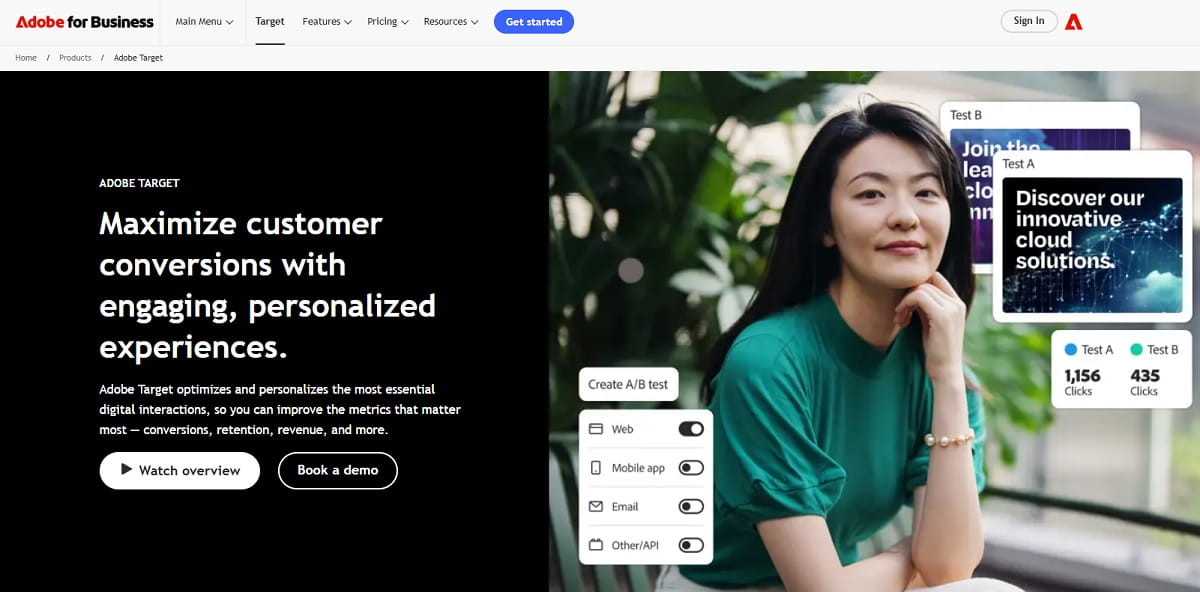
The short answer: for mid-market teams that need behavioral evidence plus testing, use Plerdy. For a like-for-like enterprise replacement, use Optimizely or Kameleoon. For ecommerce personalization at scale, use Mastercard Dynamic Yield, Insider One, or Monetate. For product and engineering teams that experiment against a data warehouse, use Statsig, Eppo by Datadog, or GrowthBook.
| Platform | Core Strength | Entry Pricing | Best For |
|---|---|---|---|
| Plerdy | Behavior analytics + A/B testing | Free forever; from $21/mo annual | SMB and mid-market CRO teams |
| Optimizely | Enterprise experimentation suite | Sales-led, custom quote | Large orgs replacing Target 1:1 |
| VWO + AB Tasty (Wingify) | Merged testing + personalization suite | Free tier; paid sales-led | Teams wanting one consolidated vendor |
| Kameleoon | Hybrid client/server-side + AI | From €495/mo | Regulated and privacy-sensitive teams |
| Mastercard Dynamic Yield | Ecommerce personalization engine | Sales-led, custom quote | Retail and commerce personalization |
| Insider One | Cross-channel personalization + CDP | Sales-led, custom quote | Multichannel lifecycle marketing |
| Monetate Maestro (ex-SiteSpect) | Server-side, zero-flicker delivery | Sales-led, custom quote | Performance-critical, regulated testing |
| Convert Experiences | Privacy-first mid-market testing | From $299/mo annual | Agencies and mid-market CRO |
| Statsig (Amplitude) | Product experimentation at scale | Free tier; usage-based | Product-led growth teams |
| Eppo by Datadog | Warehouse-native experimentation | Sales-led, custom quote | Data teams already on Datadog |
| GrowthBook | Open-source experimentation | Free self-hosted; from $20/user/mo | Engineering teams wanting control |
| LaunchDarkly | Feature flags with experimentation | Free developer tier; usage-based | Release-driven engineering orgs |
Pricing reflects publicly listed figures as of August 2026. Enterprise platforms in this category are almost universally sales-led, and published entry prices rarely survive contact with a real contract.
Why Teams Leave Adobe Target
The feature list is rarely the problem. Adobe Target’s A/B and multivariate testing, Auto-Target, and Automated Personalization are genuinely capable. Teams leave for structural reasons instead.
- Suite gravity. Target is priced, sold, and architected as part of Adobe Experience Cloud. Its best behavior — shared audiences with Adobe Analytics, activation through Adobe Experience Platform — only appears once you own several other Adobe products.
- Sales-led, opaque pricing. Adobe publishes no self-serve tiers for Target; every plan routes to a sales contact form on the official product page. Budget owners cannot model cost before a call.
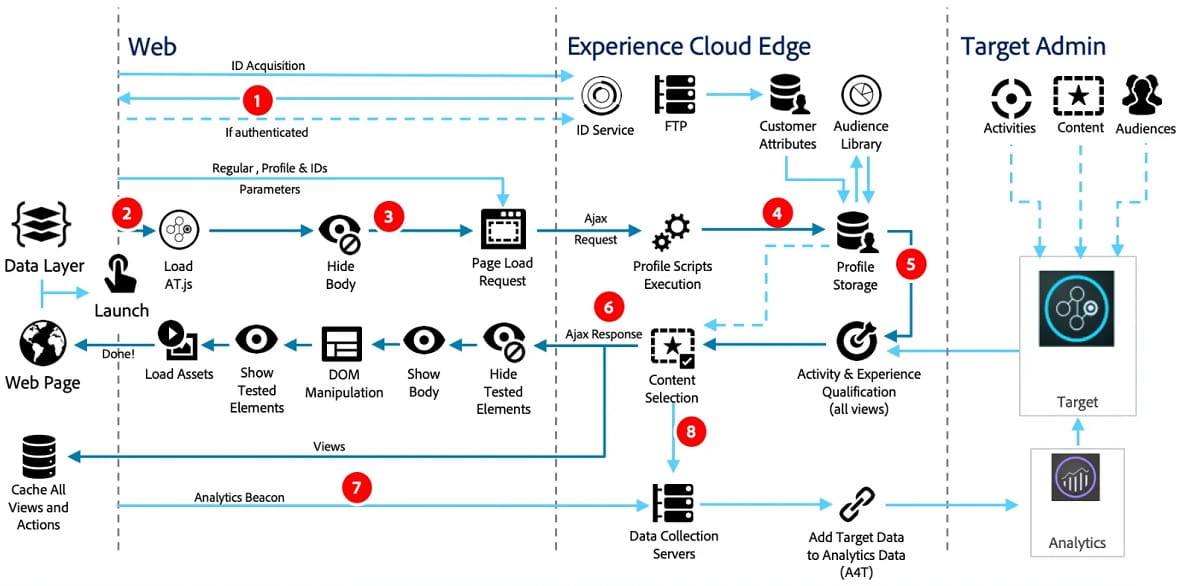
- Implementation weight. Standing up Target properly means tag management, profile scripts, and usually an implementation partner. That cost lands before a single test ships.
- Throughput, not capability. Most teams that churn were running a handful of tests per quarter. At that velocity, an enterprise contract is very hard to justify — the constraint is analyst bandwidth, not the platform.
Be honest about which of those applies to you. If your bottleneck is test velocity rather than tooling, switching platforms moves the problem rather than solving it.
Adobe Target Competitors Vs Alternatives: What the Difference Means
The two words get used interchangeably, and shortlists suffer for it.
Adobe Target competitors are platforms that compete for the same enterprise budget and sales cycle: Optimizely, Mastercard Dynamic Yield, Insider One, and Monetate. They are sold the same way, priced in the same range, and evaluated by the same committee.
Adobe Target alternatives is the wider set — any tool that lets you accomplish the job you were using Target for. That includes the enterprise competitors, but also mid-market platforms like Convert Experiences, developer-first tools like Statsig and GrowthBook, and behavior-analytics-led tools like Plerdy that solve the upstream problem of knowing what to test.
If your renewal is genuinely enterprise-scale, you want the competitor list. If you are downsizing, the alternative list is where the value is — and most teams searching for Adobe Target alternatives are downsizing.
How We Chose These Adobe Target Alternatives
Most comparison posts in this category inherit their list from older posts. That is how discontinued products keep showing up years after shutdown. Our filter:
- Replacement test. Each platform had to pass one sentence: you can replace Adobe Target with this for [specific job] because of [current, verified capability]. Tools that only sit next to Target were excluded.
- Status verified in August 2026. Ownership, product name, and availability checked on the vendor’s own site or official docs. Three products on competing lists failed this check outright.
- Pricing sourced, not guessed. Where a vendor publishes a price, we cite it. Where pricing is sales-led, we say so instead of inventing a number.
- No padding. We did not add brands to hit a round number. Landing page builders, survey tools, and analytics suites without a testing or targeting engine are listed in the section on what to avoid, not in the main list.
We do not publish uplift percentages for these platforms. No reliable public benchmark exists for “conversion lift by A/B testing vendor,” and every figure circulating in this niche traces back to vendor marketing. Measure lift in your own account, against your own baseline, at a 95% confidence level.
12 Best Adobe Target Alternatives And Competitors Compared
1. Plerdy
Best for: mid-market and SMB teams that need to know what to test before they invest in a testing platform.
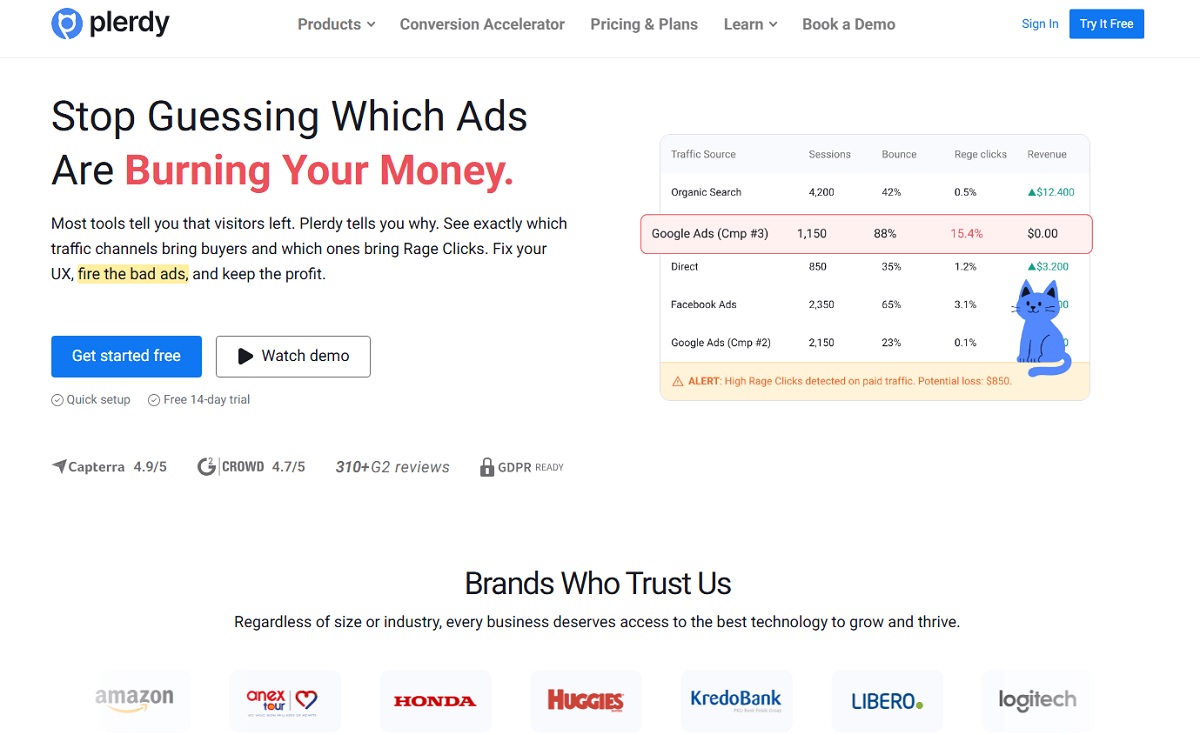
Plerdy approaches the Adobe Target problem from the other end. Instead of starting with an experimentation engine and hoping the team generates good hypotheses, it starts with behavior: where visitors click, how far they scroll, where they rage-click, which funnel step loses them, and what they say when asked. Then it runs the test. For a team leaving a six-figure Adobe contract because they were shipping four tests a quarter, that ordering matters more than the sophistication of the stats engine.
The A/B testing tool is included on every plan, including the free one, with no experiment cap. The website heatmap tool and session replay software supply the evidence layer, and the SEO checker plus event tracking cover the acquisition side that pure testing platforms ignore entirely.
Key features
- Heatmaps: click, scroll, hover, and rage-click maps segmented by device, traffic source, and campaign
- Session replay with funnel and drop-off analysis
- Unlimited A/B testing on all plans, free tier included
- Pop-up and form builder for on-site offers and lead capture
- NPS, CSAT, and CES feedback widgets
- SEO checker, SERP checker, and JavaScript error tracking
- Ecommerce analytics tying behavior to revenue events
Use cases
- Diagnosing a checkout or signup funnel before designing an experiment
- Replacing a Target contract at a fraction of the cost for a team running low test volume
- Giving a CRO agency one workspace for evidence, testing, and reporting across client sites
- Pairing behavioral data with SEO fixes on the same page set
Pros: genuinely usable free tier; unlimited A/B tests at every price point; evidence and testing in one tool; setup measured in minutes, not weeks; transparent public pricing.
Cons: not an enterprise personalization engine — no AI recommendation models or CDP-grade identity resolution; no server-side experiment delivery; less suited to organizations that need Adobe-scale governance and multi-brand permissioning.
Pricing: Free forever plan with 100 daily heatmaps, 500 video sessions, and unlimited A/B testing. Paid plans start at $32/month, or $21/month billed annually, with a 35% annual discount. Enterprise tiers run to roughly $253/month annually. Prices per Plerdy’s pricing page, August 2026.
2. Optimizely
Best for: enterprises that want a like-for-like Adobe Target replacement without leaving the enterprise tier.
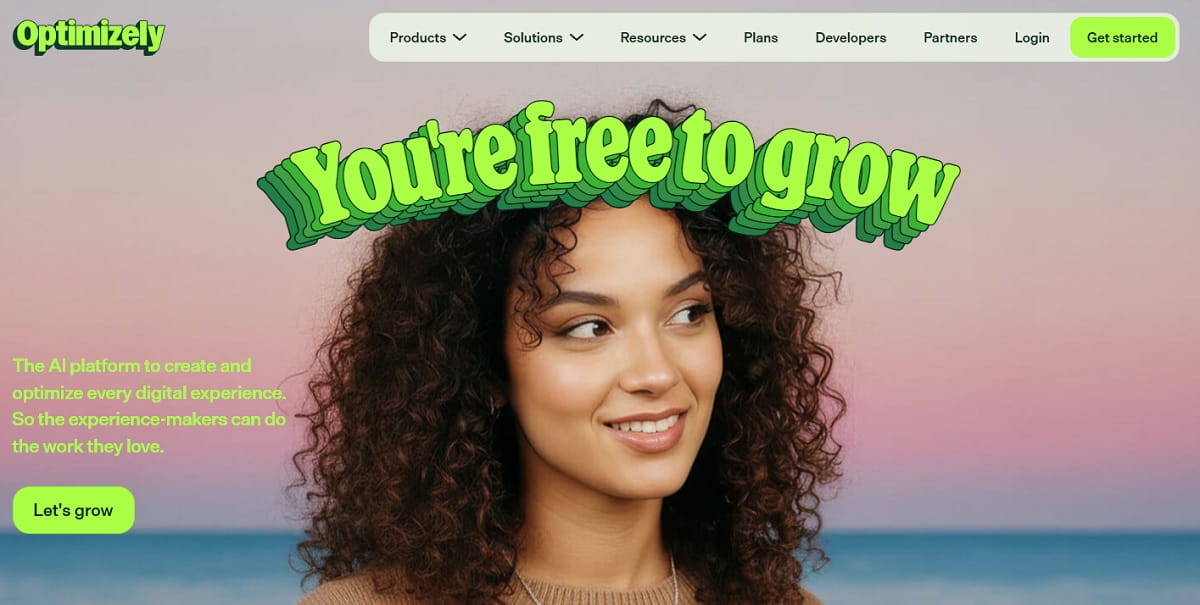
Optimizely is the closest one-to-one substitute on this list. Web Experimentation covers the marketer-facing visual testing that Target users know, while Feature Experimentation handles server-side and product experimentation. It sits inside a broader suite with CMS and commerce modules, which is both the appeal and the catch: you are trading one suite’s gravity for another’s.
Key features
- Visual editor for client-side A/B, multivariate, and multi-page tests
- Feature Experimentation with SDKs for server-side and mobile delivery
- Stats Engine with sequential testing designed for always-valid results
- Audience targeting, segmentation, and program management
- Deep integration with Optimizely CMS, commerce, and content marketing modules
Use cases
- Large marketing organizations migrating a mature Target program
- Companies needing both marketer-run web tests and developer-run feature rollouts in one contract
- Regulated enterprises requiring formal governance, approvals, and audit trails
Pros: feature parity with Adobe Target is the closest available; mature statistics; strong enterprise support; single platform for web and product experimentation.
Cons: pricing is sales-led with no published tiers; total cost frequently lands in the same range you were trying to escape; the wider suite reintroduces lock-in.
Pricing: custom quote only, available on request.
3. VWO And AB Tasty (Wingify)
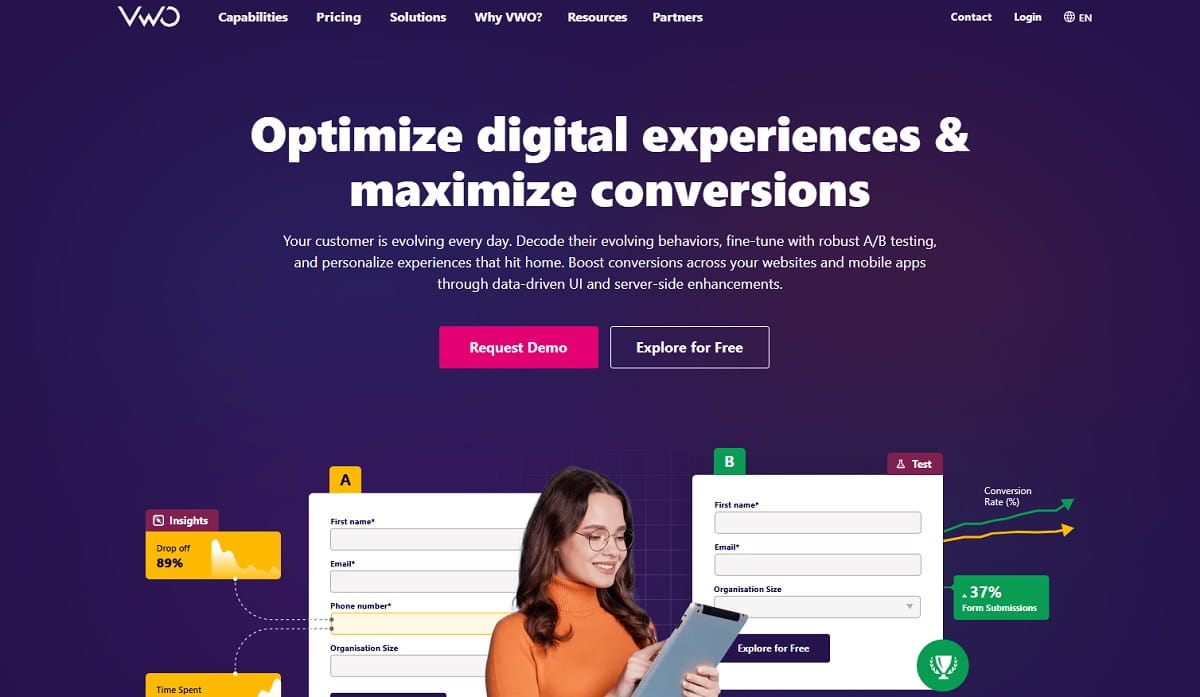
Best for: teams that want one consolidated vendor covering testing, personalization, and behavior analytics.
This is the entry most 2026 shortlists still get wrong. VWO and AB Tasty formally merged in January 2026 under Everstone Capital, operating as a unified digital experience optimization suite under the Wingify name, with VWO co-founder Sparsh Gupta as CEO. Any comparison article that lists them as two independent options you can play against each other in procurement is out of date — AB Tasty’s own announcement and VWO’s Wingify post both describe a single combined platform serving over 4,000 organizations.
Key features
- A/B, split URL, and multivariate testing with a visual editor
- Server-side and feature-flag testing for product teams
- Built-in heatmaps, session recordings, form analytics, and surveys
- Behavioral and geographic personalization with AI-assisted targeting
- Bayesian statistics with a free starter tier on VWO
Use cases
- Replacing Adobe Target and a separate behavior analytics contract with one vendor
- Mid-market to enterprise teams that want a visual editor plus server-side capability
- Organizations consolidating a fragmented optimization stack
Pros: unusually complete feature coverage for one contract; free VWO tier for evaluation; combined roadmap now backed by significant scale.
Cons: post-merger roadmaps and pricing are still settling; two overlapping product lines means feature duplication during consolidation; you lose the ability to negotiate VWO against AB Tasty.
Pricing: VWO offers a free plan; paid tiers and AB Tasty are quoted by sales.
4. Kameleoon
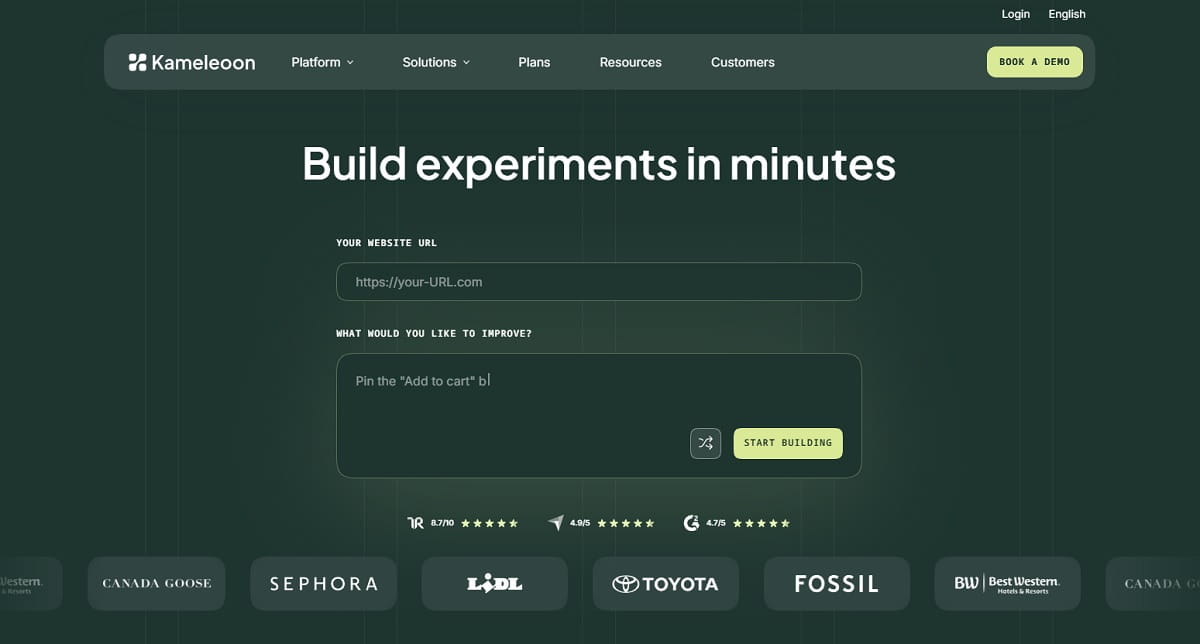
Best for: privacy-sensitive and regulated teams that need both marketer-friendly and server-side testing.
Kameleoon is the strongest European contender and the most credible hybrid on this list. It runs client-side visual tests and server-side feature experiments from one platform, with a hard focus on privacy compliance that matters if your legal team scrutinizes data residency.
Key features
- Client-side visual editor plus full-stack server-side SDKs
- AI-driven predictive targeting and personalization
- Prompt-based experimentation for faster test creation
- Built-in heatmaps, funnel analysis, and surveys
- GDPR-oriented architecture with strong consent handling
Use cases
- Financial services, healthcare, and other regulated industries
- European organizations with data residency requirements
- Teams needing one platform for both marketing and product experiments
Pros: genuine hybrid delivery; privacy posture is a real differentiator; published entry pricing, which is rare at this tier.
Cons: smaller partner and agency ecosystem than Optimizely; entry price is still enterprise-adjacent for small teams.
Pricing: from €495/month on the entry plan, covering roughly 10 experiments and 50,000 tested visitors monthly; higher tiers quoted by sales.
5. Mastercard Dynamic Yield

Best for: retail and ecommerce brands whose priority is personalization and recommendations, not test volume.
Dynamic Yield now operates as a standalone business inside Mastercard’s Data and Services organization, and its own domain now redirects into Mastercard’s site — the brand is Mastercard Dynamic Yield. It is the most direct swap for the Automated Personalization half of Adobe Target, and Gartner has named it a Leader in the Magic Quadrant for Personalization Engines for the eighth consecutive time in 2026.
Key features
- AI product recommendation engine tuned for commerce catalogs
- Audience segmentation and real-time behavioral targeting
- A/B and multivariate testing on personalized experiences
- Cross-channel delivery across web, app, email, and offline
- Transaction-informed signals drawn from Mastercard’s network data
Use cases
- Ecommerce catalog and homepage personalization at scale
- Retail brands running personalization across web, app, and email together
- Replacing Target’s personalization capability while keeping experiment volume modest
Pros: best-in-class recommendation models for commerce; proven at enterprise scale across 400-plus brands; open architecture that integrates rather than demanding a full suite.
Cons: overkill and overpriced for content sites or B2B; sales-led pricing; experimentation is competent but secondary to personalization.
Pricing: custom quote only.
6. Insider One
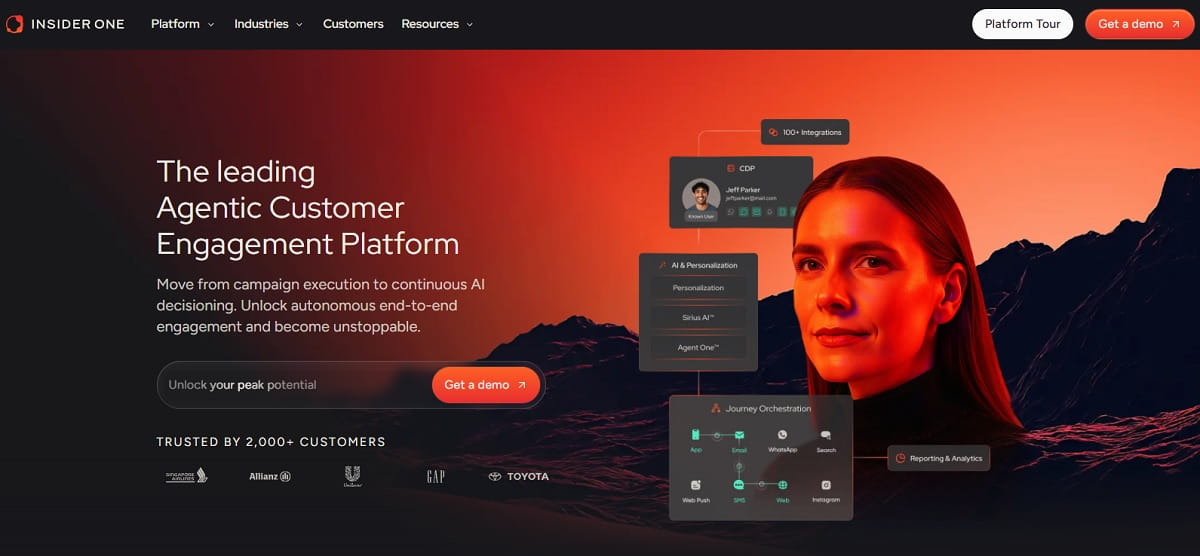
Best for: lifecycle marketing teams that need personalization across web, app, email, SMS, and WhatsApp from one platform.
Insider rebranded as Insider One in 2026 and was again named a Leader in the Gartner Magic Quadrant for Personalization Engines. Its differentiator against Adobe Target is the built-in CDP: you get identity resolution and cross-channel orchestration without assembling Adobe Experience Platform underneath it.
Key features
- Native customer data platform with unified profiles
- Web and app personalization plus onsite experimentation
- Journey orchestration across email, SMS, WhatsApp, and push
- Predictive AI segmentation and churn scoring
- Site search personalization for commerce
Use cases
- Multichannel retail and travel brands consolidating messaging and personalization
- Teams that need a CDP and personalization engine in one contract
- Replacing an Adobe Target plus Adobe Campaign combination
Pros: genuine breadth across channels; CDP included rather than sold separately; strong analyst standing.
Cons: a large platform to adopt if you only wanted A/B testing; sales-led pricing; onboarding is a project, not an afternoon.
Pricing: custom quote only.
7. Monetate Maestro (Formerly SiteSpect)
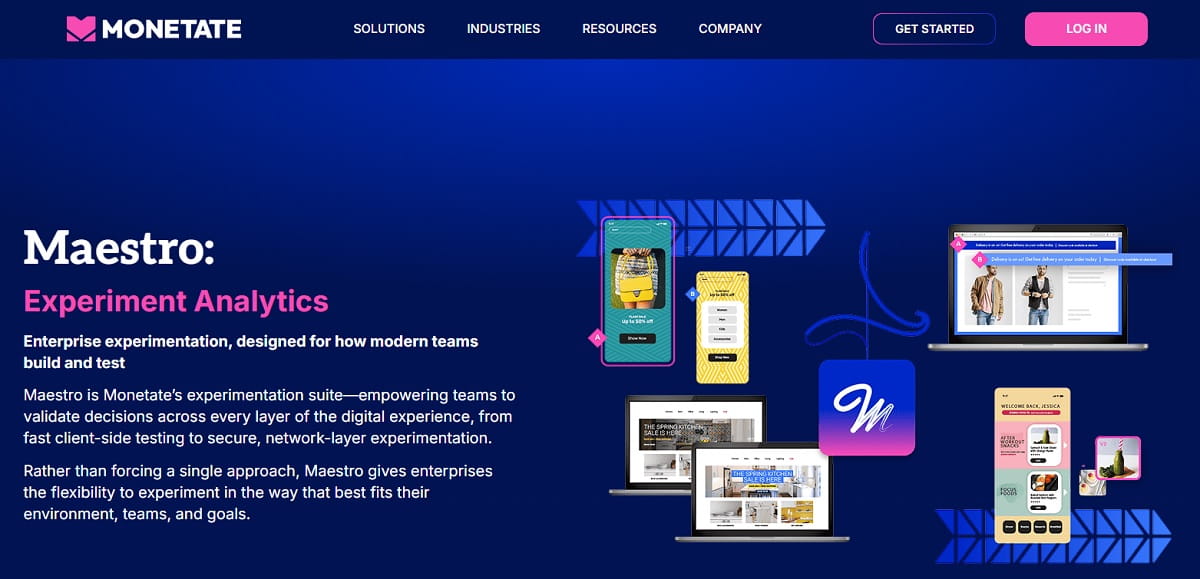
Best for: enterprise teams where page speed, flicker-free rendering, and regulated environments are non-negotiable.
If you were about to shortlist SiteSpect, shortlist this instead. Monetate acquired SiteSpect on 30 June 2025, and sitespect.com now redirects to Monetate’s Maestro product page. The zero-flicker server-side engine survived the acquisition as Forte, Maestro’s secure experimentation layer, and it now sits alongside Monetate’s personalization stack. In July 2026 Monetate also acquired Simon AI, adding a composable CDP.
The architecture is still the reason to pick it. Instead of a JavaScript tag that modifies the page after load, Forte delivers variations server-side, before the response reaches the browser. That removes the flash-of-original-content problem that plagues client-side tools and keeps third-party JavaScript off the critical path.
Key features
- Forte server-side delivery for zero-flicker testing on cloud, private network, or on-prem
- A/B, multivariate, split, and multi-armed bandit testing
- AI-driven personalization and product recommendations from the Monetate side
- Feature experimentation and advanced targeting flags
- Works across web, mobile web, SPAs, native apps, and in-store touchpoints
Use cases
- Retailers where Core Web Vitals directly affect revenue
- Secure portals, checkout flows, and logged-in journeys in regulated industries
- Organizations blocked from adding third-party client-side scripts
- Teams that want personalization and zero-flicker testing under one contract
Pros: unmatched on performance and flicker; tests things client-side tools cannot reach; personalization and experimentation now unified; strong security and deployment flexibility.
Cons: server-side architecture requires infrastructure involvement and a longer setup; two acquisitions in thirteen months means the combined roadmap is still settling; less friendly to marketers who expect a simple visual editor; sales-led pricing.
Pricing: custom quote only.
8. Convert Experiences
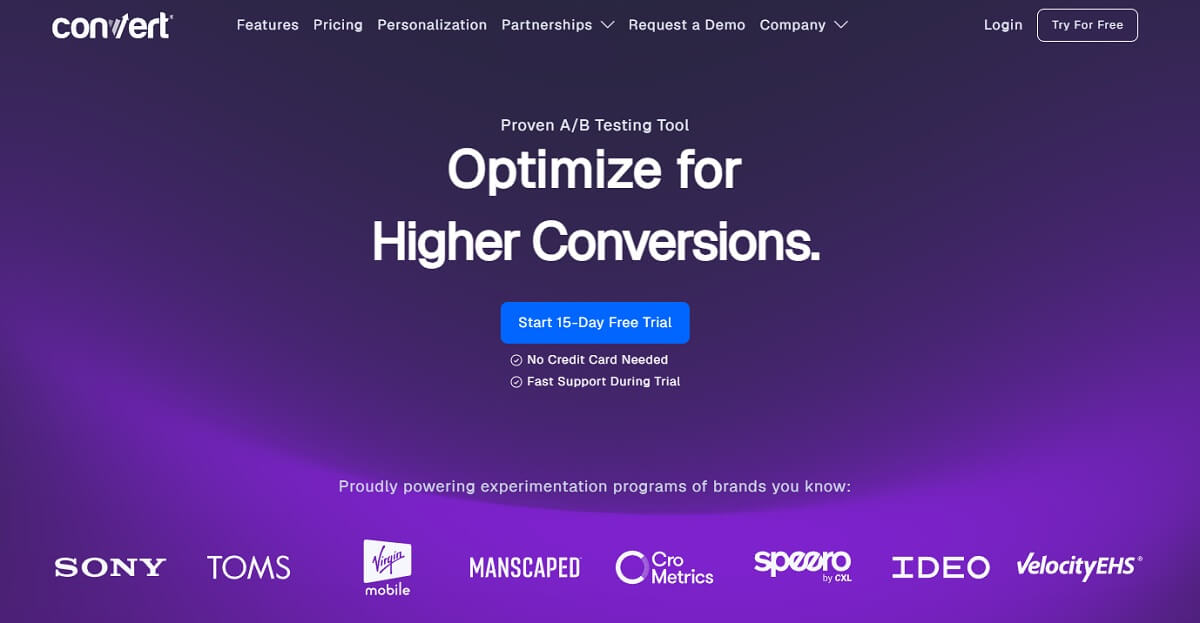
Best for: mid-market teams and CRO agencies that want serious testing without an enterprise contract.
Convert has run for over 15 years as an independent, privacy-focused testing platform. It is the natural landing spot for a team leaving Adobe Target that still needs real experimentation depth but cannot justify enterprise pricing.
Key features
- A/B, multivariate, split URL, and personalization tests
- Visual editor with anti-flicker implementation
- 90-plus integrations including Shopify, GA4, and WooCommerce
- Privacy-first data handling with no cross-client data pooling
- Unlimited team seats on standard plans
Use cases
- Agencies running programs across many client sites
- Mid-market ecommerce testing on Shopify or WooCommerce
- Teams that want transparent, published pricing
Pros: published pricing; strong privacy stance; responsive support; excellent value per test.
Cons: no server-side or feature-flag capability; smaller ecosystem than Optimizely or VWO; lighter on AI-driven personalization.
Pricing: Growth plan from $399/month, or $299/month billed annually, covering 100,000 tested users monthly.
9. Statsig (Now Part Of Amplitude)
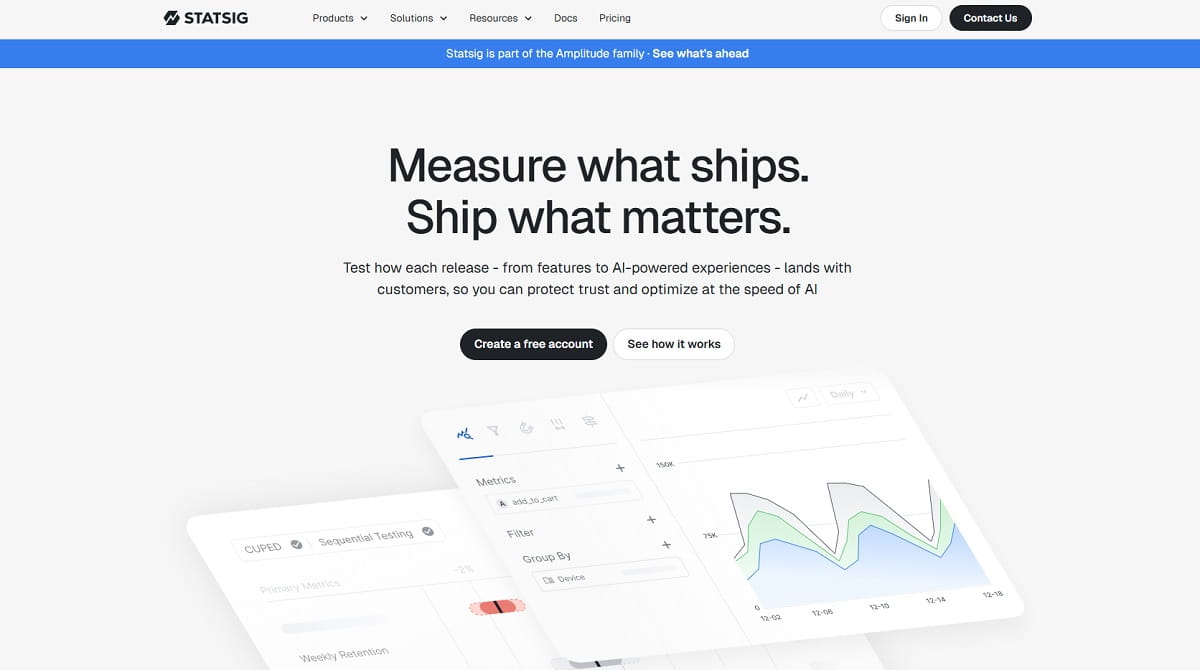
Best for: product-led growth teams running high-volume experiments against product metrics — with an ownership caveat.
Statsig is a strong product experimentation platform, and its recent history deserves a clear-eyed read. OpenAI acquired Statsig for $1.1 billion in September 2025. Then, on 5 May 2026, Statsig’s own site confirms, the product, brand, and customer base moved to Amplitude while the original engineering team remained at OpenAI. Amplitude has committed to maintaining the platform across cloud and warehouse deployments. That is a genuinely unusual structure, and it belongs on your risk register rather than buried in a footnote.
Key features
- Feature flags, experimentation, and product analytics in one platform
- Warehouse-native mode for Snowflake, BigQuery, Databricks, and Redshift
- CUPED variance reduction and sequential testing
- Session replay and funnel analysis
- Generous free tier with usage-based scaling
Use cases
- Product teams running dozens of concurrent experiments
- Companies that want experiment analysis to sit on their own warehouse data
- Startups needing enterprise statistics on a startup budget
Pros: excellent statistical engine; strong free tier; warehouse-native architecture; analytics and experimentation unified.
Cons: the team that built it now works elsewhere, which is a legitimate roadmap risk; marketer-facing visual editing is weaker than Target’s; not a personalization engine.
Pricing: free tier available; paid plans scale by usage.
10. Eppo by Datadog
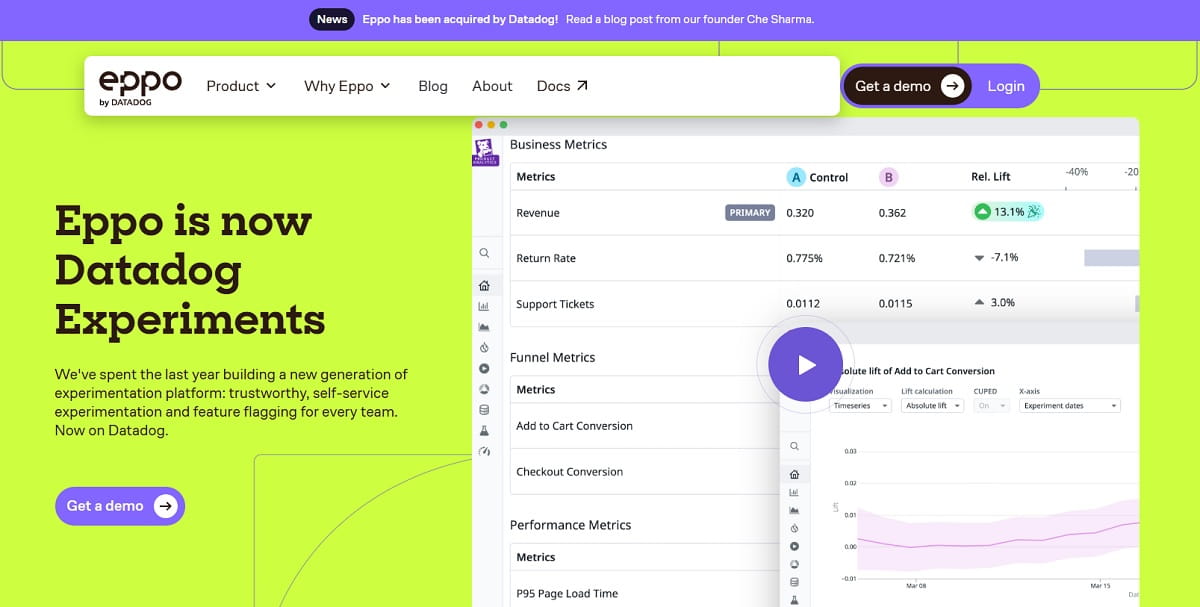
Best for: data teams that want experimentation analysis to live on the warehouse, especially if you already run Datadog.
Datadog acquired Eppo in May 2025 and now runs it as Eppo by Datadog, integrated with Datadog Product Analytics, Real User Monitoring, and Session Replay. Eppo’s original thesis holds: your experiment analysis should query your warehouse, not a vendor’s copy of your data.
Key features
- Warehouse-native experiment analysis on your own data
- Feature flagging with progressive rollouts
- Advanced statistics including CUPED and sequential analysis
- Metric governance and a shared metric layer
- Native integration with Datadog observability
Use cases
- Organizations already invested in Datadog observability
- Data teams that insist on a single source of metric truth
- Engineering-led experimentation programs
Pros: rigorous statistics; no data duplication; strong metric governance; backed by a large public company.
Cons: built for data-literate teams, not marketers; no visual editor; the Datadog relationship pushes it toward customers already in that ecosystem; sales-led pricing.
Pricing: custom quote only.
11. GrowthBook
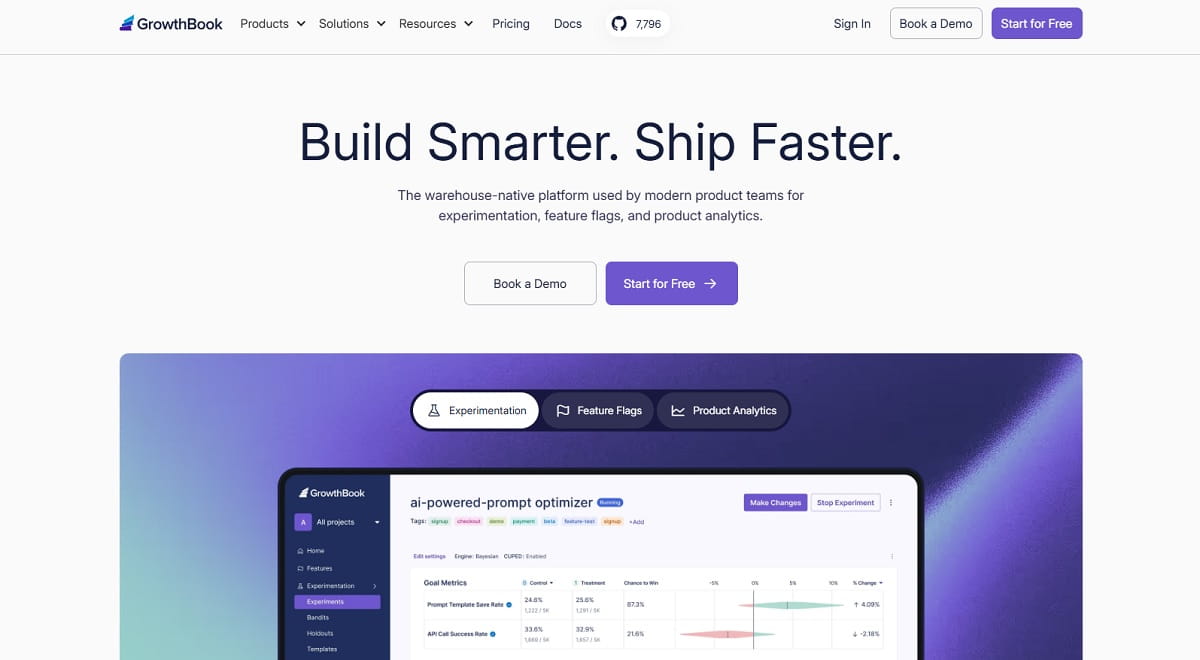
Best for: engineering teams that want to own their experimentation infrastructure outright.
GrowthBook is the credible open-source option. Self-host it and your experiment data never leaves your infrastructure — a decisive argument in privacy-sensitive or cost-constrained organizations.
Key features
- Open-source core, self-hostable at no license cost
- Warehouse-native analysis across major data platforms
- Feature flags with SDKs for most major languages
- Bayesian and frequentist statistics engines
- Visual editor available for basic client-side changes
Use cases
- Teams with strict data residency requirements
- Startups needing experimentation without a platform budget
- Engineering organizations that prefer to own the stack
Pros: free if self-hosted; no data leaves your systems; transparent methodology; active open-source community.
Cons: self-hosting is real operational work; marketer-facing tooling is thin; personalization is not the product’s purpose.
Pricing: free self-hosted; cloud plans from roughly $20 per user per month.
12. LaunchDarkly
Best for: engineering organizations where experiments ride along with feature releases.
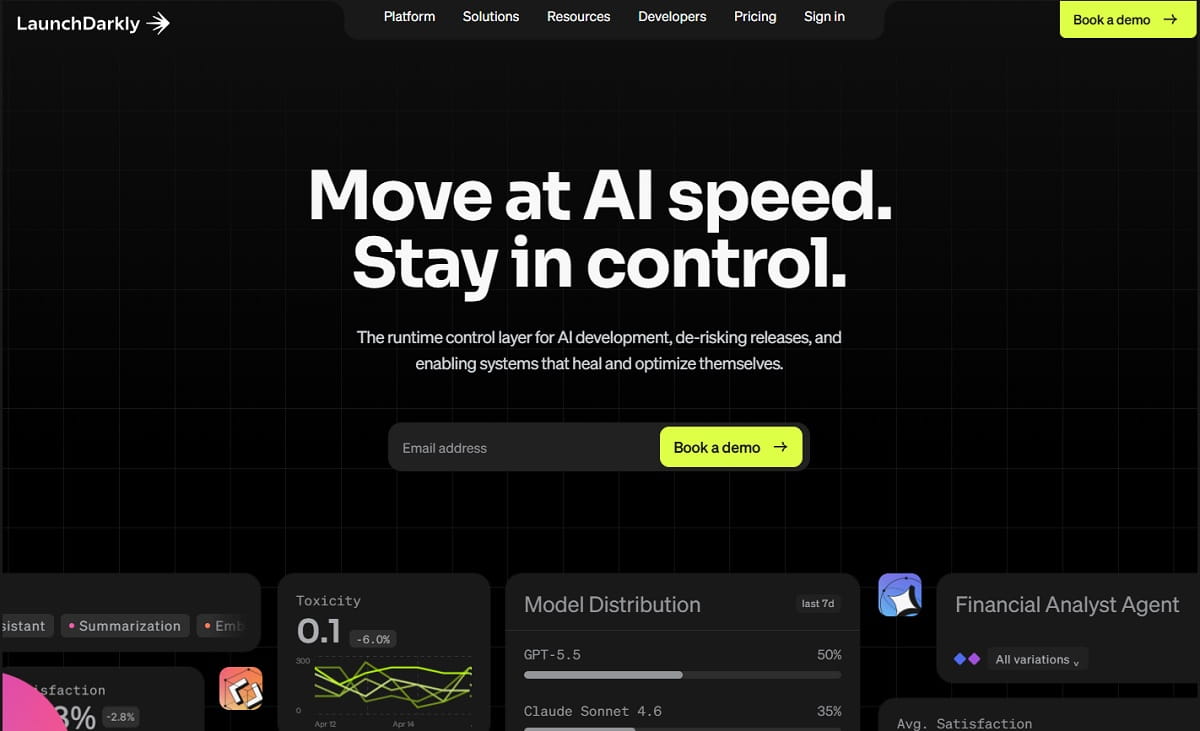
LaunchDarkly is a feature management platform first and an experimentation platform second. If your team already gates releases behind flags, adding experimentation there is a smaller change than adopting a marketing testing tool.
Key features
- Enterprise-grade feature flag management with granular targeting
- Experimentation built on top of existing flags
- Progressive delivery and automated rollback
- Extensive SDK coverage and integrations
- Strong governance, approvals, and audit logging
Use cases
- Continuous delivery teams measuring release impact
- Product experiments that require engineering deployment anyway
- Organizations needing tight rollout governance
Pros: best-in-class flag management; excellent reliability; free developer tier; mature enterprise controls.
Cons: nothing for marketers — no visual editor at all; experimentation is a secondary capability; costs climb quickly at scale.
Pricing: free developer tier, usage-based Foundation tier, and custom enterprise plans following a 2026 pricing change.
Also Worth a Look
One more established Adobe Target competitor did not make the main twelve but belongs on an enterprise shortlist.
- Webtrends Optimize — a UK-based mid-market platform offering A/B testing, personalization, and a notably hands-on managed service model.
What the 2026 Consolidation Wave Means For Your Shortlist
Five ownership changes in fourteen months reshaped this category, and they change how you should run procurement.
| Platform | What Changed | When | What It Means for Buyers |
|---|---|---|---|
| VWO + AB Tasty | Merged under Everstone Capital as Wingify | January 2026 | Two vendors became one; you cannot bid them against each other |
| Statsig | OpenAI acquired it, then brand and customers moved to Amplitude | Sept 2025, then May 2026 | Product continues, but the founding team stayed at OpenAI |
| Eppo | Acquired by Datadog for a reported $220 million | May 2025 | Now Eppo by Datadog; roadmap tilts toward Datadog customers |
| SiteSpect | Acquired by Monetate; product relaunched as Maestro with the Forte server-side layer | June 2025 | sitespect.com now redirects to Monetate; shortlist Monetate Maestro instead |
| Monetate | Acquired Simon AI, adding a composable CDP | July 2026 | Personalization, testing, and CDP now sold as one stack |
Three practical consequences. First, ask about roadmap continuity in the first sales call, not the last — a merged product line means feature duplication that someone will eventually sunset. Second, negotiate contract length carefully; a three-year commitment to a platform that changed hands twice deserves harder exit terms than one to a stable vendor. Third, check that any comparison article you read was written after January 2026 — a list that treats VWO and AB Tasty as competing options was written before the merger and is describing a market that no longer exists.
Adobe Target Alternatives To Approach With Care
These names still appear on comparison lists. They should not be on yours.
- Google Optimize — shut down on 30 September 2023. Google’s own migration documentation points users elsewhere. It is not an option.
- Oracle Maxymiser — reached end of life on 31 May 2024. Oracle retired the platform endpoints, and its customer notification instructed teams to remove the Maxymiser tag and SDKs entirely. Any list still recommending “Oracle” as an Adobe Target alternative has not been updated in two years.
- Landing page builders — tools such as Instapage and Unbounce include A/B testing, but they test pages they host themselves. They cannot run experiments on your existing site, which is the actual job Adobe Target does. They are complements, not alternatives.
- Analytics suites without a testing engine — a product analytics tool tells you what happened. Without experiment delivery and targeting, it cannot replace Target no matter how good the reporting is.
What Actually Breaks When You Migrate Off Adobe Target
Migration cost is rarely in the new license. It is in these five places.
- Audience definitions do not port. Segments built on Adobe Analytics or Adobe Experience Platform data have to be rebuilt against the new platform’s data model. Budget real analyst time for this.
- Historical results become unreadable. Past experiment data stays in Target. Export what you need for institutional memory before the contract lapses, because after that you cannot.
- Profile scripts have no equivalent. Target’s server-side profile scripts are genuinely distinctive. Teams relying on them usually need custom work on the new platform.
- QA process resets. Your team’s mental model of preview links, activity QA, and delivery rules is Target-specific. Expect a slower first quarter.
- Flicker returns if you move client-side. If you are leaving a well-tuned Target implementation for a client-side tool, test anti-flicker handling before you sign. This is where Monetate’s Forte server-side layer and Kameleoon’s hybrid delivery earn their keep.
Run the old and new platforms in parallel for one testing cycle if the contract allows. It is the cheapest insurance available.
How To Choose the Right Adobe Target Alternative
Answer four questions in order. The answers narrow twelve options to two.
1. Who runs the tests? Marketers need a visual editor: Plerdy, VWO and AB Tasty, Convert, Kameleoon, Optimizely. Engineers do not: Statsig, Eppo, GrowthBook, LaunchDarkly.
2. Is your bottleneck testing or knowing what to test? If you shipped fewer than roughly ten experiments last quarter, the constraint is hypotheses, not tooling. Start with behavioral evidence — Plerdy’s heatmaps and session replay — before buying a bigger engine.
3. Do you need personalization or experimentation? Personalization at scale points to Mastercard Dynamic Yield, Insider One, or Monetate. Rigorous experimentation points to Optimizely, Statsig, or Eppo. Very few teams genuinely need both at enterprise grade.
4. Where does the data have to live? Warehouse-native requirements point to Statsig, Eppo, or GrowthBook. Strict residency or self-hosting points to GrowthBook or Kameleoon.
Then run a paid pilot on your real traffic before signing anything annual. Every vendor on this list will demo beautifully; only your own data tells you whether the platform fits.
Frequently Asked Questions
What Is the Best Adobe Target Alternative In 2026?
There is no single best option, because Adobe Target does two different jobs. For enterprise experimentation, Optimizely is the closest like-for-like replacement. For ecommerce personalization, Mastercard Dynamic Yield leads. For mid-market teams that need behavioral evidence plus testing at a realistic price, Plerdy is the strongest fit, with unlimited A/B testing from the free plan upward.
Who Are Adobe Target’s Main Competitors?
At the enterprise tier, Adobe Target’s main competitors are Optimizely, Mastercard Dynamic Yield, Insider One, and Monetate Maestro, the platform that absorbed SiteSpect in 2025. The VWO and AB Tasty combination under Wingify competes across both enterprise and mid-market. Developer-first platforms such as Statsig, Eppo by Datadog, and LaunchDarkly compete for the experimentation budget rather than the personalization budget.
Which Adobe Target Alternative Is Easiest To Implement?
Plerdy and Convert Experiences are the fastest to get running — a single script, then testing the same day. GrowthBook’s cloud version is quick for engineering teams. Monetate Maestro is the slowest by design, because its Forte server-side delivery requires infrastructure work before the first test ships.
How Much Does Adobe Target Cost Compared To the Alternatives?
Adobe publishes no pricing for Target; every plan routes through sales, and implementation is typically quoted separately. Among alternatives, published entry pricing includes Plerdy from $21/month billed annually, Convert Experiences from $299/month billed annually, Kameleoon from €495/month, and GrowthBook from about $20 per user per month. Optimizely, Mastercard Dynamic Yield, Insider One, Monetate, and Eppo are all sales-led.
Did VWO And AB Tasty Really Merge?
Yes. The two companies formally combined in January 2026 under Everstone Capital ownership, operating as a unified suite under the Wingify brand with more than 4,000 customer organizations. Treat them as one vendor in procurement, not two.
Is Adobe Target Being Discontinued?
No. Adobe Target remains an actively sold and developed product, and Adobe has extended experimentation into Adobe Journey Optimizer alongside it rather than replacing Target. The products that were discontinued in this category are Google Optimize, in September 2023, and Oracle Maxymiser, in May 2024.
Can a Free Tool Replace Adobe Target?
Partly, and it depends on scale. Plerdy’s free plan includes unlimited A/B testing plus heatmaps and session recordings, and GrowthBook is free when self-hosted. Neither replaces Adobe-grade AI personalization, identity resolution, or enterprise governance. For a team running a handful of experiments a quarter on a single site, a free tier is genuinely sufficient.
Conclusion
The honest conclusion for most teams searching for Adobe Target alternatives is that they were paying enterprise prices for mid-market test volume. If that describes you, the answer is not a smaller version of Adobe Target — it is a tool that closes the hypothesis gap first. Start with behavioral evidence, prove the program generates wins, and buy the enterprise engine only when test velocity actually demands it.
If you do need the enterprise tier, Optimizely and Kameleoon are the strongest direct replacements, Mastercard Dynamic Yield, Insider One, and Monetate own the personalization side, and the warehouse-native trio of Statsig, Eppo, and GrowthBook is where serious product experimentation now happens. Whichever direction you take, verify ownership and status before you shortlist — this category changed more in the last eighteen months than in the previous five years.
Create a free Plerdy account and see where your visitors actually drop off before you choose a testing platform.