

Optimizely is a strong, established experimentation platform — but it’s also expensive, slow to set up, and split across products, which is exactly why so many marketing, CRO, and engineering teams go looking for an alternative. If your main goal is running experiments and actually understanding why a variant won, Plerdy is one of the most complete Optimizely alternatives on the market: unlimited A/B testing plus heatmaps and session replay in one dashboard, with a free-forever plan and no six-figure contract.
This guide breaks down the 12 best Optimizely alternatives for A/B testing, personalization, and feature-flag rollout control in 2026 — with pricing, key features, pros, cons, and who each tool actually fits. There’s also a short section near the end for readers who are really comparing Optimizely’s CMS/DXP product, not its testing tools.
What Is Optimizely? Web Experimentation vs. Content Cloud (DXP)
Optimizely is one of the oldest names in conversion rate optimization. The platform actually covers two very different product lines that people often confuse when they search for an “Optimizely alternative”: Optimizely Web / Feature Experimentation (A/B testing, personalization, and feature flags for websites and product teams) and Optimizely Content Cloud, formerly known as Episerver, a .NET-based content management system and digital experience platform (DXP). The 12 alternatives below are all for the first product line — website and product experimentation. If you’re actually evaluating the CMS/DXP side, jump to the Optimizely CMS/DXP alternatives section.
Why Teams Look for an Optimizely Alternative
Three reasons come up again and again in reviews and comparison articles:
- Price. Optimizely doesn’t publish pricing. According to Convert.com’s 2026 comparison, average contracts run close to $80,000 per year with multi-year lock-ins — out of reach for most mid-market teams.
- Setup complexity. Optimizely Full Stack and Web Experimentation are built for large engineering and marketing organizations, which means a longer implementation timeline than most CRO or product teams want.
- Split tooling. Optimizely separates experimentation from behavior analytics (heatmaps, session replay, funnels). Teams often end up paying for a second or third tool just to see why a test won or lost — the gap tools like Plerdy and Amplitude are built to close.
How We Evaluated These Optimizely Alternatives
Every tool below was checked against its own pricing page, changelog, or press coverage as of 2026 to confirm it’s still active under its current name — a few tools in this category have merged or rebranded recently (see the Amplitude/Statsig and Harness FME entries below). We then scored each one on: breadth of testing capability (A/B, multivariate, feature flags), whether behavior analytics is built in or bolted on, transparency of pricing, and the specific team or use case it fits best. No single tool wins every category — use the comparison table and “best for” tags to shortlist two or three before you request a demo.
Optimizely Alternatives Comparison Table
| Tool | Best For | A/B + Multivariate | Behavior Analytics Built In | Feature Flags | Starting Price |
|---|---|---|---|---|---|
| Plerdy | All-in-one CRO & UX testing | Yes | Yes (heatmaps, replay) | No | Free plan; from $32/mo |
| VWO | Full CRO programs | Yes | Yes (heatmaps, replay) | Limited | Free plan; from ~$190/mo |
| Adobe Target | Adobe ecosystem enterprises | Yes | Via Adobe Analytics | Limited | Custom / enterprise only |
| Kameleoon | AI-driven full-stack testing | Yes | Add-on | Yes | Custom / enterprise only |
| AB Tasty | Testing + personalization at scale | Yes | Add-on | Yes | From ~$50/mo |
| Convert | Privacy-first agencies | Yes | No | No | From ~$299/mo |
| Amplitude | Experimentation tied to analytics | Yes | Yes (native) | Yes | Free tier; usage-based |
| PostHog | Developer-first product teams | Yes | Yes (native) | Yes | Free tier; usage-based |
| GrowthBook | Open-source, warehouse-native | Yes | Via warehouse | Yes | Free (self-hosted); from $20/user |
| LaunchDarkly | Feature flags & rollout control | Limited | No | Yes | From ~$8.33/seat/mo |
| Unbounce | Landing-page A/B testing | Yes (landing pages only) | No | No | From ~$99/mo |
| Monetate | Enterprise retail personalization | Yes | Add-on | Limited | Custom / enterprise only |
Pricing is approximate and current as of 2026 — verify exact numbers on each vendor’s pricing page before publishing, since experimentation vendors change tiers often.
The 12 Best Optimizely Alternatives
Here’s the detailed breakdown — what each tool actually does well, where it falls short, and who should pick it over Optimizely.
1. Plerdy — Best All-In-One Alternative for CRO & UX Testing
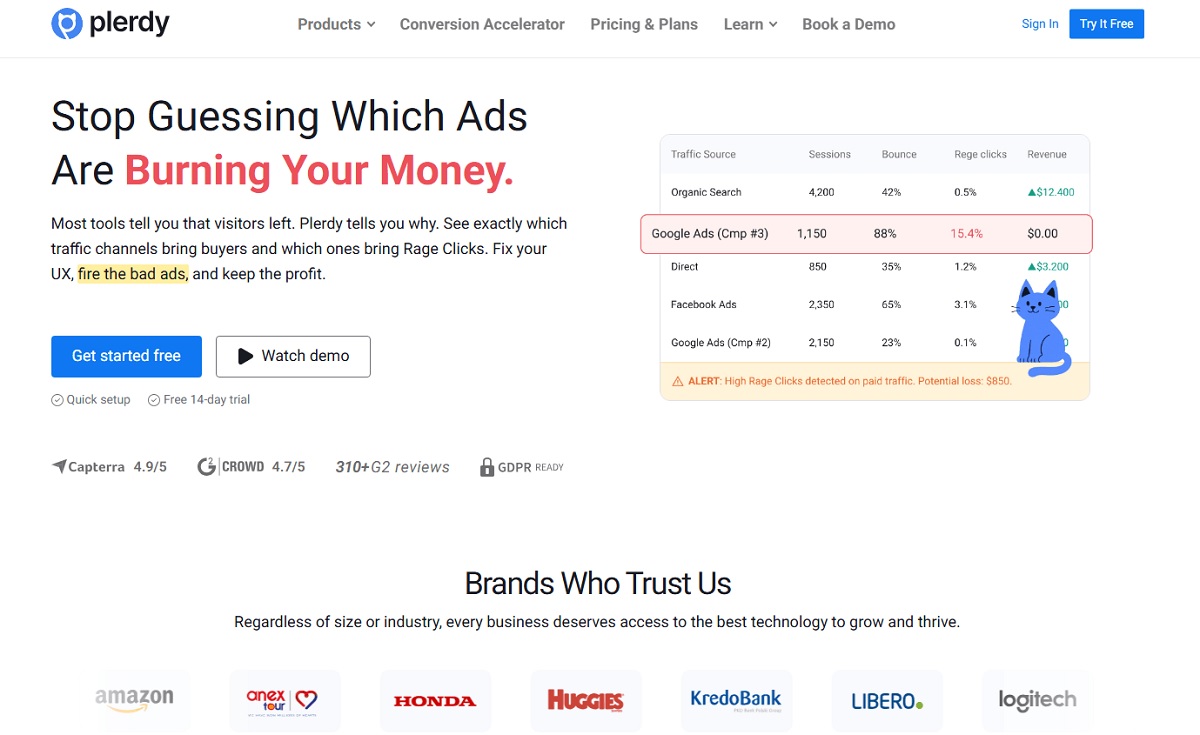
Plerdy is a conversion rate optimization platform that pairs unlimited A/B testing with the behavior-analytics layer Optimizely doesn’t include out of the box: heatmaps, session replay, rage-click detection, funnels, and pop-up/form builders. For teams whose main job is running website experiments and understanding why a variant won, Plerdy replaces both Optimizely and a separate analytics tool in one subscription.
- Key features: unlimited A/B testing on every plan, click and scroll heatmaps, session recordings, funnel and conversion tracking, pop-up/form builder, SEO and error-tracking modules, native integrations with Shopify, WordPress, Wix, and Drupal.
- Best for: marketing and CRO teams who want testing and behavior analytics in one dashboard without an enterprise contract.
- Pros: unlimited A/B tests even on the free plan; heatmaps and session replay included, not sold separately; transparent published pricing; fast setup with no dedicated implementation team required.
- Cons: lighter on developer-first feature-flagging and server-side experimentation than engineering-focused tools like LaunchDarkly or GrowthBook.
- Pricing: free plan forever (unlimited A/B testing, 100 heatmaps/day); paid plans from $32/month ($21/month billed annually) up to $108/month, plus custom enterprise tiers. Source: Plerdy pricing page.
2. VWO — Best for A/B Testing & Conversion Programs
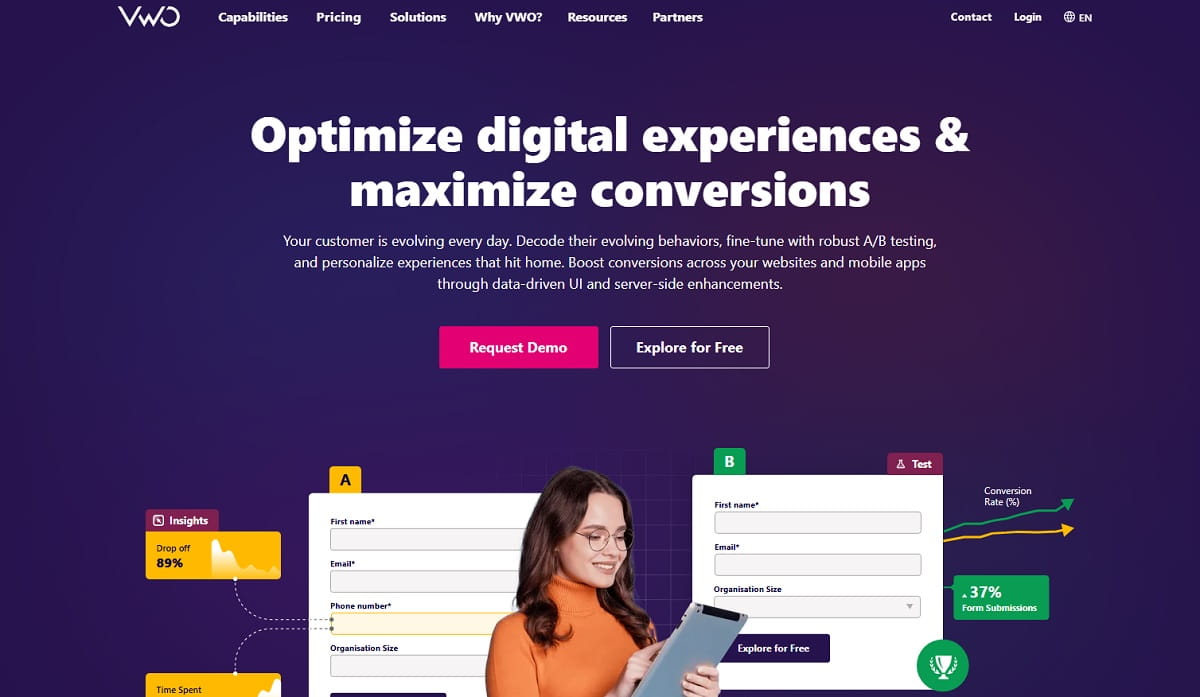
VWO is one of the most established CRO suites and shows up as an Optimizely alternative in every competitor round-up we checked. It combines A/B, split-URL, and multivariate testing with heatmaps, session recordings, and an on-page survey tool, aimed squarely at marketing and growth teams running structured testing programs.
- Key features: visual no-code editor, multivariate and multi-armed bandit testing, heatmaps and recordings, on-page surveys, server-side testing add-on.
- Best for: CRO teams that want a mature, marketer-friendly suite with a large template and integration library.
- Pros: deep feature set built up over more than a decade; strong documentation and community; free entry-level plan for smaller sites.
- Cons: pricing scales quickly once you add personalization or full-stack testing; some reviewers flag a steep learning curve for the full platform.
- Pricing: free plan for small traffic volumes; paid plans reported from roughly $190/month up to $1,049/month, with custom enterprise pricing above that (source: TheCMO’s 2026 Optimizely-alternatives review — confirm current tiers on VWO’s site).
3. Adobe Target — Best for Enterprise Personalization
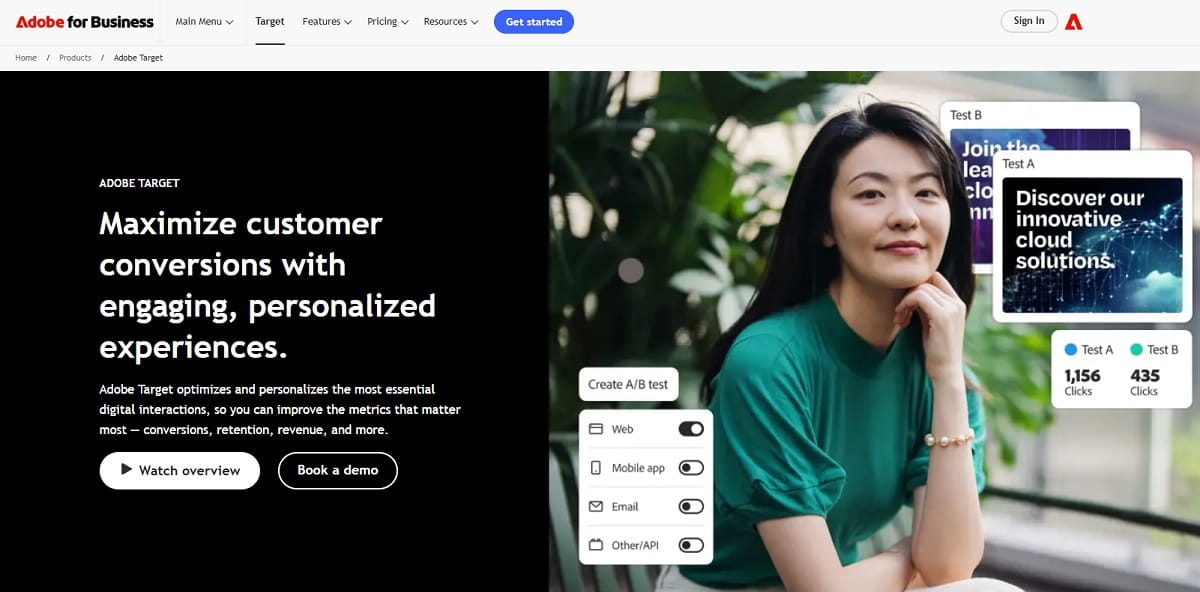
Adobe Target is the natural Optimizely alternative for organizations already running Adobe Experience Cloud. It leans harder into AI-driven personalization and omnichannel delivery than pure A/B testing, using Adobe Sensei to automate targeting across web, mobile, and email.
- Key features: AI-powered automated personalization, A/B and multivariate testing, omnichannel experience delivery, deep integration with Adobe Analytics and Experience Cloud.
- Best for: large enterprises already invested in the Adobe stack that want personalization to sit next to their existing analytics.
- Pros: best-in-class personalization automation; tight integration with the rest of Adobe Experience Cloud; strong support for complex, multi-channel campaigns.
- Cons: pricing is fully custom and enterprise-only — not a fit for small or mid-market budgets; you generally need Adobe Analytics alongside it to see the full behavioral picture.
- Pricing: custom quotes only, no published tiers. Source: Adobe and multiple 2026 comparison articles.
4. Kameleoon — Best AI-Powered Full-Stack Experimentation
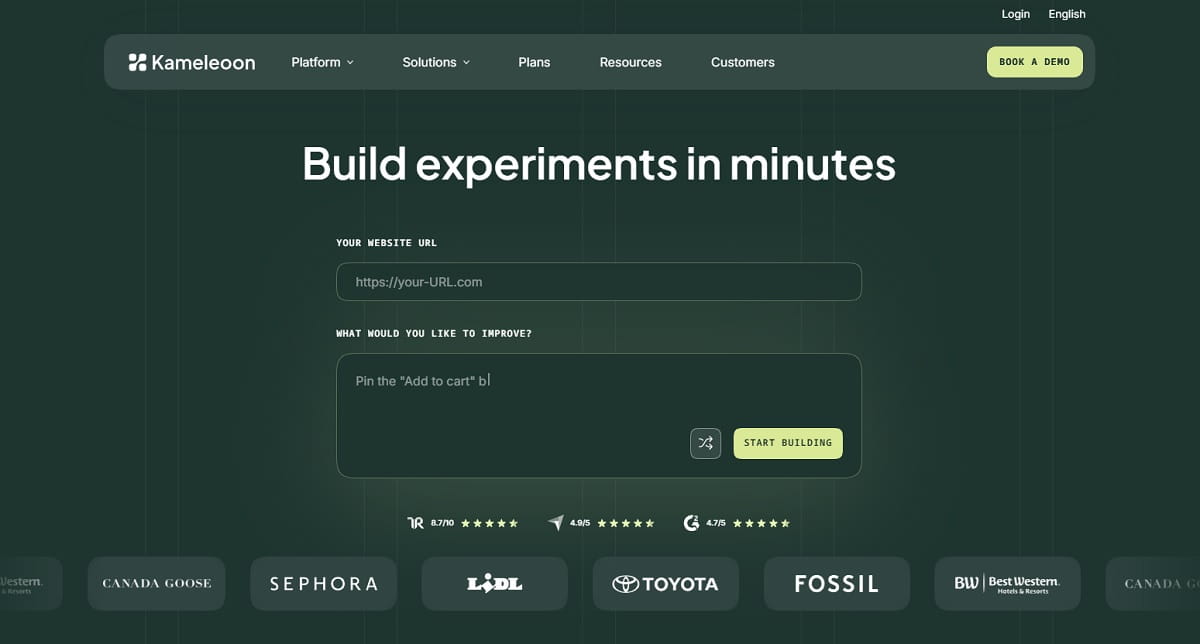
Kameleoon positions itself as an AI-first alternative to Optimizely, combining client-side and server-side testing with predictive personalization and an AI assistant that helps set up experiments and flag likely winners early.
- Key features: full-stack (client + server-side) experimentation, AI-assisted experiment creation, real-time personalization, feature experimentation and flags, compliance-focused data handling for regulated industries.
- Best for: mid-market and enterprise teams in healthcare, finance, or other regulated industries that need GDPR/HIPAA-conscious testing plus AI-driven personalization.
- Pros: genuinely useful AI features for prioritizing tests; full-stack coverage for both marketing and engineering use cases; compliance-first architecture.
- Cons: pricing isn’t published, so budgeting requires a sales conversation; smaller community and template library than VWO or Optimizely.
- Pricing: custom, quote-based (source: Convert.com and TheCMO 2026 comparisons — no public tiers as of this writing).
5. AB Tasty — Best for Experimentation Plus Personalization at Scale
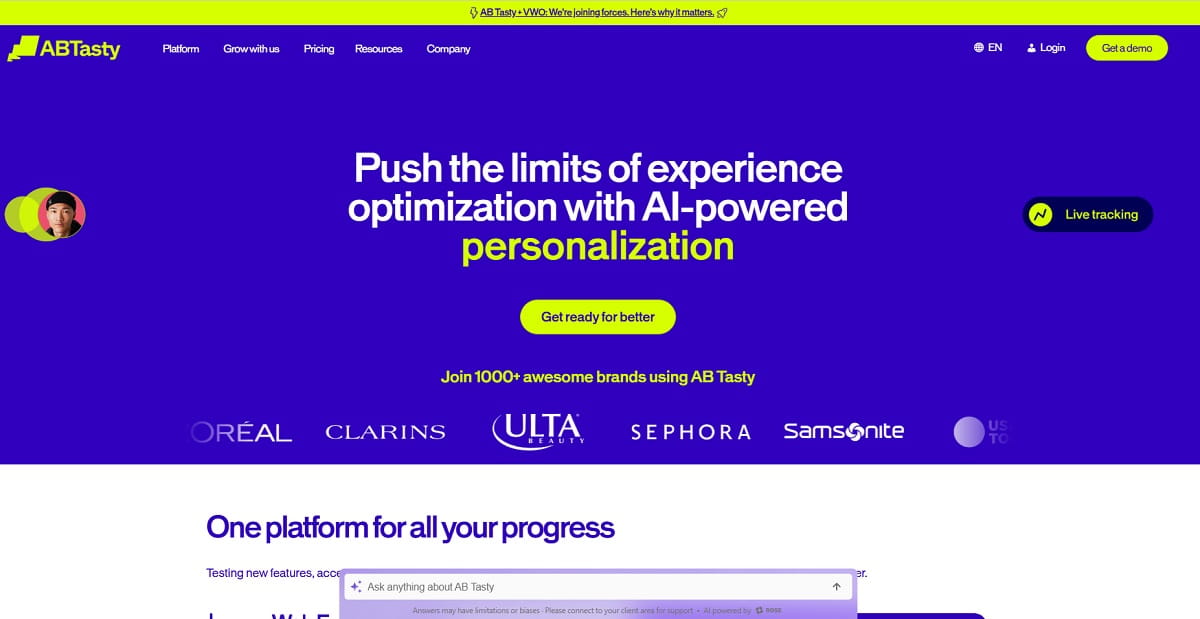
AB Tasty pairs A/B and multivariate testing with product recommendations and feature-flag-driven rollouts, and it’s one of the few tools on this list with a published entry-level price — which makes it easier to evaluate against Optimizely’s opaque enterprise pricing.
- Key features: A/B/n and multivariate testing, AI-driven personalization and product recommendations, feature experimentation and flags, WYSIWYG visual editor.
- Best for: mid-market retailers and media companies that want testing and personalization from a single vendor.
- Pros: faster onboarding than most enterprise suites, according to user reviews; reliable support reported across G2 reviews; AI personalization is a genuine differentiator.
- Cons: enterprise pricing tiers move to custom quotes quickly; can feel like overkill for a single-team, single-site setup.
- Pricing: from roughly $50/month (billed annually) at the entry tier, custom quotes above that (source: TheCMO’s 2026 review — confirm on AB Tasty’s site).
6. Convert — Best for Privacy-First A/B Testing
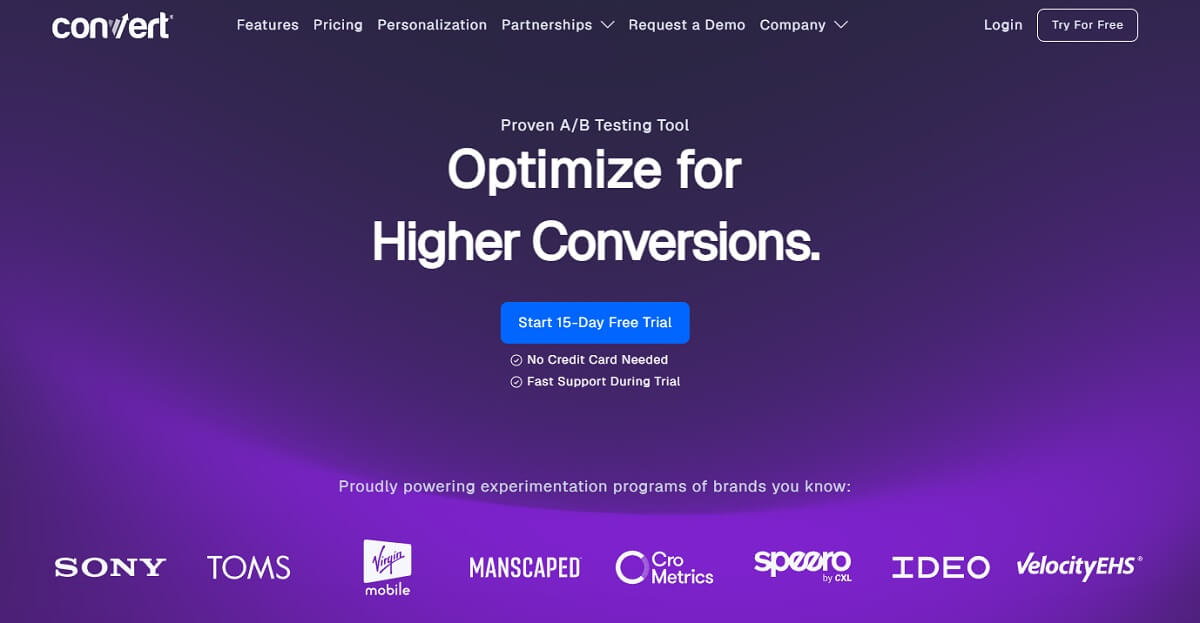
Convert Experiences is built around a privacy-first pitch: no data resale, GDPR/HIPAA/CCPA-friendly data handling, and transparent published pricing — the opposite of Optimizely’s custom-quote model. It supports frequentist, Bayesian, and sequential statistics, which appeals to CRO specialists who want control over the stats engine.
- Key features: client- and server-side A/B and multivariate testing, native heatmaps, choice of statistical models (frequentist/Bayesian/sequential), strong data-privacy posture, no vendor lock-in on data ownership.
- Best for: agencies and regulated-industry teams that need compliance guarantees and predictable, published pricing.
- Pros: transparent pricing you can see without a sales call; strong reputation for data privacy; flexible statistics engine for teams that care about methodology.
- Cons: interface is dated compared to newer entrants; no built-in widget/pop-up builder; learning curve for non-technical marketers.
- Pricing: from $299/month per 100K monthly active users (annual billing) or $399/month billed monthly; 15-day free trial; custom enterprise tiers. Source: Convert.com.
7. Amplitude (Including the Former Statsig Platform) — Best for Experimentation Tied to Analytics
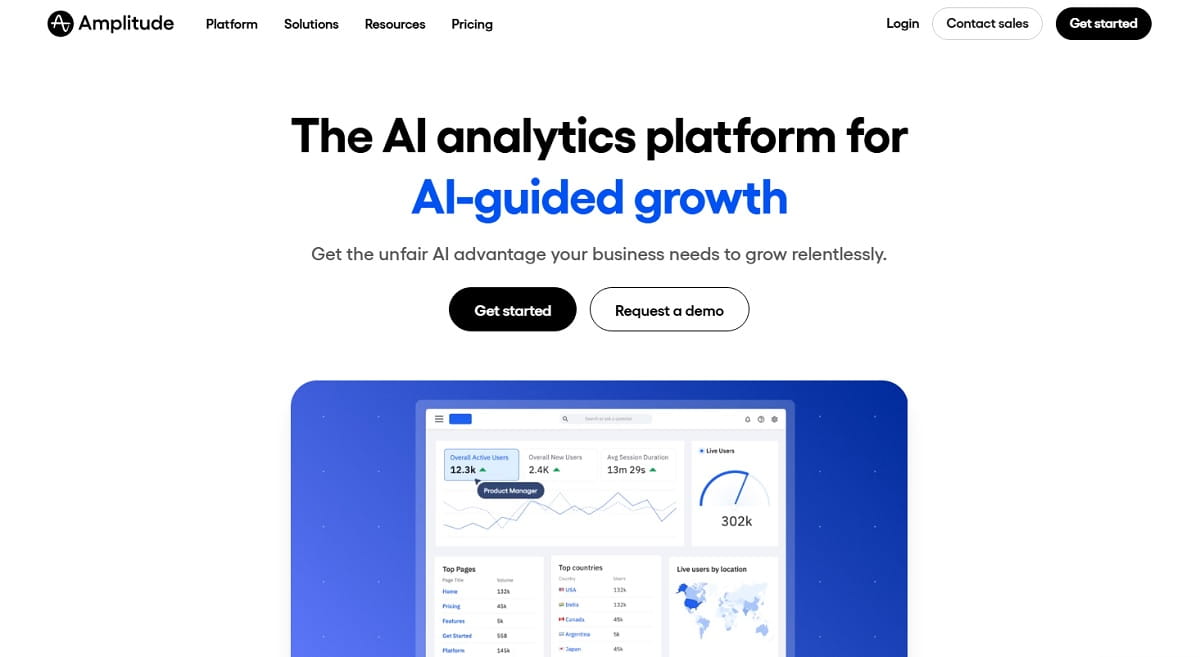
Amplitude built its experimentation product around a simple idea: judge test results by retention and activation, not just conversion. In May 2026, Amplitude took over the Statsig brand and customer base after OpenAI acquired the original Statsig team and technology — Amplitude now maintains the Statsig platform for existing customers while building a unified roadmap. That makes Amplitude the most current, analytics-native pick on this list, but it’s worth flagging the history before you commit, per MarTech’s coverage of the deal.
- Key features: feature experimentation (A/B and multivariate), results tied to retention/activation/revenue metrics, feature management with flags, session replay integration, the inherited Statsig warehouse-native stats engine.
- Best for: product and growth teams that want experimentation decisions judged against real behavioral outcomes, not just a single conversion metric.
- Pros: one of the most generous free tiers in the category (2M events/month); experimentation and analytics live in the same product; warehouse-native option inherited from Statsig for teams on Snowflake/BigQuery/Databricks.
- Cons: the 2026 Statsig transition means some roadmap and support uncertainty for former Statsig customers; less marketer-friendly visual editor than VWO or AB Tasty.
- Pricing: free tier (2M events/month); paid plans are usage-based. Source: Amplitude.
8. PostHog — Best Open-Source, Developer-First Alternative
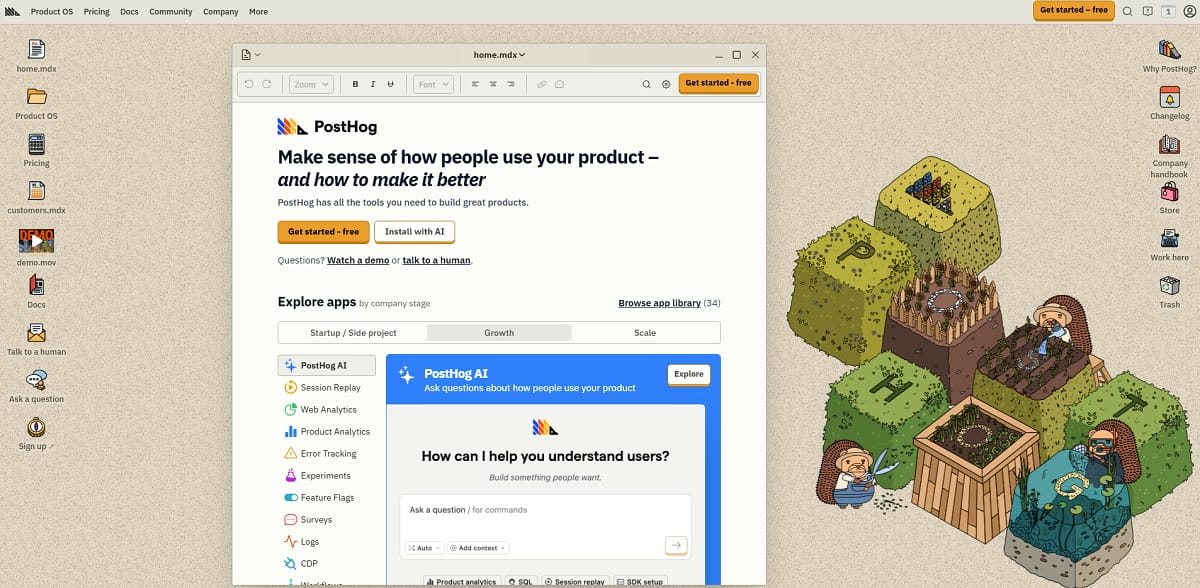
PostHog bundles A/B testing and feature flags with product analytics, session replay, and autocapture in one open-source platform. It’s the most common answer when engineering-led teams ask for a self-hostable, all-in-one alternative to stitching together Optimizely plus a separate analytics tool.
- Key features: A/B testing and feature flags, product analytics and funnels, session replay, autocapture event tracking, open-source with self-hosting option.
- Best for: technical, product-led teams that want experimentation, flags, and analytics unified in one open-source stack.
- Pros: generous free tier; open-source and self-hostable for full data control; consolidates multiple tools engineering teams would otherwise pay for separately.
- Cons: visual (no-code) editor is less mature than marketer-focused tools; marketing teams without engineering support may find it less approachable than VWO or AB Tasty.
- Pricing: free tier up to 1M events/month; usage-based pricing from roughly $2 per 1,000 events after that; self-hosting is free. Source: PostHog and 2026 comparison reviews.
9. GrowthBook — Best Open-Source, Warehouse-Native Alternative
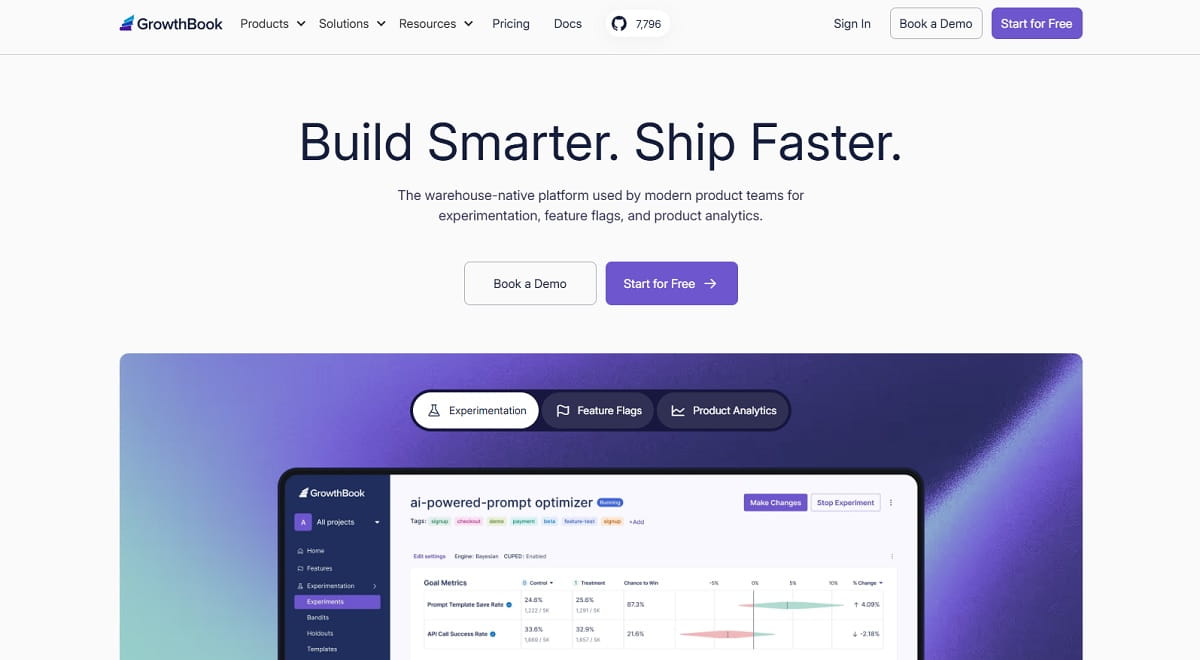
GrowthBook takes a “bring your own warehouse” approach: instead of routing event data through a vendor’s servers, it runs experiment analysis directly against your Snowflake, BigQuery, or Redshift data. That makes it a strong Optimizely alternative for data teams that already have a mature warehouse and want experimentation to plug into it rather than duplicate it.
- Key features: warehouse-native experiment analysis, feature flags, Bayesian/frequentist/sequential statistics, self-hosted or cloud deployment, open-source core.
- Best for: data-savvy engineering teams that want full control of experiment data and already invest in a cloud warehouse.
- Pros: free and open-source for self-hosted use; no data duplication since analysis runs on your existing warehouse; flexible statistics engine.
- Cons: requires warehouse and engineering setup, so it’s not a quick plug-and-play for marketing teams; cloud plans add a per-user cost once you outgrow self-hosting.
- Pricing: free (self-hosted, open-source); cloud plans reported from around $20/user/month. Source: Convert.com’s 2026 Optimizely-alternatives comparison — confirm on GrowthBook’s site.
10. LaunchDarkly — Best for Feature Flags & Rollout Control
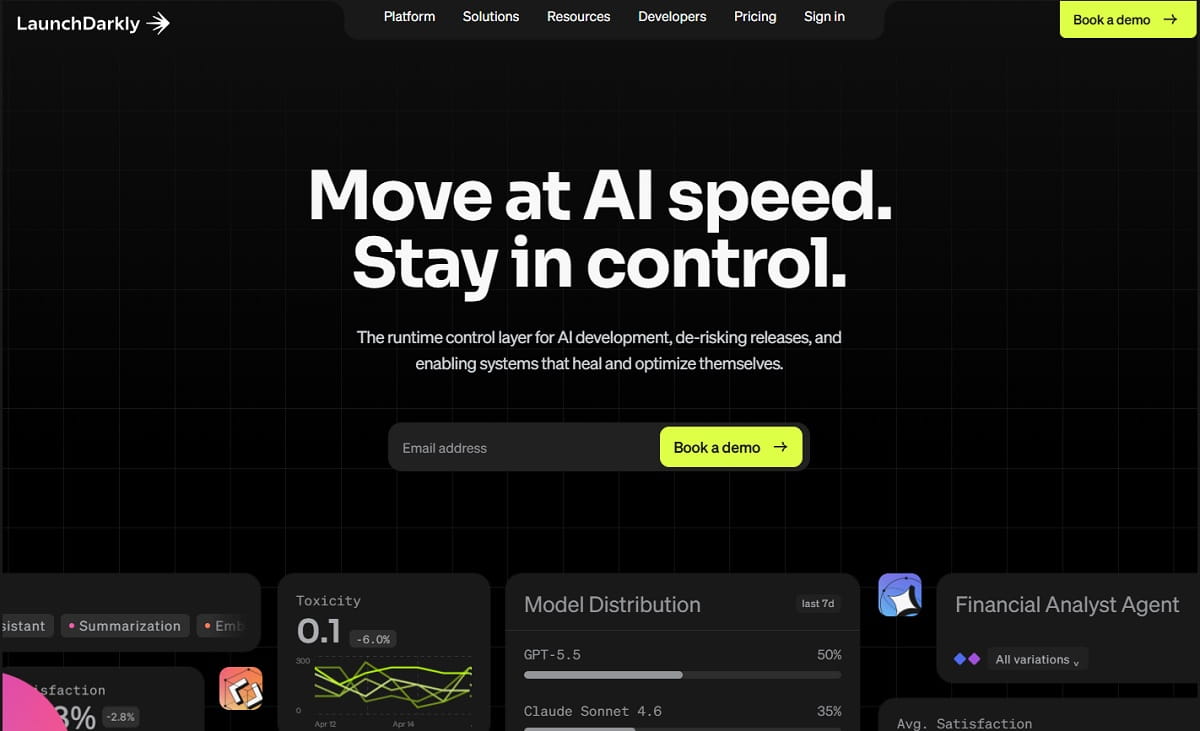
If you’re searching for Optimizely alternatives specifically for rollout control — gradual feature releases, kill switches, and progressive delivery rather than marketing-style A/B tests — LaunchDarkly is the category leader. It treats experimentation as a layer on top of enterprise-grade feature flag infrastructure, which is the opposite starting point from Optimizely’s marketing-first heritage.
- Key features: enterprise feature flags, progressive delivery and canary releases, experimentation layer on top of flags, broad SDK coverage across languages and frameworks, governance and audit controls.
- Best for: engineering-led organizations doing continuous deployment that need safe, controlled rollouts more than marketing A/B tests.
- Pros: best-in-class SDK coverage and flag infrastructure; strong compliance and governance features for regulated engineering orgs; scales to very large, multi-team engineering organizations.
- Cons: not built for marketers — there’s no visual page editor; per-seat pricing gets expensive as engineering headcount grows. Harness FME (formerly Split, acquired by Harness in 2024) is a comparable alternative worth shortlisting alongside it for the same rollout-control use case.
- Pricing: free plan with capped usage; paid tiers from roughly $8.33/seat/month, scaling with monthly active users and seats. Source: LaunchDarkly and TheCMO’s 2026 review.
11. Unbounce — Best for Landing Page A/B Testing (Specialist)
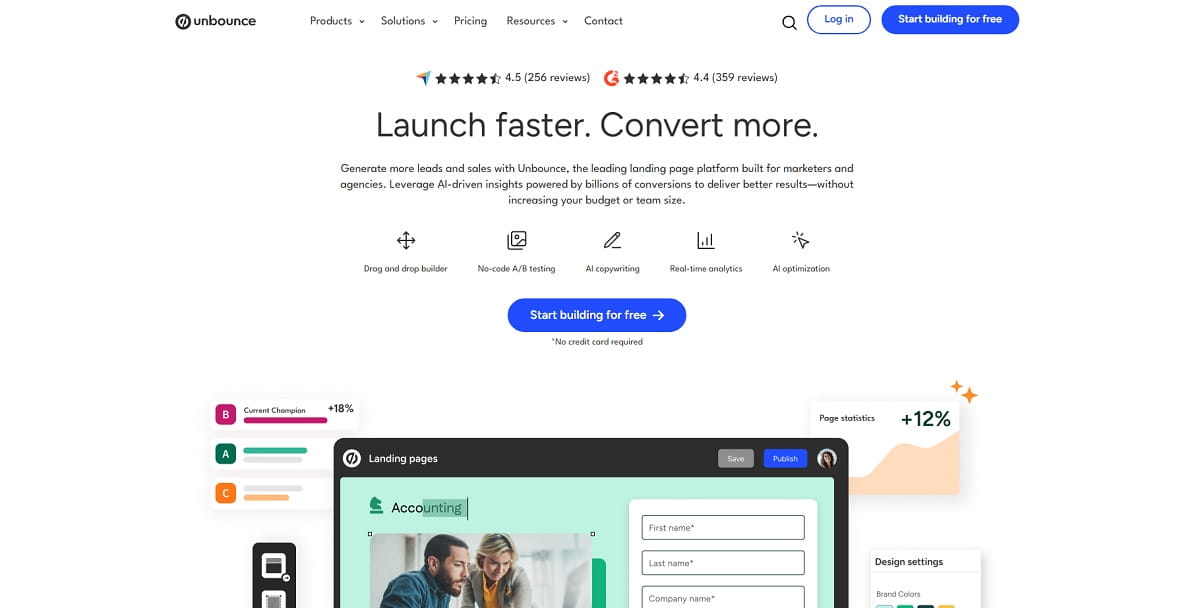
Unbounce isn’t a full replacement for Optimizely’s website-wide experimentation — it’s a landing-page builder with A/B testing and AI-driven traffic routing built in. It earns a spot here because a meaningful share of people searching for Optimizely alternatives specifically want to test landing pages without a developer, not run product-wide experiments.
- Key features: drag-and-drop landing-page builder, built-in A/B testing, Smart Traffic (ML-based visitor routing to the best-converting variant), popups and sticky bars, AI copy and page-generation tools.
- Best for: marketers who need to build and test standalone landing pages fast, without engineering involvement.
- Pros: no-code page building and testing in one tool; Smart Traffic can outperform a manual 50/50 split for high-traffic pages; fast to launch a test.
- Cons: limited to landing pages — it doesn’t test logged-in product experiences or full site flows the way Optimizely or Plerdy can; not a fit if your testing program goes beyond marketing pages.
- Pricing: from roughly $99/month, scaling with traffic. Source: Convert.com’s 2026 Optimizely-alternatives comparison.
12. Monetate (Maestro) — Best for Enterprise Retail Personalization (Specialist)
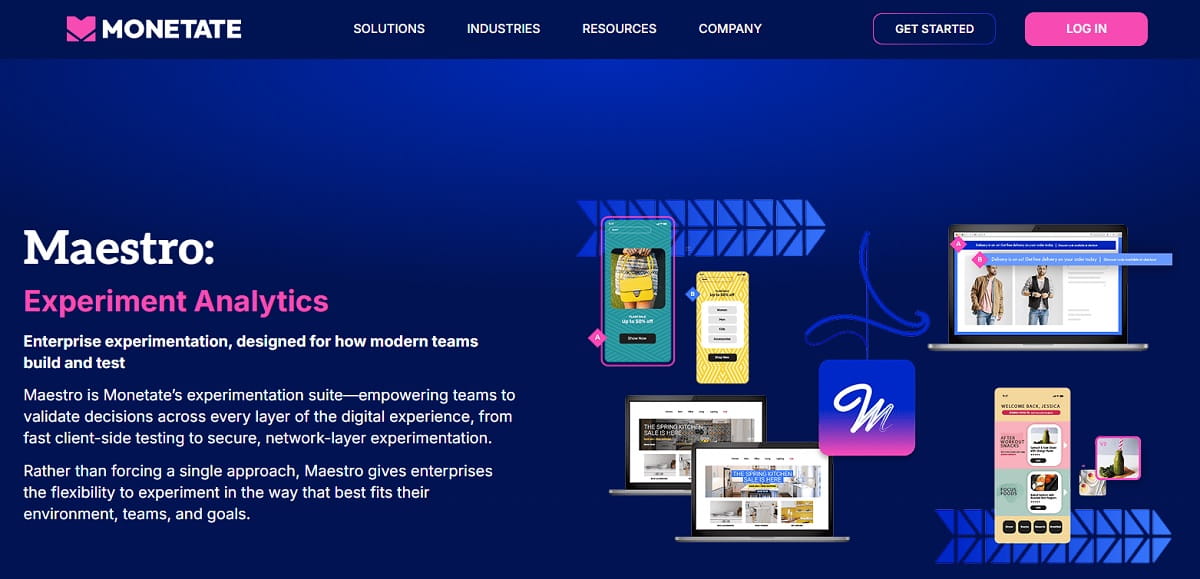
Monetate — now an independent company again after being spun out of Kibo Commerce in 2022 — focuses on personalization and experimentation for retail and e-commerce brands through its Maestro platform. It’s a narrower, retail-specific alternative rather than a general-purpose Optimizely replacement.
- Key features: A/B and multivariate testing, dynamic content personalization, audience targeting and segmentation, feature experimentation for retail use cases.
- Best for: enterprise retail and e-commerce teams that want personalization and testing purpose-built for merchandising and product experiences.
- Pros: deep retail/e-commerce specialization; personalization and testing in one workflow; independent company with a dedicated retail roadmap post-spinout.
- Cons: narrower use case than Optimizely or Plerdy outside of retail; pricing is enterprise-only and not published.
- Pricing: custom, enterprise-only quotes. Source: Monetate and Kibo Commerce press materials on the 2022 spinout.
Looking for Optimizely CMS or DXP Alternatives Instead?
Some of the traffic behind “Optimizely alternatives” isn’t about experimentation at all — it’s about Optimizely Content Cloud (formerly Episerver), the company’s separate .NET-based content management and digital experience platform. If that’s what you’re actually comparing, the tools above won’t help; you’re looking at a CMS decision, not a testing-tool decision.
| CMS / DXP Alternative | Type | Best For |
|---|---|---|
| Umbraco | Open-source .NET CMS | Teams that want Optimizely’s .NET familiarity with an open-source, content-first editor and no licensing fees |
| WordPress | Open-source CMS | Teams that want the largest plugin/theme ecosystem and lowest cost of entry |
| Kentico Xperience | .NET CMS / DXP | Teams that want a licensed DXP with personalization and multichannel content, similar in scope to Optimizely Content Cloud |
| Drupal | Open-source CMS | Enterprises that need deep customization and complex content structures |
Optimizely’s CMS license typically starts around the mid five figures per year before implementation, which is the main reason teams evaluate Umbraco or WordPress as lower-cost, open-source alternatives with a similar .NET or PHP developer pool available to hire from.
How to Choose the Right Optimizely Alternative
Match the tool to the team that will actually run it, not the other way around:
- Marketing or CRO team, no engineering support? Start with Plerdy, VWO, or AB Tasty — visual editors, no code required, and behavior analytics included or easy to add.
- You need behavior analytics (heatmaps, session replay) alongside testing? Plerdy and VWO include this natively; most other tools on this list require a second product.
- Engineering-led, continuous deployment? LaunchDarkly, Harness FME, GrowthBook, or PostHog fit a flag-first, warehouse-native, or self-hosted workflow better than a marketing-first tool.
- You’re in the Adobe ecosystem already? Adobe Target is the path of least resistance.
- Your program is landing pages only, not full-site testing? Unbounce is purpose-built for that; don’t pay for a full experimentation platform you’ll only use for one page type.
- You’re in regulated retail or finance? Convert, Kameleoon, and Monetate all lead with compliance and personalization for regulated or enterprise retail use cases.
- Budget is the deciding factor? Plerdy, PostHog, and GrowthBook all offer genuinely usable free tiers — not just a trial — which none of Optimizely’s plans do.
Frequently Asked Questions About Optimizely Alternatives
What Is the Best Optimizely Alternative Overall?
For most teams that want testing plus the behavior analytics to explain the results, Plerdy is the strongest all-around pick — it includes unlimited A/B testing, heatmaps, and session replay from its free plan up. If your team is engineering-led and needs feature-flag infrastructure first, LaunchDarkly or GrowthBook is a better starting point than a marketing-oriented tool.
What Is Optimizely Full Stack, and Which Alternatives Replace It?
Optimizely Full Stack (now branded Feature Experimentation) is Optimizely’s developer-focused product for server-side testing and feature flags, separate from the marketer-facing Optimizely Web product. LaunchDarkly, Harness FME, GrowthBook, and PostHog are the closest alternatives for that specific use case.
Are There Alternatives to Optimizely’s CMS or DXP Product?
Yes — but they’re different tools from the experimentation alternatives above. If you mean Optimizely Content Cloud (formerly Episerver), Umbraco, WordPress, Kentico Xperience, and Drupal are the CMS/DXP alternatives worth comparing, not A/B testing platforms.
Is Unbounce a Good Optimizely Alternative?
Only for landing pages. Unbounce tests standalone landing pages with a no-code builder and Smart Traffic routing, but it doesn’t test logged-in product experiences or full site flows, so it’s a specialist swap, not a full Optimizely replacement.
Is Monetate Still an Active Optimizely Alternative?
Yes. Monetate was spun out of Kibo Commerce as an independent company in 2022 and continues to operate its Maestro personalization and testing platform, focused on enterprise retail and e-commerce.
What Happened to Statsig, and Is It Still an Optimizely Alternative?
In 2025, OpenAI acquired the Statsig team and technology; in May 2026, Amplitude took over the Statsig brand and customer base in a separate partnership. Statsig’s warehouse-native experimentation platform now continues under Amplitude rather than as a fully independent product, so evaluate it as part of Amplitude’s offering going forward.
What Is the Best Optimizely Alternative for Feature Flag Rollout Control?
LaunchDarkly and Harness FME (formerly Split) are the two purpose-built options for progressive rollouts, canary releases, and kill switches. GrowthBook and PostHog also support feature flags if you want them bundled with open-source analytics.
Conclusion: Which Optimizely Alternative Should You Choose?
There isn’t one universal replacement for Optimizely — the platform spans marketing-led A/B testing, engineering-led feature flags, and a completely separate CMS/DXP product, and no single alternative covers all three equally well. If your priority is running tests and actually understanding user behavior without a six-figure contract, Plerdy is the most complete starting point, with unlimited A/B testing, heatmaps, and session replay on a free plan. If you’re engineering-led, start with LaunchDarkly, GrowthBook, or PostHog instead. Either way, shortlist two or three tools from the comparison table above and run a real test in each before you commit — pricing pages change faster than review articles can track them.