

VWO (Visual Website Optimizer) is one of the best-known A/B testing and experimentation platforms on the market, but it isn’t the only serious option — and after its January 2026 merger with AB Tasty, more teams are actively comparing it against lighter, cheaper, or more specialized tools. Plerdy is one of those options: a UX audit and CRO platform that bundles heatmaps, session recordings, funnels, an SEO checker, and unlimited A/B testing into a single plan, which makes it a practical starting point for teams that want behavior data attached to their tests rather than a separate experimentation stack.
This guide compares 12 VWO alternatives, each one checked against the vendor’s own pricing and product pages in August 2026. Every entry includes what the tool actually replaces, a side-by-side capability table against VWO, where VWO still wins, and current pricing — because a list of features with no trade-offs is a brochure, not a comparison.
- What Is VWO?
- What Changed At VWO In 2026: The AB Tasty Merger
- How To Choose the Best VWO Alternative For Your Team
- VWO Alternatives Compared: Full Capability Matrix
- The 12 Best VWO Alternatives, Reviewed
- Best VWO Alternatives By Use Case
- Is Mouseflow a VWO Alternative?
- How To Migrate Off VWO Without Losing Your Measurement Baseline
- Pros And Cons Of VWO, According To Real Users
- Conclusion: Which VWO Alternative Should You Choose?
- Frequently Asked Questions About VWO Alternatives
What Is VWO?
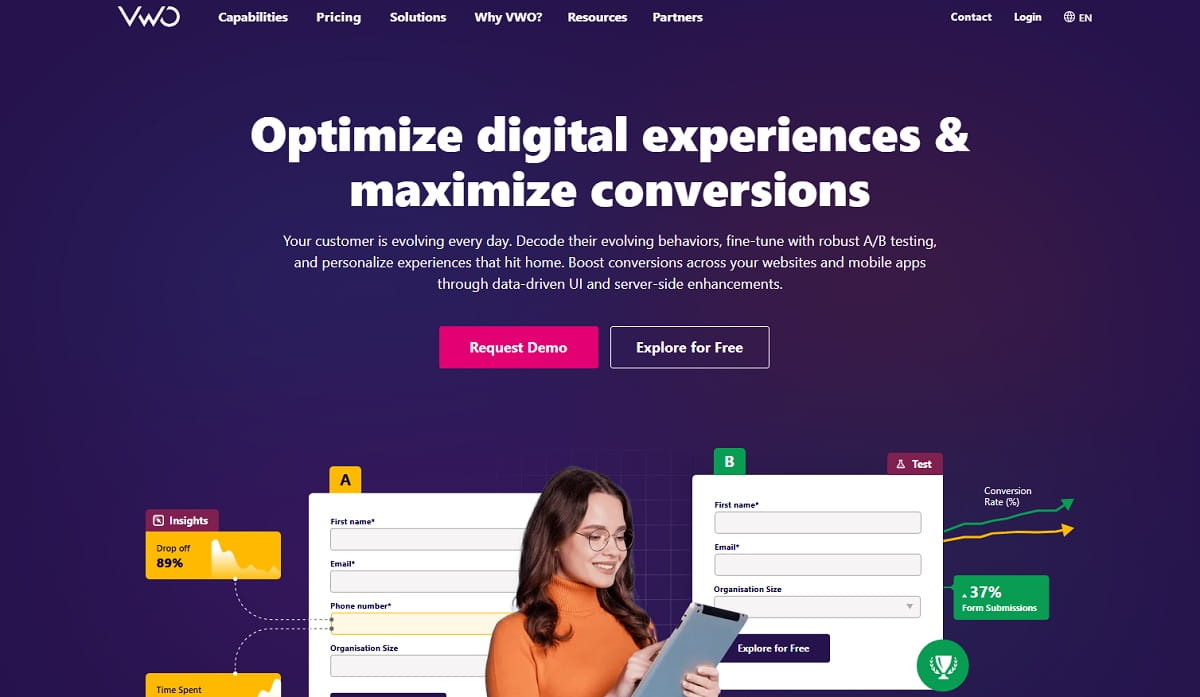
VWO is a digital experience optimization platform for A/B testing, personalization, behavioral analytics, and conversion rate optimization. Teams use it as a testing tool to run experiments on pages and flows, compare variants, track visitor behavior, and improve user journeys based on data rather than opinion.
Its current product line is organized into testing (web testing, mobile app testing, feature experimentation), behavior analytics (session recordings, heatmaps, funnel analysis, form analysis), voice-of-customer surveys, personalization, web rollouts, commerce, a customer data platform, and program management. That breadth is VWO’s real strength: very few competitors cover experimentation and behavior analytics and personalization in one product.
It is also the reason teams look elsewhere. Buying that breadth means buying modules you may not use, at a price you can only learn by talking to sales — and for a team that just needs heatmaps plus a couple of tests a month, that is a poor fit regardless of how good the platform is.
What Changed At VWO In 2026: The AB Tasty Merger
On January 20, 2026, VWO and AB Tasty announced they were merging into a single company, backed by Everstone Capital — the private equity firm that was already VWO’s majority shareholder and increased its stake to remain the largest institutional shareholder of the combined business. The new entity generates more than $100 million in annual revenue, serves 4,000+ customers across 11 global offices, and is led by VWO co-founder Sparsh Gupta as CEO, with AB Tasty co-founders Rémi Aubert and Alix de Sagazan taking Chief Customer & Strategy and Chief Revenue Officer roles respectively (CMSWire, official press release).
Three practical consequences for anyone comparing VWO to alternatives right now:
- AB Tasty is no longer an independent alternative to VWO. Several comparison articles still rank it as a separate competitor — after the merger it is the same company, with a converging product roadmap. Recommending it as a way to leave VWO no longer makes sense, so it is not on this list.
- VWO no longer publishes pricing. The current site links to a pricing page but shows no numbers publicly; getting a quote requires a sales conversation. For teams that used to self-serve, that alone is a reason to shortlist vendors who still publish rates.
- VWO’s positioning has moved further toward enterprise, AI-led workflows. The homepage now leads with Wandz, an “agentic optimization system,” and messaging built around fast-growing companies, 40,000+ customers, and 190+ countries — not a self-serve entry point for a two-person marketing team.
None of this makes VWO a worse product. It does mean the buying experience changed, and the alternatives below are worth checking against your actual budget and workflow before you renew.
How To Choose the Best VWO Alternative For Your Team
Pick based on the job you need done, not brand recognition. In practice, VWO buyers fall into five groups, and each one replaces a different part of the platform:
- CRO and UX research teams mostly use VWO’s behavior analytics — heatmaps, recordings, funnels — and run occasional tests. They are replacing behavior analytics, not an experimentation engine, and are usually overpaying on VWO.
- Landing page and paid-media teams test campaign pages, not the core product. They need a page builder with testing attached, which VWO does not provide.
- Product and engineering teams need feature flags, server-side experiments, and results in their own warehouse. A visual editor is close to irrelevant to them.
- Enterprise programs need governance, approvals, personalization at scale, and integrations — the segment VWO is actively moving toward, and where switching costs are highest.
- Small and budget-conscious teams need a genuine free tier or published entry pricing, and will not survive a procurement cycle.
One thing worth deciding before you look at any tool: which system owns your metrics. If experiment results live inside the testing vendor, switching later means losing history. If they live in your warehouse, the vendor becomes replaceable. That single choice narrows this list faster than any feature comparison.
VWO Alternatives Compared: Full Capability Matrix
Every cell below was checked against the vendor’s own site in August 2026. “Not listed” means the vendor does not advertise that capability on the pages checked — treat it as unconfirmed rather than proven absent. Where a capability exists only on higher tiers, the tier is named.
VWO Alternatives Compared: Full Capability Matrix
Every cell below was checked against the vendor’s own site in August 2026. “Not listed” means the vendor does not advertise that capability on the pages checked — treat it as unconfirmed rather than proven absent. Where a capability exists only on higher tiers, the tier is named. This is a quick-scan view on the five capabilities buyers ask about most; the remaining detail — multivariate testing, visual editor, session recordings, personalization, open source — is broken out per tool in the reviews below.
| Tool | A/B Testing | Feature Flags | Heatmaps | Permanent Free Plan | Published Pricing |
|---|---|---|---|---|---|
| VWO (baseline) | Yes | Yes | Yes | No | No |
| Plerdy | Yes, unlimited | No | Yes | Yes | Yes |
| Convert Experiences | Yes | Pro tier | Yes | No | Yes |
| PostHog | Yes | Yes | Yes | Yes | Yes |
| Statsig | Yes | Yes | No | Yes | Yes |
| GrowthBook | Yes | Yes | No | Yes | Yes |
| Optimizely | Yes | Separate product | No | No | No |
| Kameleoon | Yes | Yes | No | No | No |
| Adobe Target | Yes | No | No | No | No |
| Crazy Egg | Growth tier | No | Yes | Yes | Yes |
| Instapage | Optimize tier | No | Convert tier | No | Yes |
| Unbounce | Experiment tier | No | Not listed | No | Yes |
| Omniconvert | Yes | No | No | Yes, 50K tested users/mo | Yes |
Two patterns are worth naming. First, nothing on this list matches VWO’s breadth — VWO is the only tool here with testing, behavior analytics, and personalization all in one. Replacing it usually means running two tools, and the honest question is whether two focused tools cost less than one broad one. Often they do. Second, the tools that publish pricing and the tools that offer a real free plan are almost the same set: Plerdy, PostHog, Statsig, GrowthBook, and Crazy Egg. If procurement friction is what pushed you off VWO, start there.
The 12 Best VWO Alternatives, Reviewed
Prices below are the rates published by each vendor in August 2026 and change often — confirm on the vendor’s own pricing page before you buy.
#1. Plerdy — Best For UX Audits And Lightweight CRO
- Best for: UX and marketing teams
- Typical users: CRO specialists, SEO teams, small in-house marketing teams
- Deployment: Cloud, single tracking script
- Pricing model: Published tiers by volume
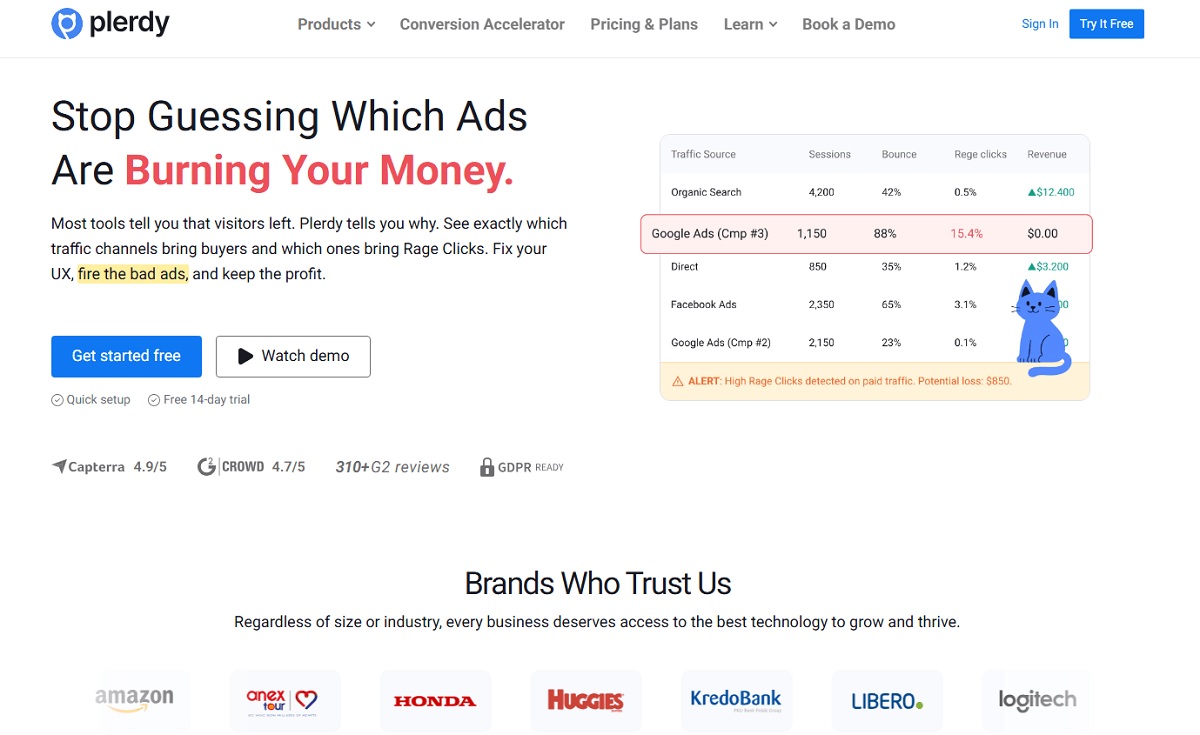
Plerdy replaces the part of VWO most teams actually use every week: behavior analytics. It combines heatmaps, session recordings, conversion funnels, pop-ups, an SEO checker, e-commerce tracking, and A/B testing in one dashboard, so a marketer can see where users hesitate and ship a fix without opening a second tool or filing an engineering ticket.
The distinguishing detail is that A/B testing is unlimited on every plan, including the free one. Most tools in this comparison gate testing behind a mid-tier upgrade — Crazy Egg at $99/month, Unbounce at $149/month, Instapage at $199/month. Plerdy treats testing as table stakes and meters the behavior data instead, which is the opposite of how the category usually prices, and it suits teams running a handful of tests on modest traffic.
The SEO checker is the genuinely unusual piece. No other tool in this comparison audits on-page SEO alongside behavior data, which matters if the same person owns both organic traffic and conversion rate — a common setup in small teams and agencies.
| Capability | Plerdy | VWO |
|---|---|---|
| A/B testing | Unlimited on all plans, including free | Yes, paid only |
| Heatmaps and session recordings | Yes, metered by volume | Yes |
| SEO audit | Yes | No |
| Pop-ups | Yes | Via personalization |
| Error monitoring | Yes | Not listed |
| Feature flags / server-side | No | Yes |
| Permanent free plan | Yes | No |
| Published pricing | Yes | No |
Where Plerdy beats VWO:
- Published pricing from $21/month billed annually, with self-serve signup and no sales call.
- A permanent free plan — 100 heatmaps daily, 500 session recordings, 5,000 SEO audit pages, and unlimited A/B testing — rather than a 30-day trial.
- On-page SEO auditing in the same product as behavior data, which VWO does not offer at all.
- Fast setup: one script, no experimentation program required before you see value.
Where VWO still wins:
- Server-side and feature-flag experimentation — Plerdy has no equivalent, so product teams testing backend logic need a different tool.
- Advanced personalization and audience targeting at enterprise scale.
- Mobile app testing, which VWO covers natively.
Pricing: Free forever plan; Startup $32/month or $21/month billed annually; Scale $64/$42; Thrive $108/$70; Enterprise tiers $149–$390/month.
#2. Convert Experiences — Best For Transparent Pricing And Agency Work
- Best for: CRO teams and agencies
- Typical users: Conversion consultants, in-house optimization leads
- Deployment: Cloud, client-side plus full-stack SDKs
- Pricing model: Published flat tiers by tested users
Convert Experiences is the closest like-for-like swap for VWO’s web testing, and it is the one alternative built specifically around the complaint that pushed most people here: opaque, module-based pricing. Convert publishes flat monthly and annual rates, counts each unique visitor once regardless of how many features touch them, and includes targeting and personalization in the base plan rather than as paid add-ons.
It is also the strongest fit for agencies. One account covers multiple projects, which matters when VWO’s structure pushes toward separate licenses per domain. Convert additionally offers free migration of active tests from VWO, which removes most of the switching friction.
Be precise about tiers, though: multivariate testing, multipage testing, feature flags, and the multi-armed bandit are Pro-tier features, not Growth. If multivariate testing is why you are leaving VWO, Growth at $299/month will not do it.
| Capability | Convert Experiences | VWO |
|---|---|---|
| A/B and split URL testing | Yes, all plans | Yes |
| Multivariate and multipage testing | Pro tier only | Yes |
| Visual editor | Yes | Yes |
| Feature flags / full stack | Pro tier only | Yes |
| Heatmaps | Yes | Yes |
| Session recordings | Not listed | Yes |
| Published pricing | Yes | No |
| Free plan | No — 15-day trial | No |
Where Convert beats VWO:
- Flat published pricing with a choice of monthly or annual billing, instead of a custom quote.
- Targeting and personalization included in the base plan rather than sold as modules.
- One account covering multiple projects — materially cheaper for agencies than per-domain licensing.
- Free migration of existing VWO tests.
Where VWO still wins:
- Behavior analytics depth — Convert does not advertise session recordings, so you will likely pair it with a second tool.
- Multivariate testing is standard on VWO but Pro-tier on Convert.
- Mobile app testing and a broader integrated product suite.
Pricing: Growth $399/month or $299/month billed annually; Pro $599/month or $420/month billed annually; Enterprise on request. Both published tiers include 100K tested users per month. 15-day free trial, no credit card; no permanent free plan.
#3. PostHog — Best For Product And Engineering Teams
- Best for: Startups and product teams consolidating tools
- Typical users: Engineers, product managers, data teams
- Deployment: Cloud or self-hosted, open source
- Pricing model: Published usage-based, generous free tier
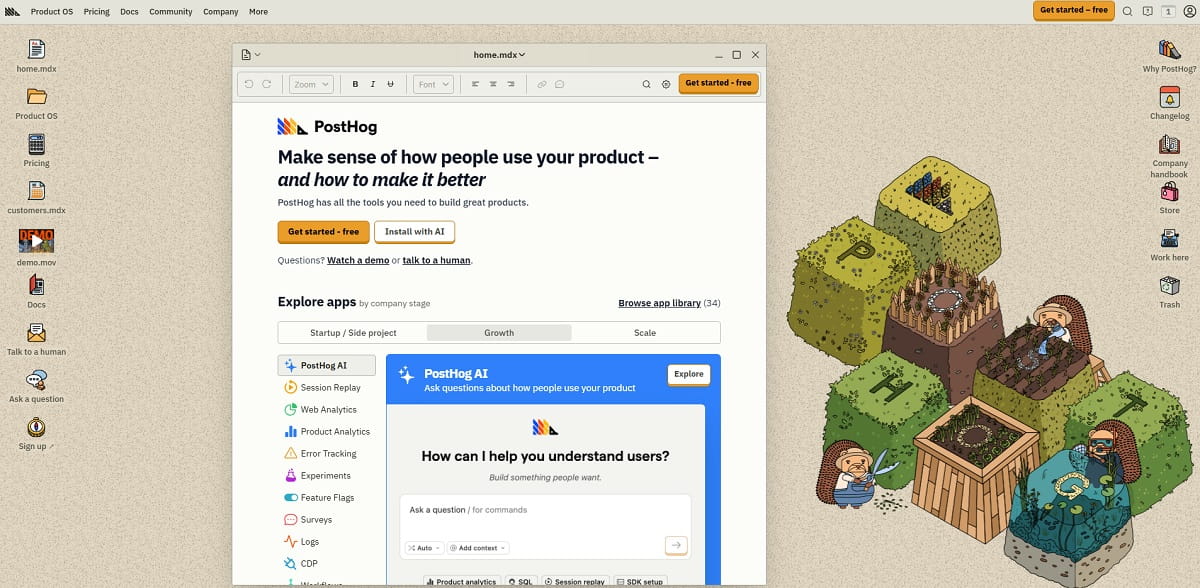
PostHog is the most complete open-source answer to VWO. One platform covers experiments, feature flags, product analytics, session replay, heatmaps, surveys, error tracking, and a data warehouse — so instead of replacing VWO with a testing tool plus an analytics tool, you replace it with one stack that engineers own.
Its free tier is the most generous in this comparison by a wide margin: 1 million analytics events, 5,000 session replays, 1 million feature-flag requests, 1,500 survey responses, and 100,000 error-tracking exceptions every month, permanently. A small product team can run real experimentation on that indefinitely, which is simply not possible on VWO.
The trade-off is orientation. PostHog is built for people comfortable defining events and reading data, not for a marketer who wants to drag a headline in a visual editor. If your testing program is run by marketing, this is the wrong tool — and PostHog’s own comparison content concedes that VWO has the stronger no-code visual editor.
| Capability | PostHog | VWO |
|---|---|---|
| Experiments and feature flags | Yes, unified | Yes, separate modules |
| Product analytics | Yes, core product | Via Data360 |
| Session replay and heatmaps | Yes | Yes |
| Error tracking | Yes | Not listed |
| No-code visual editor | Limited | Yes, stronger |
| Open source / self-hosting | Yes | No |
| Permanent free plan | Yes, substantial | No |
| Published pricing | Yes, per-unit | No |
Where PostHog beats VWO:
- A permanent free tier large enough to run a real product analytics and experimentation program.
- Error tracking and a data warehouse included — neither is part of VWO.
- Open-source codebase with self-hosting, so you are not locked into a vendor’s pricing changes.
- Per-unit published pricing you can model before you commit.
Where VWO still wins:
- The no-code visual editor is stronger, which matters for marketing-led testing.
- Usage-based pricing can rise unpredictably at scale, where VWO’s flat contract is easier to budget.
- Personalization is a first-class VWO product; PostHog does not advertise an equivalent.
Pricing: Free tier as described above; beyond it, usage-based from roughly $0.00005 per analytics event, $0.005 per session replay, and $0.0001 per feature-flag request. Pricing verified on posthog.com/pricing.
#4. Statsig — Best For Experimentation At Scale
- Best for: Technical teams running many experiments
- Typical users: Data scientists, platform and product engineers
- Deployment: Cloud or warehouse-native
- Pricing model: Published, metered by events
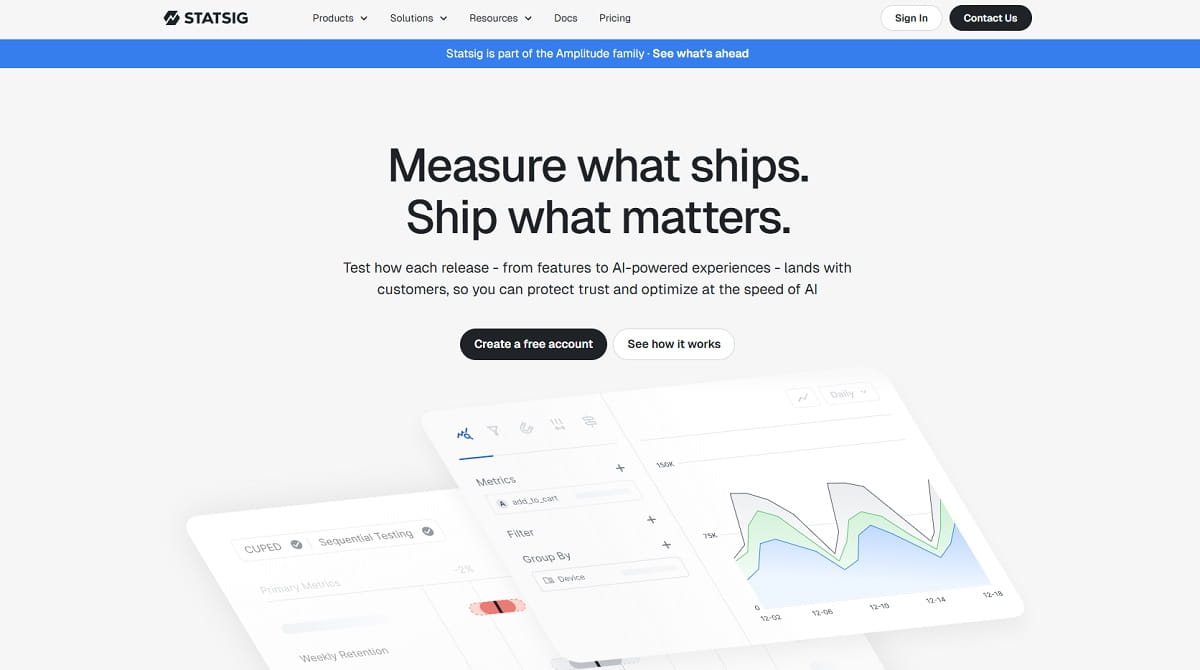
Statsig is the choice when the constraint is statistical rigour and volume rather than ease of editing. It runs A/B testing, feature gates, product analytics, and session replay on one event pipeline, and offers a warehouse-native deployment so experiment data stays in your own stack instead of the vendor’s.
Its free Developer tier is unusually strong for a platform aimed at large-scale use: 2 million events per month, unlimited feature-flag and config checks, and 50,000 session replays — with A/B testing included rather than gated. Paid Pro starts at $150/month, which is well below the entry point of most enterprise experimentation platforms.
For regulated teams, Statsig lists HIPAA eligibility, SSO, and role-based access on its enterprise tier — worth noting if compliance is what is keeping you on an enterprise contract.
| Capability | Statsig | VWO |
|---|---|---|
| A/B testing and feature gates | Yes, unified | Yes, separate modules |
| Product analytics | Yes | Via Data360 |
| Session replay | Yes, 50K/month free | Yes |
| Heatmaps | No | Yes |
| Warehouse-native deployment | Yes | Not listed |
| Visual editor | Limited | Yes |
| Permanent free plan | Yes, 2M events/month | No |
| Published pricing | Yes, from $150/month | No |
Where Statsig beats VWO:
- A free tier that includes advanced experimentation, not a stripped-down trial.
- Warehouse-native option — your experiment data and history remain portable.
- Published $150/month Pro tier instead of an enterprise quote.
- Built for high experiment volume, with unlimited flag and config checks at every tier.
Where VWO still wins:
- No heatmaps at all — a significant gap if behavior analytics is part of why you bought VWO.
- Marketing usability: there is no comparable visual editor for non-technical users.
- Personalization and voice-of-customer surveys are not part of the platform.
Pricing: Free Developer tier (2M events/month); Pro $150/month including 5M events, then $0.05 per additional 1,000 events; Enterprise custom with volume discounts. Verified on statsig.com/pricing.
#5. GrowthBook — Best Open-Source Alternative To VWO
- Best for: Data-mature product teams
- Typical users: Engineers, analysts, data teams
- Deployment: Cloud or fully self-hosted, open source
- Pricing model: Published per-seat
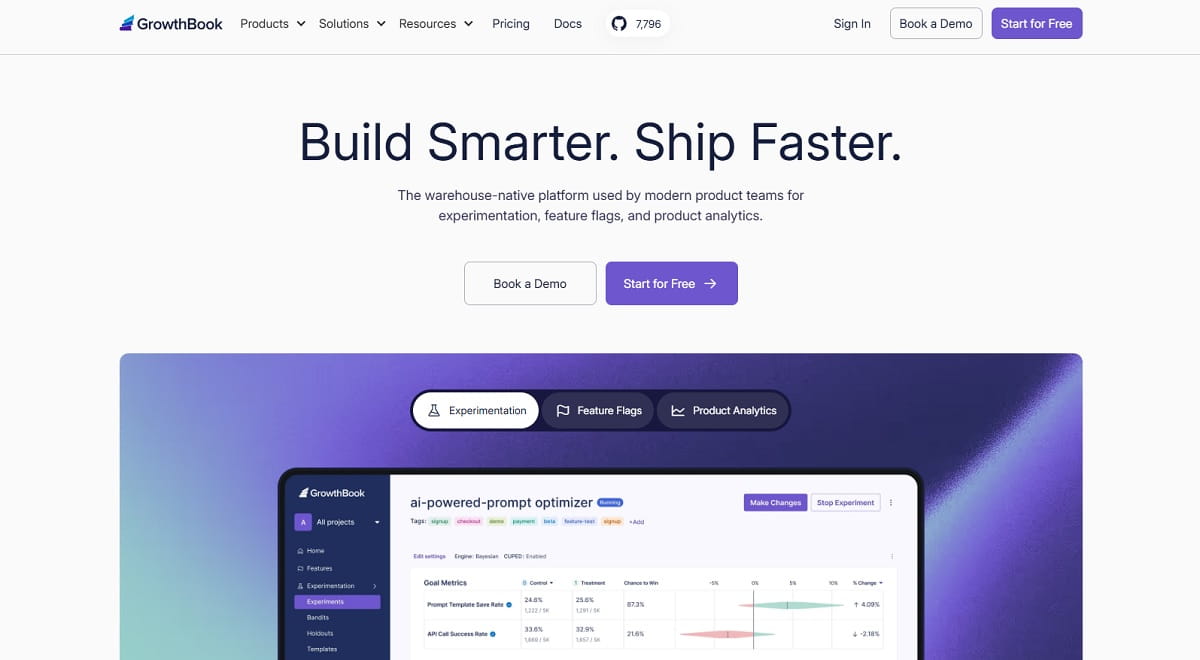
GrowthBook takes the most opinionated position in this list: your data warehouse is the source of truth, and the experimentation tool is a thin layer on top of it. Metrics are defined in SQL you can read and audit, results are computed against your own warehouse, and the whole thing can be self-hosted with no vendor involved.
That architecture solves the problem most teams only notice at renewal — vendor lock-in. When experiment history lives in your warehouse, switching tools costs almost nothing, which is the exact opposite of the position a long-term VWO customer is in today.
One correction to the way GrowthBook is often described: the visual editor is a Pro-tier feature, not part of the free Starter plan. If you want no-code editing without paying, this is not it.
| Capability | GrowthBook | VWO |
|---|---|---|
| A/B and multivariate testing | Yes, all tiers | Yes |
| Feature flags | Yes, unlimited | Yes, separate module |
| Visual editor | Pro tier only | Yes, all plans |
| Warehouse-native reporting | Yes, core design | Not listed |
| Self-hosting | Yes, unlimited users | No |
| Heatmaps and session replay | No | Yes |
| Permanent free plan | Yes, 3 users | No |
| Published pricing | Yes, $40/seat | No |
Where GrowthBook beats VWO:
- Open source with unlimited self-hosted users — the cheapest path to unlimited experimentation.
- Warehouse-native measurement keeps experiment history portable and auditable.
- Transparent statistics: the SQL behind every metric is visible, not a black box.
- Free Starter plan with unlimited flags and experiments for up to three users.
Where VWO still wins:
- No heatmaps, session replay, or surveys — GrowthBook replaces the testing half of VWO only.
- Requires a working data warehouse and the discipline to define metrics correctly; there is no shortcut.
- The visual editor is paywalled, so marketing-led teams start at $40/seat/month.
Pricing: Cloud Starter free for 3 users; Pro $40/seat/month up to 50 users; Enterprise custom. Self-hosted open source is free with unlimited users. Verified on growthbook.io/pricing.
#6. Optimizely — Best For Mature Enterprise Programs
- Best for: Established experimentation organizations
- Typical users: Enterprise marketing and frontend teams
- Deployment: Cloud, client and server-side
- Pricing model: Custom contract
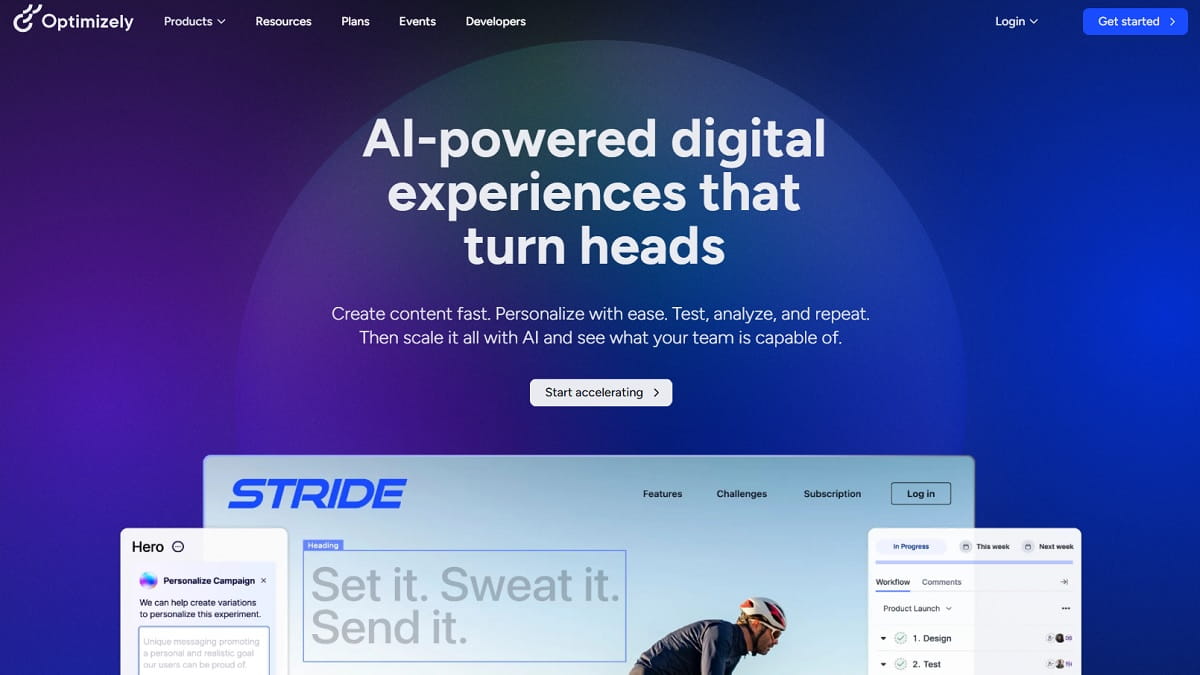
Optimizely is the incumbent VWO is usually measured against at the top of the market. Web Experimentation covers A/B testing, multivariate tests, bandits, and a visual editor for fast web changes, with server-side control when you need to go deeper, plus AI that recommends what to test next based on your program history.
It sits inside Optimizely One, a broader suite spanning content management, personalization, feature management, analytics, and commerce. For an organization that wants experimentation, CMS, and personalization from one vendor, that consolidation is the entire argument — and it is one VWO cannot match on the content side.
The cost of that is procurement. Nothing is published, everything is a contract, and the products you need are licensed separately — so confirm in writing whether feature management and personalization are included before you compare the quote to VWO’s.
| Capability | Optimizely | VWO |
|---|---|---|
| A/B and multivariate testing | Yes, plus bandits | Yes |
| Visual editor | Yes | Yes |
| Server-side testing | Yes | Yes |
| AI test recommendations | Yes | Yes, via Wandz |
| Feature management | Separate product | Separate module |
| Personalization | Separate product | Separate module |
| Heatmaps and session replay | No | Yes |
| Content management (CMS) | Yes | No |
Where Optimizely beats VWO:
- A full CMS and content marketing platform alongside experimentation — genuinely outside VWO’s scope.
- Longer enterprise track record and a deeper partner and services ecosystem.
- AI recommendations informed by the whole experimentation program, not just a single test.
- Mature separation of web and feature experimentation for organizations running both.
Where VWO still wins:
- Behavior analytics: Optimizely has no heatmaps or session replay, so you will buy a second tool.
- Typically a larger, slower procurement decision with a higher floor price.
- VWO bundles behavior analytics and testing; Optimizely splits capabilities across separately licensed products.
Pricing: Custom contracts only — no published rates or public free trial.
#7. Kameleoon — Best For Regulated Industries
- Best for: Healthcare, finance, and other compliance-bound teams
- Typical users: Enterprise marketing and product teams
- Deployment: Cloud, client and server-side
- Pricing model: Custom quote
Kameleoon is the clearest answer to a question a lot of buyers arrive with: which VWO alternative can we actually put through a compliance review? It lists GDPR, CCPA, and HIPAA compliance together with ISO 27001 and SOC 2 certification, and names healthcare, financial services, and automotive as core verticals. Among the tools here, that combination is close to unique.
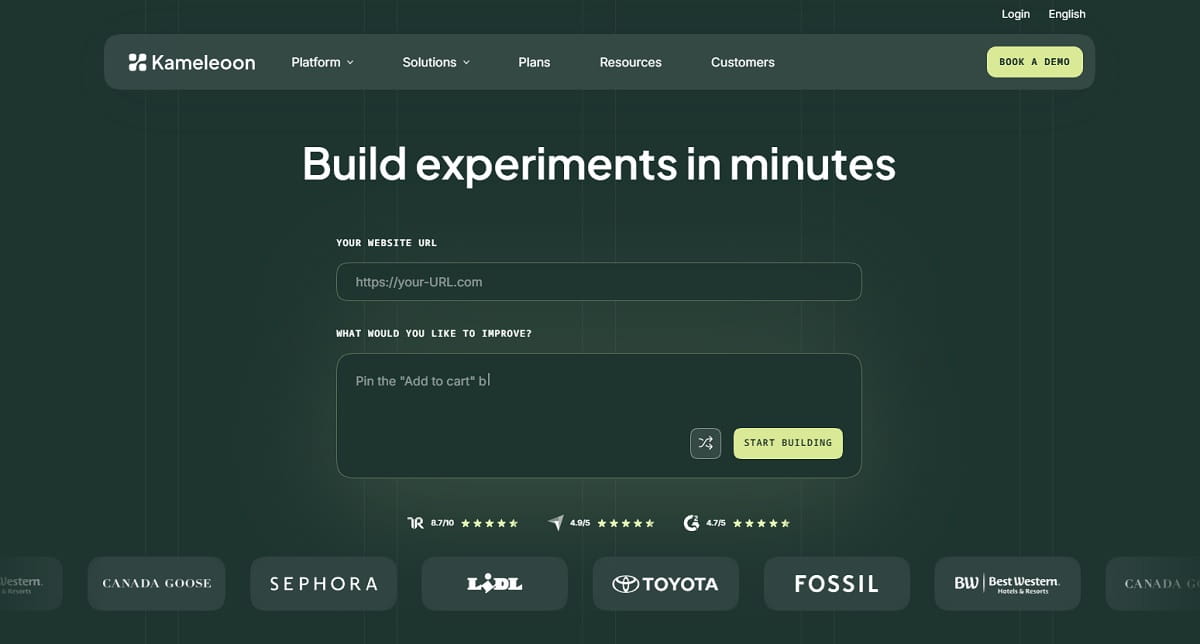
Capability-wise it is a genuine like-for-like swap on the testing side: A/B and multivariate testing, a visual editor, feature flags and full-stack experimentation, server-side testing, AI-driven personalization, and mobile app testing. Its current positioning centres on PBX — prompt-based experimentation — where variations are created conversationally rather than hand-built.
What it does not do is behavior analytics. There are no heatmaps and no session replay, so a team replacing VWO wholesale will need a second tool for the “why” behind the numbers.
| Capability | Kameleoon | VWO |
|---|---|---|
| A/B and multivariate testing | Yes | Yes |
| Visual editor | Yes | Yes |
| Feature flags / full stack | Yes | Yes |
| AI personalization | Yes | Yes |
| Mobile app testing | Yes | Yes |
| HIPAA compliance stated | Yes | Not stated publicly |
| Heatmaps and session replay | No | Yes |
| Published pricing | No | No |
Where Kameleoon beats VWO:
- Explicit HIPAA, GDPR, and CCPA compliance plus ISO 27001 and SOC 2 — the shortest path through a healthcare or finance security review.
- Prompt-based experiment creation, which cuts setup time for routine variations.
- Strong European presence and support for teams that need an EU-based vendor.
- Full-stack and mobile app experimentation included rather than sold as a separate module.
Where VWO still wins:
- No heatmaps or session replay — the behavior-analytics half of VWO is missing entirely.
- Pricing is not published, so it does not solve the transparency problem that pushed many teams off VWO.
- Smaller North American brand presence and partner network.
Pricing: Not published on the vendor’s site — request a quote. AI-generated variations still require human QA and security review before they go live, so budget for that time.
#8. Adobe Target — Best For Adobe Experience Cloud Users
- Best for: Enterprises already committed to Adobe
- Typical users: Enterprise marketing and personalization teams
- Deployment: Cloud, client-side and server-side API
- Pricing model: Custom enterprise licensing
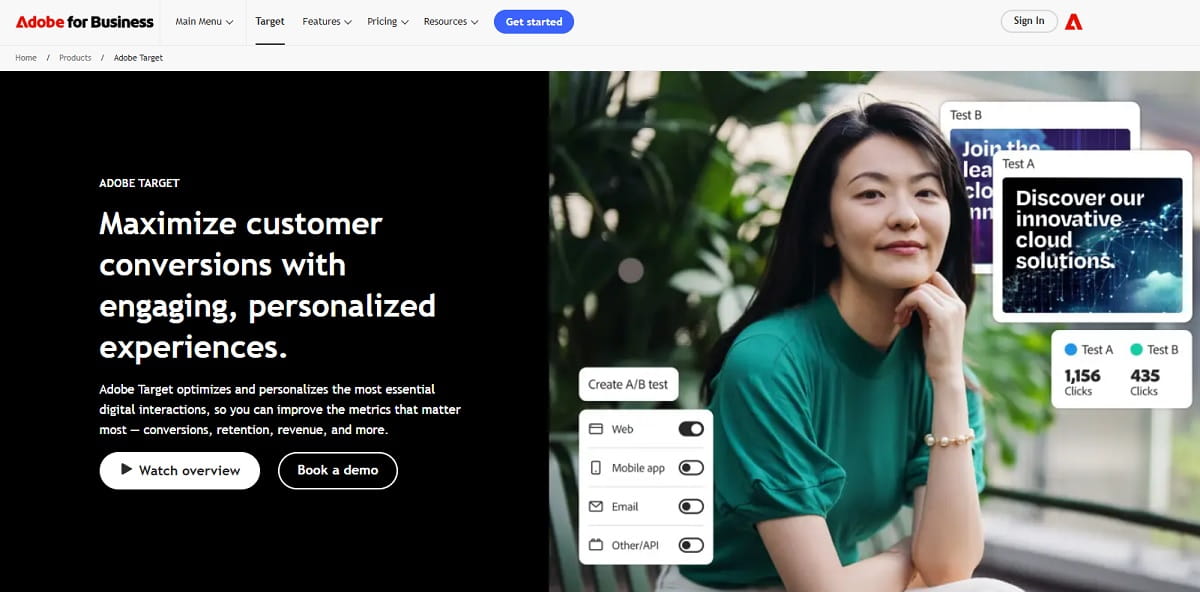
Adobe Target is an enterprise optimization engine for A/B testing, multivariate testing, AI-powered personalization, and omnichannel targeting. Its automation features — Auto-Target and Auto-Allocate, plus multi-armed bandit testing — shift traffic toward winning experiences automatically instead of waiting for a human to call the test.
The real case for it is ecosystem. If your customer data already lives in Adobe Analytics, Experience Platform, and Journey Optimizer, Target reads from the same profiles and delivers across web, mobile app, and other channels without a separate integration project. Against that, VWO’s standalone nature is a disadvantage rather than a feature.
If you are not an Adobe shop, the equation inverts completely: you would be buying into a large ecosystem to get testing you can buy standalone for a fraction of the cost.
| Capability | Adobe Target | VWO |
|---|---|---|
| A/B and multivariate testing | Yes | Yes |
| AI personalization and auto-allocation | Yes | Yes |
| Multi-armed bandit | Yes | Yes |
| Server-side / API delivery | Yes | Yes |
| Mobile app and omnichannel testing | Yes | Yes |
| Adobe Experience Cloud integration | Native | Integration only |
| Heatmaps and session replay | No | Yes |
| Published pricing | No | No |
Where Adobe Target beats VWO:
- Native access to Adobe Analytics and Experience Platform audiences with no data-sync project.
- Omnichannel delivery beyond the website — email, app, and other touchpoints from one targeting layer.
- Mature automated personalization (Auto-Target, Auto-Allocate) built for high-traffic enterprise sites.
- Enterprise governance and scale, backed by Adobe’s support organization.
Where VWO still wins:
- Far lighter implementation — Adobe Target assumes an ecosystem and a dedicated team.
- Behavior analytics included; Target has no heatmaps or session replay.
- Outside the Adobe stack, Target is usually the most expensive way to run an A/B test.
Pricing: Custom enterprise licensing; no published rates or public free trial.
#9. Crazy Egg — Best For Heatmaps On a Small Budget
- Best for: Small marketing teams and site owners
- Typical users: Marketers, founders, web designers
- Deployment: Cloud, single script
- Pricing model: Published tiers
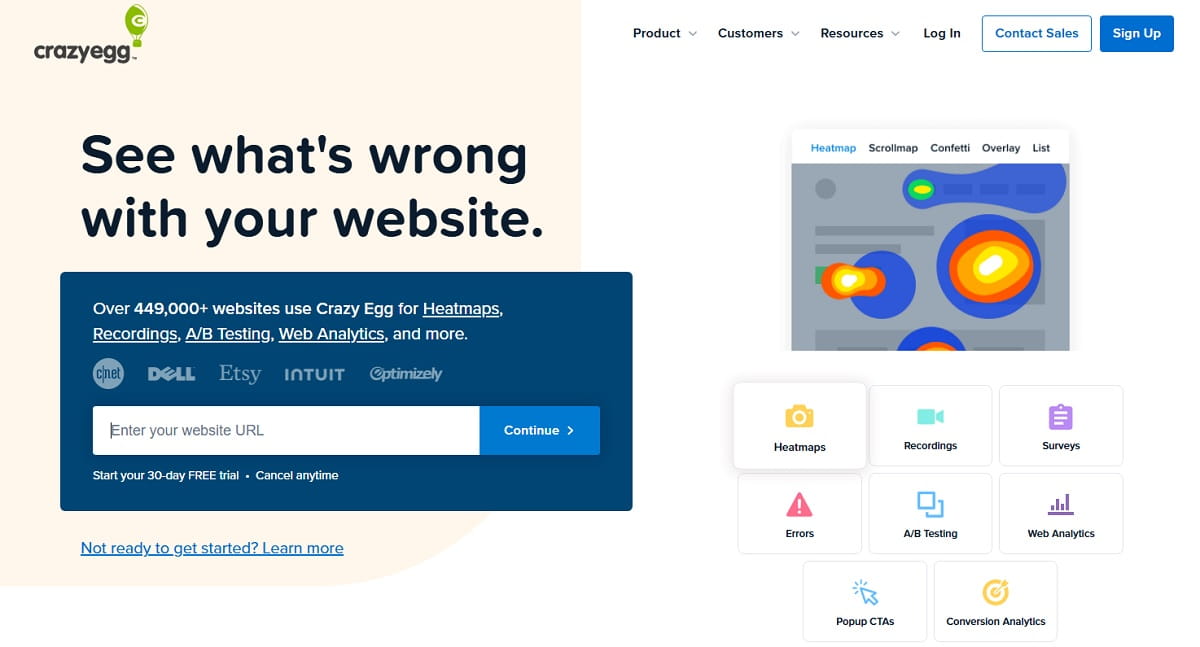
Crazy Egg replaces VWO’s behavior analytics at a fraction of the cost. Heatmaps, session recordings, surveys, error tracking, and traffic analysis start at $29/month billed annually, and there is a permanent free plan alongside the standard 30-day trial — a combination almost nobody else in this comparison offers.
Its error tracking deserves a mention: it surfaces JavaScript errors that block conversions, with device and browser detail. That is a capability VWO does not list, and broken checkout flows are a more common revenue leak than a suboptimal button colour.
The important caveat is tiering. A/B testing is not on the $29 plan. It becomes available on Growth at $99/month, and personalization only at Enterprise. If you need testing, Crazy Egg’s real entry price is $99, not $29 — which changes the comparison against Convert and Plerdy considerably.
| Capability | Crazy Egg | VWO |
|---|---|---|
| Heatmaps and session recordings | Yes, all paid plans | Yes |
| A/B testing | Growth tier ($99/mo) and above | Yes |
| Surveys | Yes | Yes, via Pulse |
| Error tracking | Yes | Not listed |
| Personalization | Enterprise tier only | Yes |
| Feature flags / server-side | No | Yes |
| Permanent free plan | Yes | No |
| Published pricing | Yes, from $29/month | No |
Where Crazy Egg beats VWO:
- Behavior analytics from $29/month billed annually, with published pricing and no sales call.
- A permanent free plan plus a 30-day full trial of the paid tiers.
- Error tracking that ties JavaScript failures to lost conversions — not part of VWO.
- Very short setup: useful data within a day, no experimentation program required.
Where VWO still wins:
- A/B testing is gated at $99/month, and there is no server-side or feature-flag testing at any tier.
- Personalization is Enterprise-only, whereas VWO treats it as a core product.
- Web-focused, with no native mobile app testing.
Pricing: Permanent free plan; Analytics $29/month billed annually; Growth $99/month billed annually (first tier with A/B testing); Enterprise custom. All paid plans include a 30-day trial. Verified on crazyegg.com/pricing.
#10. Instapage — Best For Enterprise Landing Page Testing
- Best for: Paid-media and demand-generation teams
- Typical users: Performance marketers, agencies
- Deployment: Cloud, hosted pages
- Pricing model: Published tiers by visitors
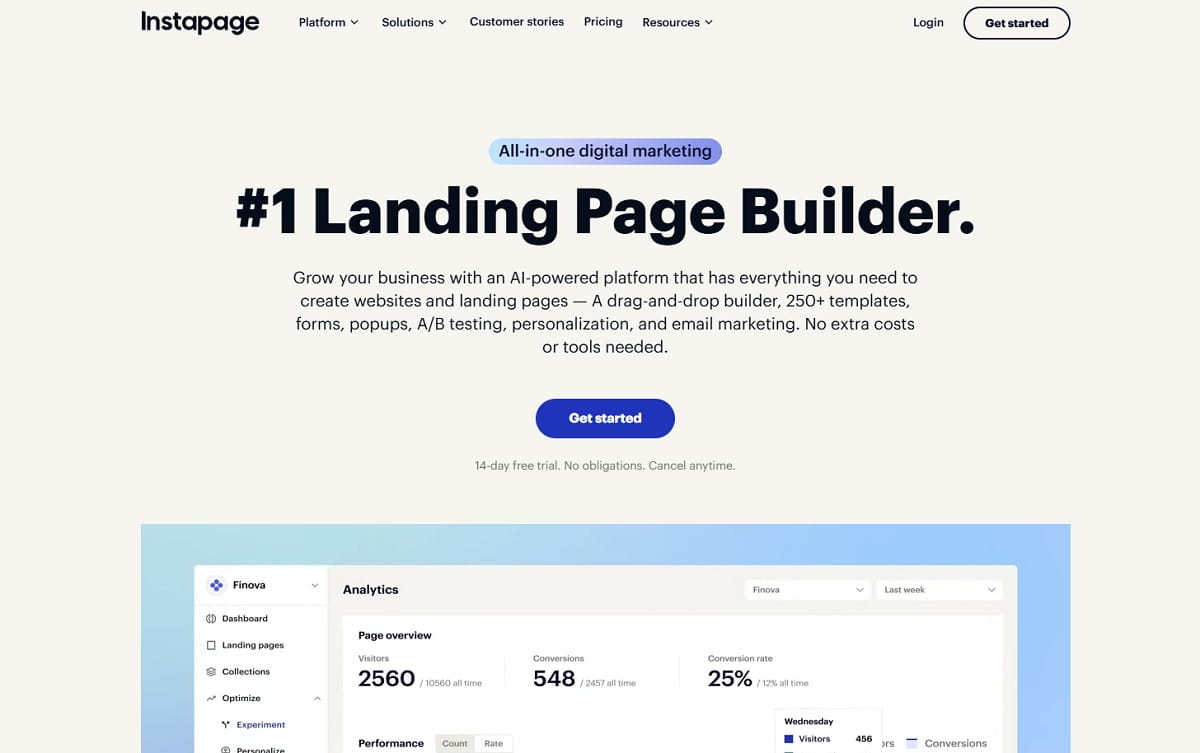
Instapage solves a problem VWO structurally cannot: it builds the page as well as tests it. VWO optimizes pages that already exist; Instapage lets a marketer create a campaign landing page, run server-side A/B tests on it, personalize copy to the ad that drove the click, and do all of it without engineering involvement.
For teams whose testing is entirely campaign-side — paid search, paid social, display — that is a better shaped tool than a general experimentation platform, and the personalization is ad-aware in a way VWO’s is not.
Watch the tiers closely, because they are strict. A/B testing and personalization start on Optimize at $199/month ($159 annually), and heatmaps only appear on the custom-priced Convert plan. The $99 Create plan builds pages but does not test them.
| Capability | Instapage | VWO |
|---|---|---|
| Landing page builder | Yes, core product | No |
| A/B testing | Optimize tier ($199/mo) and above | Yes |
| Server-side A/B testing | Optimize tier and above | Yes |
| Dynamic text replacement | Optimize tier and above | Via personalization |
| AI content generation | Yes, all plans | Via Wandz |
| Heatmaps | Convert tier only | Yes, standard |
| Session recordings | No | Yes |
| Published pricing | Yes | No |
Where Instapage beats VWO:
- Builds and hosts the landing page — VWO requires a page to already exist.
- Ad-aware personalization and dynamic text replacement matched to the originating campaign.
- AI content generation on every plan, including the entry tier.
- Published pricing with a 14-day trial and no sales call to get started.
Where VWO still wins:
- Tests only pages built in Instapage — it cannot optimize your existing site.
- Heatmaps are locked to the top custom-priced tier; VWO includes behavior analytics as standard.
- No session recordings, feature flags, or mobile app testing.
Pricing: Create $99/month or $79 annually (15,000 visitors, no A/B testing); Optimize $199/month or $159 annually (30,000 visitors, A/B testing and personalization); Convert custom. 14-day free trial; no permanent free plan. Verified on instapage.com/plans.
#11. Unbounce — Best For AI-Optimized Campaign Pages
- Best for: Small and mid-size paid-media teams
- Typical users: Growth marketers, agencies, e-commerce operators
- Deployment: Cloud, hosted pages
- Pricing model: Published tiers by traffic
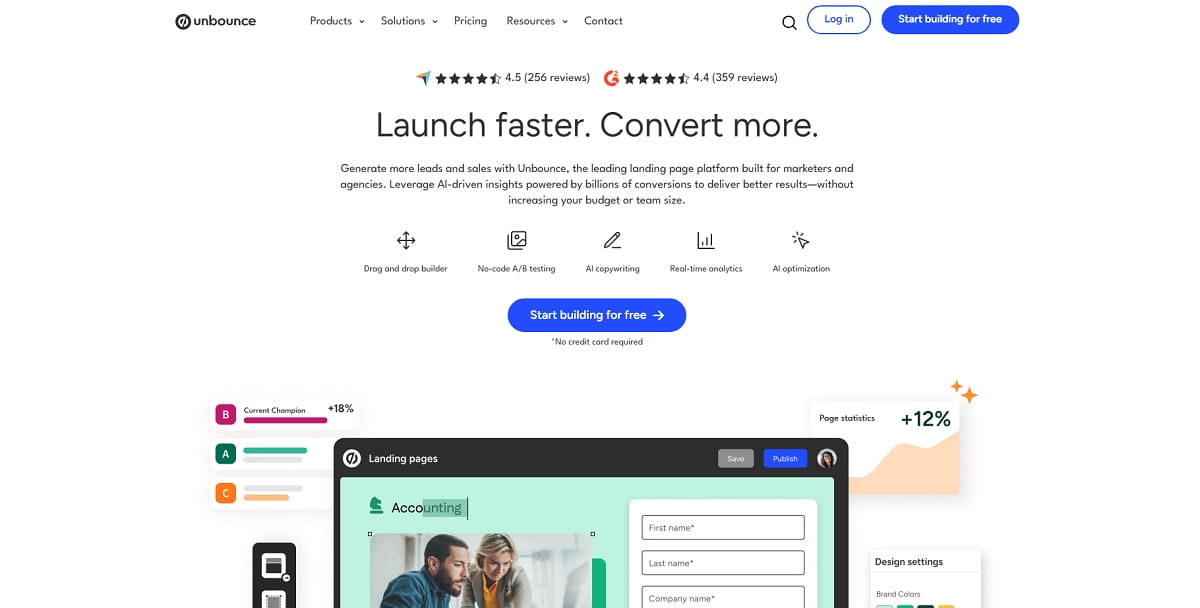
Unbounce is the lower-priced landing page counterpart to Instapage, with a drag-and-drop builder, AI copy generation, pop-ups and sticky bars, and native commerce integrations. Its signature feature is Smart Traffic: instead of splitting traffic evenly and waiting for significance, it routes each visitor to the variant most likely to convert for someone like them.
That is a meaningfully different model from VWO’s classic A/B test, and it suits low-traffic campaigns that would never reach statistical significance in a conventional split test — a real constraint for B2B teams sending a few thousand visitors a month.
The tiering is the catch, and it is easy to misread. Entry is $29/month, but A/B testing starts on Experiment at $149/month ($112 annually) and Smart Traffic is Optimize-only at $249/month ($187 annually). The $29 Starter plan builds pages and nothing more.
| Capability | Unbounce | VWO |
|---|---|---|
| Landing page builder | Yes, all plans | No |
| A/B testing | Experiment tier ($149/mo) and above | Yes |
| AI traffic optimization (Smart Traffic) | Optimize tier ($249/mo) only | Not equivalent |
| AI copy generation | Build tier and above | Via Wandz |
| Pop-ups and sticky bars | Build tier and above | Via personalization |
| Dynamic text replacement | Experiment tier and above | Via personalization |
| Heatmaps and session recordings | Not listed | Yes |
| Published pricing | Yes, from $29/month | No |
Where Unbounce beats VWO:
- Smart Traffic converts on low-volume campaigns where a conventional A/B test never reaches significance.
- Builds, hosts, and tests the page in one product with no engineering dependency.
- Native Shopify, Stripe, and PayPal integrations for direct-response campaigns.
- Published pricing from $29/month with a 14-day trial.
Where VWO still wins:
- Testing is limited to Unbounce-built pages; your existing site is out of scope.
- No heatmaps, session recordings, or surveys are advertised at any tier.
- Real cost for a testing team is $149–$249/month, not the $29 headline price.
Pricing: Starter $29/month or $22 annually (no A/B testing); Build $99/$74; Experiment $149/$112 (first tier with A/B testing); Optimize $249/$187 (adds Smart Traffic); Concierge and Agency custom. 14-day free trial. Verified on unbounce.com/pricing.
#12. Omniconvert — Best For E-Commerce And D2C Testing
- Best for: E-commerce, D2C, and omnichannel retail teams
- Typical users: In-house CRO teams and agencies
- Deployment: Cloud, script-based
- Pricing model: Published free tier; paid tiers by volume, on request
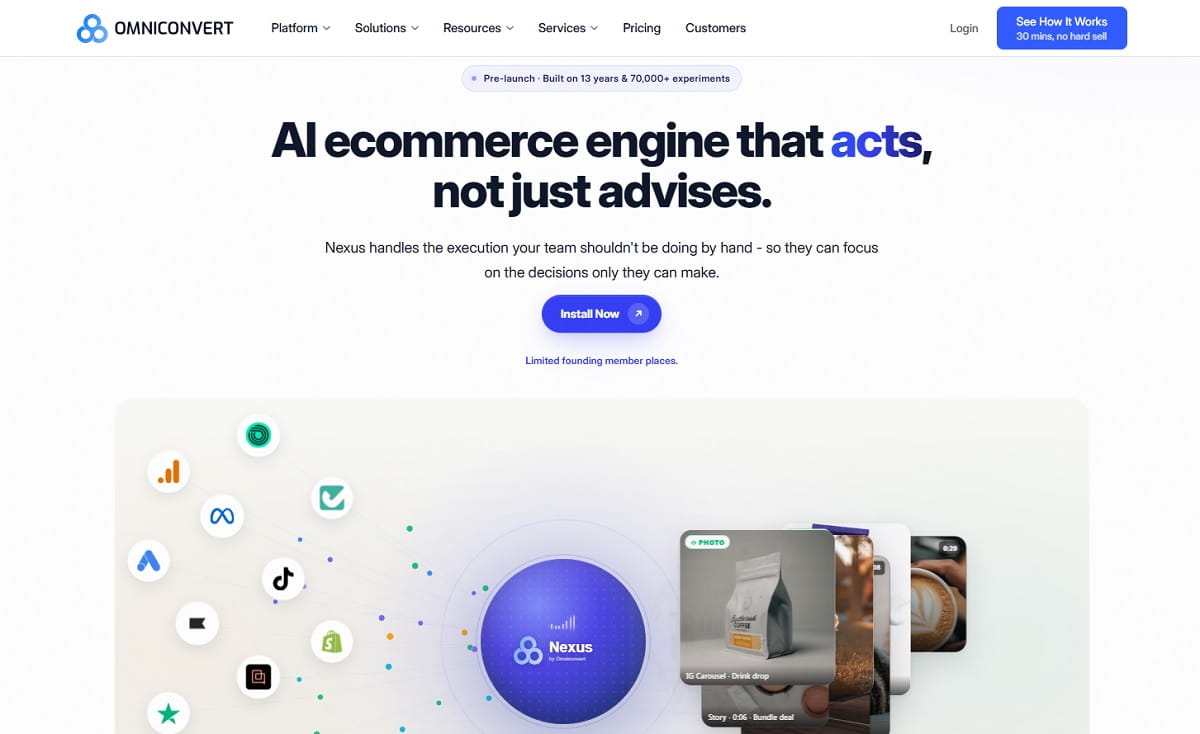
Omniconvert is a Romania-founded CRO platform (2012) built specifically for e-commerce, D2C, and omnichannel retailers. Its Explore product covers A/B and multivariate testing with a visual editor, paired with Pulse for NPS and customer-experience surveys — so testing and customer feedback live in one place rather than two separate vendors.
The free tier is the real story: Explore is permanently free up to 50,000 tested users a month, and that free plan includes full A/B testing, multivariate testing, segmentation, and personalization — not a stripped-down trial. That is a more generous free ceiling than most vendors’ paid entry tier. The company also states 13+ years and 70,000+ experiments run, and currently holds G2’s Momentum Leader badge for Summer 2026.
One honest caveat: Nexus, Omniconvert’s newer AI execution layer, is explicitly labeled pre-launch beta on their own site, so treat its automated-agent claims as early-stage rather than proven. And like several other testing-first tools on this list, there are no heatmaps or session recordings — Explore replaces VWO’s testing and segmentation, not its behavior analytics.
| Capability | Omniconvert | VWO |
|---|---|---|
| A/B and multivariate testing | Yes, free up to 50K tested users/mo | Yes |
| Visual editor | Yes | Yes |
| Segmentation | Yes, core feature | Yes |
| Surveys (NPS/CX) | Yes, via Pulse | Yes, via Pulse |
| Personalization | Yes | Yes |
| Heatmaps and session recordings | No | Yes |
| Feature flags | Not listed | Yes |
| Permanent free plan | Yes, 50K tested users/month | No |
Where Omniconvert beats VWO:
- A permanent free tier covering 50,000 tested users a month with full A/B testing, multivariate testing, and personalization included.
- Built specifically for e-commerce and D2C, with segmentation and NPS surveys in the same platform as testing.
- 13+ years in the category and current G2 recognition (Momentum Leader, Summer 2026).
- Segmentation and personalization included in Explore rather than sold as separate modules.
Where VWO still wins:
- No heatmaps or session recordings — pair it with a behavior-analytics tool if that is part of why you bought VWO.
- Paid tiers beyond the 50K free ceiling are not published as flat numbers; scaling cost still requires a conversation.
- Nexus (AI execution) is pre-launch beta — not yet a proven substitute for VWO’s more mature Wandz automation.
Pricing: Explore free up to 50,000 tested users/month, full features included; paid Explore tiers scale by tested users (100K–2M+), exact rates on request; Pulse surveys free at Essential/Advanced, Expert $290/year. Verified on omniconvert.com/pricing.
Best VWO Alternatives By Use Case
| Use Case | Recommended Tools | Why | Realistic Entry Cost |
|---|---|---|---|
| UX and CRO audits | Plerdy, Crazy Egg | Heatmaps, recordings, and funnels with testing attached | $21–$99/month |
| Product and engineering teams | PostHog, Statsig, GrowthBook | Feature flags, warehouse-native data, portable experiment history | Free to $150/month |
| Enterprise experimentation | Optimizely, Kameleoon, Adobe Target | Governance, personalization at scale, dedicated support | Custom quote |
| Landing pages and paid campaigns | Unbounce, Instapage | Page builder plus testing, no engineering dependency | $149–$199/month for testing tiers |
| Healthcare, finance, regulated | Kameleoon, Statsig | HIPAA compliance stated; ISO 27001 and SOC 2 (Kameleoon) | Custom / $150+/month |
| Smallest possible budget | PostHog, Statsig, GrowthBook, Plerdy | Genuine permanent free plans, not trials | $0 |
| Better support and clearer pricing | Plerdy, Convert Experiences | Published rates, self-serve signup, no enterprise sales layer | $21–$299/month |
| Low-traffic sites | Unbounce (Smart Traffic) | Optimize without reaching classical statistical significance | $249/month or free sign-up |
| E-commerce and D2C | Omniconvert, Plerdy | Segmentation and NPS surveys bundled with testing; free tier included | $0–$21/month |
Is Mouseflow a VWO Alternative?
Not on its own. Mouseflow is a behavior-analytics tool — session replay, heatmaps, friction detection, conversion funnels, journey analytics, form analytics, and feedback surveys — and its own product pages advertise no A/B testing or experimentation at all. Since running experiments is VWO’s core job, Mouseflow cannot replace it.
That does not make the comparison pointless. Teams searching “Mouseflow vs VWO” are usually deciding between understanding behavior and changing it, and the honest answer is that those are two different purchases. A common, cheaper setup is one behavior tool (Mouseflow, Plerdy, or Crazy Egg) plus one testing tool (Convert Experiences, GrowthBook, or PostHog) — which frequently costs less than a single VWO contract covering both.
The same reasoning applies to a few other tools that appear on VWO comparison lists but do not run experiments: pure analytics and session-replay platforms complement an experimentation tool rather than replacing one. Check whether a “VWO alternative” can actually run a test before shortlisting it.
How To Migrate Off VWO Without Losing Your Measurement Baseline
The most expensive mistake in switching is not choosing the wrong tool — it is losing comparability with everything you measured before. A short, boring process avoids that:
- Export your VWO experiment history first. Test names, dates, variants, sample sizes, and outcomes. Once the contract lapses, this is usually gone.
- Write down how your current metrics are defined — what counts as a conversion, which sessions are excluded, how visitors are bucketed. Two tools rarely define these identically, and unexplained differences after a switch are almost always definitional.
- Run both tools in parallel for two to four weeks. Overlapping tags will not break anything if only one tool is assigning variants; the goal is to see how the numbers differ on identical traffic before you trust the new one.
- Re-run one already-concluded test in the new platform. If a known winner does not reproduce, the problem is instrumentation, not the tool.
- Check that visitor counting matches your billing assumption. Vendors count tested users, monthly tracked users, and events differently, and this is where surprise invoices come from.
- Only then remove the VWO script — and keep the exported history somewhere permanent.
Convert Experiences offers free migration of active VWO tests, and most other vendors on this list will help during a trial. Ask before you sign, not after.
Pros And Cons Of VWO, According To Real Users
Whether or not you switch, it is worth being clear about what VWO does well and where it frustrates people:
- What users consistently praise: a mature visual editor that requires no coding knowledge, breadth of capability that few competitors match, and a long track record of running experiments at volume. The combination of testing, behavior analytics, and personalization in one platform is real, and no single tool on this list reproduces all three.
- What users consistently criticize: pricing is no longer published and requires a sales conversation; the module structure means capabilities you expected to be included are often add-ons; some teams report difficulty reconciling VWO’s reported numbers with Google Analytics; and the post-merger enterprise focus feels heavy for smaller teams.
If “better support” or “simpler pricing” is your main reason for looking, prioritize vendors that publish rates and let you sign up without a call — Plerdy, Convert Experiences, PostHog, Statsig, GrowthBook, and Crazy Egg all do.
Conclusion: Which VWO Alternative Should You Choose?
VWO remains a capable platform, and its 2026 merger with AB Tasty made it a bigger one. It also made it a more enterprise-shaped purchase, with pricing behind a sales conversation — which is exactly why more teams are comparing it now.
There is no single best replacement, because VWO is really three products in one. Decide which part you actually use, then pick accordingly: Plerdy or Crazy Egg if what you use is behavior analytics with occasional tests; Convert Experiences if you want VWO-style web testing with published pricing; PostHog, Statsig, or GrowthBook if your team is engineering-led and wants experiment data it owns; Unbounce or Instapage if your testing is campaign-side; and Optimizely, Kameleoon, or Adobe Target if you need enterprise governance, compliance, or ecosystem integration.
One practical note to finish on: the cheapest path off VWO is often two focused tools rather than one broad one, and the safest is the one that keeps your experiment history portable. The best tool is still the one your team will actually open every week.
Frequently Asked Questions About VWO Alternatives
What Are The Best VWO Alternatives?
The strongest options in 2026 are Plerdy, Convert Experiences, PostHog, Statsig, GrowthBook, Optimizely, Kameleoon, Adobe Target, Crazy Egg, Instapage, Unbounce, and Omniconvert. Which one is best depends on whether you need A/B testing, heatmaps, UX audits, landing pages, personalization, or feature flags — VWO combines several of these, so most teams replace it with the one or two parts they actually use.
Which VWO Alternative Is Best For UX Audits?
Plerdy, because it combines heatmaps, session recordings, event tracking, funnels, pop-ups, and SEO checks in one product, with unlimited A/B testing on every plan including the free tier.
Is There a Free VWO Alternative?
Yes. Plerdy, PostHog, Statsig, GrowthBook, and Crazy Egg all offer permanent free plans, and Omniconvert offers a free sign-up. PostHog’s free tier is the largest — 1 million analytics events, 5,000 session replays, and 1 million feature-flag requests per month. VWO itself does not offer a permanent free plan.
What Happened To Google Optimize?
Google Optimize and Optimize 360 were discontinued on September 30, 2023, and should not be listed as active VWO alternatives.
What Changed At VWO In 2026?
VWO merged with AB Tasty on January 20, 2026, under majority shareholder Everstone Capital, forming a combined company with more than $100 million in annual revenue and 4,000+ customers across 11 offices. VWO no longer publishes pricing publicly and now positions itself more toward enterprise, AI-led workflows.
Is AB Tasty Still a Separate VWO Alternative?
No. After the January 2026 merger, AB Tasty and VWO are part of the same company with a converging roadmap, so switching from one to the other is not a meaningful change of vendor. Some older comparison articles still list it separately.
Is Mouseflow a Good VWO Alternative?
Not on its own. Mouseflow covers session replay, heatmaps, friction detection, and funnels but advertises no A/B testing, so it cannot replace VWO’s core experimentation function. It works well paired with a dedicated testing tool.
Which VWO Competitors Are Best For Enterprise A/B Testing?
Optimizely, Kameleoon, and Adobe Target. Optimizely adds a full CMS and content platform, Kameleoon leads on compliance with stated HIPAA, GDPR, ISO 27001 and SOC 2 coverage, and Adobe Target is the natural choice inside Adobe Experience Cloud.
Do I Need a VWO Partner Agency Or a VWO Alternative Tool?
Choose an agency if you are staying on VWO and need help with strategy, setup, or ongoing management. Choose an alternative tool if VWO is too expensive, too complex, or not focused on the CRO, UX, or landing-page work you actually do today.
What Is the Best VWO Alternative For Product Teams?
PostHog, Statsig, or GrowthBook. All three are built around feature flags and event or warehouse-based data rather than a marketer-facing visual editor, and all three publish pricing with a permanent free tier.
What Is the Best VWO Alternative For Healthcare Websites?
Kameleoon states GDPR, CCPA, and HIPAA compliance along with ISO 27001 and SOC 2 certification, and names healthcare as a core vertical. Statsig also lists HIPAA eligibility on its enterprise tier. Always confirm current compliance scope with the vendor before a healthcare deployment.
What Is the Cheapest VWO Alternative That Includes A/B Testing?
Among tools with published pricing, Plerdy includes unlimited A/B testing on its free plan and from $21/month on paid tiers. PostHog, Statsig, and GrowthBook include experimentation in their permanent free tiers. Note that Crazy Egg gates A/B testing at $99/month, Unbounce at $149/month, and Instapage at $199/month despite lower headline prices.
Which VWO Alternatives Publish Their Pricing?
Plerdy, Convert Experiences, PostHog, Statsig, GrowthBook, Crazy Egg, Instapage, and Unbounce all publish rates. Optimizely, Kameleoon, Adobe Target, Omniconvert, and VWO itself require a sales conversation or quote request.